Department of Integrative Biology and Physiology, University of Minnesota, Minneapolis, MN, 55455, USA.
Center for Immunology, University of Minnesota, Minneapolis, MN, 55455, USA.
Nat Commun. 2019 Jan 21;10(1):354. doi: 10.1038/s41467-019-08300-3.
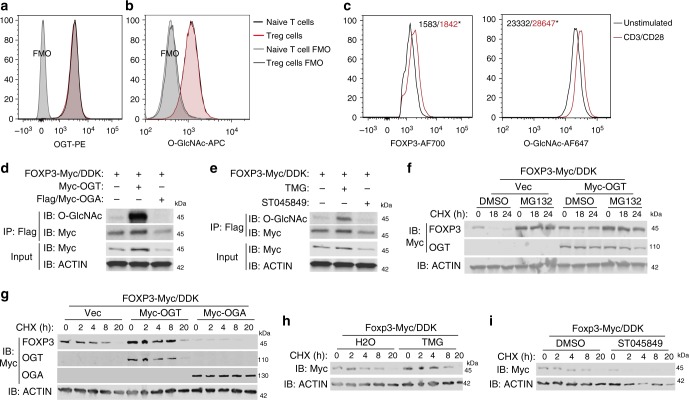
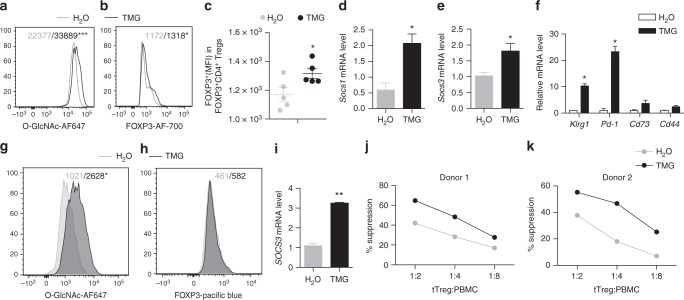
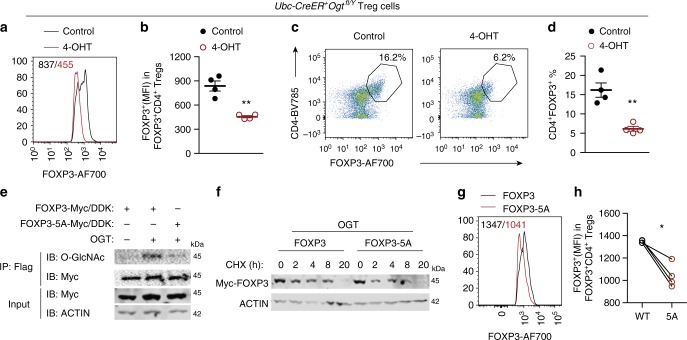
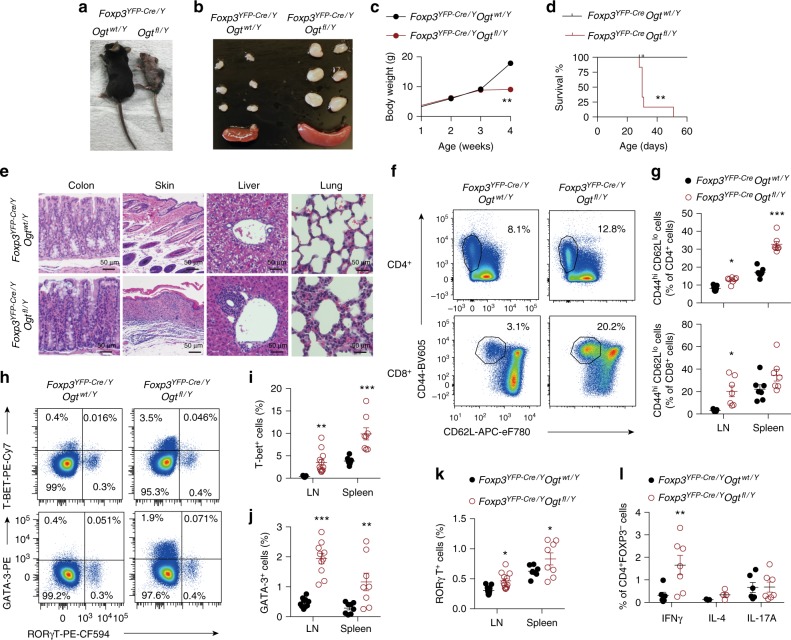
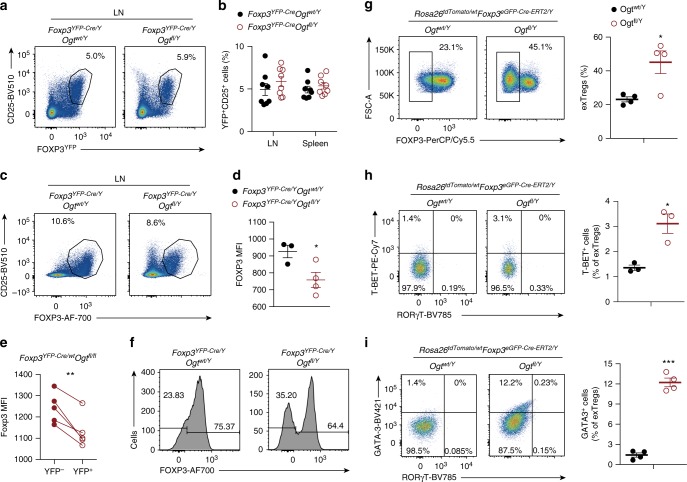
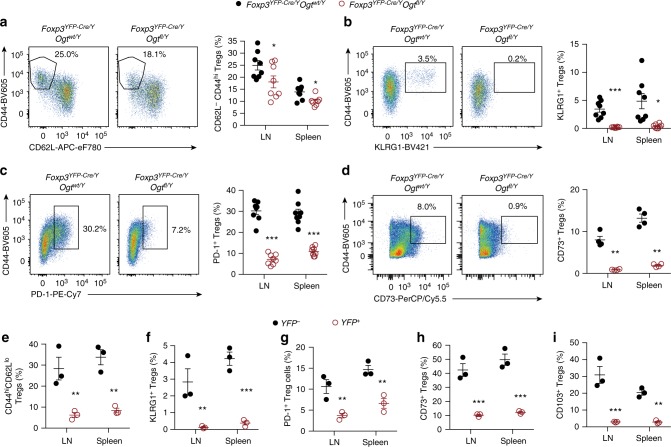
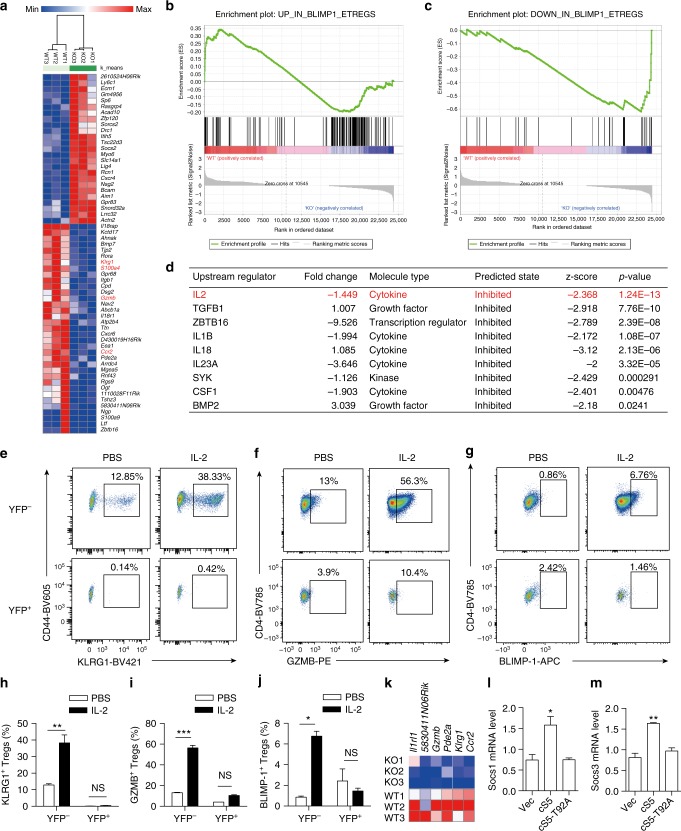
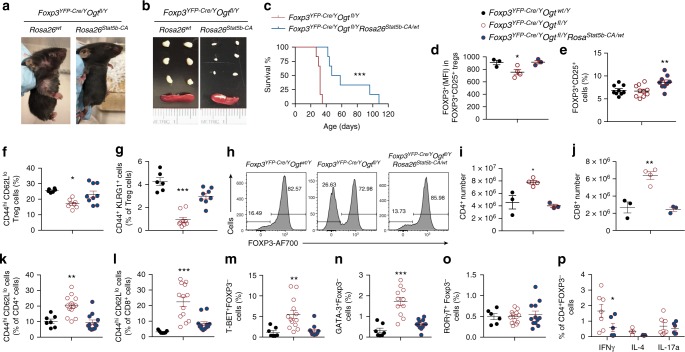
Regulatory T (Treg) cells control self-tolerance, inflammatory responses and tissue homeostasis. In mature Treg cells, continued expression of FOXP3 maintains lineage identity, while T cell receptor (TCR) signaling and interleukin-2 (IL-2)/STAT5 activation support the suppressive effector function of Treg cells, but how these regulators synergize to control Treg cell homeostasis and function remains unclear. Here we show that TCR-activated posttranslational modification by O-linked N-Acetylglucosamine (O-GlcNAc) stabilizes FOXP3 and activates STAT5, thus integrating these critical signaling pathways. O-GlcNAc-deficient Treg cells develop normally but display modestly reduced FOXP3 expression, strongly impaired lineage stability and effector function, and ultimately fatal autoimmunity in mice. Moreover, deficiency in protein O-GlcNAcylation attenuates IL-2/STAT5 signaling, while overexpression of a constitutively active form of STAT5 partially ameliorates Treg cell dysfunction and systemic inflammation in O-GlcNAc deficient mice. Collectively, our data demonstrate that protein O-GlcNAcylation is essential for lineage stability and effector function in Treg cells.
调节性 T(Treg)细胞控制自身耐受、炎症反应和组织稳态。在成熟的 Treg 细胞中,FOXP3 的持续表达维持谱系身份,而 T 细胞受体(TCR)信号和白细胞介素-2(IL-2)/STAT5 激活支持 Treg 细胞的抑制效应功能,但这些调节剂如何协同控制 Treg 细胞的稳态和功能尚不清楚。在这里,我们表明 TCR 激活的 O-连接的 N-乙酰氨基葡萄糖(O-GlcNAc)的翻译后修饰稳定 FOXP3 并激活 STAT5,从而整合这些关键的信号通路。O-GlcNAc 缺陷型 Treg 细胞正常发育,但 FOXP3 表达明显减少,谱系稳定性和效应功能严重受损,最终导致小鼠致命性自身免疫。此外,蛋白质 O-GlcNAcylation 的缺乏会减弱 IL-2/STAT5 信号,而过表达组成型激活形式的 STAT5 可部分改善 O-GlcNAc 缺陷型小鼠的 Treg 细胞功能障碍和全身炎症。总之,我们的数据表明蛋白质 O-GlcNAcylation 对于 Treg 细胞的谱系稳定性和效应功能至关重要。