Department of Physics and Center for the Physics of Living Cells, University of Illinois at Urbana-Champaign, Champaign, IL, USA.
Department of Chemistry and Chemical Biology, Harvard University, Cambridge, MA, USA.
Nat Chem Biol. 2019 Mar;15(3):269-275. doi: 10.1038/s41589-018-0209-y. Epub 2019 Jan 21.
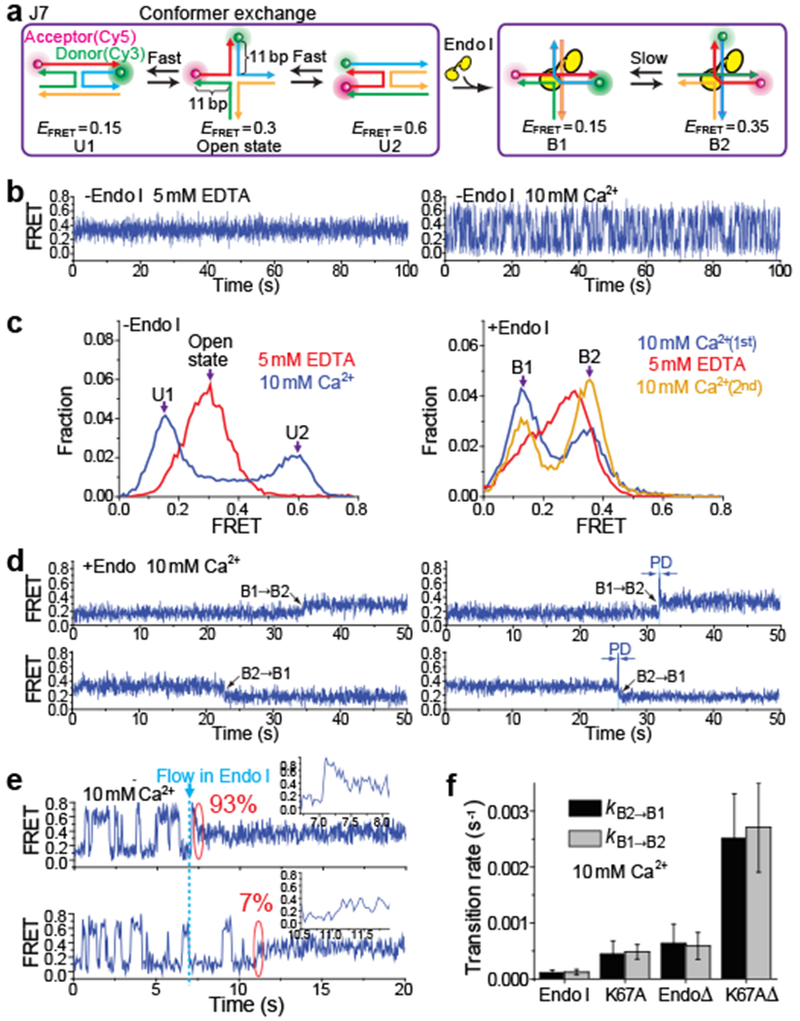
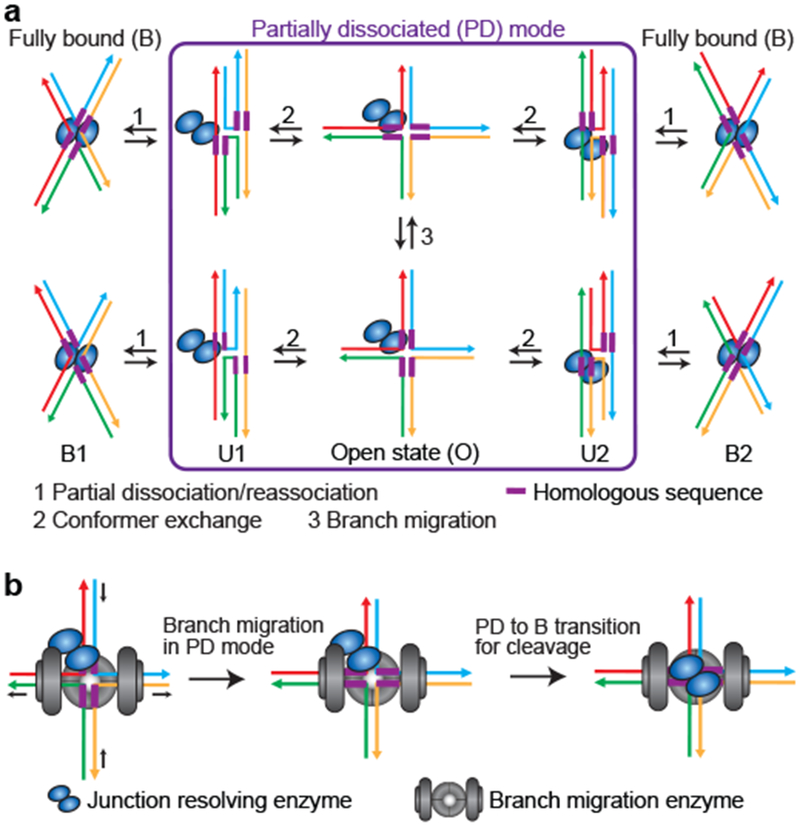
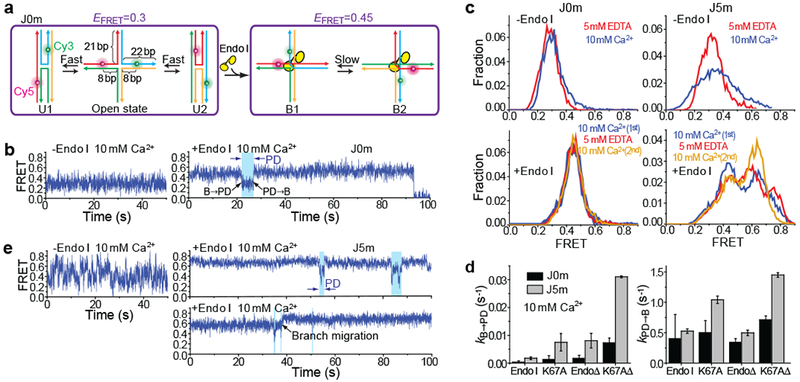
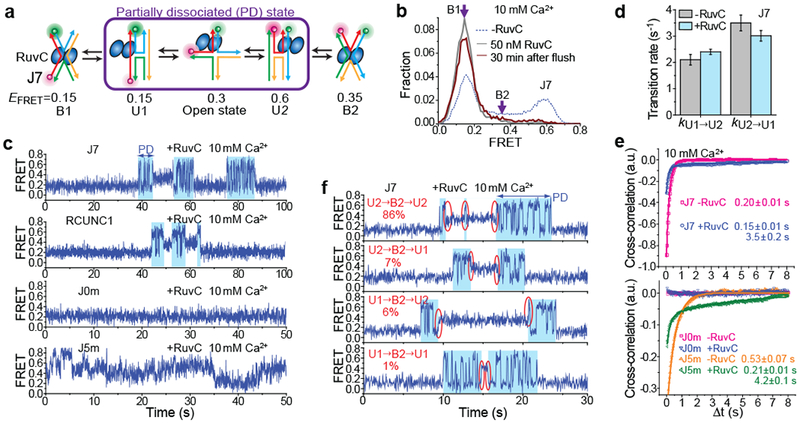
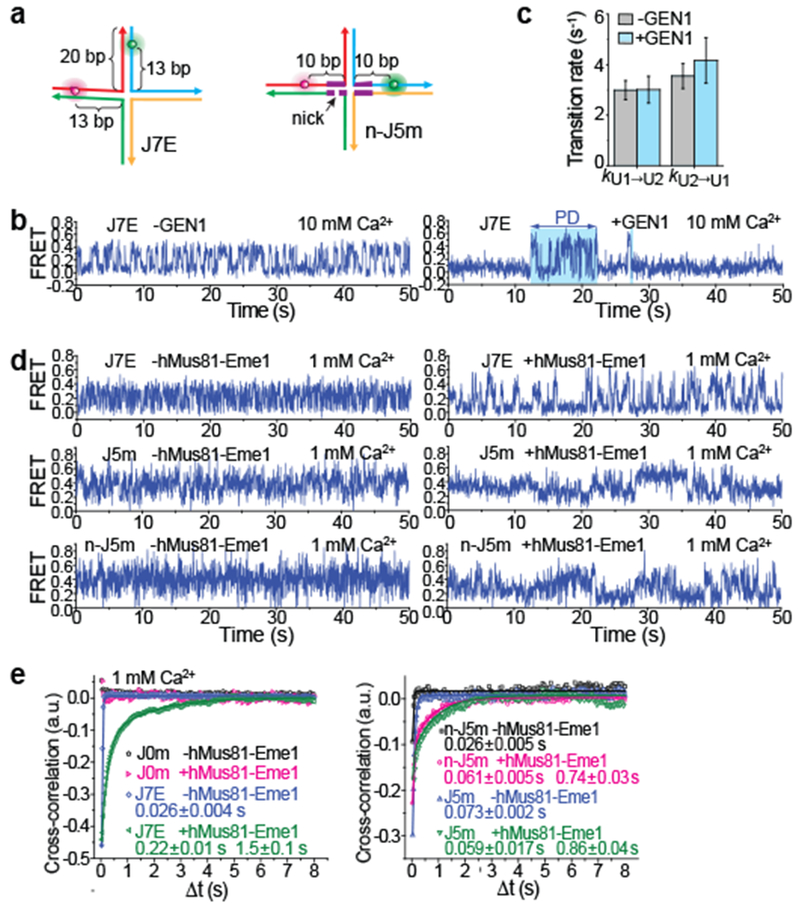
Holliday junction (HJ) resolution by resolving enzymes is essential for chromosome segregation and recombination-mediated DNA repair. HJs undergo two types of structural dynamics that determine the outcome of recombination: conformer exchange between two isoforms and branch migration. However, it is unknown how the preferred branch point and conformer are achieved between enzyme binding and HJ resolution given the extensive binding interactions seen in static crystal structures. Single-molecule fluorescence resonance energy transfer analysis of resolving enzymes from bacteriophages (T7 endonuclease I), bacteria (RuvC), fungi (GEN1) and humans (hMus81-Eme1) showed that both types of HJ dynamics still occur after enzyme binding. These dimeric enzymes use their multivalent interactions to achieve this, going through a partially dissociated intermediate in which the HJ undergoes nearly unencumbered dynamics. This evolutionarily conserved property of HJ resolving enzymes provides previously unappreciated insight on how junction resolution, conformer exchange and branch migration may be coordinated.
连接点(HJ)的解决由解决酶是必不可少的染色体分离和重组介导的 DNA 修复。 HJs 经历两种结构动力学,这决定了重组的结果:两种异构体之间的构象交换和分支迁移。然而,在酶结合和 HJ 解决之间,由于在静态晶体结构中看到的广泛结合相互作用,不知道如何获得首选的分支点和构象。来自噬菌体(T7 内切酶 I)、细菌(RuvC)、真菌(GEN1)和人类(hMus81-Eme1)的解决酶的单分子荧光共振能量转移分析表明,酶结合后仍然发生两种类型的 HJ 动力学。这些二聚体酶利用它们的多价相互作用来实现这一点,经历一个部分解离的中间体,其中 HJ 经历几乎不受阻碍的动力学。HJ 解决酶的这种进化保守特性提供了关于连接点分辨率、构象交换和分支迁移如何协调的以前未被认识到的见解。