Department of Microbiology, Tumor and Cell Biology, Karolinska Institutet, Solnavägen 9, SE-171 77, Stockholm, Sweden.
Health Metrics at Sahlgrenska Academy, University of Gothenburg, Gothenburg, Sweden.
BMC Med. 2019 Jan 22;17(1):14. doi: 10.1186/s12916-018-1243-z.
Substantial global progress in the control of malaria in recent years has led to increased commitment to its potential elimination. Whether this is possible in high transmission areas of sub-Saharan Africa remains unclear. Zanzibar represents a unique case study of such attempt, where modern tools and strategies for malaria treatment and vector control have been deployed since 2003.
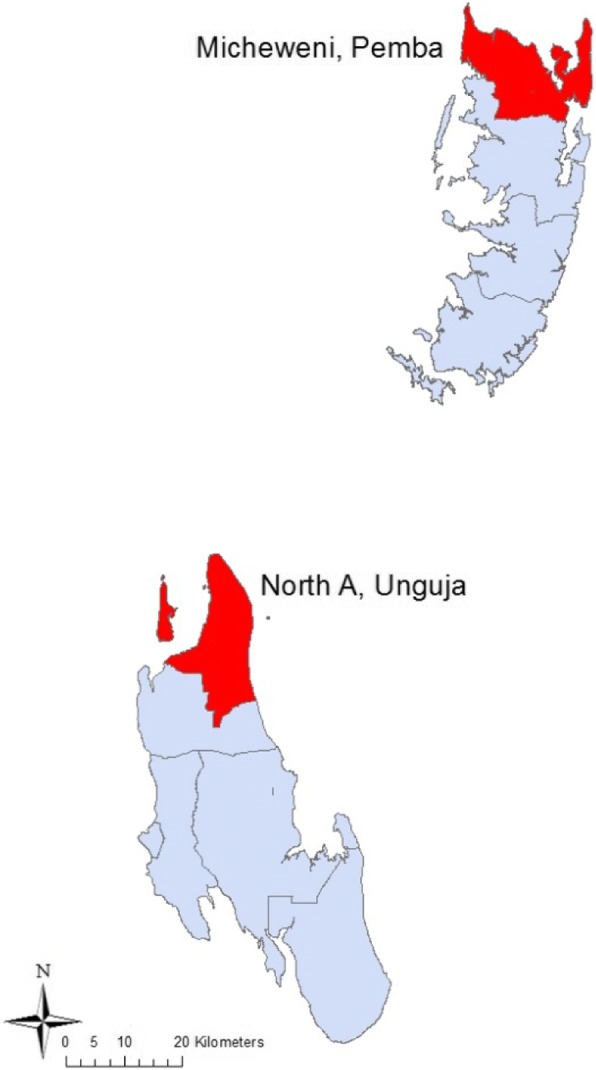
We have studied temporal trends of comprehensive malariometric indices in two districts with over 100,000 inhabitants each. The analyses included triangulation of data from annual community-based cross-sectional surveys, health management information systems, vital registry and entomological sentinel surveys.
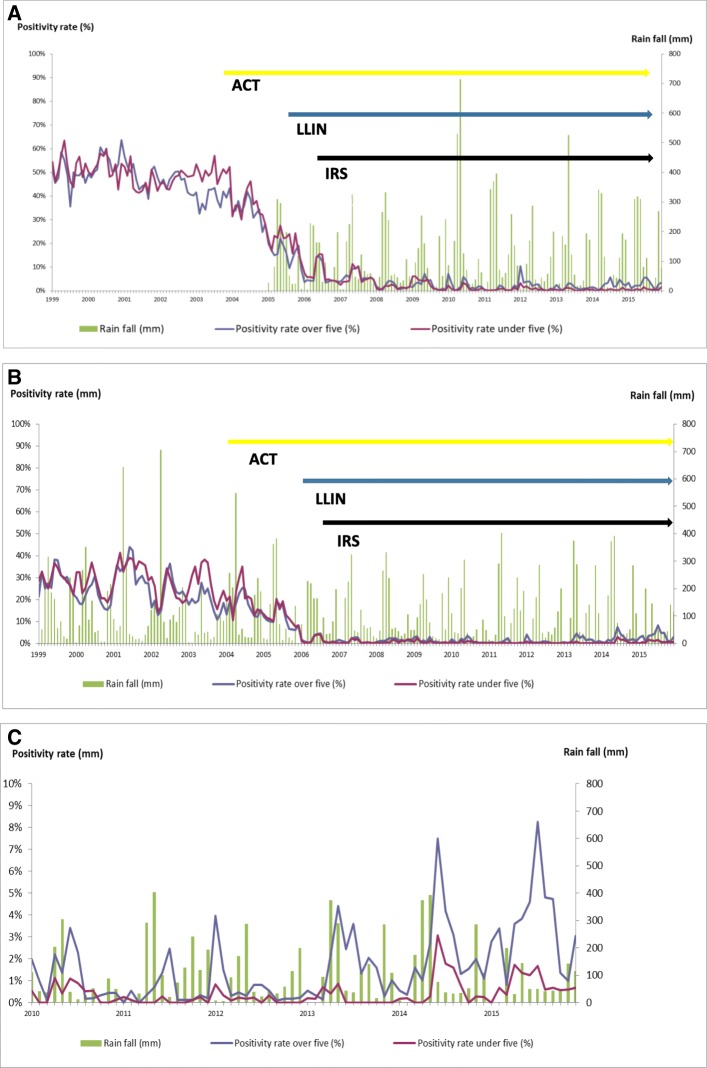
The interventions, with sustained high-community uptake, were temporally associated with a major malaria decline, most pronounced between 2004 and 2007 and followed by a sustained state of low transmission. In 2015, the Plasmodium falciparum community prevalence of 0.43% (95% CI 0.23-0.73) by microscopy or rapid diagnostic test represented 96% reduction compared with that in 2003. The P. falciparum and P. malariae prevalence by PCR was 1.8% (95% CI 1.3-2.3), and the annual P. falciparum incidence was estimated to 8 infections including 2.8 clinical episodes per 1000 inhabitants. The total parasite load decreased over 1000-fold (99.9%) between 2003 and 2015. The incidence of symptomatic malaria at health facilities decreased by 94% with a trend towards relatively higher incidence in age groups > 5 years, a more pronounced seasonality and with reported travel history to/from Tanzania mainland as a higher risk factor. All-cause mortality among children < 5 years decreased by 72% between 2002 and 2007 mainly following the introduction of artemisinin-based combination therapies whereas the main reduction in malaria incidence followed upon the vector control interventions from 2006. Human biting rates decreased by 98% with a major shift towards outdoor biting by Anopheles arabiensis.
Zanzibar provides new evidence of the feasibility of reaching uniquely significant and sustainable malaria reduction (pre-elimination) in a previously high endemic region in sub-Saharan Africa. The data highlight constraints of optimistic prognostic modelling studies. New challenges, mainly with outdoor transmission, a large asymptomatic parasite reservoir and imported infections, require novel tools and reoriented strategies to prevent a rebound effect and achieve elimination.
近年来,全球在疟疾控制方面取得了重大进展,这促使人们更加致力于消除疟疾。在撒哈拉以南非洲的高传播地区,这种情况是否可行尚不清楚。桑给巴尔为这种尝试提供了一个独特的案例研究,自 2003 年以来,这里一直在使用治疗疟疾和控制病媒的现代工具和策略。
我们研究了两个拥有超过 10 万居民的地区的全面疟疾指标的时间趋势。分析包括对年度社区横断面调查、卫生管理信息系统、生命登记和昆虫学哨点调查的数据进行三角测量。
这些干预措施得到了社区的持续高度参与,与疟疾的大幅下降有关,2004 年至 2007 年期间最为显著,随后是持续的低传播状态。2015 年,显微镜或快速诊断检测的恶性疟原虫社区流行率为 0.43%(95%CI 0.23-0.73),与 2003 年相比下降了 96%。聚合酶链反应检测到的恶性疟原虫和间日疟原虫的流行率为 1.8%(95%CI 1.3-2.3),估计每年的恶性疟原虫发病率为 8 例,包括每 1000 名居民中有 2.8 例临床病例。寄生虫总负荷在 2003 年至 2015 年间下降了 1000 多倍(99.9%)。卫生机构报告的有症状疟疾发病率下降了 94%,年龄组 > 5 岁的发病率呈上升趋势,季节性更为明显,有报告前往坦桑尼亚大陆的旅行史是一个更高的危险因素。2002 年至 2007 年间,5 岁以下儿童的全因死亡率下降了 72%,主要是由于引入了青蒿素联合疗法,而疟疾发病率的主要下降则是由于 2006 年开始的病媒控制干预措施。人类叮咬率下降了 98%,按蚊(Anopheles arabiensis)的叮咬更多地转移到户外。
桑给巴尔为在撒哈拉以南非洲的一个先前高度流行地区实现独特的、显著和可持续的疟疾减少(接近消除)提供了新的证据。这些数据突出了乐观预测模型研究的局限性。新的挑战,主要是户外传播、大量无症状寄生虫库和输入性感染,需要新的工具和重新定位的策略,以防止反弹效应并实现消除。