Liu Yandong, Yang Futang, Zou Sili, Qu Lefeng
Department of Vascular and Endovascular Surgery, Changzheng Hospital Affiliated to the Second Military Medical University, Shanghai, China.
Front Pharmacol. 2019 Jan 7;9:1520. doi: 10.3389/fphar.2018.01520. eCollection 2018.
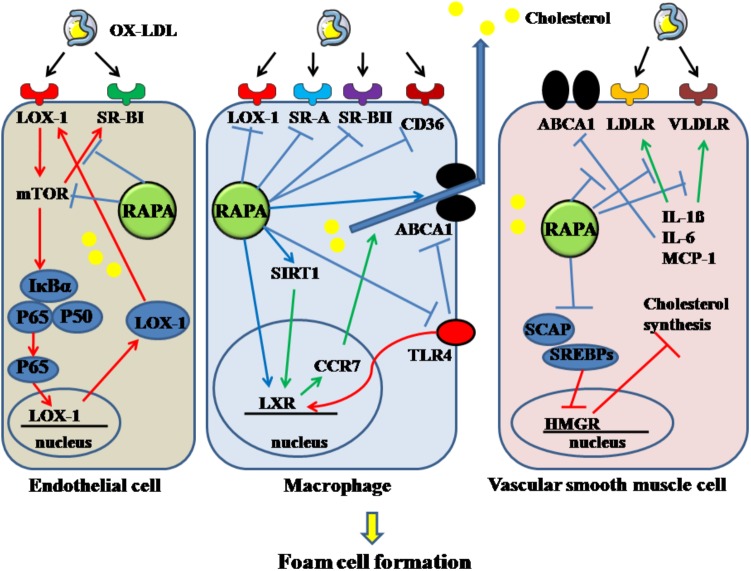
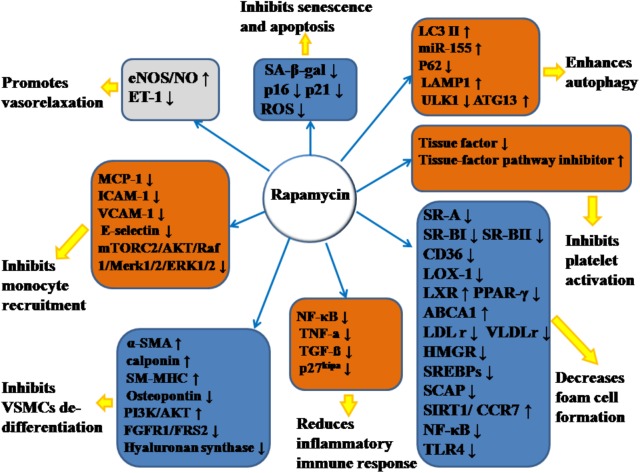
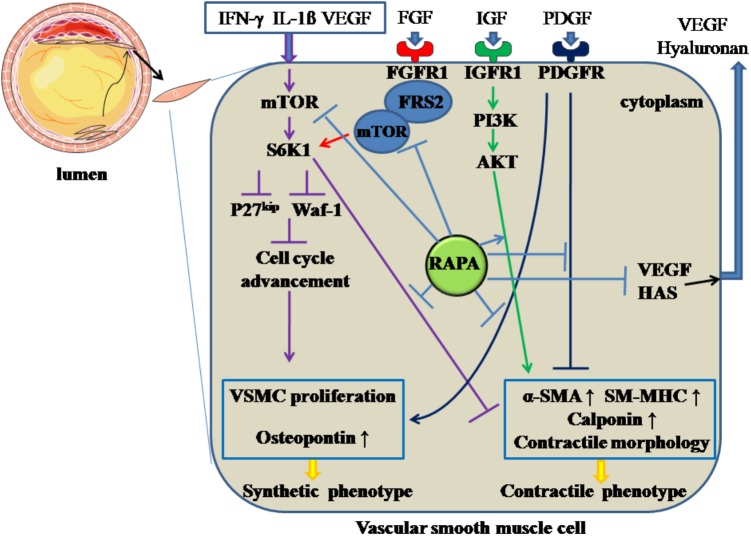
Atherosclerosis (AS) is the leading cause of stroke and death worldwide. Although many lipid-lowering or antiplatelet medicines have been used to prevent the devastating outcomes caused by AS, the serious side effects of these medicines cannot be ignored. Moreover, these medicines are aimed at preventing end-point events rather than addressing the formation and progression of the lesion. Rapamycin (sirolimus), a fermentation product derived from soil samples, has immunosuppressive and anti-proliferation effects. It is an inhibitor of mammalian targets of rapamycin, thereby stimulating autophagy pathways. Several lines of evidence have demonstrated that rapamycin possess multiple protective effects against AS through various molecular mechanisms. Moreover, it has been used successfully as an anti-proliferation agent to prevent in-stent restenosis or vascular graft stenosis in patients with coronary artery disease. A thorough understanding of the biomedical regulatory mechanism of rapamycin in AS might reveal pathways for retarding AS. This review summarizes the current knowledge of biomedical mechanisms by which rapamycin retards AS through action on various cells (endothelial cells, macrophages, vascular smooth muscle cells, and T-cells) in early and advanced AS and describes clinical and potential clinical applications of the agent.
动脉粥样硬化(AS)是全球范围内中风和死亡的主要原因。尽管许多降脂或抗血小板药物已被用于预防AS导致的灾难性后果,但这些药物的严重副作用不容忽视。此外,这些药物旨在预防终点事件,而非解决病变的形成和进展。雷帕霉素(西罗莫司)是一种从土壤样本中提取的发酵产物,具有免疫抑制和抗增殖作用。它是哺乳动物雷帕霉素靶蛋白的抑制剂,从而刺激自噬途径。多项证据表明,雷帕霉素通过多种分子机制对AS具有多种保护作用。此外,它已成功用作抗增殖剂,以预防冠心病患者的支架内再狭窄或血管移植物狭窄。深入了解雷帕霉素在AS中的生物医学调节机制可能会揭示延缓AS的途径。本综述总结了雷帕霉素通过作用于早期和晚期AS中的各种细胞(内皮细胞、巨噬细胞、血管平滑肌细胞和T细胞)来延缓AS的生物医学机制的现有知识,并描述了该药物的临床及潜在临床应用。