Program in Translational Medicine, Peter Gilgan Centre for Research and Learning, The Hospital for Sick Children, Toronto, ON M5G 0A4, Canada.
Department of Laboratory Medicine and Pathobiology, Faculty of Medicine, University of Toronto, Toronto, ON M5S 1A8, Canada.
Biomolecules. 2019 Jan 18;9(1):32. doi: 10.3390/biom9010032.
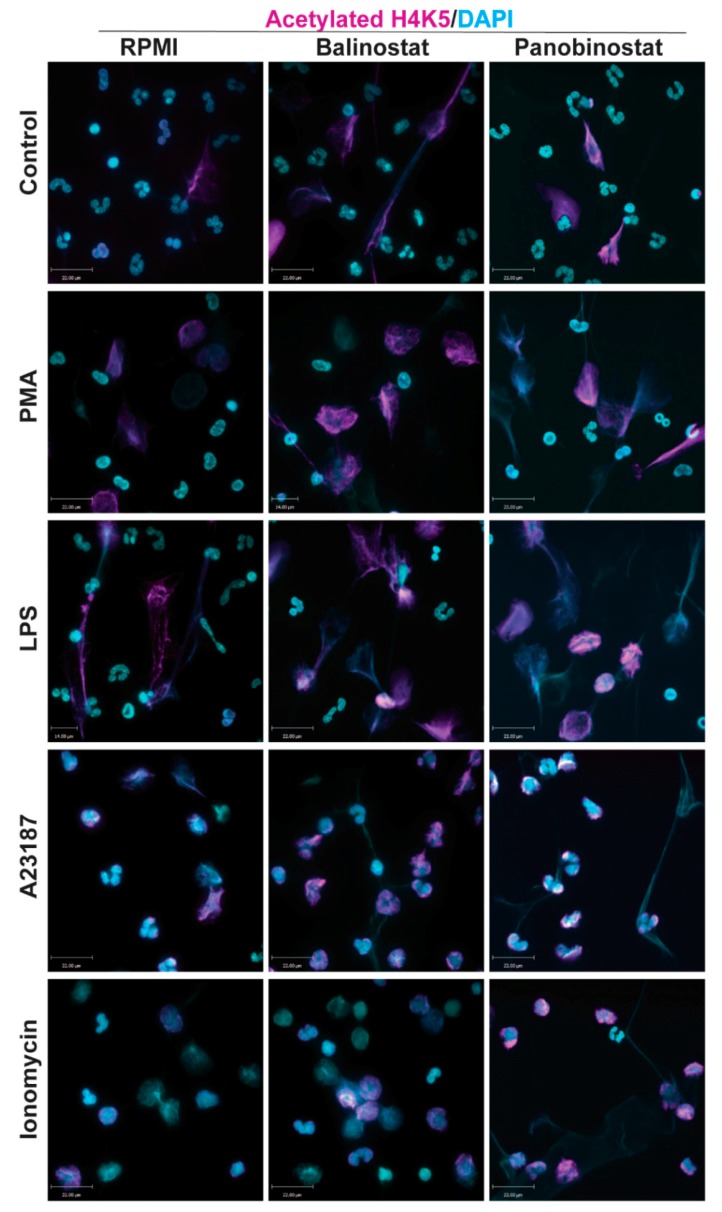
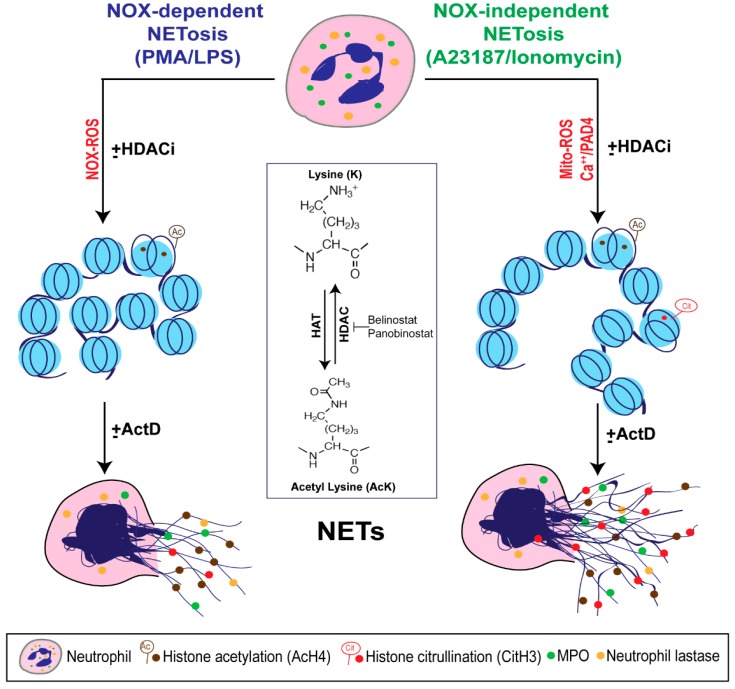
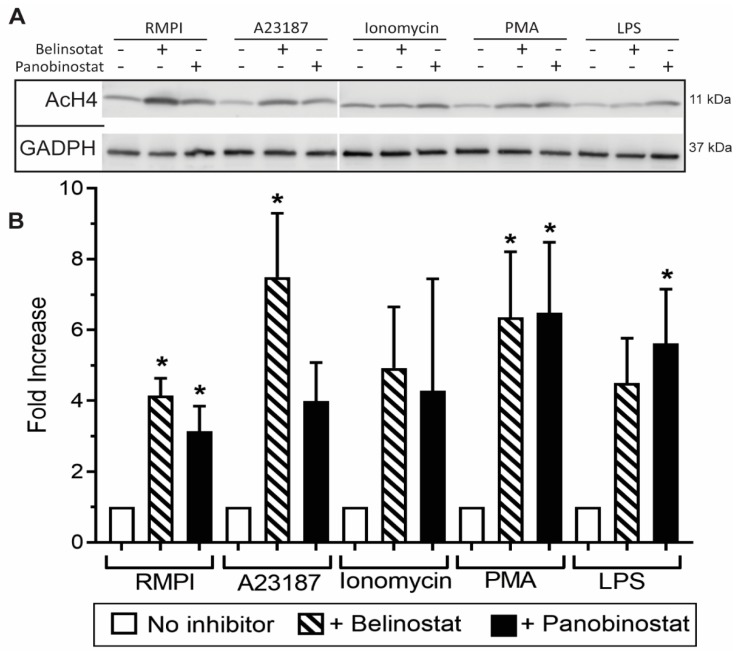
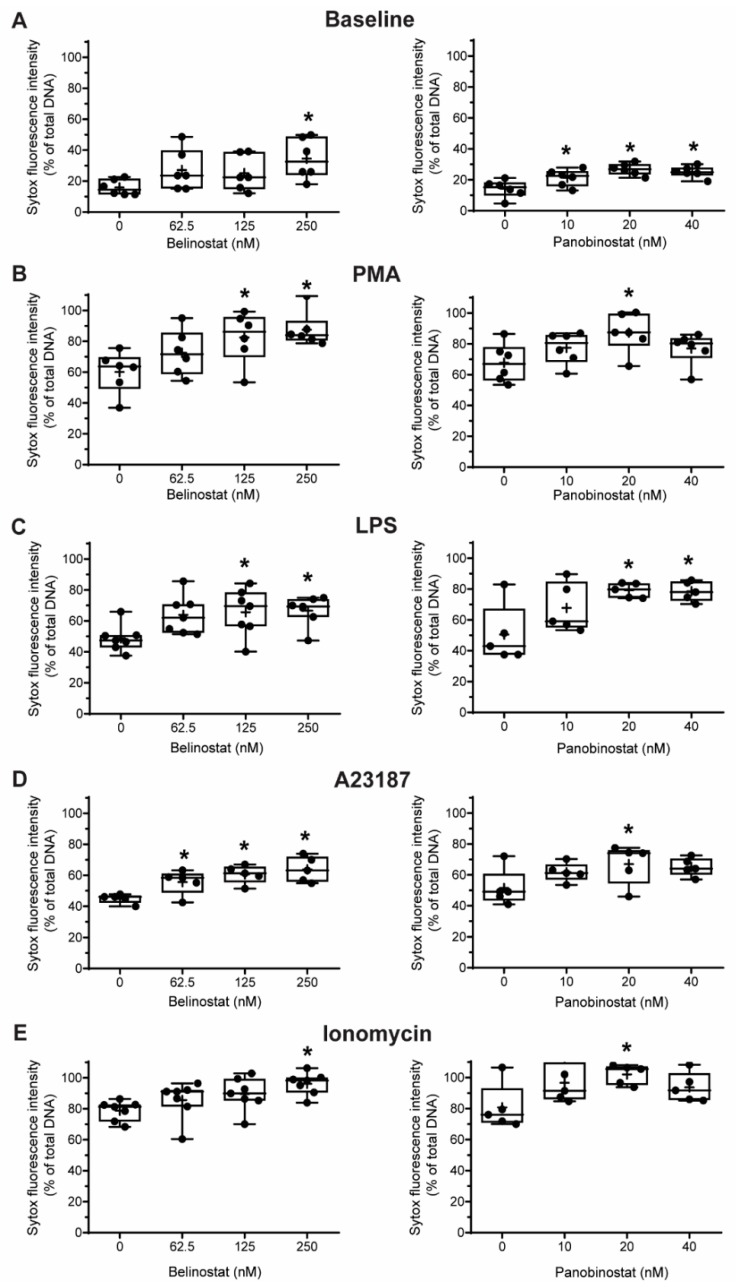
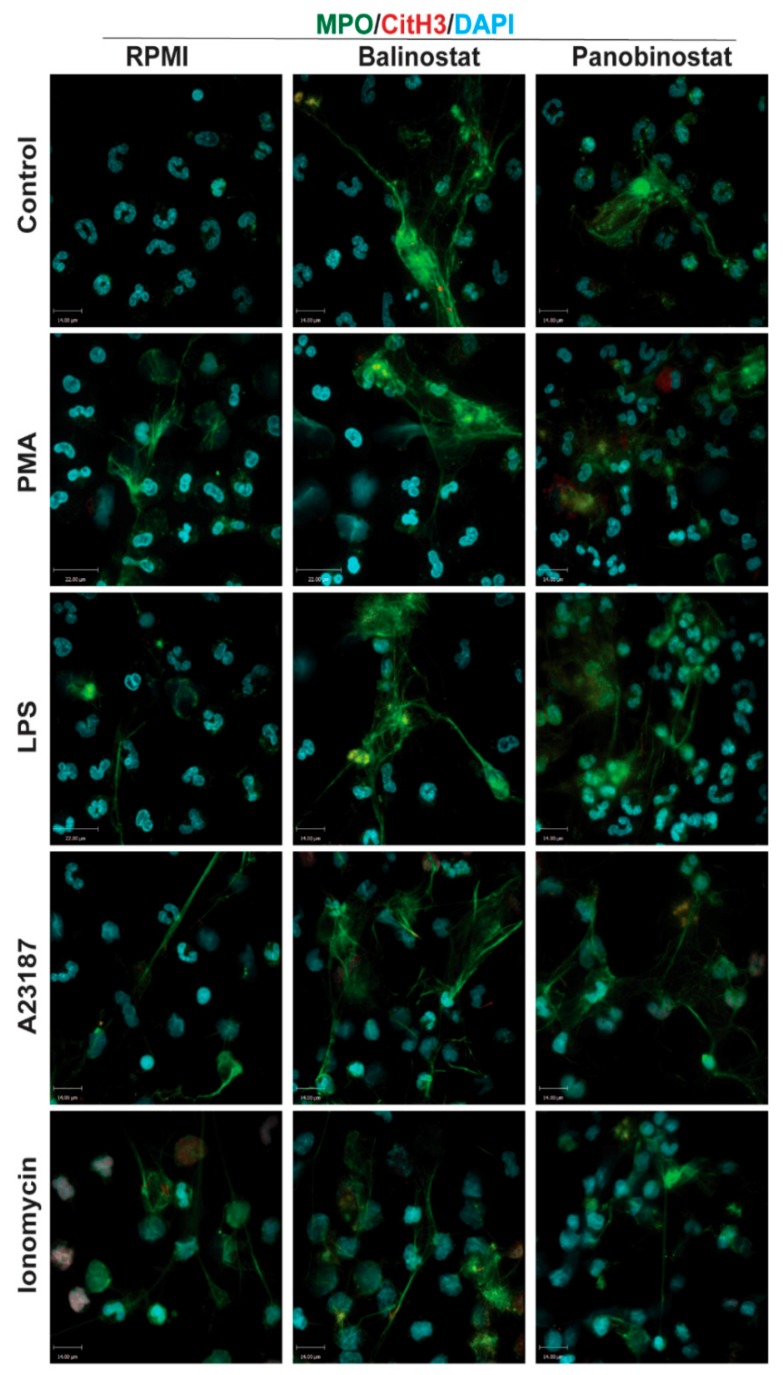
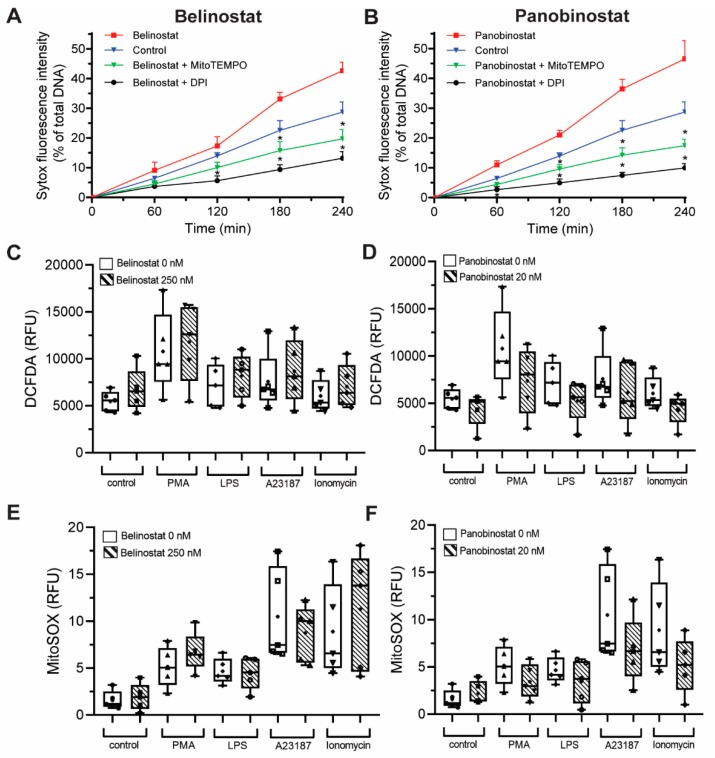
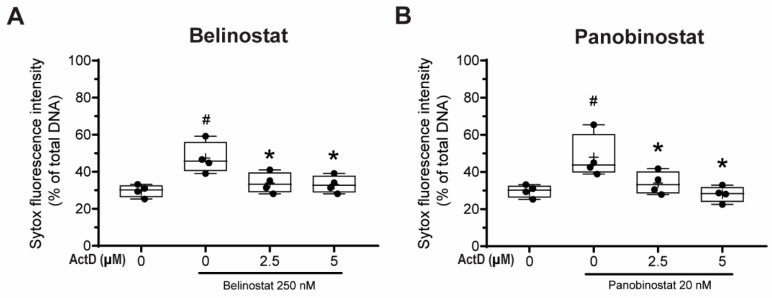
Neutrophils undergo a unique form of cell death to generate neutrophil extracellular traps (NETs). It is well established that citrullination of histones (e.g., CitH3) facilitates chromatin decondensation during NET formation (NETosis), particularly during calcium-induced NETosis that is independent of nicotinamide adenine dinucleotide phosphate (NADPH) oxidase (NOX) activation. However, the importance of other forms of histone modifications in NETosis has not been established. We considered that acetylation of histones would also facilitate NETosis. To test this hypothesis, we induced NOX-dependent NETosis in human neutrophils with phorbol myristate acetate or lipopolysaccharide (from 0128), and NOX-independent NETosis with calcium ionophores A23187 or ionomycin (from ) in the presence or absence of two pan histone deacetylase inhibitors (HDACis), belinostat and panobinostat (within their half maximal inhibitory concentration (IC50) range). The presence of these inhibitors increased histone acetylation (e.g., AcH4) in neutrophils. Histone acetylation was sufficient to cause a significant increase (20%) in NETosis in resting neutrophils above baseline values. When acetylation was promoted during NOX-dependent or -independent NETosis, the degree of NETosis additively increased (15⁻30%). Reactive oxygen species (ROS) production is essential for baseline NETosis (mediated either by NOX or mitochondria); however, HDACis did not promote ROS production. The chromatin decondensation step requires promoter melting and transcriptional firing in both types of NETosis; consistent with this point, suppression of transcription prevented the NETosis induced by the acetylation of histones. Collectively, this study establishes that histone acetylation (e.g., AcH4) promotes NETosis at baseline, and when induced by both NOX-dependent or -independent pathway agonists, in human neutrophils. Therefore, we propose that acetylation of histone is a key component of NETosis.
中性粒细胞通过一种独特的细胞死亡形式产生中性粒细胞胞外诱捕网(NETs)。已证实,组蛋白瓜氨酸化(例如,CitH3)有助于 NET 形成(NETosis)期间染色质解凝聚,特别是在钙诱导的 NETosis 中,该过程独立于烟酰胺腺嘌呤二核苷酸磷酸(NADPH)氧化酶(NOX)激活。然而,其他形式的组蛋白修饰在 NETosis 中的重要性尚未确定。我们认为组蛋白的乙酰化也会促进 NETosis。为了验证这一假设,我们在存在或不存在两种泛组蛋白去乙酰化酶抑制剂(HDACi)贝拉司他汀和帕比司他(在其半最大抑制浓度(IC50)范围内)的情况下,用佛波醇肉豆蔻酸酯或脂多糖(来自 0128)诱导依赖 NOX 的 NETosis,用钙离子载体 A23187 或离子霉素(来自 )诱导非依赖 NOX 的 NETosis。这些抑制剂的存在增加了中性粒细胞中的组蛋白乙酰化(例如,AcH4)。组蛋白乙酰化足以使静息中性粒细胞中的 NETosis 比基线值增加约 20%。当在依赖 NOX 或非依赖 NOX 的 NETosis 期间促进乙酰化时,NETosis 的程度会附加性地增加约 15-30%。活性氧(ROS)的产生是基线 NETosis 的必要条件(通过 NOX 或线粒体介导);然而,HDACi 并没有促进 ROS 的产生。染色质解凝聚步骤需要启动子的熔化和两种类型的 NETosis 中的转录启动;与这一点一致,抑制转录可阻止由组蛋白乙酰化引起的 NETosis。总之,这项研究确立了组蛋白乙酰化(例如,AcH4)在基础状态下促进 NETosis,并且当由依赖 NOX 或非依赖 NOX 的途径激动剂诱导时,在人中性粒细胞中促进 NETosis。因此,我们提出组蛋白乙酰化是 NETosis 的关键组成部分。