Laboratory of Immunology, Department of Immunology, Instituto de Investigaciones Biomédicas, Universidad Nacional Autónoma de México, Mexico City, Mexico.
Laboratory of Immunopathology, Department of Experimental Medicine, Hospital General de México, Facultad de Medicina, Universidad Nacional Autónoma de México, Mexico City, Mexico.
Front Cell Infect Microbiol. 2018 Jun 5;8:184. doi: 10.3389/fcimb.2018.00184. eCollection 2018.
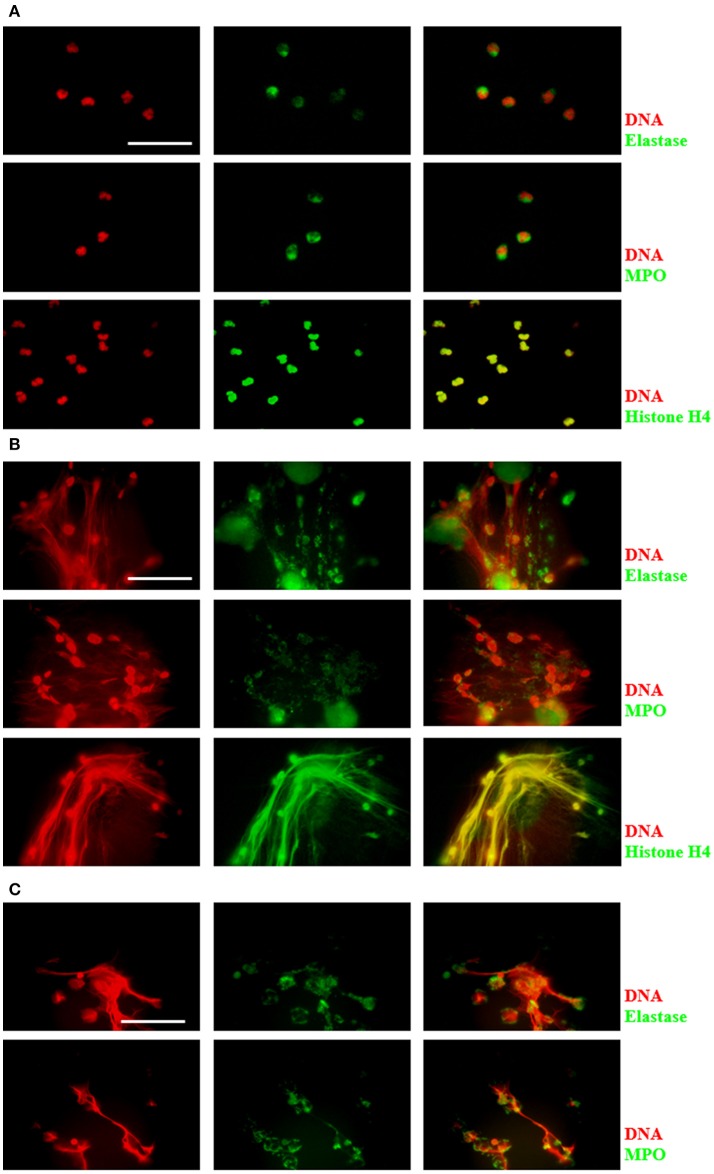
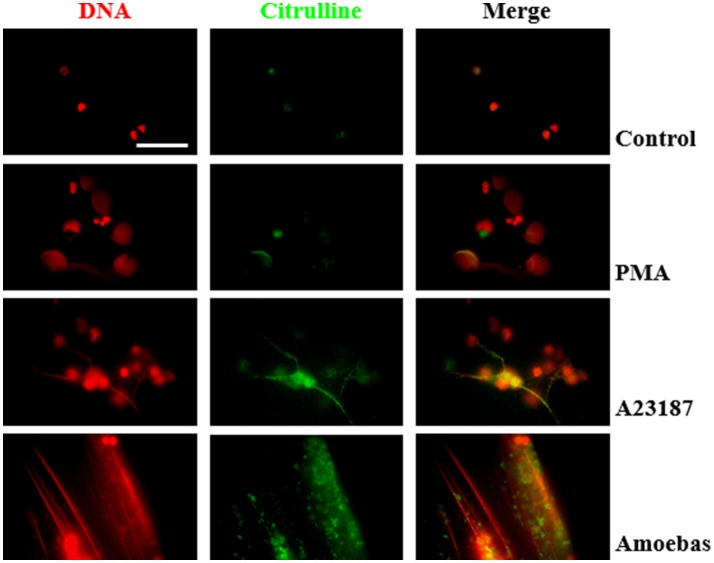
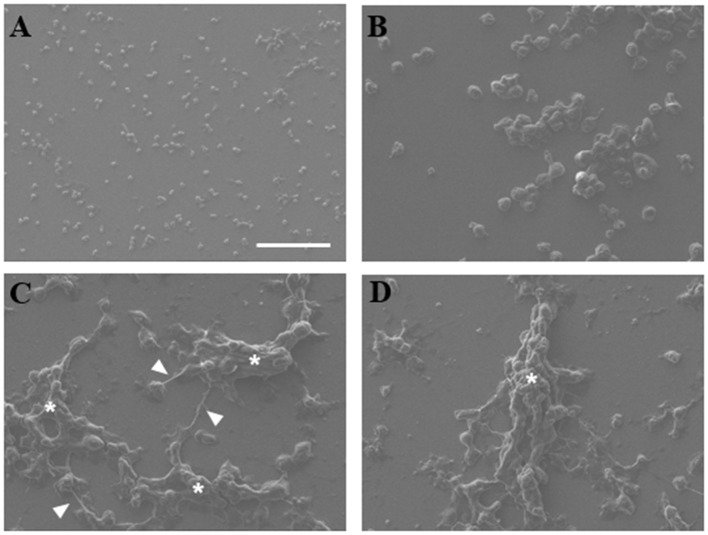
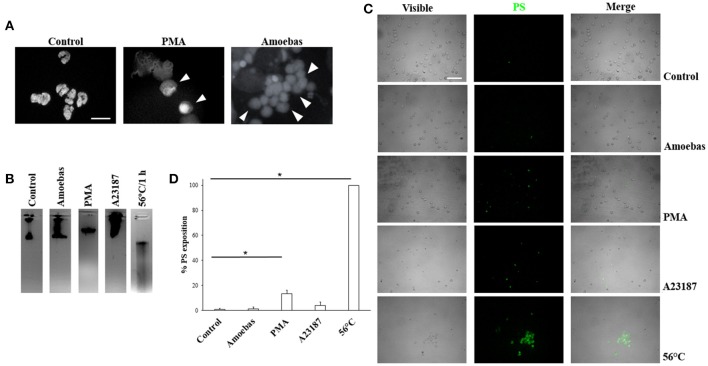
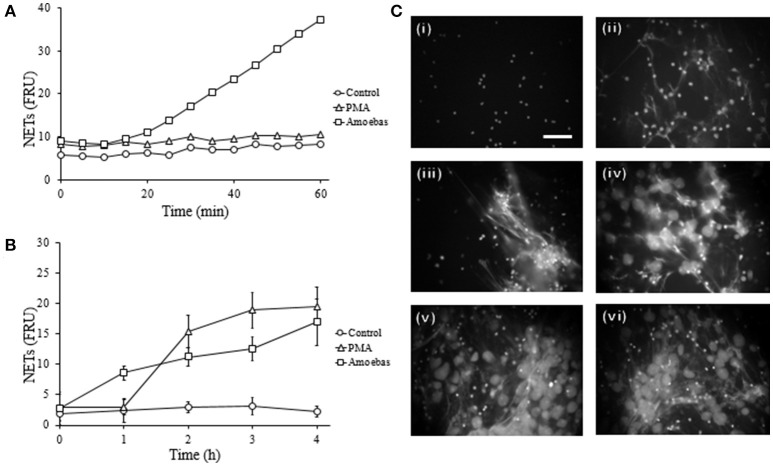
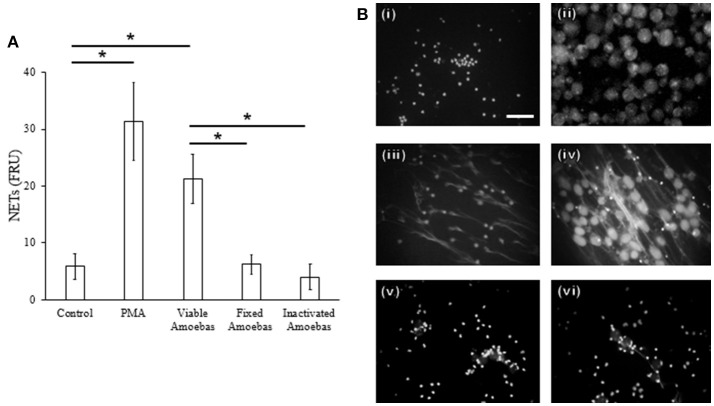
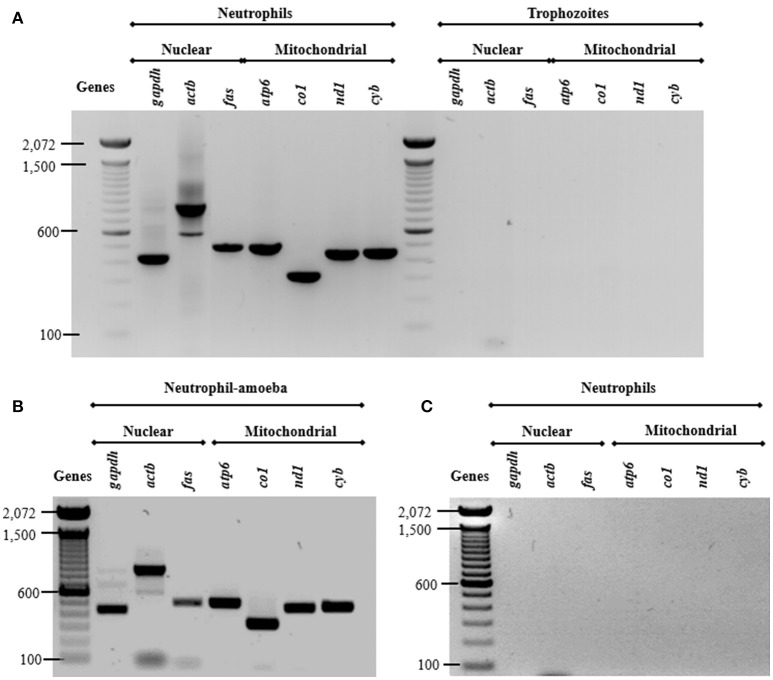
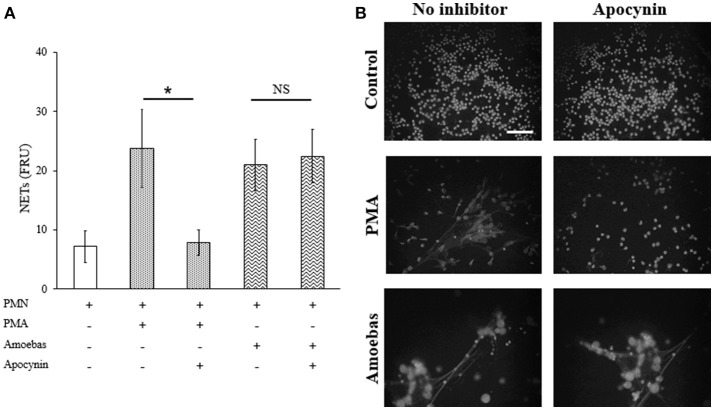
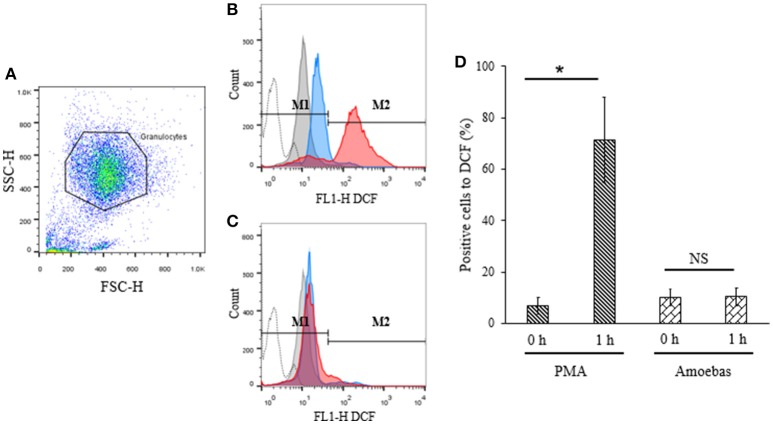
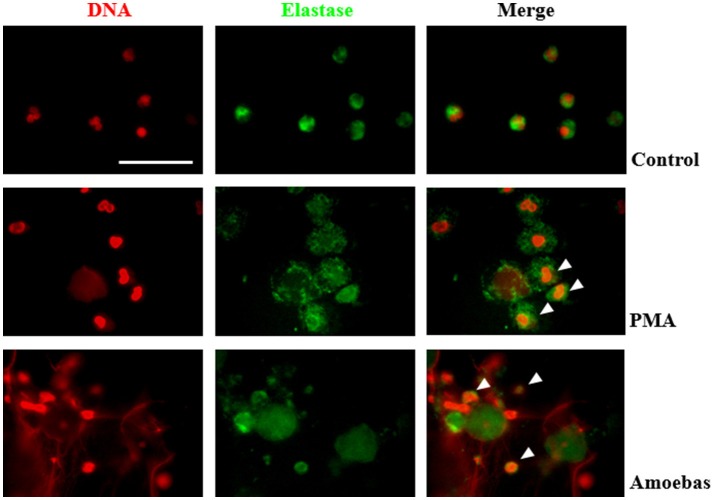
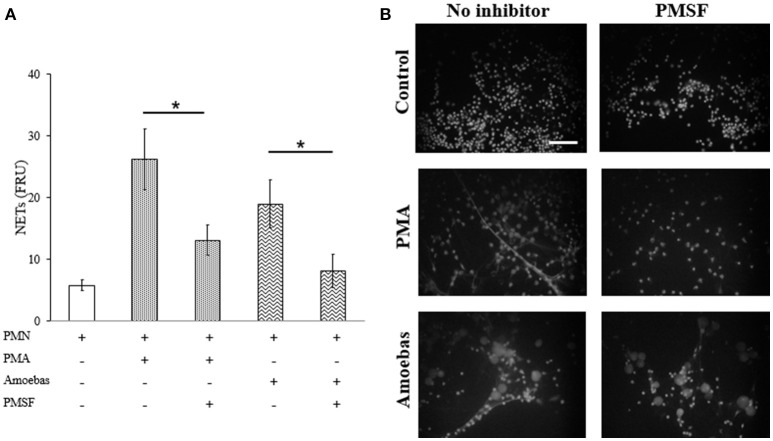
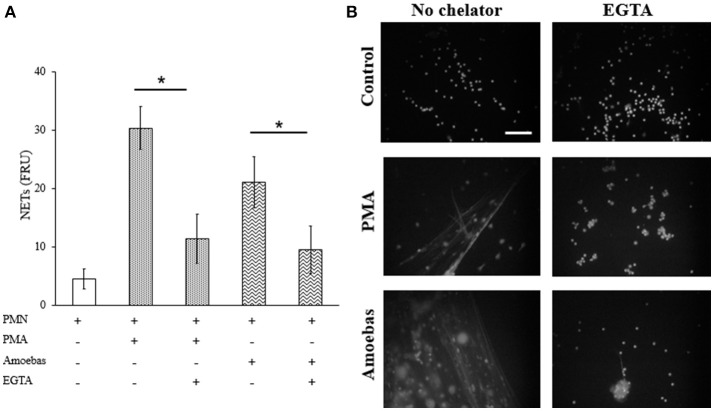
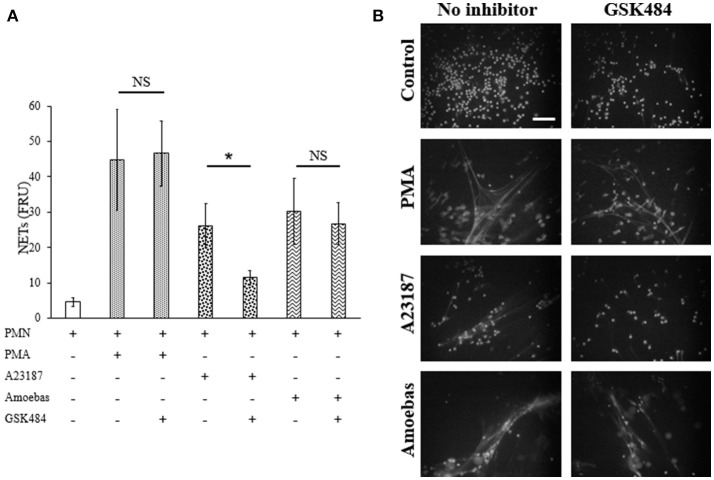
Neutrophil extracellular traps (NETs) are DNA fibers decorated with histones and antimicrobial proteins from cytoplasmic granules released into the extracellular space in a process denominated NETosis. The molecular pathways involved in NETosis have not been completely understood. Classical NETosis mechanisms involve the neutrophil elastase (NE) translocation to nucleus due to the generation of reactive oxygen species (ROS) by NADPH oxidase (NOX2) or the peptidyl arginine deiminase 4 (PAD4) activation in response to an increase in extracellular calcium influx; both mechanisms result in DNA decondensation. Previously, we reported that trophozoites and lipopeptidophosphoglycan from trigger NET release in human neutrophils. Here, we demonstrated in a quantitative manner that NETs were rapidly form upon treatment with amoebic trophozoites and involved both nuclear and mitochondrial DNA (mtDNA). NETs formation depended on amoeba viability as heat-inactivated or paraformaldehyde-fixed amoebas were not able to induce NETs. Interestingly, ROS were not detected in neutrophils during their interaction with amoebas, which could explain why NOX2 inhibition using apocynin did not affect this NETosis. Surprisingly, whereas calcium chelation reduced NET release induced by amoebas, PAD4 inhibition by GSK484 failed to block DNA extrusion but, as expected, abolished NETosis induced by the calcium ionophore A23187. Additionally, NE translocation to the nucleus and serine-protease activity were necessary for NET release caused by amoeba. These data support the idea that trophozoites trigger NETosis by a rapid non-classical mechanism and that different mechanisms of NETs release exist depending on the stimuli used.
中性粒细胞胞外诱捕网(NETs)是一种 DNA 纤维,由细胞质颗粒中的组蛋白和抗菌蛋白修饰而成,在一种称为 NETosis 的过程中释放到细胞外空间。NETosis 涉及的分子途径尚未完全理解。经典的 NETosis 机制涉及中性粒细胞弹性蛋白酶(NE)向细胞核的易位,这是由于 NADPH 氧化酶(NOX2)产生的活性氧(ROS)或肽基精氨酸脱亚氨酶 4(PAD4)的激活,以响应细胞外钙流入的增加;这两种机制都会导致 DNA 去凝聚。此前,我们报道过滋养体和脂肽磷酰葡聚糖可引发人中性粒细胞释放 NET。在这里,我们以定量的方式证明,滋养体处理后会迅速形成 NET,涉及核和线粒体 DNA(mtDNA)。NET 的形成依赖于滋养体的活力,因为热失活或多聚甲醛固定的滋养体不能诱导 NET 的形成。有趣的是,在中性粒细胞与滋养体相互作用过程中未检测到 ROS,这可以解释为什么使用 apocynin 抑制 NOX2 不影响这种 NETosis。令人惊讶的是,虽然钙螯合剂减少了由滋养体诱导的 NET 释放,但 GSK484 抑制 PAD4 并不能阻止 DNA 挤出,但如预期的那样,它会阻止钙离子载体 A23187 诱导的 NETosis。此外,NE 向细胞核的易位和丝氨酸蛋白酶活性是滋养体引起的 NET 释放所必需的。这些数据支持了滋养体通过快速非经典机制触发 NETosis 的观点,并且存在不同的 NETs 释放机制,这取决于所使用的刺激物。