GeneCology Research Centre, School of Science and Engineering University of the Sunshine Coast, Queensland, 4556, Australia.
Department of Biology, Colorado State University, Fort Collins, CO, 80523, USA.
BMC Genomics. 2019 Jan 22;20(1):74. doi: 10.1186/s12864-018-5363-9.
G-protein coupled receptors (GPCRs) are ancient, ubiquitous, constitute the largest family of transducing cell surface proteins, and are integral to cell communication via an array of ligands/neuropeptides. Molt inhibiting hormone (MIH) is a key neuropeptide that controls growth and reproduction in crustaceans by regulating the molt cycle. It inhibits ecdysone biosynthesis by a pair of endocrine glands (Y-organs; YOs) through binding a yet uncharacterized GPCR, which triggers a signalling cascade, leading to inhibition of the ecdysis sequence. When MIH release stops, ecdysone is synthesized and released to the hemolymph. A peak in ecdysone titer is followed by a molting event. A transcriptome of the blackback land crab Gecarcinus lateralis YOs across molt was utilized in this study to curate the list of GPCRs and their expression in order to better assess which GPCRs are involved in the molt process.
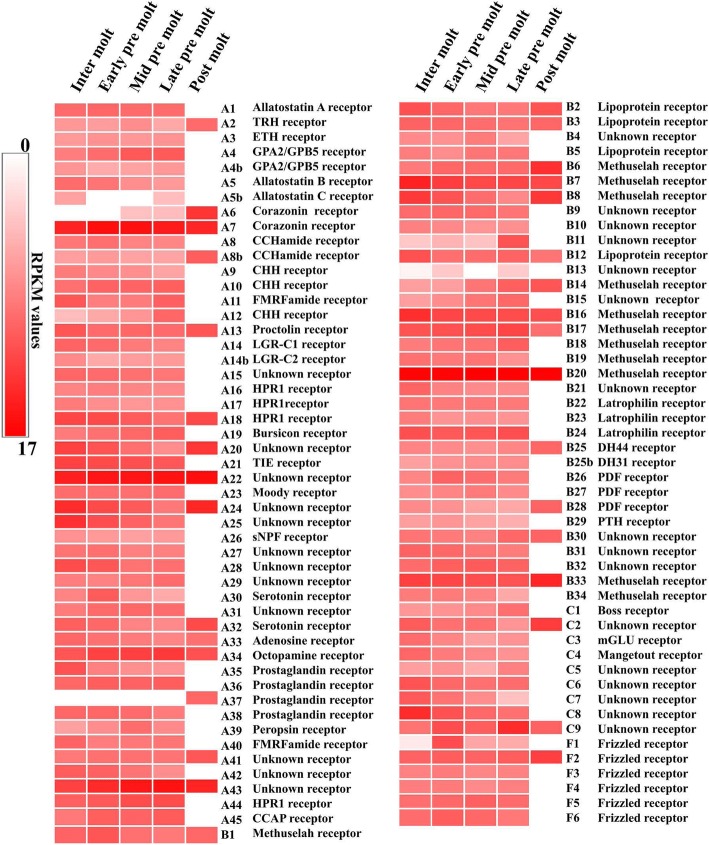
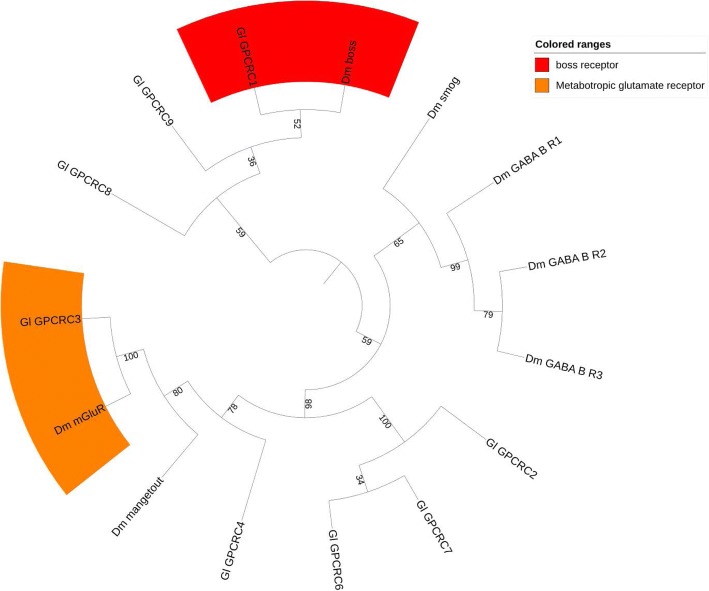
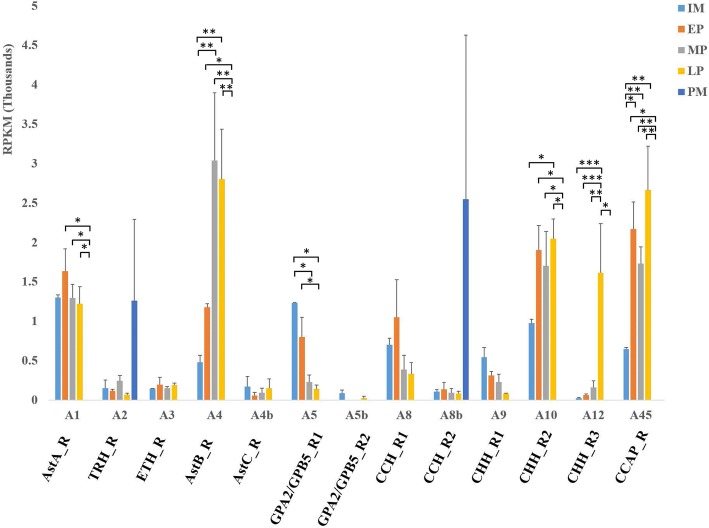
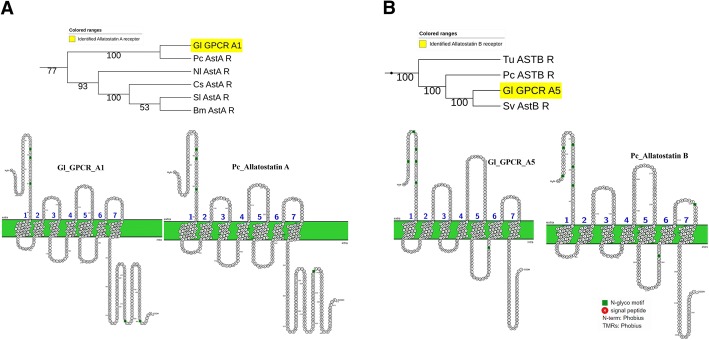
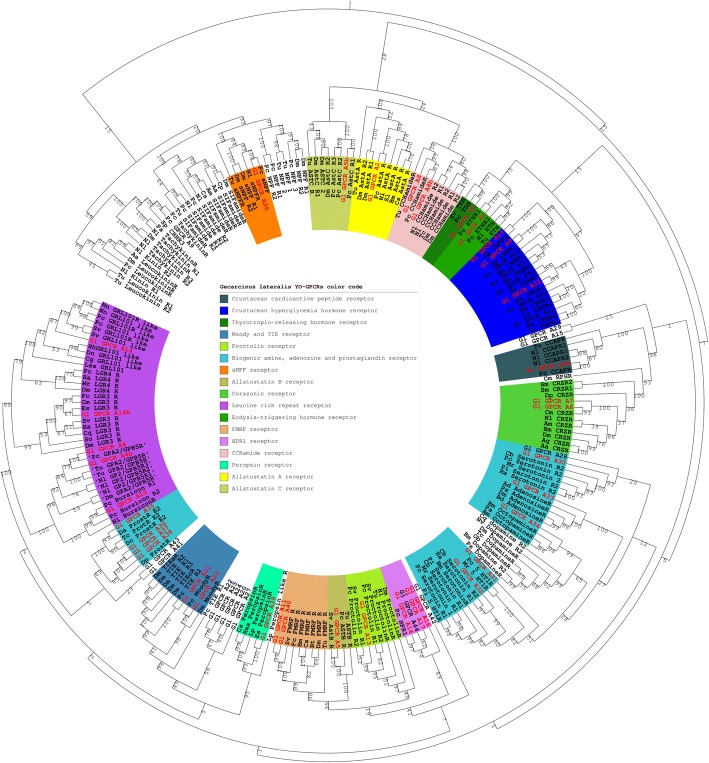
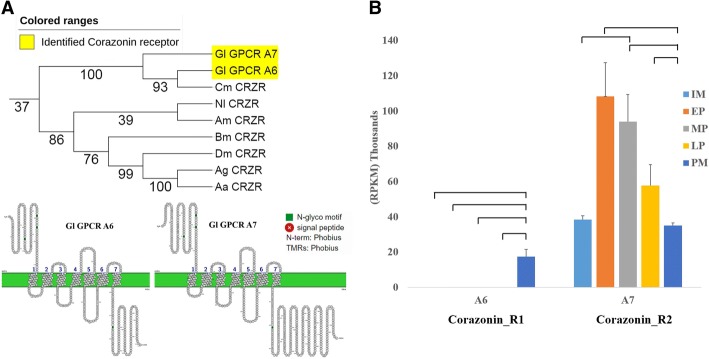
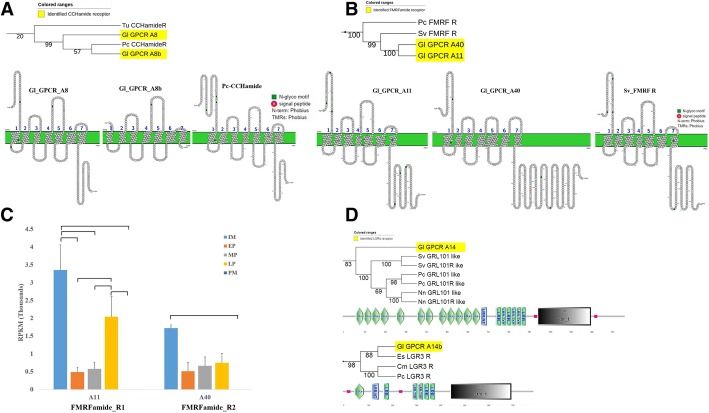
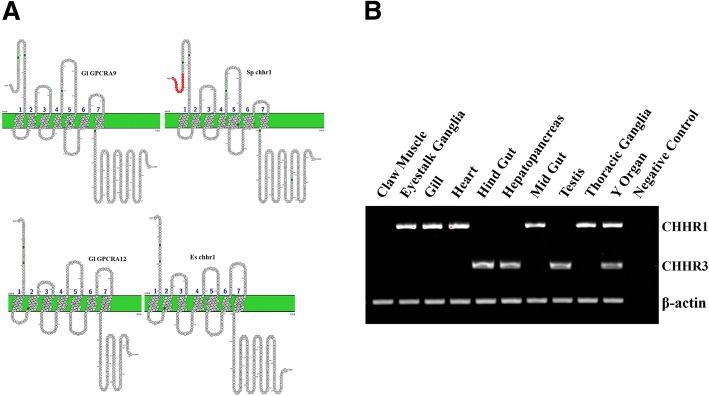
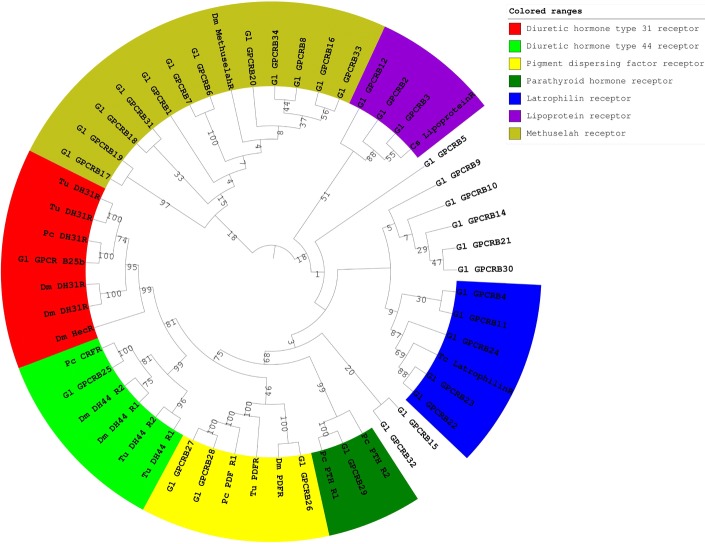
Ninety-nine G. lateralis putative GPCRs were obtained by screening the YO transcriptome against the Pfam database. Phylogenetic analysis classified 49 as class A (Rhodopsin-like receptor), 35 as class B (Secretin receptor), and 9 as class C (metabotropic glutamate). Further phylogenetic analysis of class A GPCRs identified neuropeptide GPCRs, including those for Allatostatin A, Allatostatin B, Bursicon, CCHamide, FMRFamide, Proctolin, Corazonin, Relaxin, and the biogenic amine Serotonin. Three GPCRs clustered with recently identified putative CHH receptors (CHHRs), and differential expression over the molt cycle suggests that they are associated with ecdysteroidogenesis regulation. Two putative Corazonin receptors showed much higher expression in the YOs compared with all other GPCRs, suggesting an important role in molt regulation.
Molting requires an orchestrated regulation of YO ecdysteroid synthesis by multiple neuropeptides. In this study, we curated a comprehensive list of GPCRs expressed in the YO and followed their expression across the molt cycle. Three putative CHH receptors were identified and could include an MIH receptor whose activation negatively regulates molting. Orthologs of receptors that were found to be involved in molt regulation in insects were also identified, including LGR3 and Corazonin receptor, the latter of which was expressed at much higher level than all other receptors, suggesting a key role in YO regulation.
G 蛋白偶联受体(GPCRs)是古老而普遍存在的,构成了最大的细胞表面蛋白转导家族,通过一系列配体/神经肽参与细胞通讯。蜕皮抑制激素(MIH)是一种关键的神经肽,通过一对内分泌腺(性腺;YOs)控制甲壳类动物的生长和繁殖,通过结合尚未表征的 GPCR 抑制蜕皮甾酮的生物合成,触发信号级联反应,从而抑制蜕皮序列。当 MIH 释放停止时,蜕皮甾酮被合成并释放到血淋巴中。当蜕皮甾酮浓度达到峰值时,就会发生蜕皮事件。本研究利用黑背地蟹 Gecarcinus lateralis YOs 的转录组来整理 GPCR 及其在蜕皮过程中的表达列表,以更好地评估哪些 GPCR 参与蜕皮过程。
通过将 YO 转录组与 Pfam 数据库进行筛选,获得了 99 个 G. lateralis 假定 GPCR。系统发育分析将 49 个分类为 A 类(视紫红质样受体),35 个分类为 B 类(分泌素受体),9 个分类为 C 类(代谢型谷氨酸受体)。对 A 类 GPCR 的进一步系统发育分析鉴定了神经肽 GPCR,包括 Allatostatin A、Allatostatin B、Bursicon、CCHamide、FMRFamide、Proctolin、Corazonin、Relaxin 和生物胺血清素。三个 GPCR 与最近鉴定的假定 CHH 受体(CHHRs)聚类,并且在蜕皮周期中的差异表达表明它们与蜕皮甾酮生成的调节有关。两个假定的 Corazonin 受体在 YOs 中的表达明显高于所有其他 GPCR,表明它们在蜕皮调节中具有重要作用。
蜕皮需要多种神经肽协调调节 YOs 蜕皮甾酮的合成。在这项研究中,我们整理了一个在 YO 中表达的 GPCR 综合列表,并跟踪了它们在蜕皮周期中的表达。鉴定了三个假定的 CHH 受体,其激活可能负调节蜕皮。还鉴定了在昆虫中发现参与蜕皮调节的受体的同源物,包括 LGR3 和 Corazonin 受体,后者的表达水平明显高于所有其他受体,表明其在 YO 调节中具有关键作用。