Department of Microbiology, Harvard Medical School, Boston, Massachusetts, USA.
Department of Microbiology, Harvard Medical School, Boston, Massachusetts, USA
mBio. 2019 Jan 22;10(1):e02621-18. doi: 10.1128/mBio.02621-18.
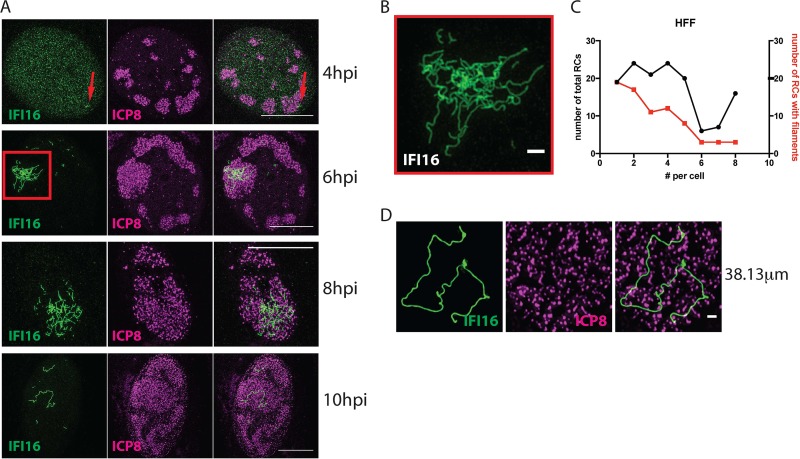
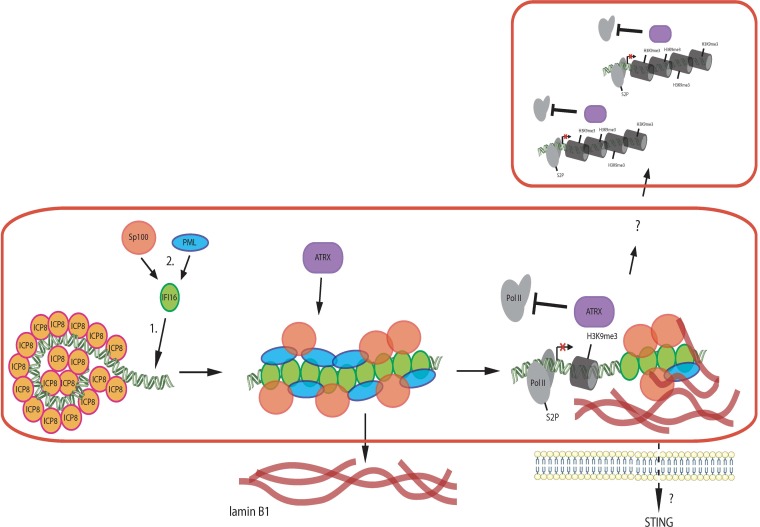
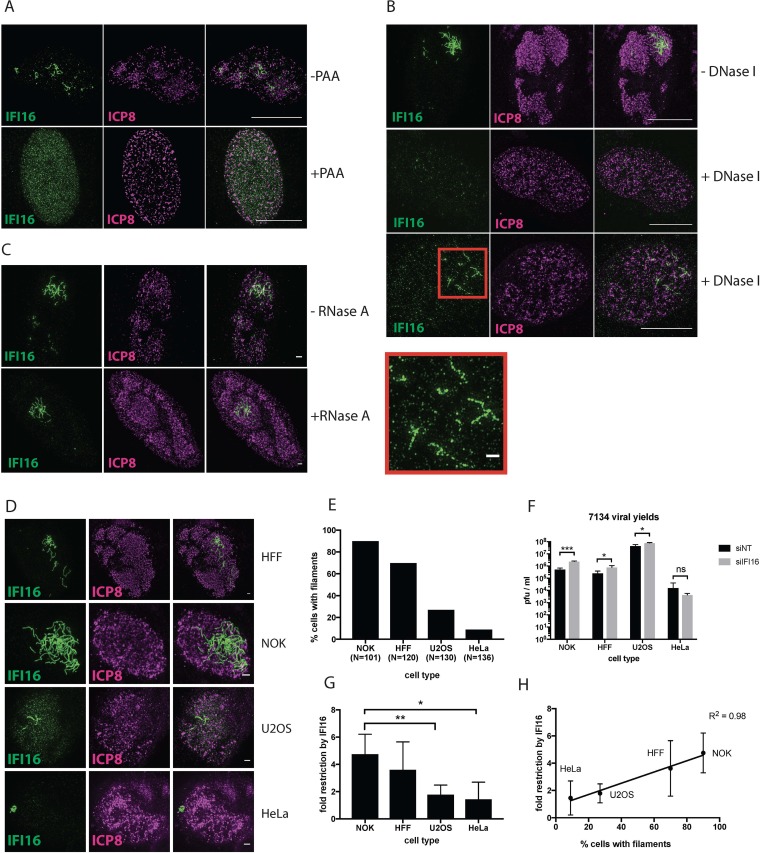
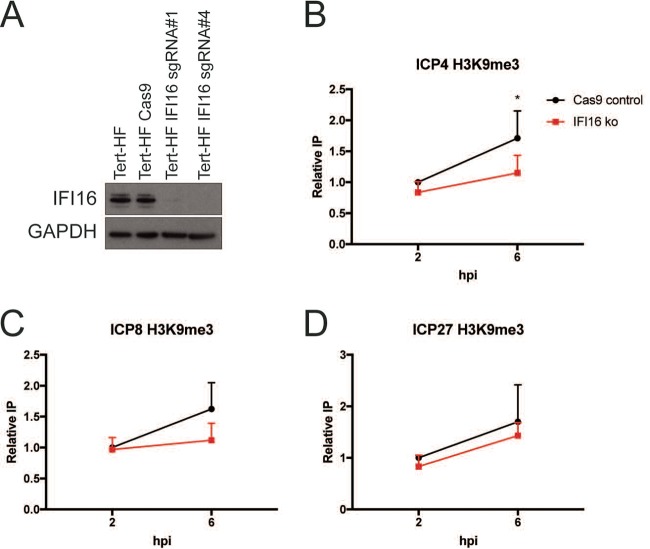
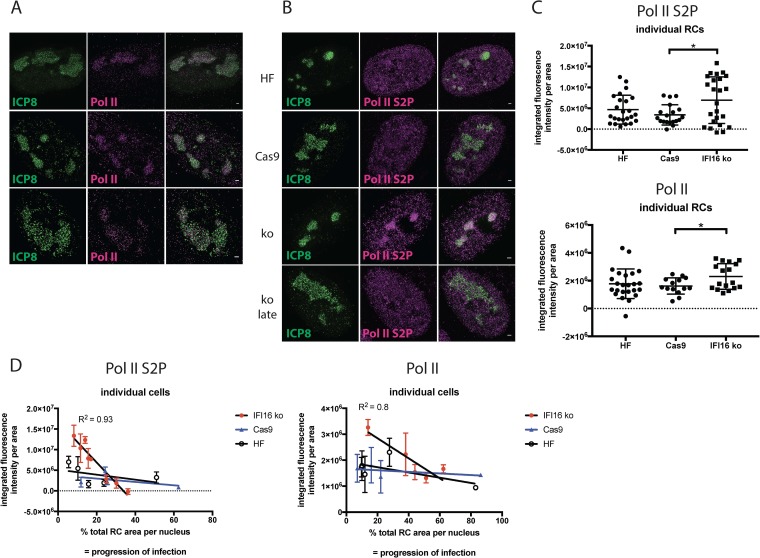
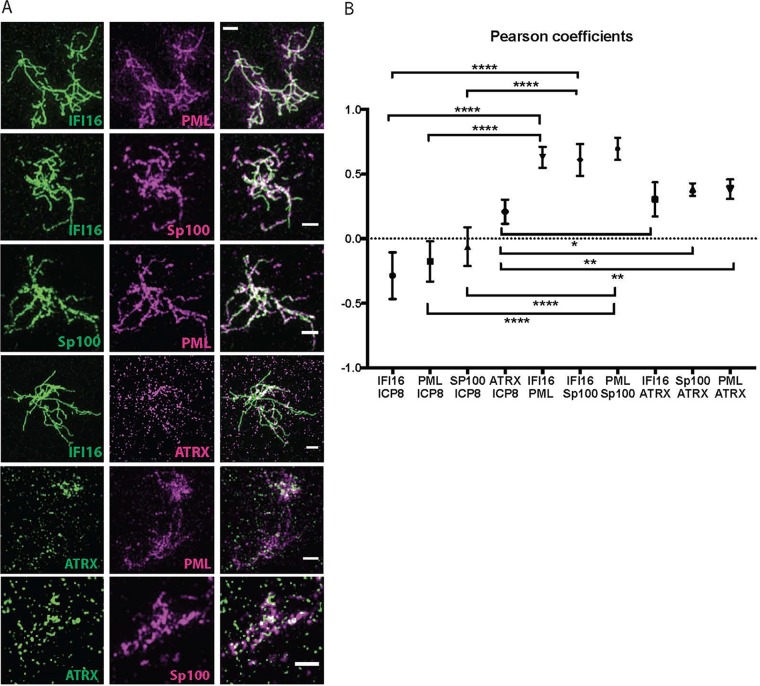
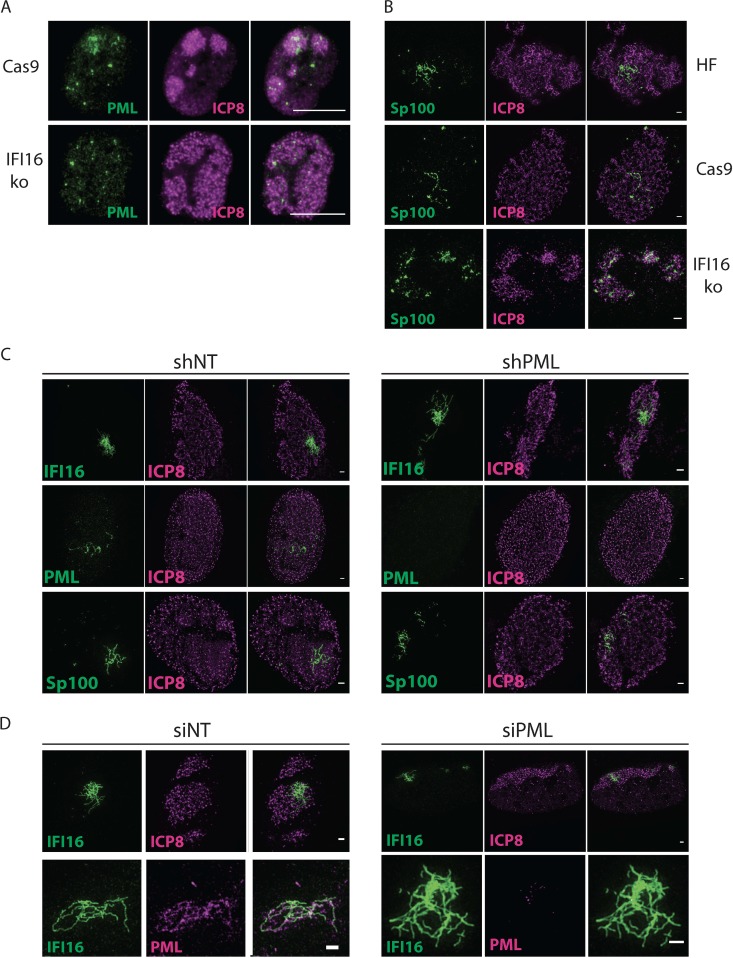
Several host cell nuclear factors are known to restrict herpes simplex virus 1 (HSV-1) replication, but their mechanisms of action remain to be defined. Interferon-inducible protein 16 (IFI16) and the nuclear domain 10-associated proteins, such as promyelocytic leukemia (PML) protein, localize to input viral genomes, but they are also capable of restricting progeny viral transcription. In this study, we used structured illumination microscopy to show that after HSV DNA replication, IFI16 forms nuclear filamentous structures on DNA within a subset of nuclear replication compartments in HSV-1 ICP0-null mutant virus-infected human cells. The ability to form filaments in different cell types correlates with the efficiency of restriction, and the kinetics of filament formation and epigenetic changes are similar. Thus, both are consistent with the filamentous structures being involved in epigenetic silencing of viral progeny DNA. IFI16 filaments recruit other restriction factors, including PML, Sp100, and ATRX, to aid in the restriction. Although the filaments are only in a subset of the replication compartments, IFI16 reduces the levels of elongation-competent RNA polymerase II (Pol II) in all replication compartments. Therefore, we propose that IFI16 filaments with associated restriction factors that form in replication compartments constitute a "restrictosome" structure that signals in and to silence the progeny viral DNA throughout the infected cell nucleus. The IFI16 filamentous structure may constitute the first known nuclear supramolecular organizing center for signaling in the cell nucleus. Mammalian cells exhibit numerous strategies to recognize and contain viral infections. The best-characterized antiviral responses are those that are induced within the cytosol by receptors that activate interferon responses or shut down translation. Antiviral responses also occur in the nucleus, yet these intranuclear innate immune responses are poorly defined at the receptor-proximal level. In this study, we explored the ability of cells to restrict infection by assembling viral DNA into transcriptionally silent heterochromatin within the nucleus. We found that the IFI16 restriction factor forms filaments on DNA within infected cells. These filaments recruit antiviral restriction factors to prevent viral replication in various cell types. Mechanistically, IFI16 filaments inhibit the recruitment of RNA polymerase II to viral genes. We propose that IFI16 filaments with associated restriction factors constitute a "restrictosome" structure that can signal to other parts of the nucleus where foreign DNA is located that it should be silenced.
几种宿主细胞核因子已被证实可限制单纯疱疹病毒 1(HSV-1)的复制,但它们的作用机制仍有待确定。干扰素诱导蛋白 16(IFI16)和核域 10 相关蛋白,如早幼粒细胞白血病(PML)蛋白,定位于输入病毒基因组,但它们也能够限制病毒转录产物的产生。在这项研究中,我们使用结构照明显微镜显示,在 HSV DNA 复制后,IFI16 在 HSV-1 ICP0 缺失突变病毒感染的人细胞中,在一小部分核复制隔间内的 DNA 上形成核丝状结构。在不同细胞类型中形成丝状结构的能力与限制效率相关,并且丝状结构的形成动力学和表观遗传变化相似。因此,这两者都表明丝状结构参与了病毒后代 DNA 的表观遗传沉默。IFI16 丝状体募集其他限制因子,包括 PML、Sp100 和 ATRX,以辅助限制。尽管丝状结构仅存在于一部分复制隔间中,但 IFI16 会降低所有复制隔间中具有延伸能力的 RNA 聚合酶 II(Pol II)的水平。因此,我们提出,与形成在复制隔间中的限制因子相关的 IFI16 丝状体构成了一个“限制体”结构,该结构在 和 中发出信号,以沉默整个感染细胞核中的病毒后代 DNA。IFI16 丝状结构可能构成了细胞核中信号转导的第一个已知的核超分子组织中心。哺乳动物细胞表现出多种识别和包含病毒感染的策略。最具特征的抗病毒反应是那些在细胞质中由激活干扰素反应或抑制翻译的受体诱导的反应。抗病毒反应也发生在细胞核中,但这些核内先天免疫反应在受体近端水平上还没有得到很好的定义。在这项研究中,我们探索了细胞将病毒 DNA 组装成转录沉默的异染色质从而限制感染的能力。我们发现,IFI16 限制因子在感染细胞的 DNA 上形成丝状体。这些丝状体募集抗病毒限制因子,以防止各种细胞类型中的病毒复制。从机制上讲,IFI16 丝状体抑制 RNA 聚合酶 II 向病毒基因的募集。我们提出,与相关限制因子结合的 IFI16 丝状体构成了一种“限制体”结构,可以向位于细胞核中其他位置的外源 DNA 发出信号,表明其应被沉默。