Kwon Hyun Jung, Jung Hyo Young, Hahn Kyu Ri, Kim Woosuk, Kim Jong Whi, Yoo Dae Young, Yoon Yeo Sung, Hwang In Koo, Kim Dae Won
Department of Biochemistry and Molecular Biology, Research Institute of Oral Sciences, College of Dentistry, Gangneung-Wonju National University, Gangneung, Korea.
Department of Anatomy and Cell Biology, College of Veterinary Medicine, and Research Institute for Veterinary Science, Seoul National University, Seoul, Korea.
Lab Anim Res. 2018 Dec;34(4):239-247. doi: 10.5625/lar.2018.34.4.239. Epub 2018 Dec 31.
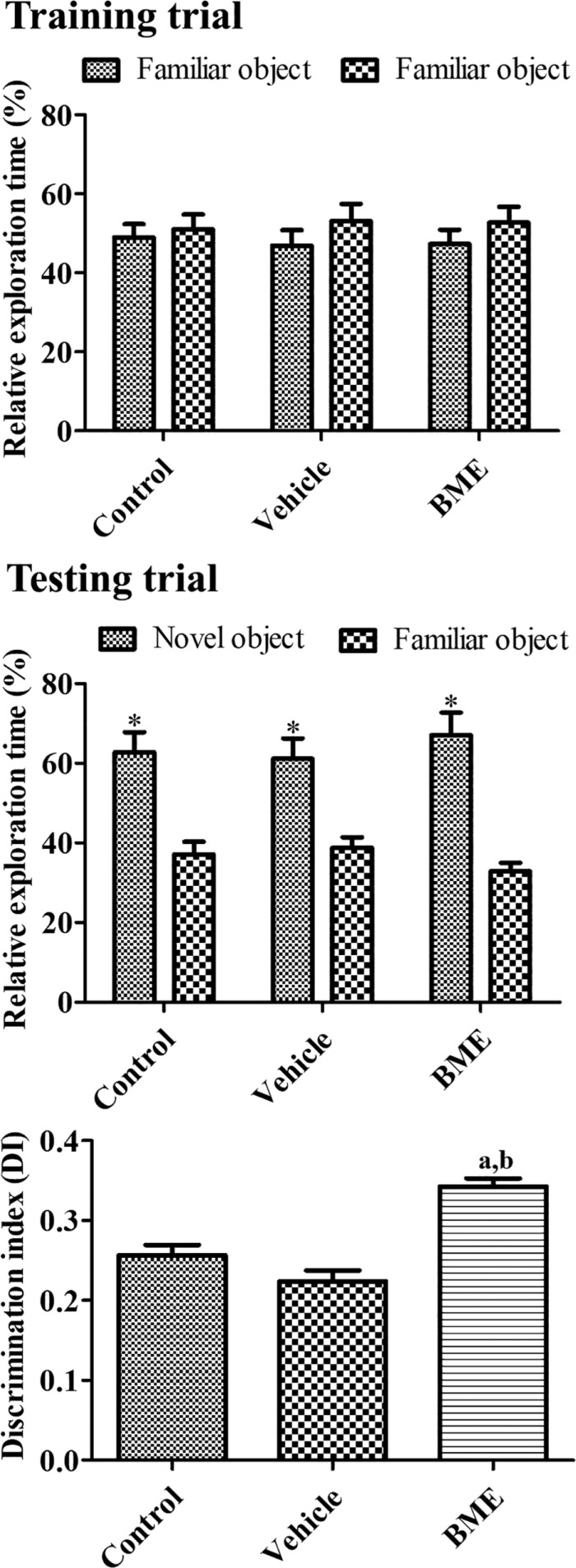
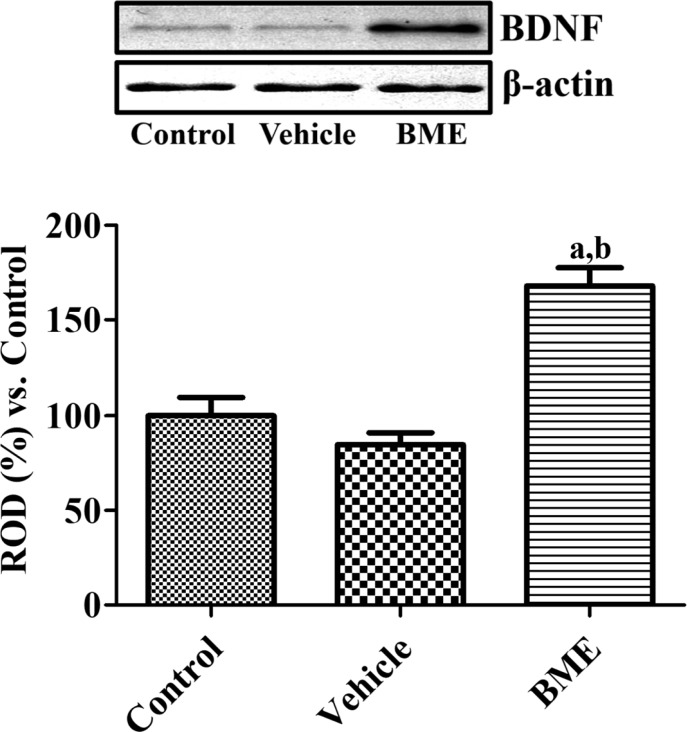
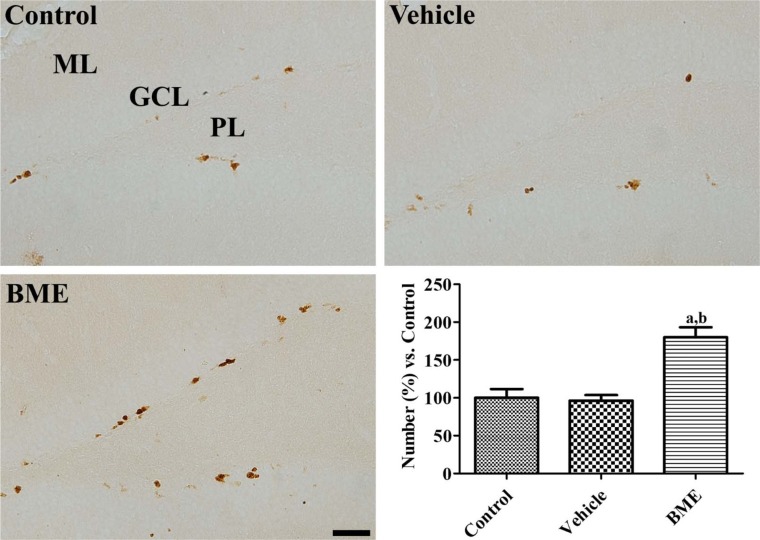
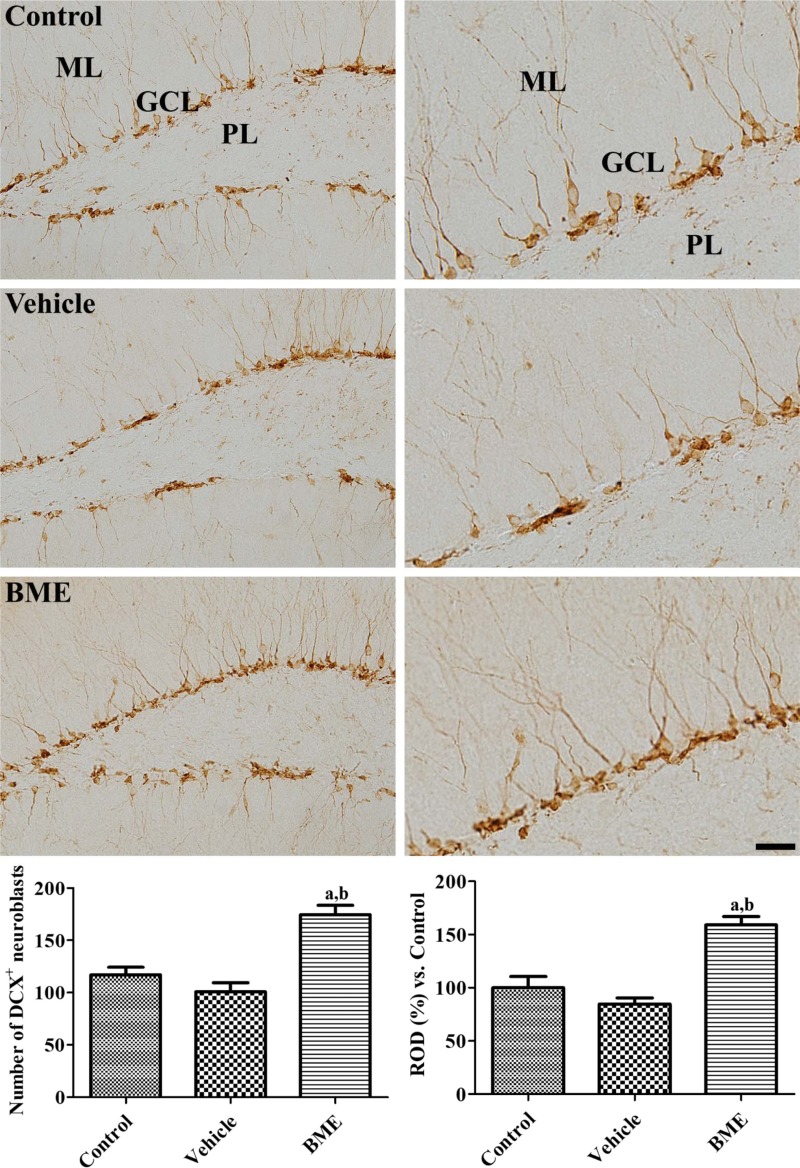
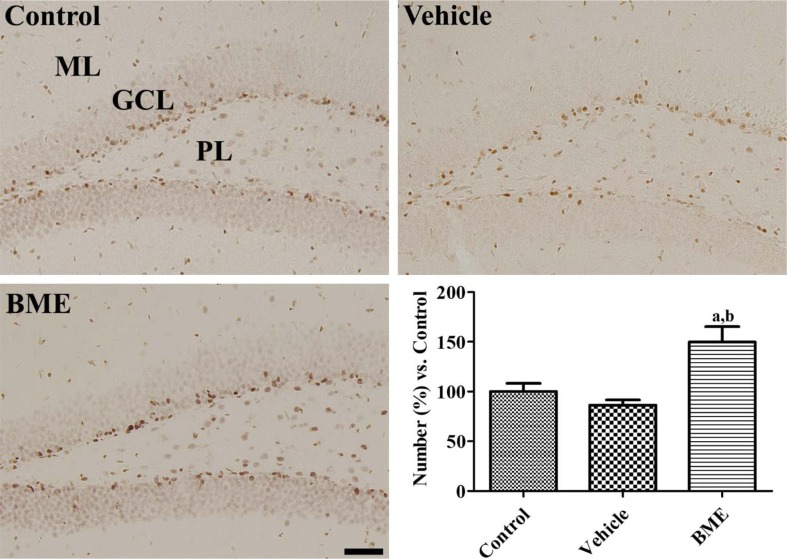
is a medicinal plant with a long history of use in Ayurveda, especially in the treatment of poor memory and cognitive deficits. In the present study, we hypothesized that extract (BME) can improve memory increased cell proliferation and neuroblast differentiation in the dentate gyrus. BME was administered to 7-week-old mice once a day for 4 weeks and a novel object recognition memory test was performed. Thereafter, the mice were euthanized followed by immunohistochemistry analysis for Ki67, doublecortin (DCX), and phosphorylated cAMP response element-binding protein (CREB), and western blot analysis of brain-derived neurotrophic factor (BDNF). BME-treated mice showed moderate increases in the exploration of new objects when compared with that of familiar objects, leading to a significant higher discrimination index compared with vehicle-treated mice. Ki67 and DCX immunohistochemistry showed a facilitation of cell proliferation and neuroblast differentiation following the administration of BME in the dentate gyrus. In addition, administration of BME significantly elevated the BDNF protein expression in the hippocampal dentate gyrus, and increased CREB phosphorylation in the dentate gyrus. These data suggest that BME improves novel object recognition by increasing the cell proliferation and neuroblast differentiation in the dentate gyrus, and this may be closely related to elevated levels of BDNF and CREB phosphorylation in the dentate gyrus.
是一种在阿育吠陀医学中有悠久使用历史的药用植物,尤其用于治疗记忆力减退和认知缺陷。在本研究中,我们假设提取物(BME)可以改善记忆力,增加齿状回中的细胞增殖和神经母细胞分化。将BME每天一次给予7周龄小鼠,持续4周,并进行新物体识别记忆测试。此后,对小鼠实施安乐死,然后进行Ki67、双皮质素(DCX)和磷酸化环磷酸腺苷反应元件结合蛋白(CREB)的免疫组织化学分析,以及脑源性神经营养因子(BDNF)的蛋白质印迹分析。与对照小鼠相比,BME处理的小鼠对新物体的探索有适度增加,导致其辨别指数显著高于对照小鼠。Ki67和DCX免疫组织化学显示,在齿状回中给予BME后,细胞增殖和神经母细胞分化得到促进。此外,给予BME显著提高了海马齿状回中BDNF蛋白的表达,并增加了齿状回中CREB的磷酸化。这些数据表明,BME通过增加齿状回中的细胞增殖和神经母细胞分化来改善新物体识别,这可能与齿状回中BDNF水平升高和CREB磷酸化密切相关。