Yokoji-Takeuchi Mai, Tabeta Koichi, Takahashi Naoki, Arimatsu Kei, Miyazawa Haruna, Matsuda-Matsukawa Yumi, Sato Keisuke, Yamada Miki, Yamazaki Kazuhisa
Division of Periodontology, Department of Oral Biological Science, Niigata University Graduate School of Medical and Dental Sciences, Niigata, Japan.
Research Unit for Oral-Systemic Connection, Division of Oral Science for Health Promotion, Niigata University Graduate School of Medical and Dental Sciences, Niigata, Japan.
Heliyon. 2019 Jan 9;5(1):e01111. doi: 10.1016/j.heliyon.2018.e01111. eCollection 2019 Jan.
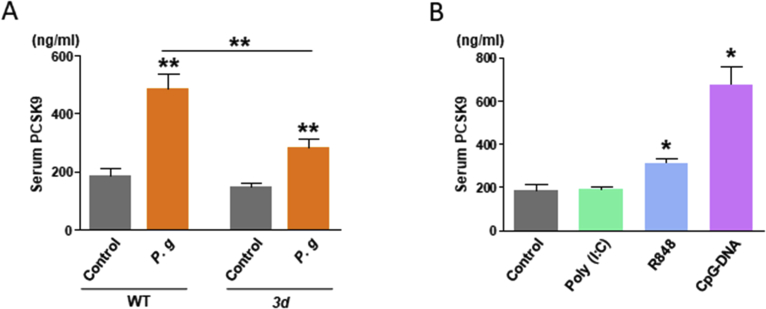
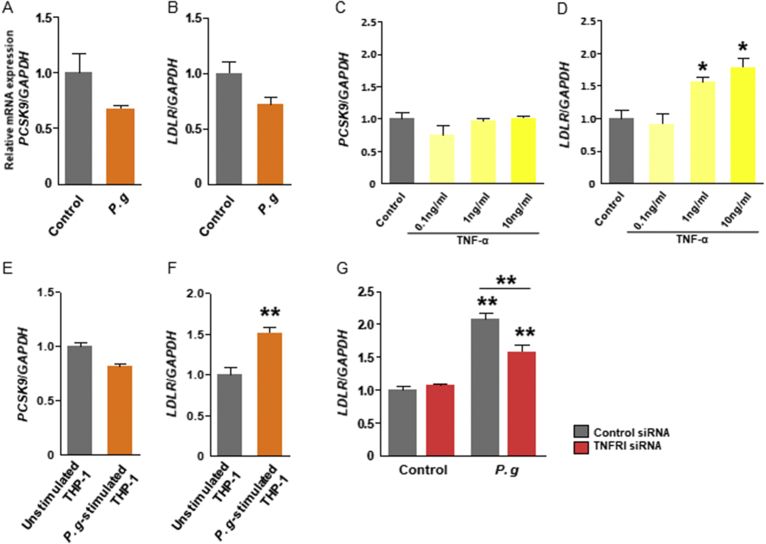
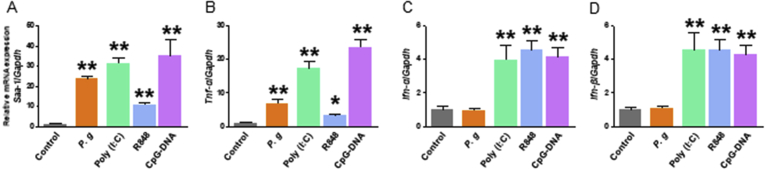
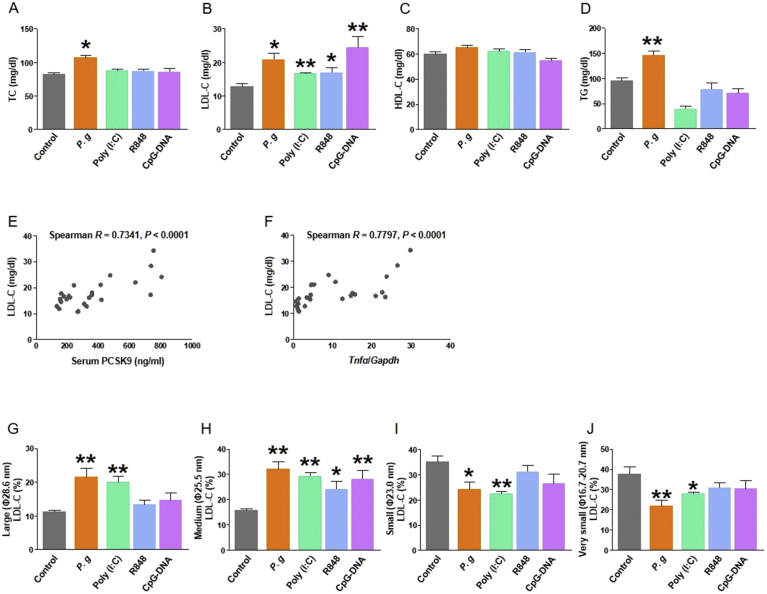
Pro-protein convertase subtilisin/kexin type 9 (PCSK9), a secreted serine protease, regulates serum low-density lipoprotein (LDL) cholesterol levels by targeting the degradation of LDL receptor (LDLR) in the liver. Although previous reports describe elevated levels of PCSK9 in patients with periodontitis, the mechanisms that trigger this increase in serum PCSK9 levels and induce the related inflammatory response remain unclear. In an -deficient mouse of infection, nucleic acid antigen recognition via Toll-like receptors was found to promote PCSK9 production, suggesting an indirect role for tumor necrosis factor-α as an inducer of PCSK9 in contrast to that reported in previous studies. Furthermore, PCSK9 production was independent of the TIR domain-containing adapter-inducing interferon-β-dependent signaling pathway. These results indicate that changes in LDLR expression precede an increase in the serum PCSK9 level in the context of an infectious disease such as periodontitis.
前蛋白转化酶枯草溶菌素/kexin 9型(PCSK9)是一种分泌型丝氨酸蛋白酶,通过靶向肝脏中低密度脂蛋白受体(LDLR)的降解来调节血清低密度脂蛋白(LDL)胆固醇水平。尽管先前的报告描述了牙周炎患者中PCSK9水平升高,但触发血清PCSK9水平升高并诱导相关炎症反应的机制仍不清楚。在感染缺陷小鼠中,发现通过Toll样受体进行的核酸抗原识别可促进PCSK9的产生,这表明肿瘤坏死因子-α作为PCSK9诱导剂的间接作用与先前研究中报道的相反。此外,PCSK9的产生独立于含TIR结构域的衔接蛋白诱导干扰素-β依赖性信号通路。这些结果表明,在诸如牙周炎等传染病的背景下,LDLR表达的变化先于血清PCSK9水平的升高。