Department of Psychiatry, University of Pittsburgh, Pittsburgh, PA 15213, USA; Center for Neuroscience, University of Pittsburgh, Pittsburgh, PA 15260, USA; Center for the Neural Basis of Cognition, University of Pittsburgh, Pittsburgh, PA 15213, USA.
Department of Psychiatry, University of Pittsburgh, Pittsburgh, PA 15213, USA; Center for Neuroscience, University of Pittsburgh, Pittsburgh, PA 15260, USA.
Cell Rep. 2019 Jan 22;26(4):1010-1020.e5. doi: 10.1016/j.celrep.2018.12.105.
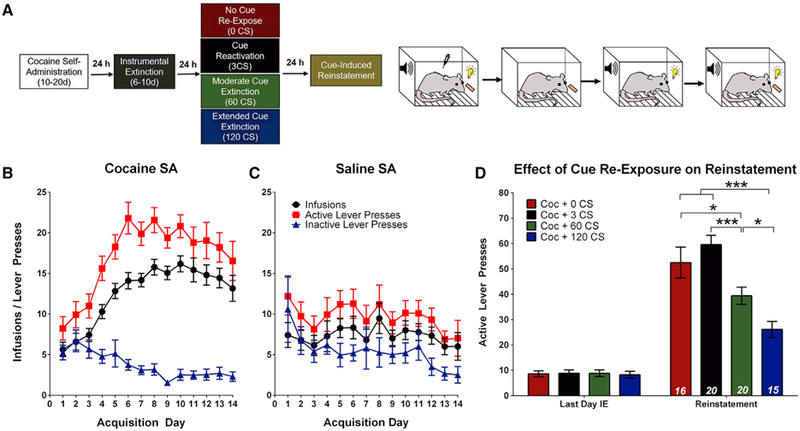
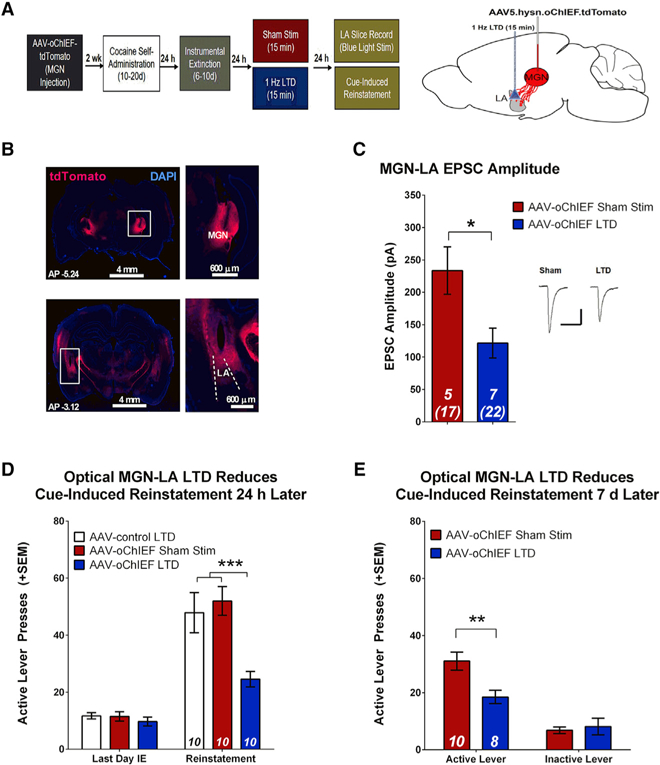
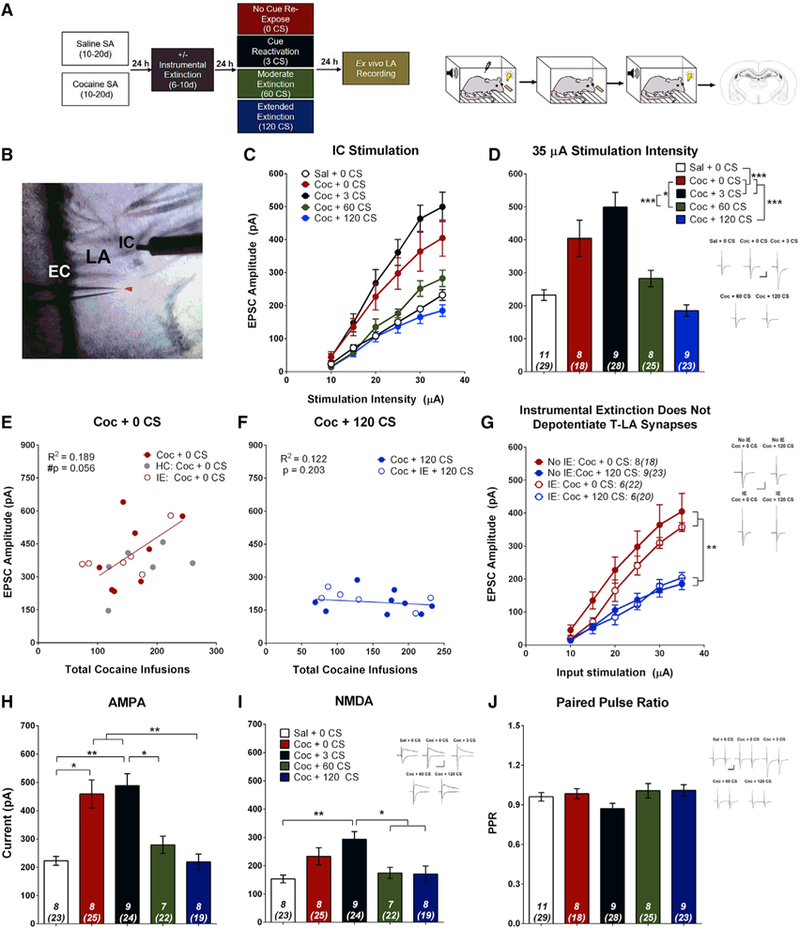
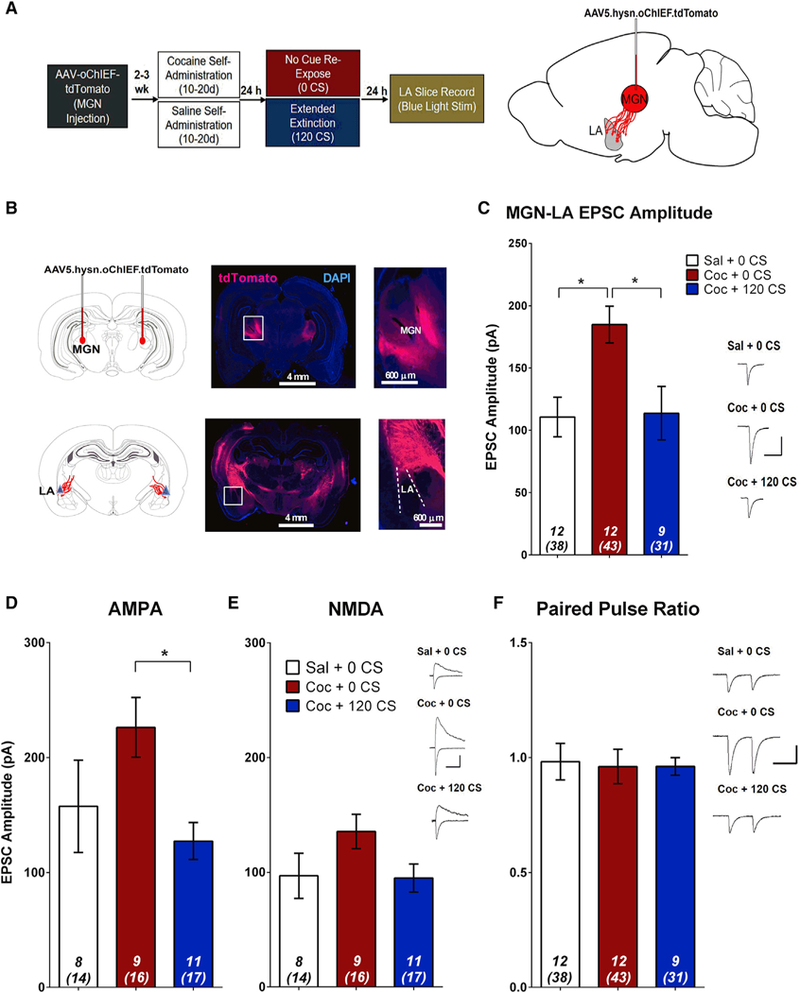
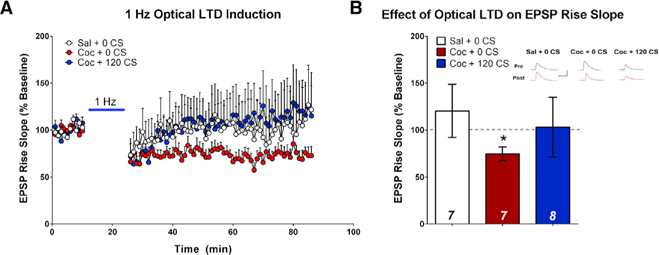
Repeated drug use has long-lasting effects on plasticity throughout the brain's reward and memory systems. Environmental cues that are associated with drugs of abuse can elicit craving and relapse, but the neural circuits responsible for driving drug-cue-related behaviors have not been well delineated, creating a hurdle for the development of effective relapse prevention therapies. In this study, we used a cocaine+cue self-administration paradigm followed by cue re-exposure to establish that the strength of the drug cue association corresponds to the strength of synapses between the medial geniculate nucleus (MGN) of the thalamus and the lateral amygdala (LA). Furthermore, we demonstrate, via optogenetically induced LTD of MGN-LA synapses, that reversing cocaine-induced potentiation of this pathway is sufficient to inhibit cue-induced relapse-like behavior.
重复使用药物会对大脑奖励和记忆系统的可塑性产生持久影响。与滥用药物相关的环境线索会引起渴望和复发,但负责驱动与药物线索相关行为的神经回路尚未得到很好的描述,这为开发有效的预防复发治疗方法带来了障碍。在这项研究中,我们使用可卡因+线索自我给药范式,然后重新暴露于线索,以确定药物线索关联的强度与丘脑内侧膝状体核(MGN)和外侧杏仁核(LA)之间突触的强度相对应。此外,我们通过光遗传学诱导 MGN-LA 突触 LTD 证明,逆转可卡因诱导的该通路的增强足以抑制线索诱导的类似复发的行为。