Wan Xun, Torregrossa Mary M, Sanchez Hayde, Nairn Angus C, Taylor Jane R
Department of Psychiatry, Yale University School of Medicine, New Haven, Connecticut, United States of America.
PLoS One. 2014 Sep 26;9(9):e107359. doi: 10.1371/journal.pone.0107359. eCollection 2014.
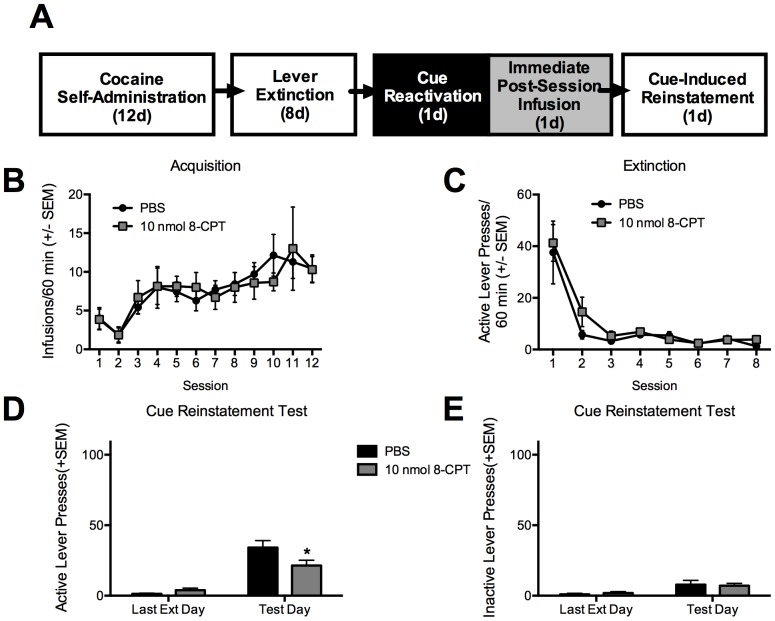
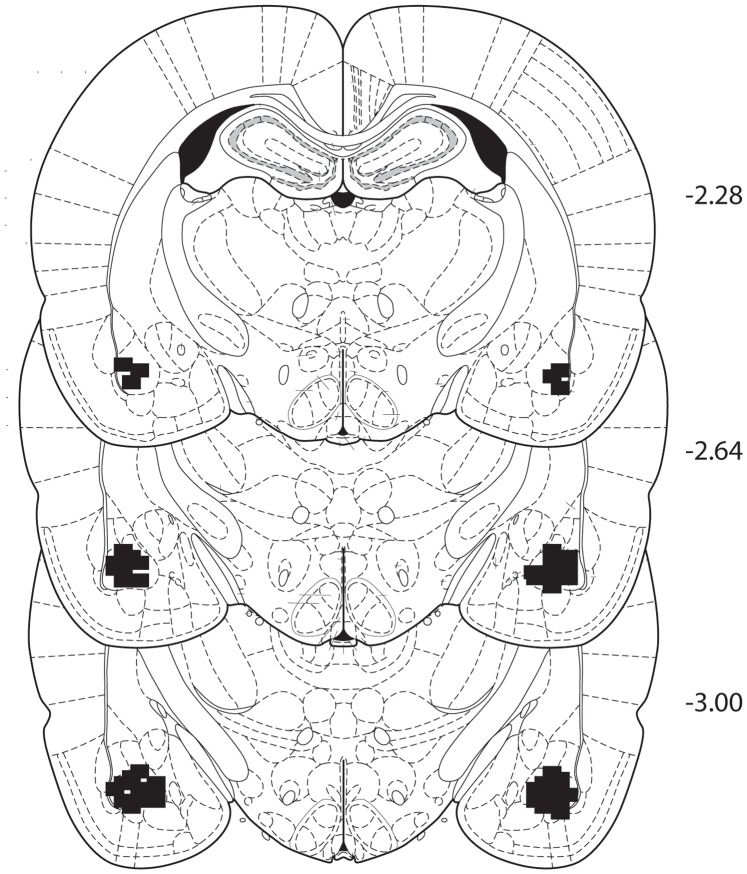
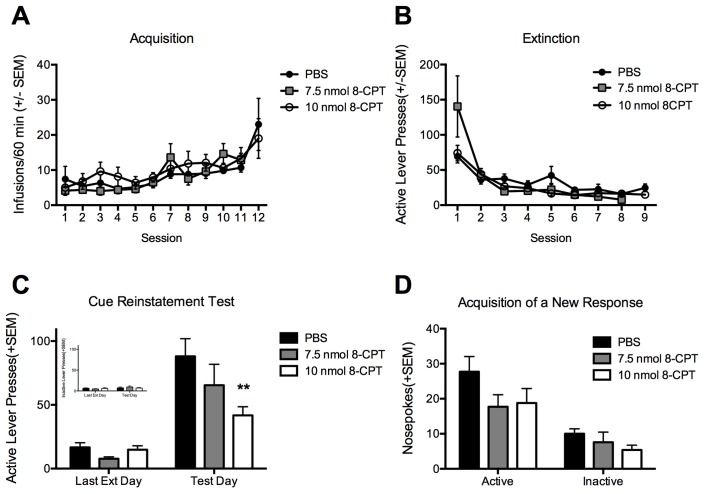
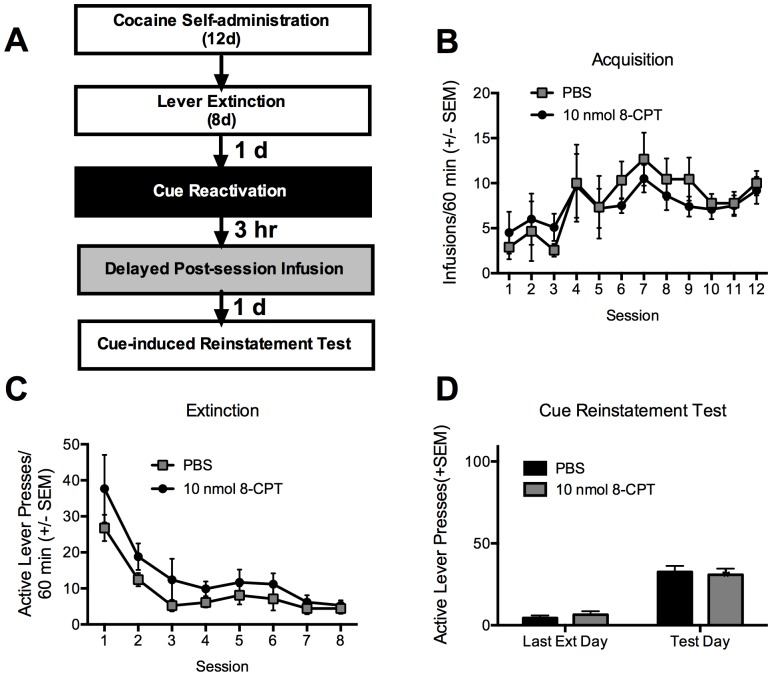
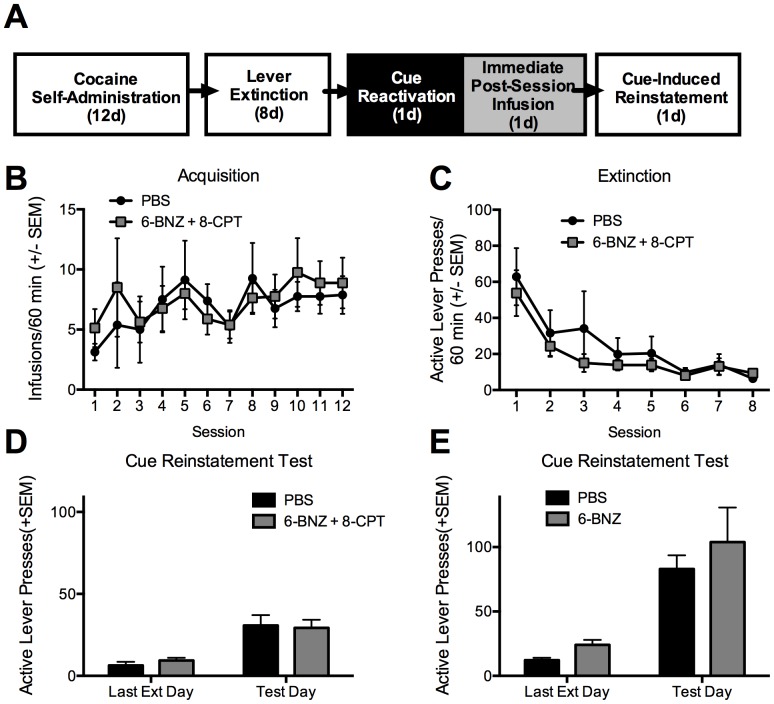
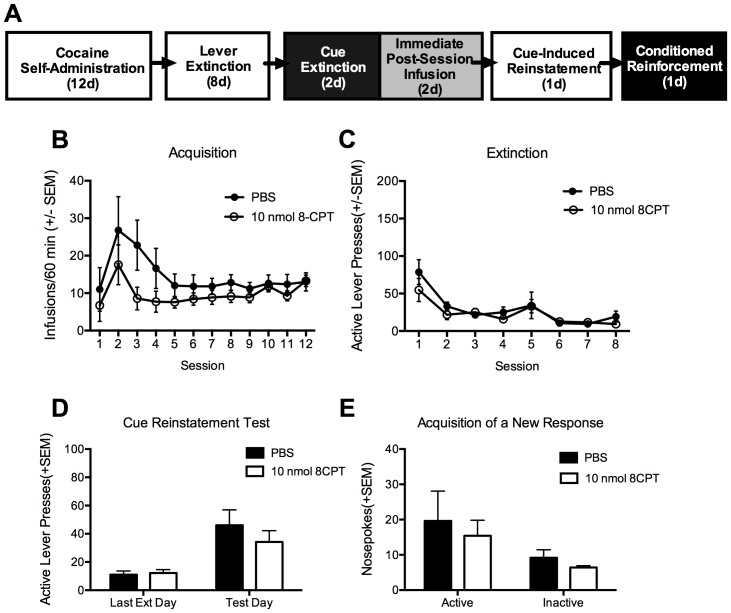
The intracellular mechanisms underlying memory reconsolidation critically involve cAMP signaling. These events were originally attributed to PKA activation by cAMP, but the identification of Exchange Protein Activated by cAMP (Epac), as a distinct mediator of cAMP signaling, suggests that cAMP-regulated processes that subserve memory reconsolidation are more complex. Here we investigated how activation of Epac with 8-pCPT-cAMP (8-CPT) impacts reconsolidation of a memory that had been associated with cocaine self-administration. Rats were trained to lever press for cocaine on an FR-1 schedule, in which each cocaine delivery was paired with a tone+light cue. Lever pressing was then extinguished in the absence of cue presentations and cocaine delivery. Following the last day of extinction, rats were put in a novel context, in which the conditioned cue was presented to reactivate the cocaine-associated memory. Immediate bilateral infusions of 8-CPT into the basolateral amygdala (BLA) following reactivation disrupted subsequent cue-induced reinstatement in a dose-dependent manner, and modestly reduced responding for conditioned reinforcement. When 8-CPT infusions were delayed for 3 hours after the cue reactivation session or were given after a cue extinction session, no effect on cue-induced reinstatement was observed. Co-administration of 8-CPT and the PKA activator 6-Bnz-cAMP (10 nmol/side) rescued memory reconsolidation while 6-Bnz alone had no effect, suggesting an antagonizing interaction between the two cAMP signaling substrates. Taken together, these studies suggest that activation of Epac represents a parallel cAMP-dependent pathway that can inhibit reconsolidation of cocaine-cue memories and reduce the ability of the cue to produce reinstatement of cocaine-seeking behavior.
记忆再巩固背后的细胞内机制关键涉及环磷酸腺苷(cAMP)信号传导。这些事件最初归因于cAMP对蛋白激酶A(PKA)的激活,但环磷酸腺苷激活的交换蛋白(Epac)作为cAMP信号传导的一种独特介质的发现表明,有助于记忆再巩固的cAMP调节过程更为复杂。在此,我们研究了用8-对氯苯硫基-cAMP(8-CPT)激活Epac如何影响与可卡因自我给药相关记忆的再巩固。大鼠按固定比率1(FR-1)程序接受训练,通过按压杠杆获取可卡因,每次可卡因给药都与一个音调+灯光提示配对。然后在无提示呈现和可卡因给药的情况下使杠杆按压行为消退。在消退的最后一天后,将大鼠置于一个新环境中,呈现条件提示以重新激活与可卡因相关的记忆。在重新激活后立即向基底外侧杏仁核(BLA)双侧注射8-CPT,以剂量依赖的方式破坏了随后提示诱导的复吸,并适度降低了对条件强化的反应。当在提示重新激活 session 后3小时延迟注射8-CPT或在提示消退 session 后注射时,未观察到对提示诱导复吸的影响。联合给予8-CPT和PKA激活剂6-苄基-cAMP(每侧10 nmol)可挽救记忆再巩固,而单独给予6-苄基-cAMP则无效果,这表明两种cAMP信号底物之间存在拮抗相互作用。综上所述,这些研究表明Epac的激活代表了一条平行的cAMP依赖性途径,该途径可抑制可卡因-提示记忆的再巩固,并降低提示产生可卡因寻求行为复吸的能力。