Metastasis Research Laboratory, GIGA-Cancer, University of Liège (ULiège), Pathology Tour, +4 level, Building 23, Avenue Hippocrate 13, 4000, Liège, Belgium.
Genomics Platform, GIGA, ULiège, Liège, Belgium.
Breast Cancer Res. 2019 Jan 23;21(1):11. doi: 10.1186/s13058-018-1095-7.
Elevated aerobic glycolysis rate is a biochemical alteration associated with malignant transformation and cancer progression. This metabolic shift unavoidably generates methylglyoxal (MG), a potent inducer of dicarbonyl stress through the formation of advanced glycation end products (AGEs). We have previously shown that the silencing of glyoxalase 1 (GLO1), the main MG detoxifying enzyme, generates endogenous dicarbonyl stress resulting in enhanced growth and metastasis in vivo. However, the molecular mechanisms through which MG stress promotes metastasis development remain to be unveiled.
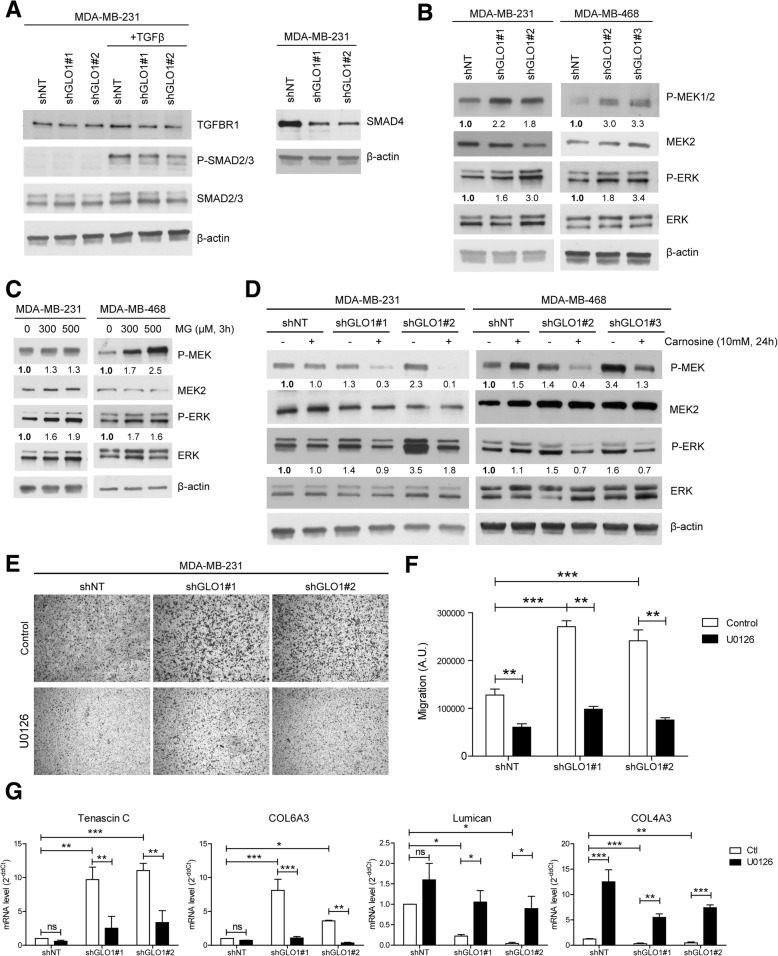
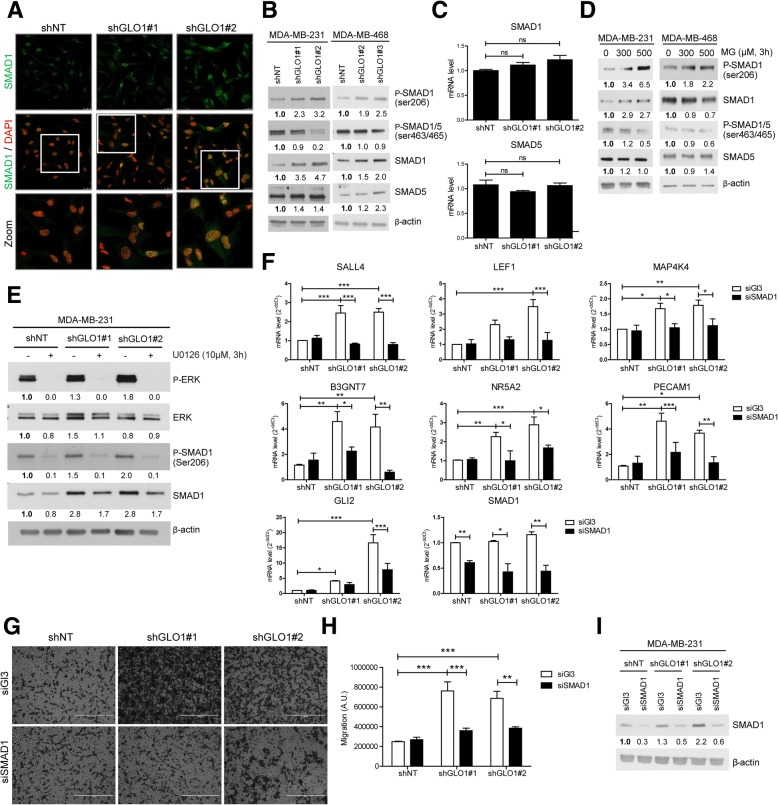
In this study, we used RNA sequencing analysis to investigate gene-expression profiling of GLO1-depleted breast cancer cells and we validated the regulated expression of selected genes of interest by RT-qPCR. Using in vitro and in vivo assays, we demonstrated the acquisition of a pro-metastatic phenotype related to dicarbonyl stress in MDA-MB-231, MDA-MB-468 and MCF7 breast cancer cellular models. Hyperactivation of MEK/ERK/SMAD1 pathway was evidenced using western blotting upon endogenous MG stress and exogenous MG treatment conditions. MEK and SMAD1 regulation of MG pro-metastatic signature genes in breast cancer cells was demonstrated by RT-qPCR.
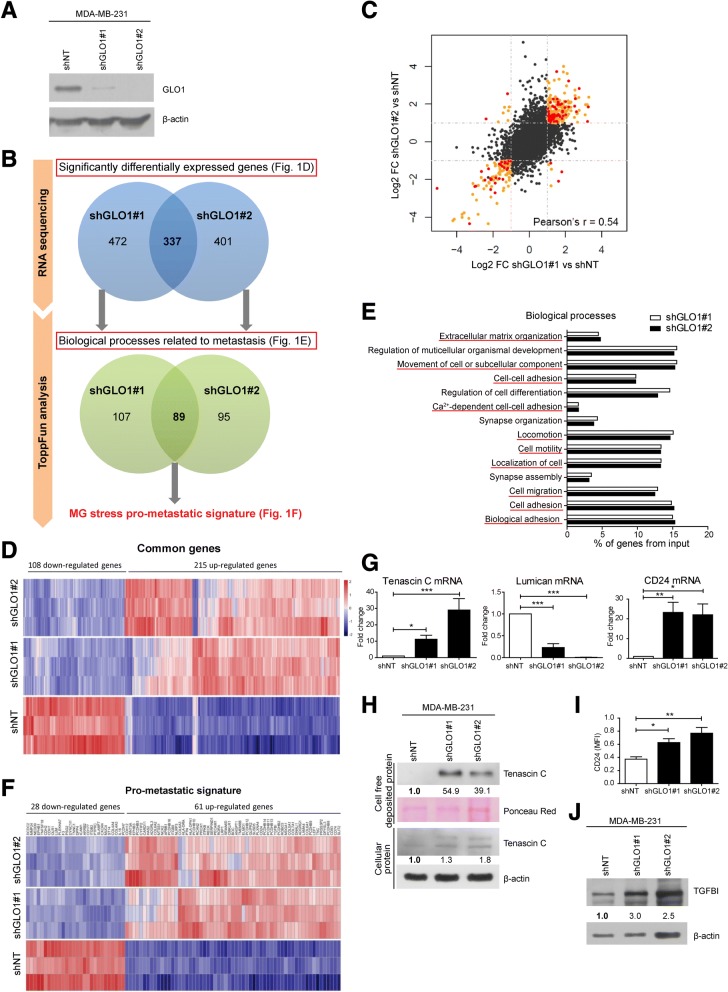
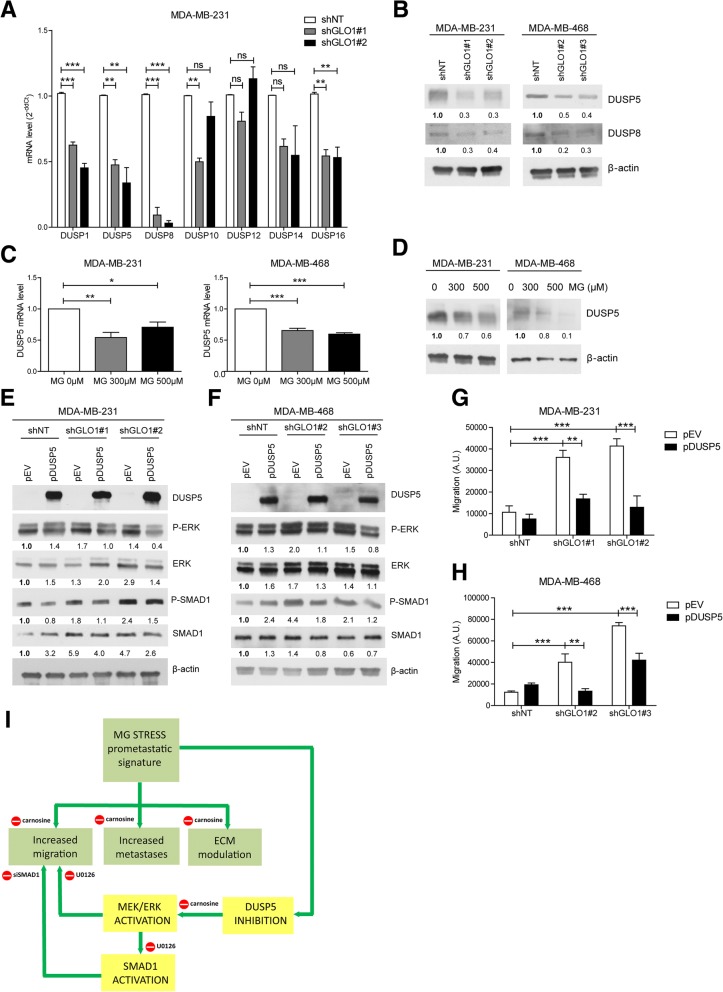
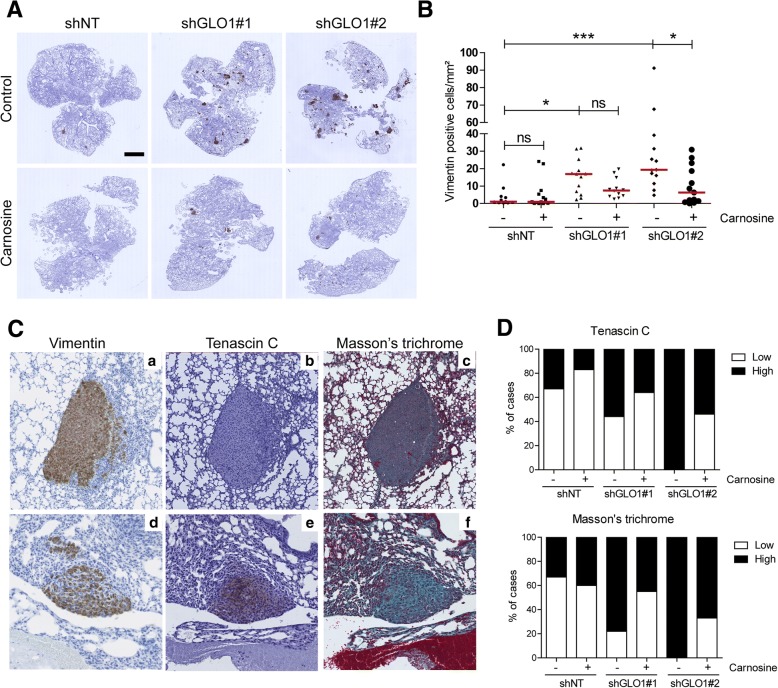
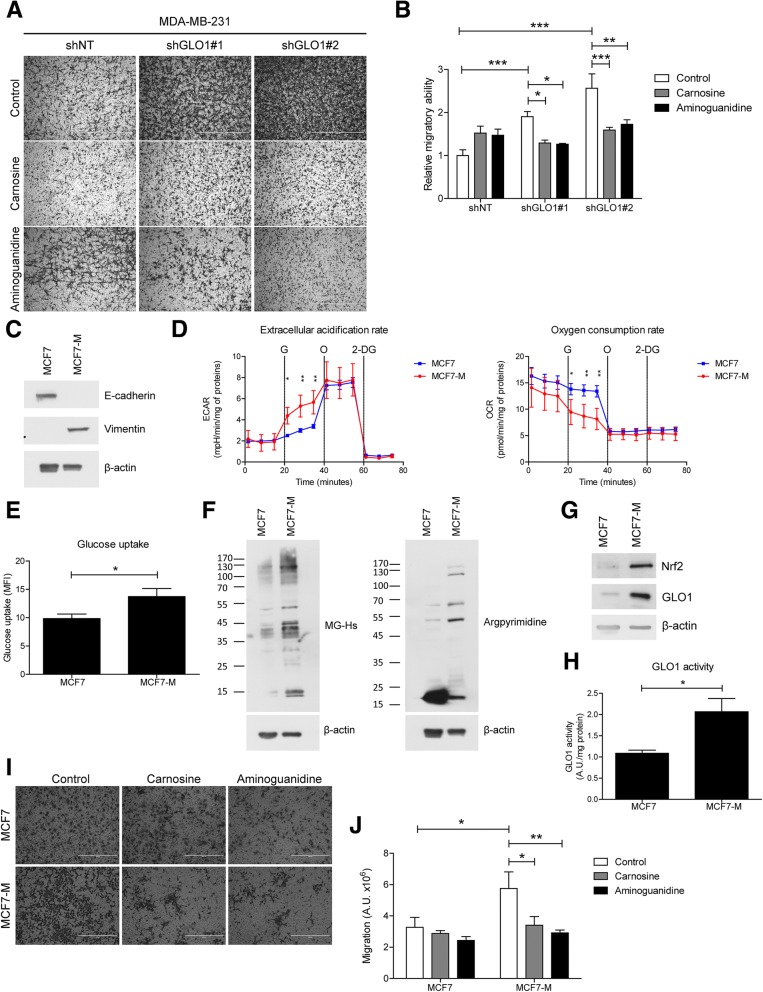
High-throughput transcriptome profiling of GLO1-depleted breast cancer cells highlighted a pro-metastatic signature that establishes novel connections between MG dicarbonyl stress, extracellular matrix (ECM) remodeling by neoplastic cells and enhanced cell migration. Mechanistically, we showed that these metastasis-related processes are functionally linked to MEK/ERK/SMAD1 cascade activation in breast cancer cells. We showed that sustained MEK/ERK activation in GLO1-depleted cells notably occurred through the down-regulation of the expression of dual specificity phosphatases in MG-stressed breast cancer cells. The use of carnosine and aminoguanidine, two potent MG scavengers, reversed MG stress effects in in vitro and in vivo experimental settings.
These results uncover for the first time the key role of MG dicarbonyl stress in the induction of ECM remodeling and the activation of migratory signaling pathways, both in favor of enhanced metastatic dissemination of breast cancer cells. Importantly, the efficient inhibition of mitogen-activated protein kinase (MAPK) signaling using MG scavengers further emphasizes the need to investigate their therapeutic potential across different malignancies.
有氧糖酵解率升高是与恶性转化和癌症进展相关的生化改变。这种代谢转变不可避免地会产生甲基乙二醛(MG),通过形成晚期糖基化终产物(AGEs),MG 是二羰基应激的有力诱导剂。我们之前已经表明,主要的 MG 解毒酶甘油醛-3-磷酸脱氢酶 1(GLO1)的沉默会产生内源性二羰基应激,导致体内生长和转移增强。然而,MG 应激促进转移发展的分子机制仍有待揭示。
在这项研究中,我们使用 RNA 测序分析来研究 GLO1 耗尽的乳腺癌细胞的基因表达谱,并通过 RT-qPCR 验证了所选感兴趣基因的调节表达。我们使用体外和体内测定,证明了在 MDA-MB-231、MDA-MB-468 和 MCF7 乳腺癌细胞模型中,与二羰基应激相关的促转移表型的获得。Western blot 检测到内源性 MG 应激和外源性 MG 处理条件下 MEK/ERK/SMAD1 通路的超激活。通过 RT-qPCR 证明了 MEK 和 SMAD1 对乳腺癌细胞中 MG 促转移特征基因的调节。
对 GLO1 耗尽的乳腺癌细胞进行高通量转录组谱分析,突出了一个促转移特征,该特征建立了 MG 二羰基应激、肿瘤细胞对细胞外基质(ECM)重塑和增强细胞迁移之间的新联系。从机制上讲,我们表明这些与转移相关的过程在功能上与乳腺癌细胞中 MEK/ERK/SMAD1 级联的激活相关。我们表明,在 GLO1 耗尽的细胞中,持续的 MEK/ERK 激活主要是通过下调 MG 应激乳腺癌细胞中双特异性磷酸酶的表达来实现的。使用肌肽和氨基胍,两种有效的 MG 清除剂,在体外和体内实验环境中逆转了 MG 应激的作用。
这些结果首次揭示了 MG 二羰基应激在诱导 ECM 重塑和激活迁移信号通路中的关键作用,这两者都有利于增强乳腺癌细胞的转移扩散。重要的是,使用 MG 清除剂有效抑制丝裂原活化蛋白激酶(MAPK)信号进一步强调了需要研究它们在不同恶性肿瘤中的治疗潜力。