Department of Cardiothoracic Surgery, The First People's Hospital of Yunnan Province, Kunming, Yunnan Province, China.
Department of Neurology, Institute of Surgery Research, Daping Hospital, Third Military Medical University, Chongqing, China.
EBioMedicine. 2019 Feb;40:685-694. doi: 10.1016/j.ebiom.2019.01.032. Epub 2019 Jan 20.
Atherosclerosis is a hyperlipidemia-induced condition affecting the arterial wall that damages healthy endothelial cell (EC) function, leading to enhanced risk of atherothrombotic events. Certain microRNAs regulate EC dysfunction in response to hyperlipidemia and may be suitable therapeutic targets to combat atherosclerosis.
miRNA expression in human ECs was analyzed under various conditions to identify key microRNAs. High-cholesterol diet (HCD)-fed Mir652Apoe (Mir652) mice and matching Mir652Apoe (Mir652) mice were subjected to carotid injury to analyze the effects of miR-652 knockdown on endothelial repair. In silico analysis followed by in vitro and in vivo experiments were applied to identify miR-652's target gene Ccnd2 and investigate the pair's effects on ECs. miR-652-5p and miR-652-3p antagomir therapies were tested in Mir652 mice under normal and HCD diet to assess their effect on endothelial repair.
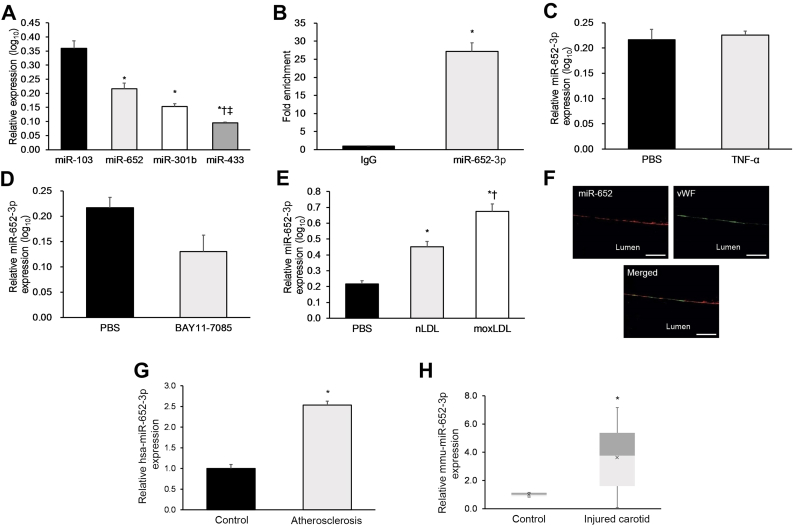
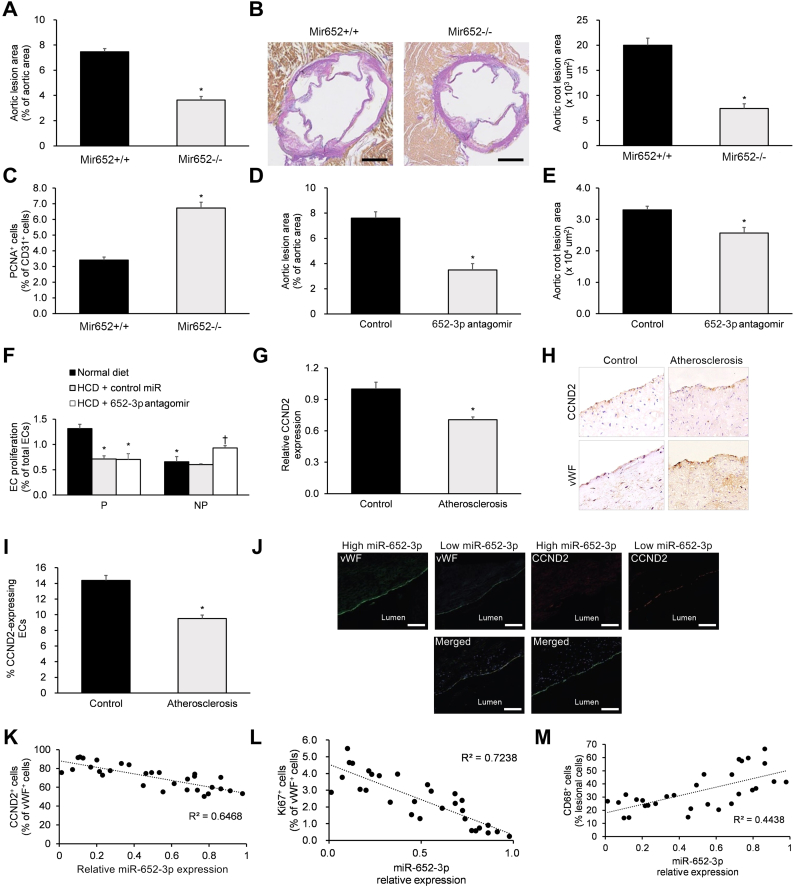
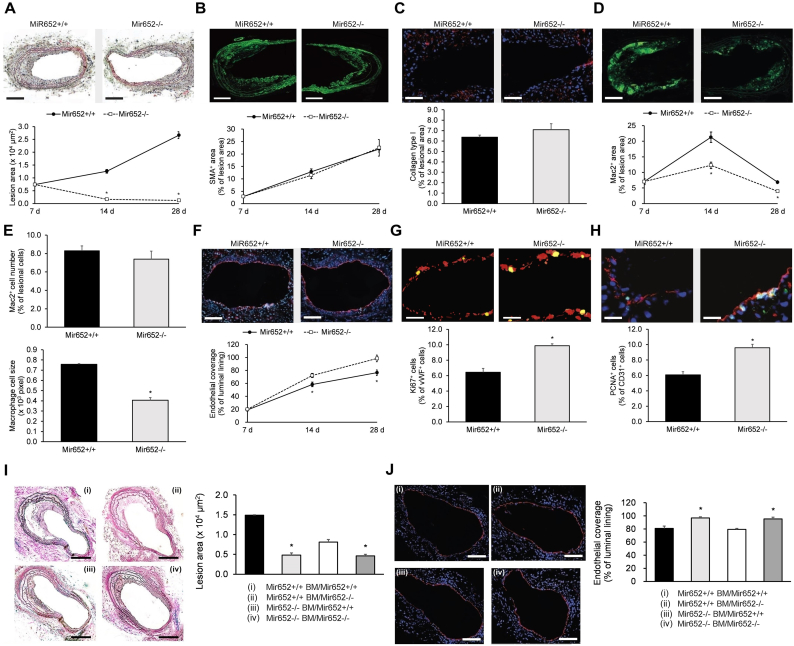
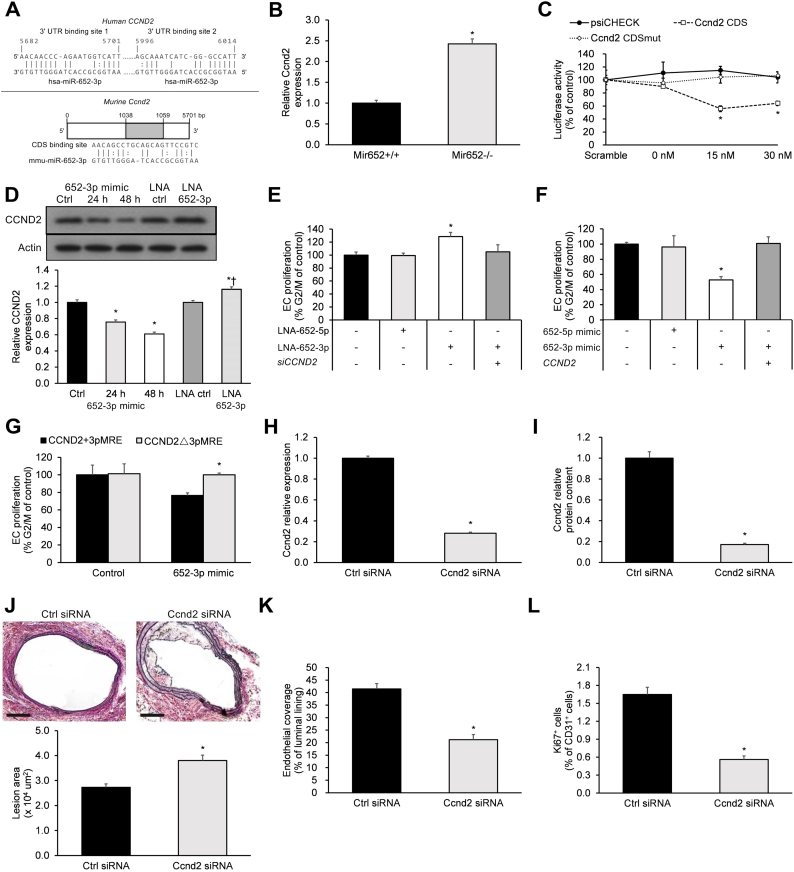
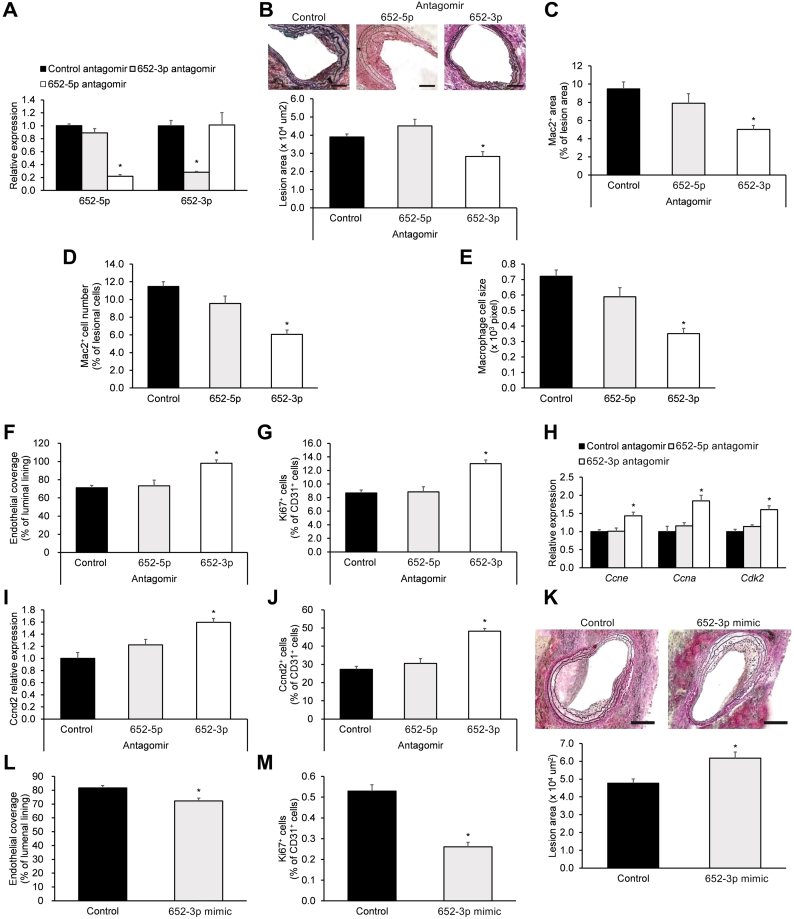
miR-652-3p, which is upregulated in human and murine atherosclerotic plaques, suppresses expression of the endothelial repair gene Ccnd2, thereby enhancing atherosclerotic lesion formation. Post-denudation recovery of ECs was promoted in Mir652 mice due to enhanced EC proliferation attributable to de-repression of miR-652-3p's (but not miR-652-5p's) regulation of Ccnd2 expression. Under hyperlipidemic conditions at non-predilection sites, miR-652-3p produces anti-proliferative effects in ECs, such that Mir652 mice display reduced atherosclerotic progression. In contrast, neither miR-652-3p nor Ccnd2 displayed significant effects on the endothelium at predilection sites or under disturbed flow conditions. Administration of a miR-652-3p antagomir rescued the proliferation of ECs in vivo, thereby limiting atherosclerotic development.
miR-652-3p blockade may be a potential therapeutic strategy against atherosclerosis.
动脉粥样硬化是一种由高血脂引起的疾病,影响动脉壁,损害健康的内皮细胞(EC)功能,导致动脉粥样硬化血栓形成事件的风险增加。某些 microRNA 调节内皮细胞对高血脂的功能障碍,可能是对抗动脉粥样硬化的合适治疗靶点。
分析各种条件下人类 EC 中的 miRNA 表达,以鉴定关键的 microRNA。用高胆固醇饮食(HCD)喂养 Mir652Apoe(Mir652)小鼠和匹配的 Mir652Apoe(Mir652)小鼠,进行颈动脉损伤,分析 miR-652 敲低对内皮修复的影响。通过计算机分析,结合体外和体内实验,鉴定 miR-652 的靶基因 Ccnd2,并研究其对 EC 的影响。在 Mir652 小鼠中进行 miR-652-5p 和 miR-652-3p 拮抗剂治疗,在正常和 HCD 饮食下评估其对内皮修复的影响。
在人类和鼠动脉粥样硬化斑块中上调的 miR-652-3p 抑制内皮修复基因 Ccnd2 的表达,从而促进动脉粥样硬化病变的形成。由于 miR-652-3p (而不是 miR-652-5p)对 Ccnd2 表达的抑制作用得到解除,Mir652 小鼠中的 EC 增殖得到增强,导致 EC 剥落后的恢复得到促进。在非易患部位的高脂血症条件下,miR-652-3p 在 EC 中产生抗增殖作用,使得 Mir652 小鼠的动脉粥样硬化进展减少。相反,miR-652-3p 和 Ccnd2 都没有在易患部位或在血流紊乱的情况下对内皮产生显著影响。miR-652-3p 拮抗剂的给药在体内恢复了 EC 的增殖,从而限制了动脉粥样硬化的发展。
miR-652-3p 阻断可能是一种对抗动脉粥样硬化的潜在治疗策略。