Center for Excellence in Regional Atmospheric Environment, Institute of Urban Environment, Chinese Academy of Sciences, 1799 Jimei Road, Xiamen, 361021, China.
Key Laboratory of Urban Environment and Health, Institute of Urban Environment, Chinese Academy of Sciences, 1799 Jimei Road, Xiamen, 361021, China.
Cell Death Dis. 2019 Jan 15;10(2):39. doi: 10.1038/s41419-018-1135-3.
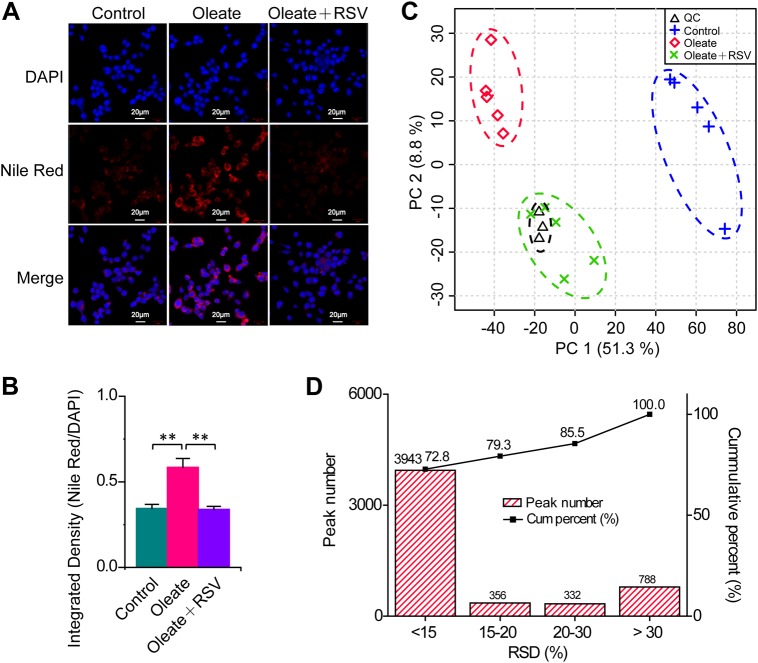
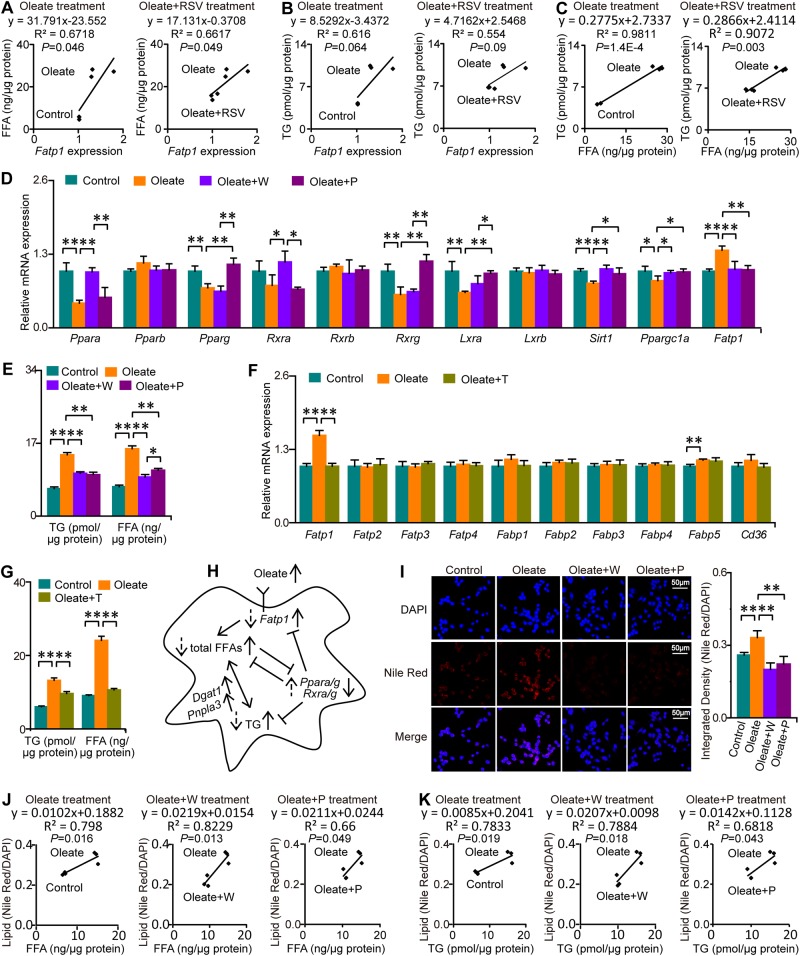
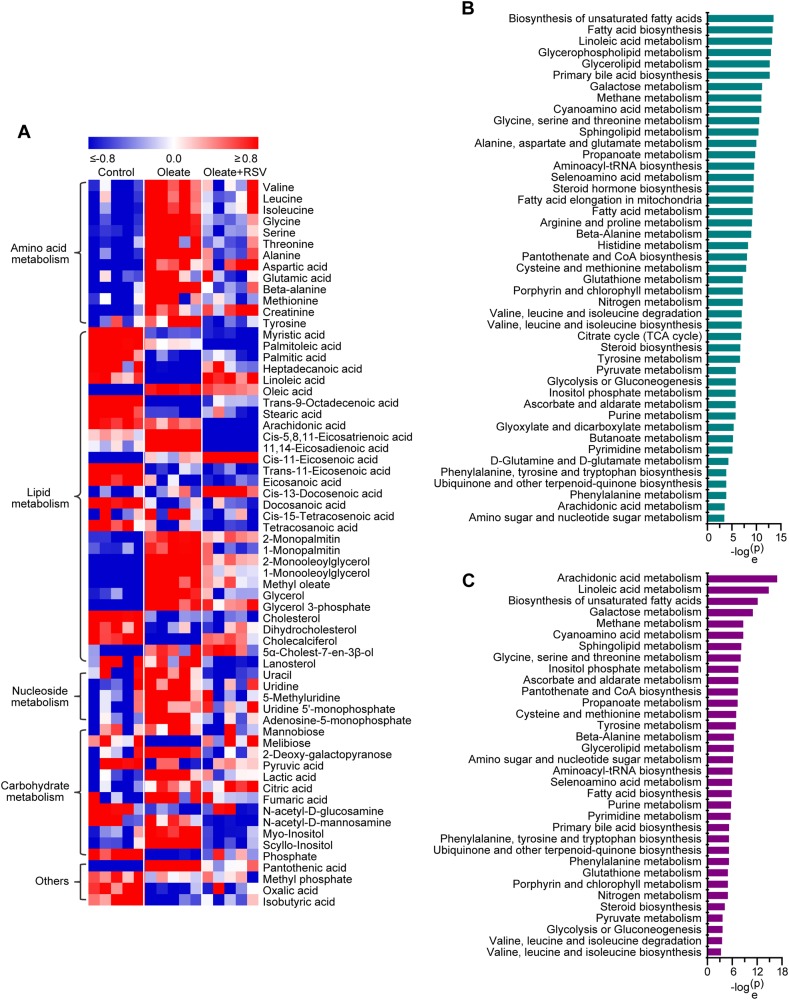
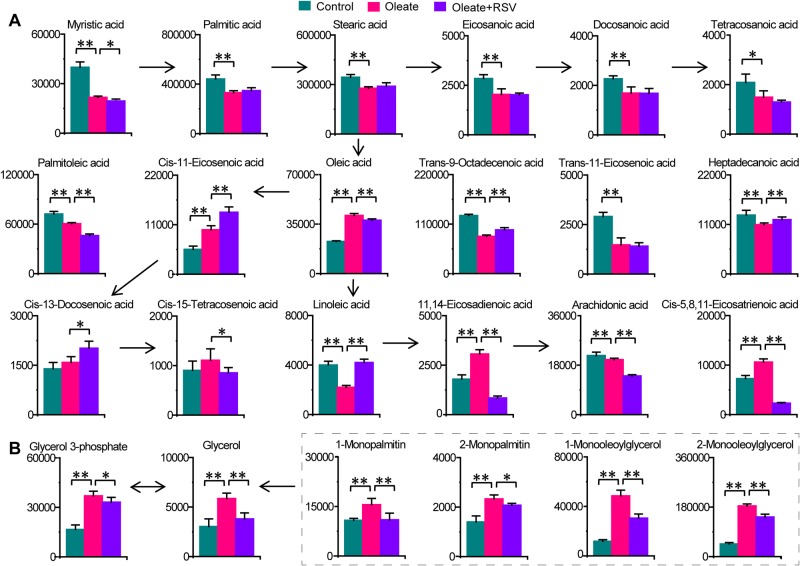
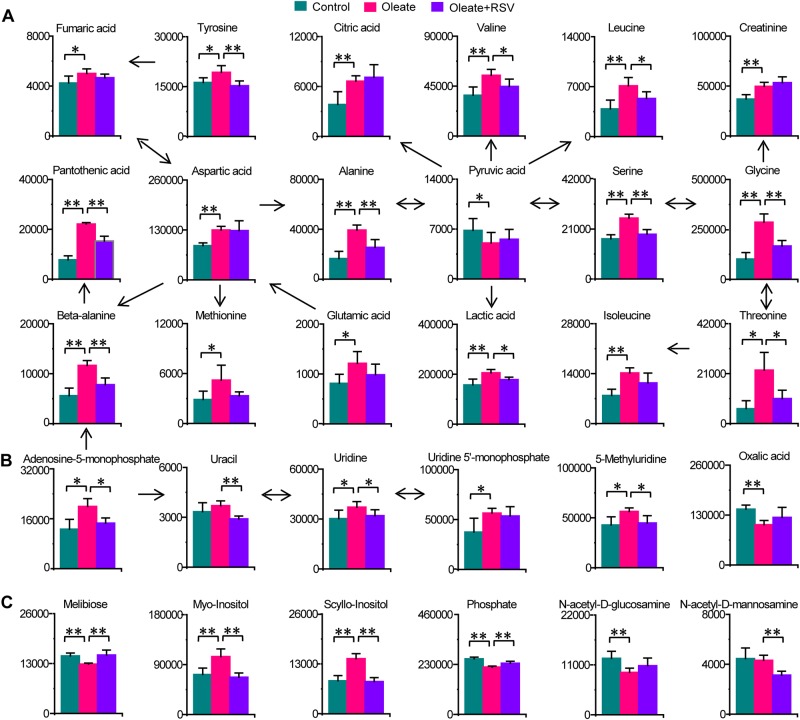
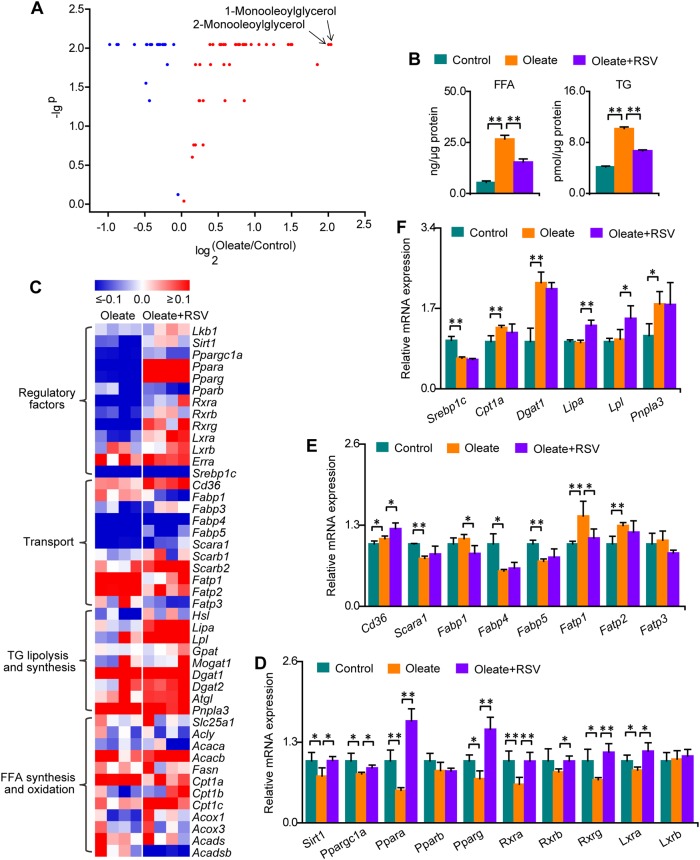
Lipid accumulation in macrophages interacts with microenvironment signals and accelerates diabetic atherosclerosis. However, the molecular mechanisms by which macrophage metabolism interacts with microenvironment signals during lipid accumulation are not clearly understood. Accordingly, an untargeted metabolomics approach was employed to characterize the metabolic reprogramming, and to identify potential regulatory targets related to lipid accumulation in macrophages treated with oleate, an important nutrient. The metabolomics approach revealed that multiple metabolic pathways were significantly disturbed in oleate-treated macrophages. We discovered that amino acids, nucleosides, lactate, monoacylglycerols, total free fatty acids (FFAs), and triglycerides (TGs) accumulated in oleate-treated macrophages, but these effects were effectively attenuated or even abolished by resveratrol. Notably, 1-monooleoylglycerol and 2-monooleoylglycerol showed the largest fold changes in the levels among the differential metabolites. Subsequently, we found that oleate triggered total FFA and TG accumulation in macrophages by accelerating FFA influx through the activation of Fatp1 expression, but this effect was attenuated by resveratrol via the activation of PPARα and PPARγ signaling. We verified that the activation of PPARα and PPARγ by WY14643 and pioglitazone, respectively, attenuated oleate triggered total FFA and TG accumulation in macrophages by repressing FFA import via the suppression of Fatp1 expression. Furthermore, the inhibition of Fatp1 by tumor necrosis factor α alleviated oleate-induced total FFA and TG accumulation in macrophages. This study provided the first demonstration that accumulation of amino acids, nucleosides, lactate, monoacylglycerols, total FFAs, and TGs in oleate-treated macrophages is effectively attenuated or even abolished by resveratrol, and that the activation of PPARα and PPARγ attenuates oleate-induced total FFA and TG accumulation via suppression of Fatp1 expression in macrophages. Therapeutic strategies aim to activate PPAR signaling, and to repress FFA import and triglyceride synthesis are promising approaches to reduce the risk of obesity, diabetes and atherosclerosis.
巨噬细胞中的脂质积累与微环境信号相互作用,加速了糖尿病性动脉粥样硬化的发生。然而,巨噬细胞代谢与脂质积累过程中微环境信号相互作用的分子机制尚不清楚。因此,本研究采用非靶向代谢组学方法来描述代谢重编程,并鉴定与油酸处理的巨噬细胞中脂质积累相关的潜在调控靶点,油酸是一种重要的营养物质。代谢组学方法揭示了油酸处理的巨噬细胞中多个代谢途径发生显著紊乱。我们发现,在油酸处理的巨噬细胞中,氨基酸、核苷、乳酸盐、单酰基甘油、总游离脂肪酸(FFAs)和甘油三酯(TGs)积累,但这些影响可被白藜芦醇有效减弱甚至消除。值得注意的是,在差异代谢物中,1-单油酰基甘油和 2-单油酰基甘油的水平变化幅度最大。随后,我们发现油酸通过激活 Fatp1 表达加速 FFA 内流,从而引发巨噬细胞中总 FFA 和 TG 积累,但白藜芦醇通过激活 PPARα 和 PPARγ 信号通路减弱了这种作用。我们验证了通过抑制 Fatp1 表达抑制 FFA 内流,WY14643 和吡格列酮分别通过激活 PPARα 和 PPARγ 减弱油酸引发的巨噬细胞中总 FFA 和 TG 积累。此外,肿瘤坏死因子-α对 Fatp1 的抑制减轻了油酸诱导的巨噬细胞中总 FFA 和 TG 积累。本研究首次证明,油酸处理的巨噬细胞中氨基酸、核苷、乳酸盐、单酰基甘油、总 FFAs 和 TGs 的积累可被白藜芦醇有效减弱甚至消除,PPARα 和 PPARγ 的激活通过抑制 Fatp1 表达减弱油酸诱导的巨噬细胞中总 FFA 和 TG 积累。靶向激活 PPAR 信号通路并抑制 FFA 内流和甘油三酯合成的治疗策略有望降低肥胖、糖尿病和动脉粥样硬化的风险。