Department of Nephrology, Chinese PLA General Hospital, Chinese PLA Institute of Nephrology, State Key Laboratory of Kidney Diseases, National Clinical Research Center for Kidney Diseases, Beijing Key Laboratory of Kidney Diseases, Beijing, China.
Shock. 2019 Dec;52(6):622-630. doi: 10.1097/SHK.0000000000001319.
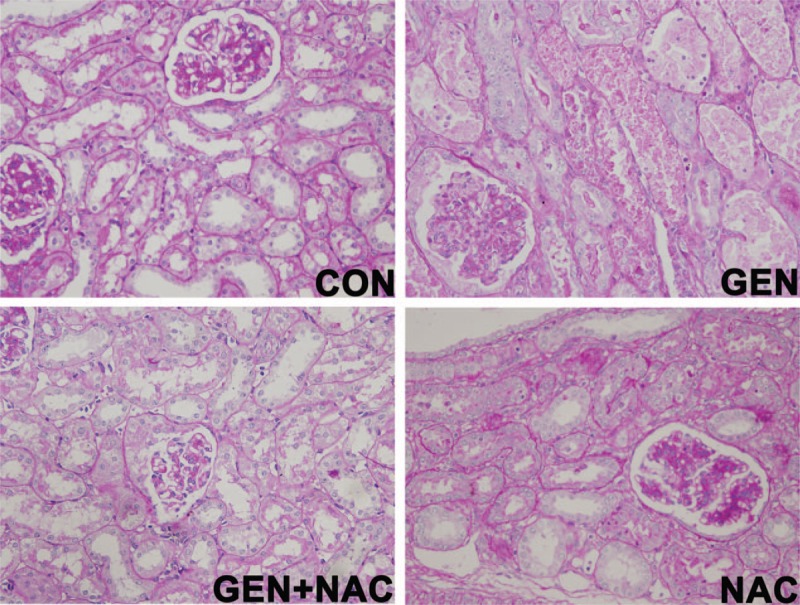
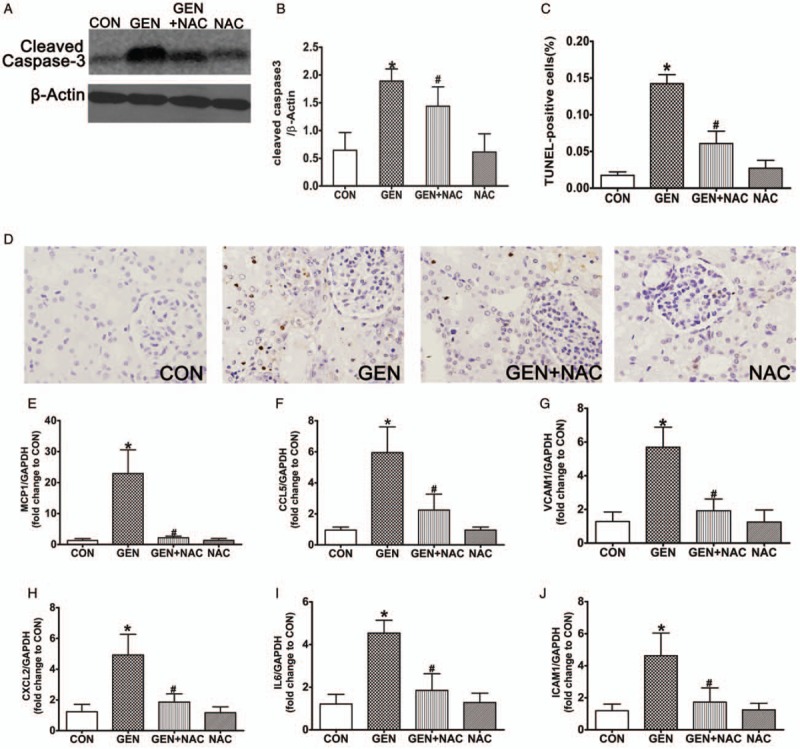
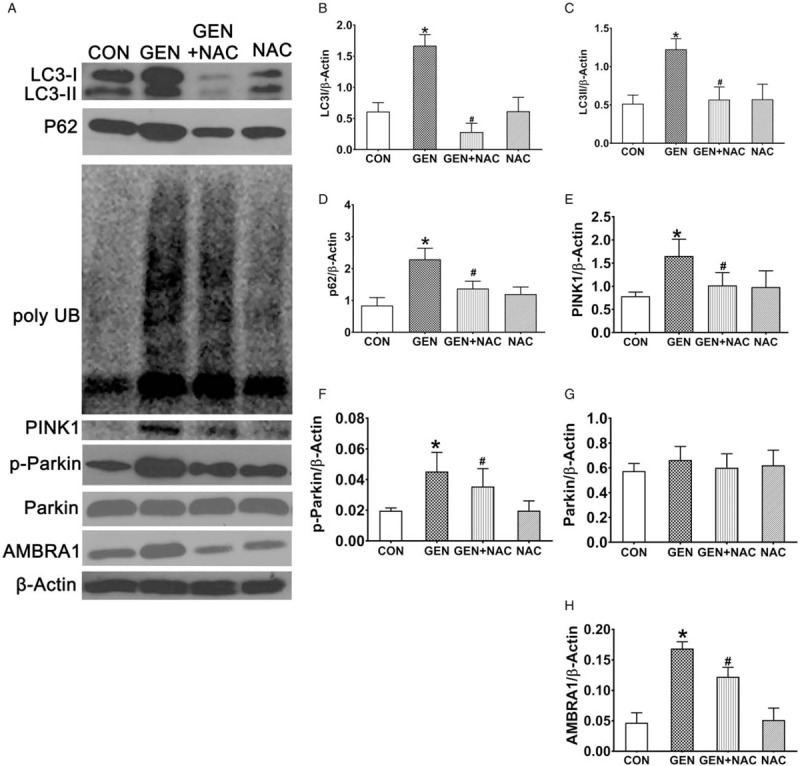
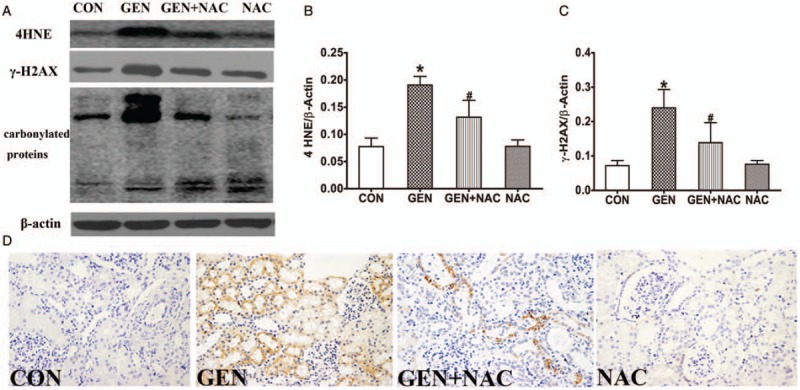
The clinical use of gentamicin over prolonged periods is limited because of dose and time-dependent nephrotoxicity, in which intracellular oxidative stress and heightened inflammation have been implicated. Macroautophagy/autophagy is an essential and highly conserved self-digestion pathway that plays important roles in the maintenance of cellular function and viability under stress. The aim of this study was to determine changes in autophagy in response to the antioxidant N-acetylcysteine (NAC), via its effects on oxidative stress, inflammation, apoptosis, and renal function, following treatment with gentamicin in mini pigs. Adult mini pigs were divided into isotonic saline solution, gentamicin, and gentamicin plus NAC combination treatment groups. Gentamicin-induced histopathological changes, including inflammatory cell infiltration and tubular necrosis, were attenuated by NAC. NAC ameliorated the gentamicin-induced decreases in the levels of autophagy-related proteins, such as LC3 (microtubule-associated protein 1 light chain 3), PINK1 (phosphatase and tensin homologue deleted on chromosome10-induced kinase 1), phospho-parkin, AMBRA1 (activatingmolecule in Beclin 1-regulated autophagy), p62/SQSTM1 (sequestosome protein 1), and polyubiquitinated protein aggregates. NAC also caused a significant reduction in oxidative damage markers, including 4-hydroxy-2-nonenal, protein carbonyls, γ-H2AX (gamma histone variant H2AX), and 8-hydroxy-2'-deoxyguanosine, in gentamicin-treated animals. These data show that the protective effects of NAC might be related, at least in part, to a reduced inflammatory response, as observed in animals treated with both gentamicin and NAC. These results suggest that autophagy could be a new therapeutic target for preventing gentamicin-induced kidney injury, and that NAC might ameliorate gentamicin-induced nephrotoxicity by autophagy.
庆大霉素长期临床应用受到限制,是因为其剂量和时间依赖性肾毒性,其中细胞内氧化应激和炎症反应增强被认为与此有关。巨自噬/自噬是一种基本且高度保守的自我消化途径,在应激下对维持细胞功能和活力发挥着重要作用。本研究旨在通过抗氧化剂 N-乙酰半胱氨酸(NAC)对氧化应激、炎症、细胞凋亡和肾功能的影响,确定自噬对庆大霉素诱导的肾损伤的反应变化。成年小型猪分为生理盐水组、庆大霉素组和庆大霉素+NAC 联合治疗组。NAC 减轻了庆大霉素诱导的炎症细胞浸润和肾小管坏死等组织病理学变化。NAC 改善了庆大霉素诱导的自噬相关蛋白水平降低,如 LC3(微管相关蛋白 1 轻链 3)、PINK1(磷酸酶和张力蛋白同源物缺失于染色体 10 诱导的激酶 1)、磷酸化 parkin、AMBRA1(Beclin 1 调节自噬的激活分子)、p62/SQSTM1(自噬体蛋白 1)和多聚泛素化蛋白聚集体。NAC 还显著降低了氧化损伤标志物,包括 4-羟基-2-壬烯醛、蛋白质羰基、γ-H2AX(γ组蛋白变体 H2AX)和 8-羟基-2'-脱氧鸟苷,在庆大霉素处理的动物中。这些数据表明,NAC 的保护作用可能与炎症反应的减轻有关,至少部分与炎症反应有关,这在同时接受庆大霉素和 NAC 治疗的动物中观察到。这些结果表明,自噬可能是预防庆大霉素诱导的肾损伤的新治疗靶点,并且 NAC 可能通过自噬改善庆大霉素诱导的肾毒性。