Department of Translational and Precision Medicine, Sapienza University of Rome, Rome, Italy.
Department of Anatomical, Histological, Forensic Medicine and Orthopedics Sciences, Sapienza University of Rome, Rome, Italy.
PLoS One. 2019 Jan 24;14(1):e0210077. doi: 10.1371/journal.pone.0210077. eCollection 2019.
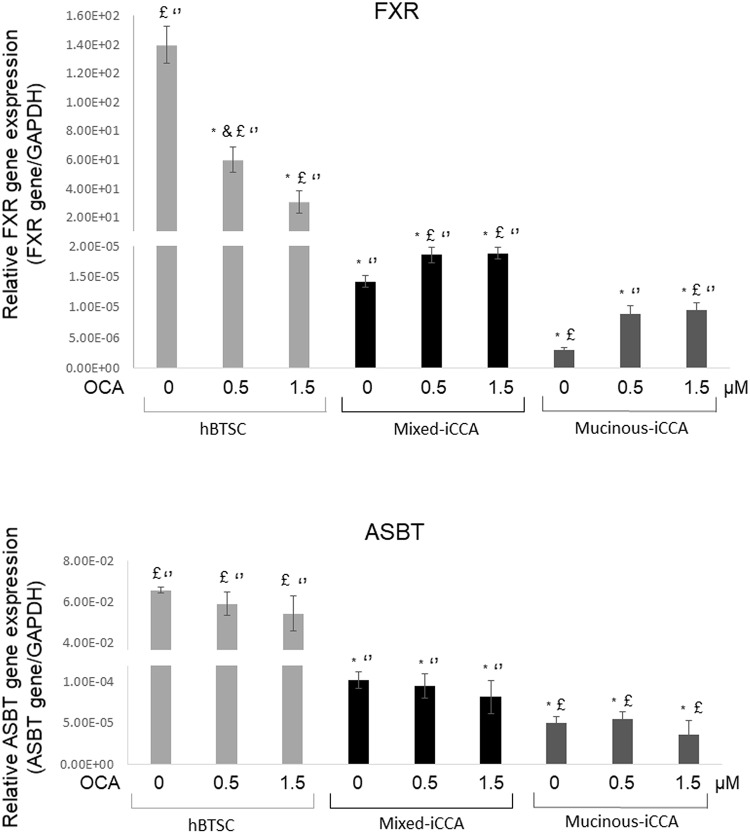
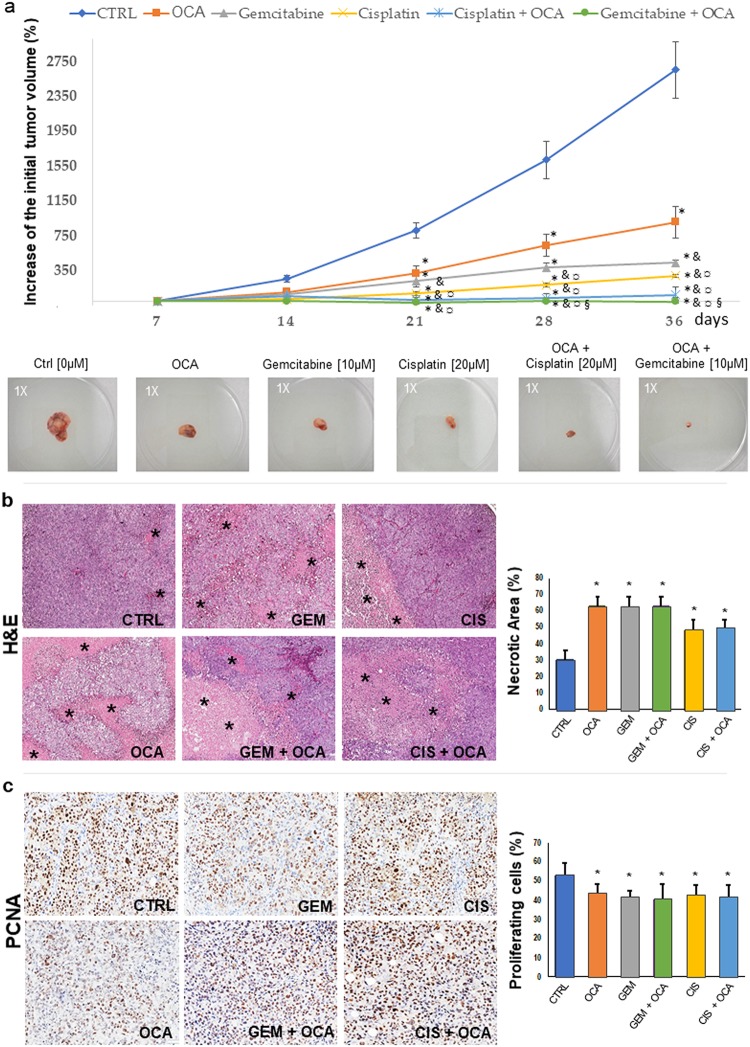
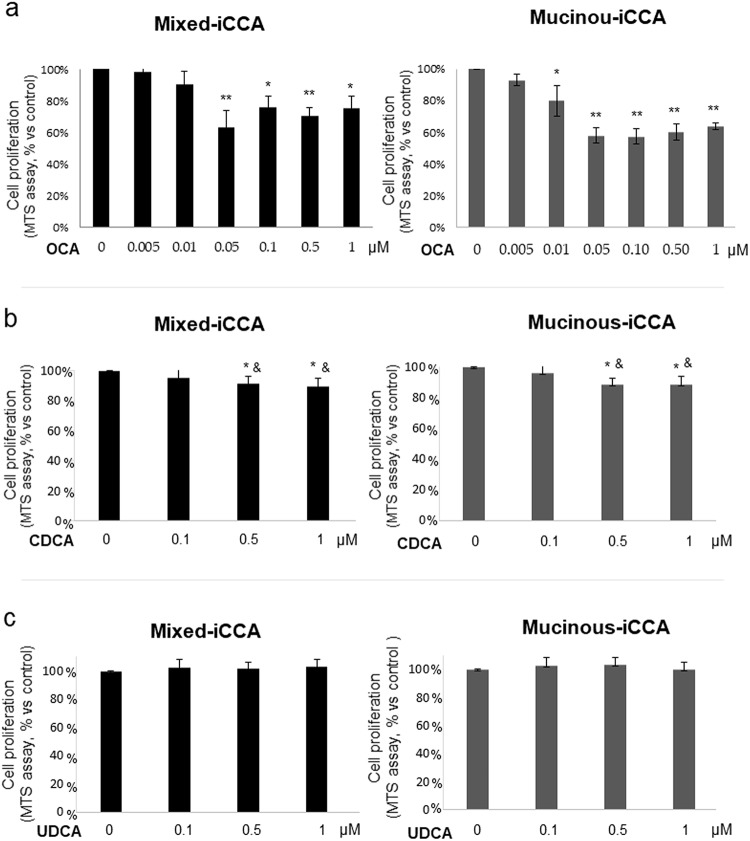
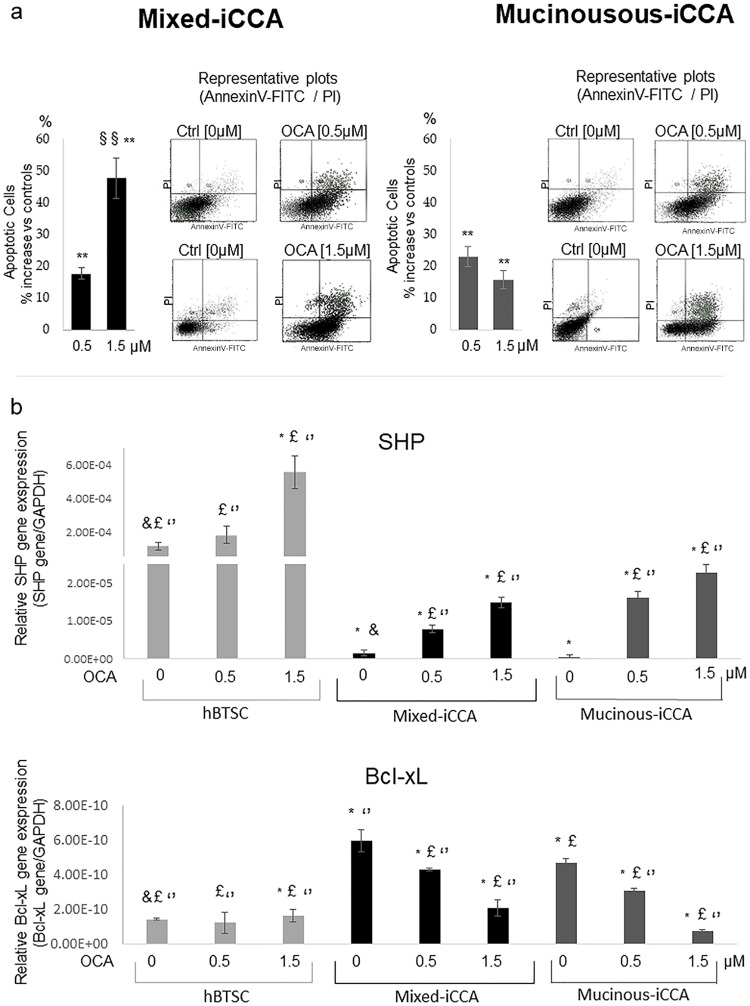
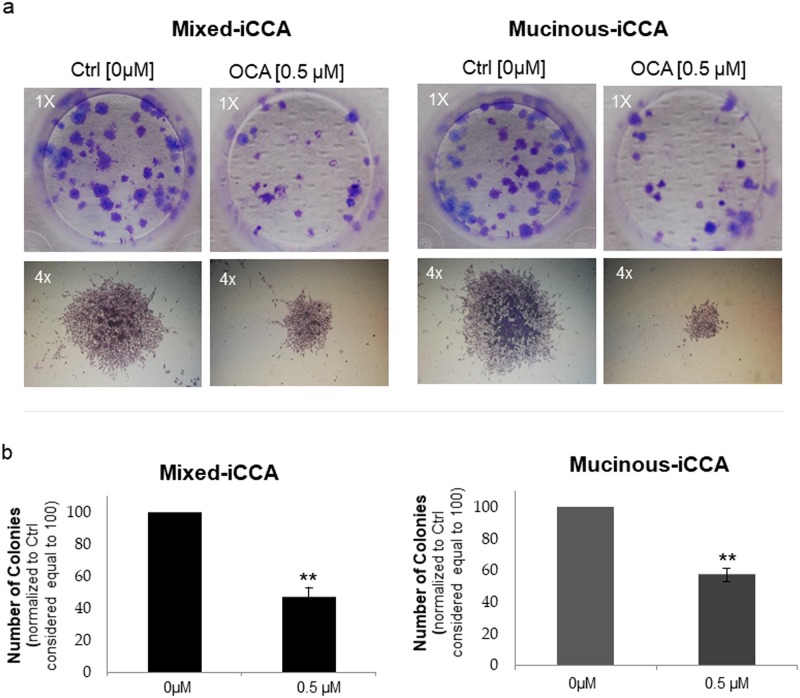
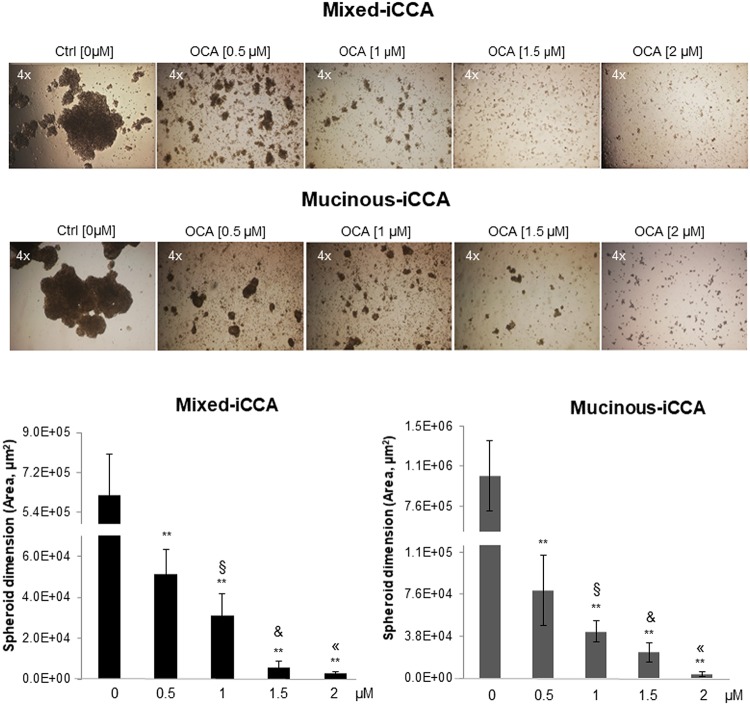
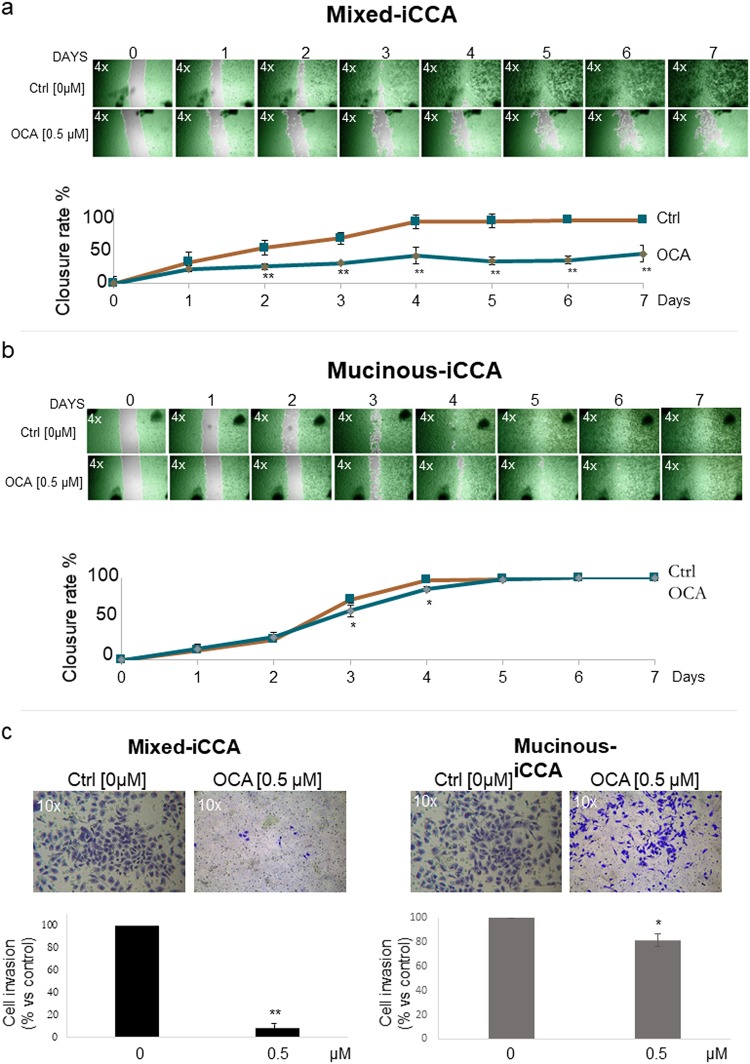
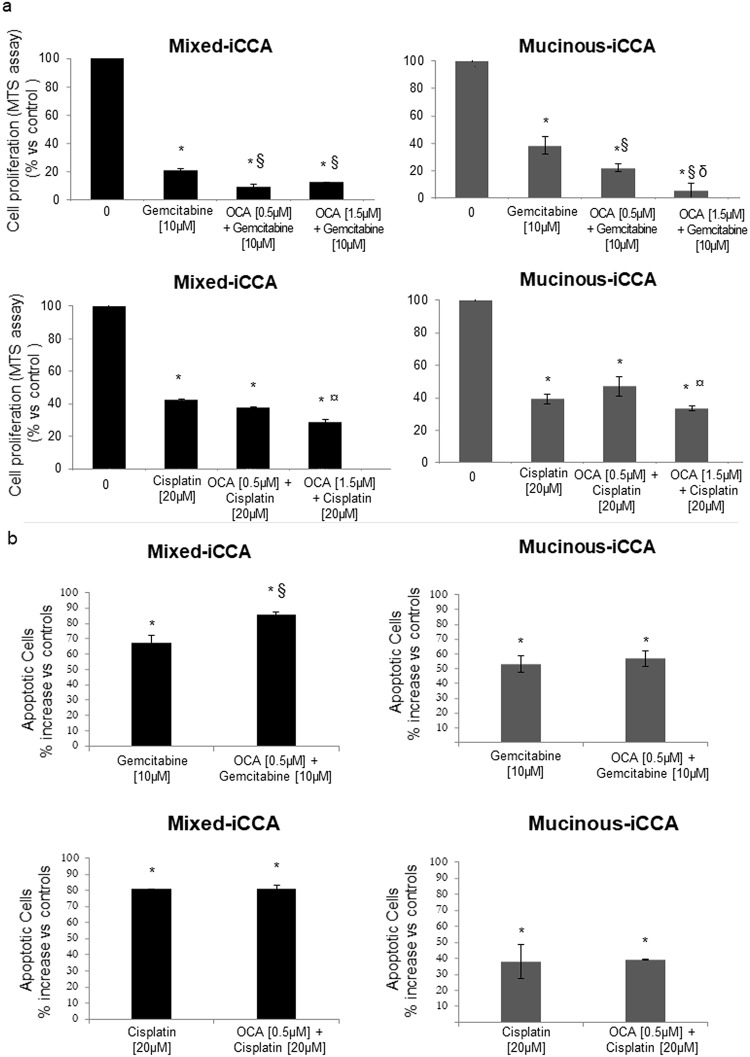
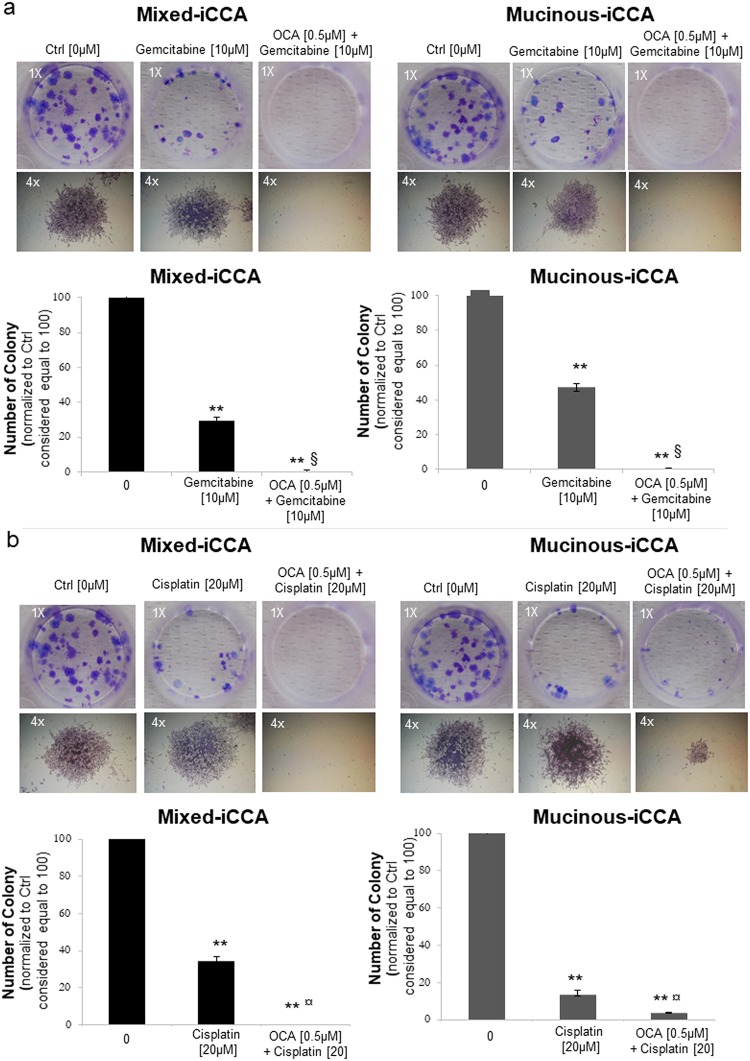
Cholangiocarcinoma (CCA) is an aggressive cancer with high resistance to chemotherapeutics. CCA is enriched in cancer stem cells, which correlate with aggressiveness and prognosis. FXR, a member of the metabolic nuclear receptor family, is markedly down-regulated in human CCA. Our aim was to evaluate, in primary cultures of human intrahepatic CCA (iCCA), the effects of the FXR agonist obeticholic acid (OCA), a semisynthetic bile acid derivative, on their cancerogenic potential. Primary human iCCA cell cultures were prepared from surgical specimens of mucinous or mixed iCCA subtypes. Increasing concentrations (0-2.5 μM) of OCA were added to culture media and, after 3-10 days, effects on proliferation (MTS assay, cell population doubling time), apoptosis (annexin V-FITC/propidium iodide), cell migration and invasion (wound healing response and Matrigel invasion assay), and cancerogenic potential (spheroid formation, clonogenic assay, colony formation capacity) were evaluated. Results: FXR gene expression was downregulated (RT-qPCR) in iCCA cells vs normal human biliary tree stem cells (p < 0.05) and in mucinous iCCA vs mixed iCCA cells (p < 0.05) but was upregulated by addition of OCA. OCA significantly (p < 0.05) inhibited proliferation of both mucinous and mixed iCCA cells, starting at a concentration as low as 0.05 μM. Also, CDCA (but not UDCA) inhibited cell proliferation, although to a much lower extent than OCA, consistent with its different affinity for FXR. OCA significantly induced apoptosis of both iCCA subtypes and decreased their in vitro cancerogenic potential, as evaluated by impairment of colony and spheroid formation capacity and delayed wound healing and Matrigel invasion. In general, these effects were more evident in mixed than mucinous iCCA cells. When tested together with Gemcitabine and Cisplatin, OCA potentiated the anti-proliferative and pro-apoptotic effects of these chemotherapeutics, but mainly in mixed iCCA cells. OCA abolished the capacity of both mucinous and mixed iCCA cells to form colonies when administered together with Gemcitabine and Cisplatin. In subcutaneous xenografts of mixed iCCA cells, OCA alone or combined with Gemcitabine or Cisplatin markedly reduced the tumor size after 5 weeks of treatment by inducing necrosis of tumor mass and inhibiting cell proliferation. In conclusion, FXR is down-regulated in iCCA cells, and its activation by OCA results in anti-cancerogenic effects against mucinous and mixed iCCA cells, both in vitro and in vivo. The effects of OCA predominated in mixed iCCA cells, consistent with the lower aggressiveness and the higher FXR expression in this CCA subtype. These results, showing the FXR-mediated capacity of OCA to inhibit cholangiocarcinogenesis, represent the basis for testing OCA in clinical trials of CCA patients.
胆管癌(CCA)是一种具有高化疗耐药性的侵袭性癌症。CCA 富含癌症干细胞,这些细胞与侵袭性和预后相关。FXR 是代谢核受体家族的成员,在人类 CCA 中明显下调。我们的目的是在人肝内 CCA(iCCA)的原代培养物中评估 FXR 激动剂奥贝胆酸(OCA)的作用,OCA 是一种半合成胆酸衍生物。从粘蛋白或混合 iCCA 亚型的手术标本中制备原代人 iCCA 细胞培养物。将不同浓度(0-2.5 μM)的 OCA 添加到培养基中,3-10 天后,评估对增殖(MTS 测定、细胞倍增时间)、凋亡(膜联蛋白 V-FITC/碘化丙啶)、细胞迁移和侵袭(伤口愈合反应和 Matrigel 侵袭测定)以及致癌潜能(球体形成、集落形成测定、集落形成能力)的影响。结果:与正常人类胆管树干细胞相比(p < 0.05),FXR 基因在 iCCA 细胞中表达下调(RT-qPCR),在粘蛋白 iCCA 与混合 iCCA 细胞中表达下调(p < 0.05),但添加 OCA 后表达上调。OCA 显著(p < 0.05)抑制两种粘蛋白和混合 iCCA 细胞的增殖,起始浓度低至 0.05 μM。此外,CDCA(但不是 UDCA)抑制细胞增殖,尽管程度远低于 OCA,这与其对 FXR 的不同亲和力一致。OCA 显著诱导两种 iCCA 亚型的细胞凋亡,并降低其体外致癌潜能,通过损害集落和球体形成能力以及延迟伤口愈合和 Matrigel 侵袭来评估。一般来说,这些作用在混合 iCCA 细胞中比粘蛋白 iCCA 细胞中更为明显。当与吉西他滨和顺铂联合测试时,OCA 增强了这些化疗药物的抗增殖和促凋亡作用,但主要在混合 iCCA 细胞中。当与吉西他滨和顺铂联合使用时,OCA 可消除粘蛋白和混合 iCCA 细胞形成菌落的能力。在混合 iCCA 细胞的皮下异种移植中,OCA 单独或与吉西他滨或顺铂联合使用,通过诱导肿瘤坏死和抑制细胞增殖,在 5 周的治疗后显著减小肿瘤体积。总之,FXR 在 iCCA 细胞中下调,其被 OCA 激活导致对粘蛋白和混合 iCCA 细胞产生抗癌作用,无论是在体外还是体内。OCA 的作用在混合 iCCA 细胞中占主导地位,这与该 CCA 亚型较低的侵袭性和较高的 FXR 表达一致。这些结果表明,OCA 通过 FXR 介导抑制胆管癌发生的能力,为在 CCA 患者的临床试验中测试 OCA 奠定了基础。