Spence J David
Stroke Prevention & Atherosclerosis Research Centre, Robarts Research Institute, Western University, 1400 Western Road, London, ON N6G 2V4, Canada.
Brain Sci. 2019 Jan 23;9(2):21. doi: 10.3390/brainsci9020021.
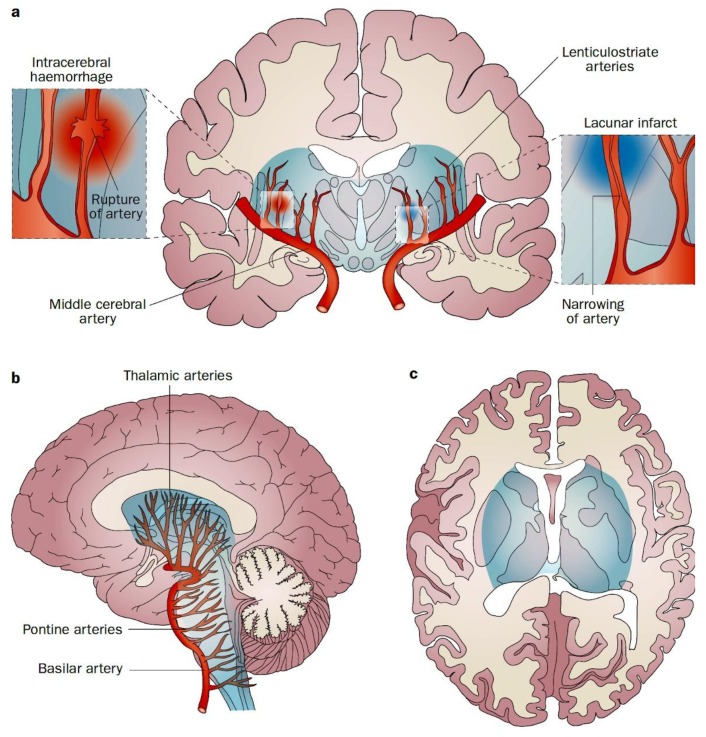
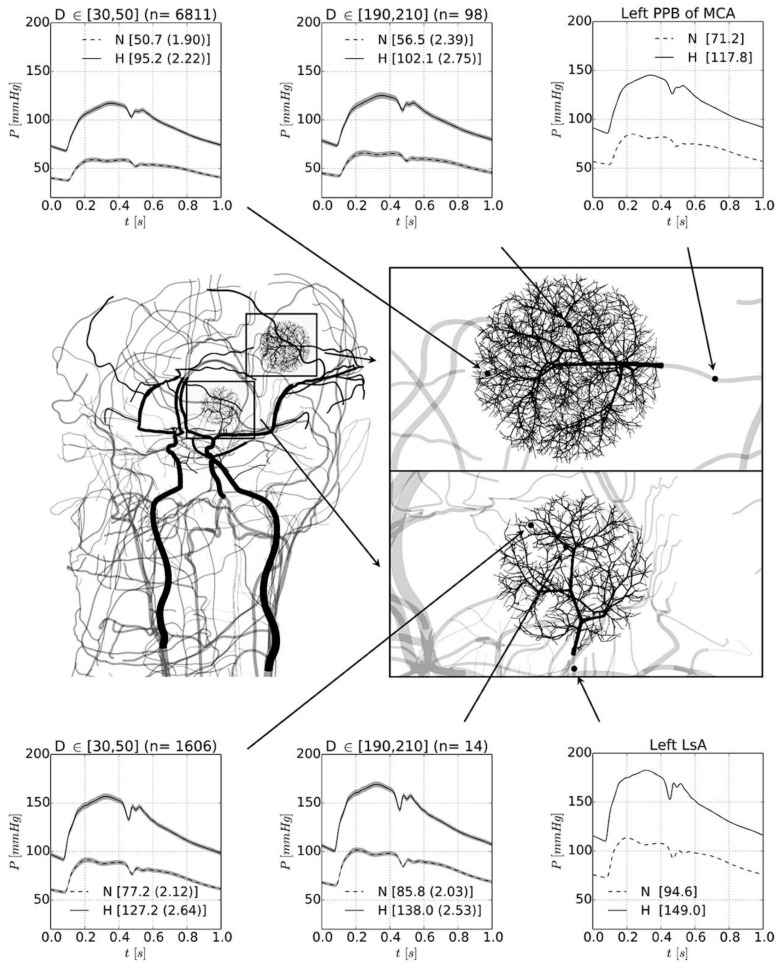
The term "lacunar infarction" referred to small infarctions in the basal ganglia, internal capsule, thalamus, and brainstem, due to hypertensive small vessel disease. However, it has become common to refer to all small infarctions as "vascular centrencephalon", where short straight arteries with few branches transmit high blood pressure straight through to end-arterioles. The cortex is supplied by long arteries with many branches, so there is a very large blood pressure gradient in the brain. When blood pressure in the brachial artery is 117/75 mmHg, the pressure in the lenticulostriate artery would be 113/73, and the pressure in small parietal arterioles would be only 59/38 mmHg. Recent studies have reported that patients with a pulse pressure >60 mmHg and diastolic pressure <60 mmHg have a doubling of coronary risk and a 5.85-fold increase in stroke risk. This means that new low systolic targets being proposed will probably decrease the incidence of true lacunes, but increase small subcortical infarctions in the hemispheres. The pathogenesis of small vessel disease should be interpreted in the light of these blood pressure gradients.
术语“腔隙性梗死”指的是由于高血压性小血管疾病导致的基底节、内囊、丘脑和脑干的小梗死灶。然而,现在通常将所有小梗死灶都称为“血管性中脑”,即分支少的短直动脉将高血压直接传导至终末小动脉。大脑皮质由分支多的长动脉供血,因此大脑中存在很大的血压梯度。当肱动脉血压为117/75 mmHg时,豆纹动脉的压力将为113/73 mmHg,顶叶小动脉的压力仅为59/38 mmHg。最近的研究报告称,脉压>60 mmHg且舒张压<60 mmHg的患者患冠心病的风险加倍,中风风险增加5.85倍。这意味着新提出的低收缩压目标可能会降低真正腔隙性梗死的发生率,但会增加半球小皮质下梗死的发生率。小血管疾病的发病机制应根据这些血压梯度来解释。