Graduate Institute of Medicine, College of Medicine, Kaohsiung Medical University, Kaohsiung 807, Taiwan.
Division of Neurosurgery, Department of Surgery, Kaohsiung Municipal Ta-Tung Hospital, Kaohsiung 801, Taiwan.
Int J Mol Sci. 2019 Jan 22;20(3):473. doi: 10.3390/ijms20030473.
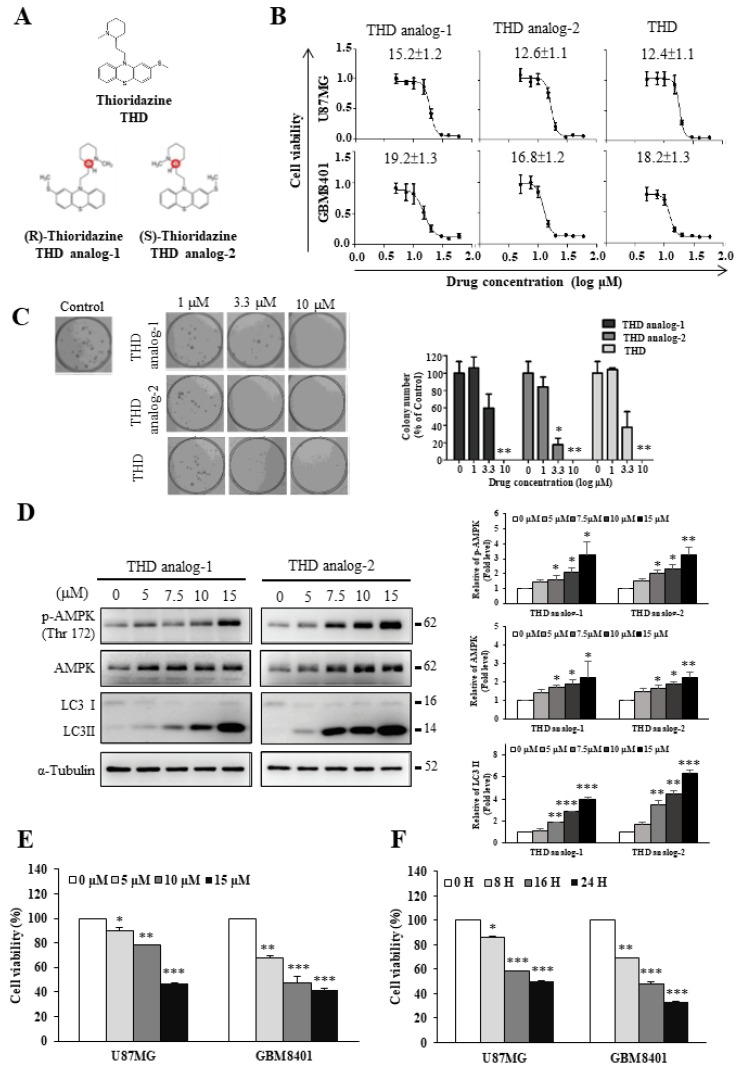
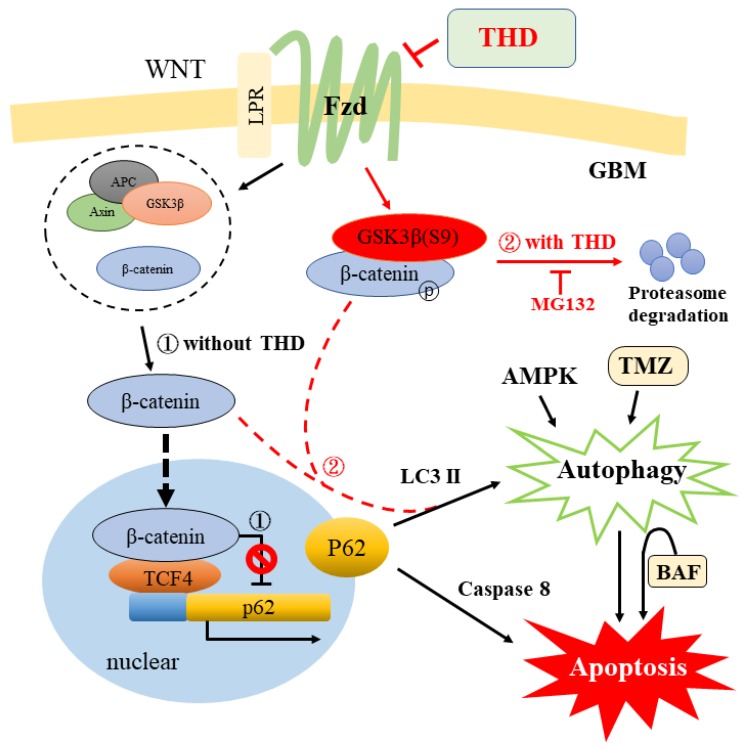
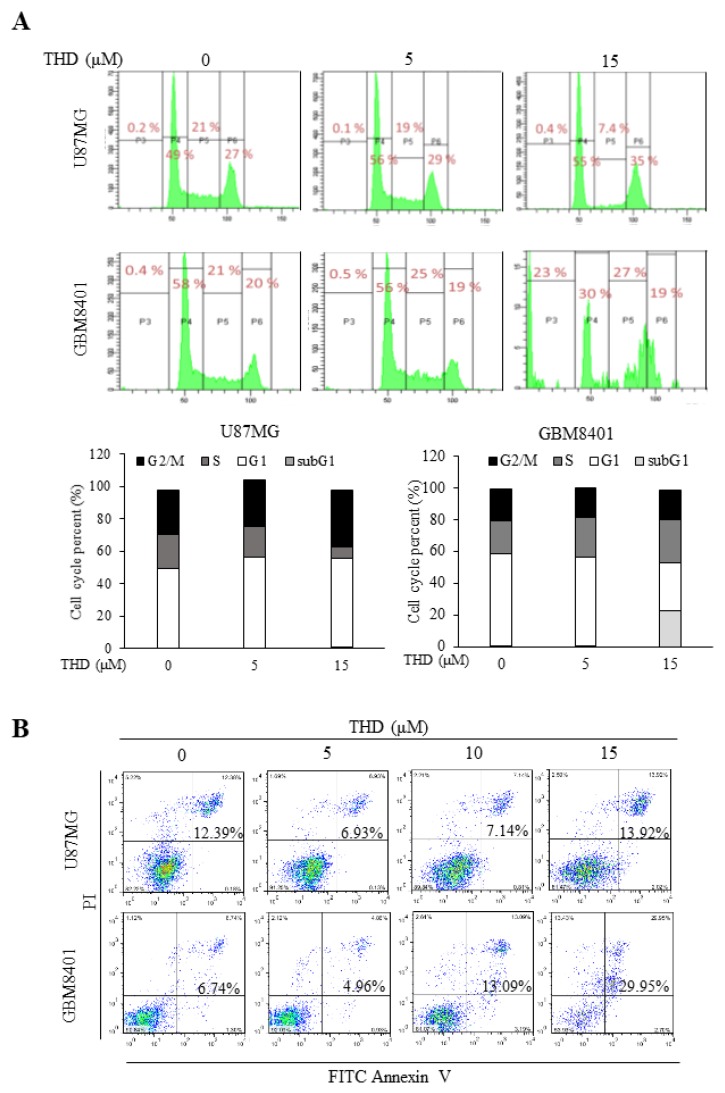
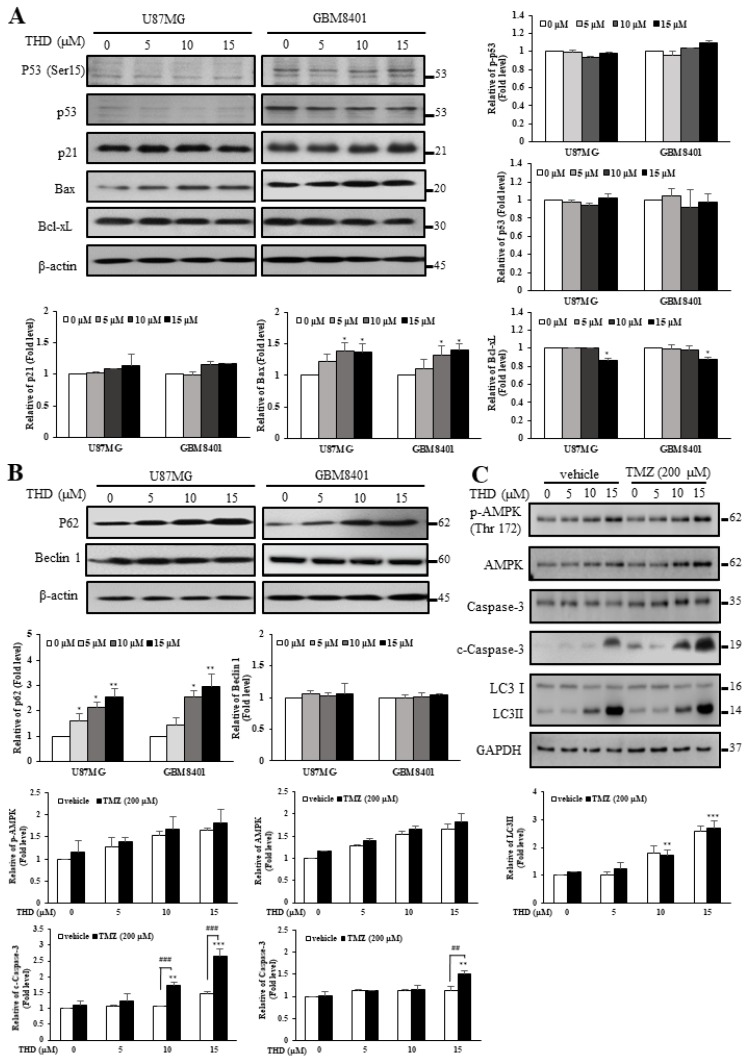
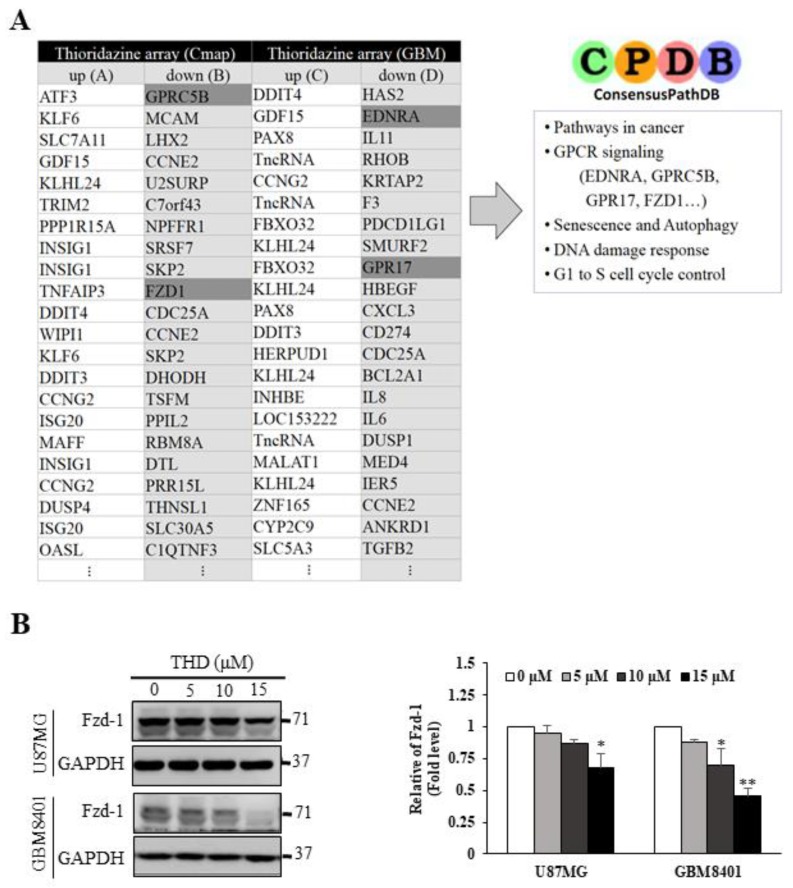
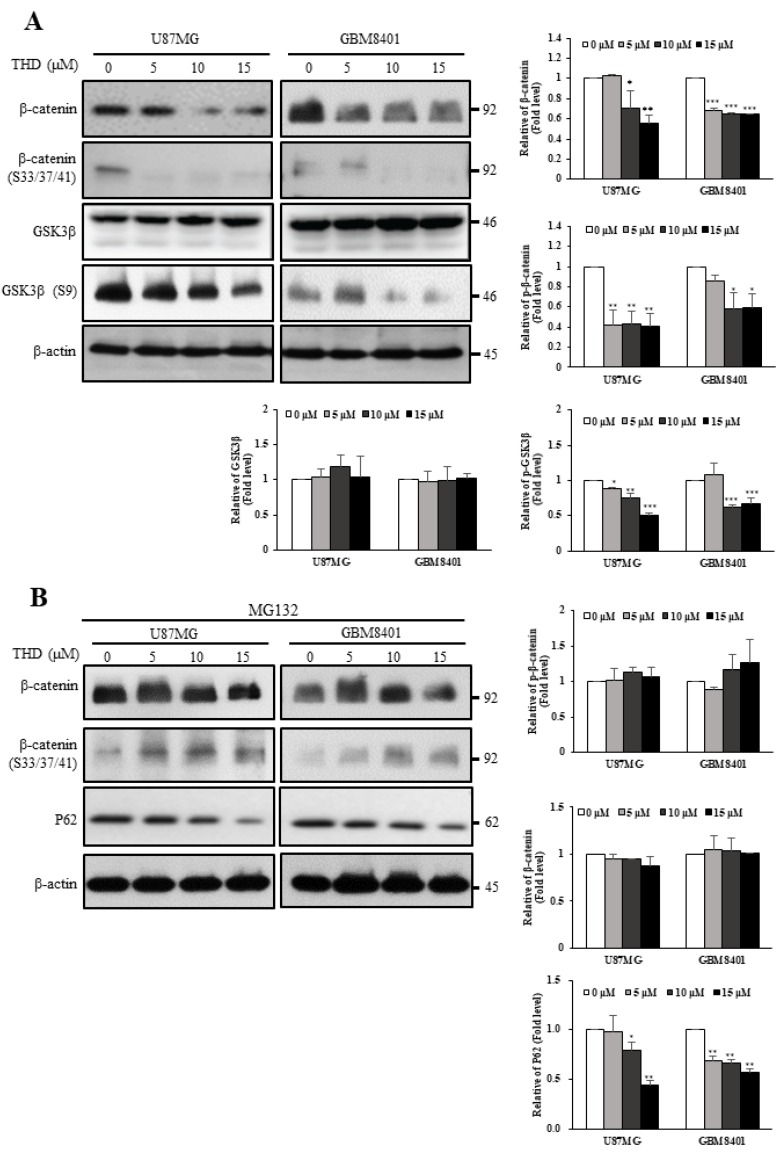
Thioridazine (THD) is a common phenothiazine antipsychotic drug reported to suppress growth in several types of cancer cells. We previously showed that THD acts as an antiglioblastoma and anticancer stem-like cell agent. However, the signaling pathway underlying autophagy and apoptosis induction remains unclear. THD treatment significantly induced autophagy with upregulated AMPK activity and engendered cell death with increased sub-G1 in glioblastoma multiform (GBM) cell lines. Notably, through whole gene expression screening with THD treatment, frizzled (Fzd) proteins, a family of G-protein-coupled receptors, were found, suggesting the participation of Wnt/β-catenin signaling. After THD treatment, Fzd-1 and GSK3β-S9 phosphorylation (inactivated form) was reduced to promote β-catenin degradation, which attenuated P62 inhibition. The autophagy marker LC3-II markedly increased when P62 was released from β-catenin inhibition. Additionally, the P62-dependent caspase-8 activation that induced P53-independent apoptosis was confirmed by inhibiting T-cell factor/β-catenin and autophagy flux. Moreover, treatment with THD combined with temozolomide (TMZ) engendered increased LC3-II expression and caspase-3 activity, indicating promising drug synergism. In conclusion, THD induces autophagy in GBM cells by not only upregulating AMPK activity, but also enhancing P62-mediated autophagy and apoptosis through Wnt/β-catenin signaling. Therefore, THD is a potential alternative therapeutic agent for drug repositioning in GBM.
噻吨嗪(THD)是一种常见的吩噻嗪类抗精神病药物,据报道可抑制多种类型的癌细胞生长。我们之前曾表明,THD 可作为胶质母细胞瘤和癌症干细胞样细胞的抑制剂。然而,诱导自噬和细胞凋亡的信号通路仍不清楚。THD 处理显著诱导自噬,增加 AMPK 活性,并在胶质母细胞瘤多形性(GBM)细胞系中产生增加的亚 G1 细胞死亡。值得注意的是,通过用 THD 处理进行全基因表达筛选,发现了卷曲(Fzd)蛋白,即 G 蛋白偶联受体家族,表明 Wnt/β-catenin 信号参与其中。在 THD 处理后,Fzd-1 和 GSK3β-S9 磷酸化(失活形式)减少,促进β-catenin 降解,从而减弱 P62 的抑制作用。当 P62 从β-catenin 抑制中释放出来时,自噬标记物 LC3-II 明显增加。此外,通过抑制 T 细胞因子/β-catenin 和自噬通量,证实了 P62 依赖性半胱天冬酶-8 激活诱导的 P53 非依赖性细胞凋亡。此外,用 THD 联合替莫唑胺(TMZ)治疗可增加 LC3-II 的表达和 caspase-3 的活性,表明具有潜在的药物协同作用。总之,THD 通过上调 AMPK 活性以及通过 Wnt/β-catenin 信号增强 P62 介导的自噬和凋亡,在 GBM 细胞中诱导自噬。因此,THD 是 GBM 药物重定位的潜在治疗药物。