Institute for Behavioral Medicine Research, Ohio State University Wexner Medical Center, Columbus, OH, USA.
Postgraduate Program in Basic and Applied Immunology, Ribeirão Preto School of Medicine, University of São Paulo, Ribeirão Preto, SP, Brazil.
Sci Rep. 2019 Jan 24;9(1):752. doi: 10.1038/s41598-018-37334-8.
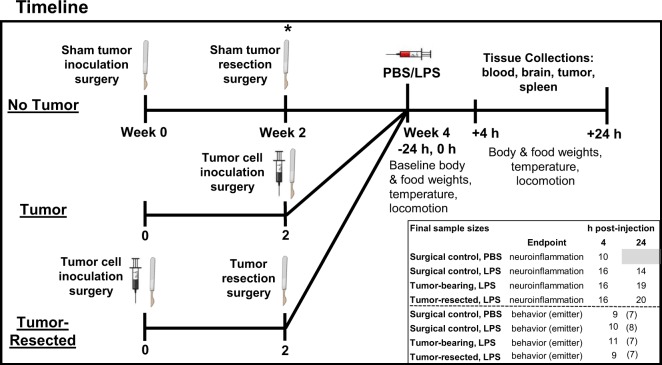
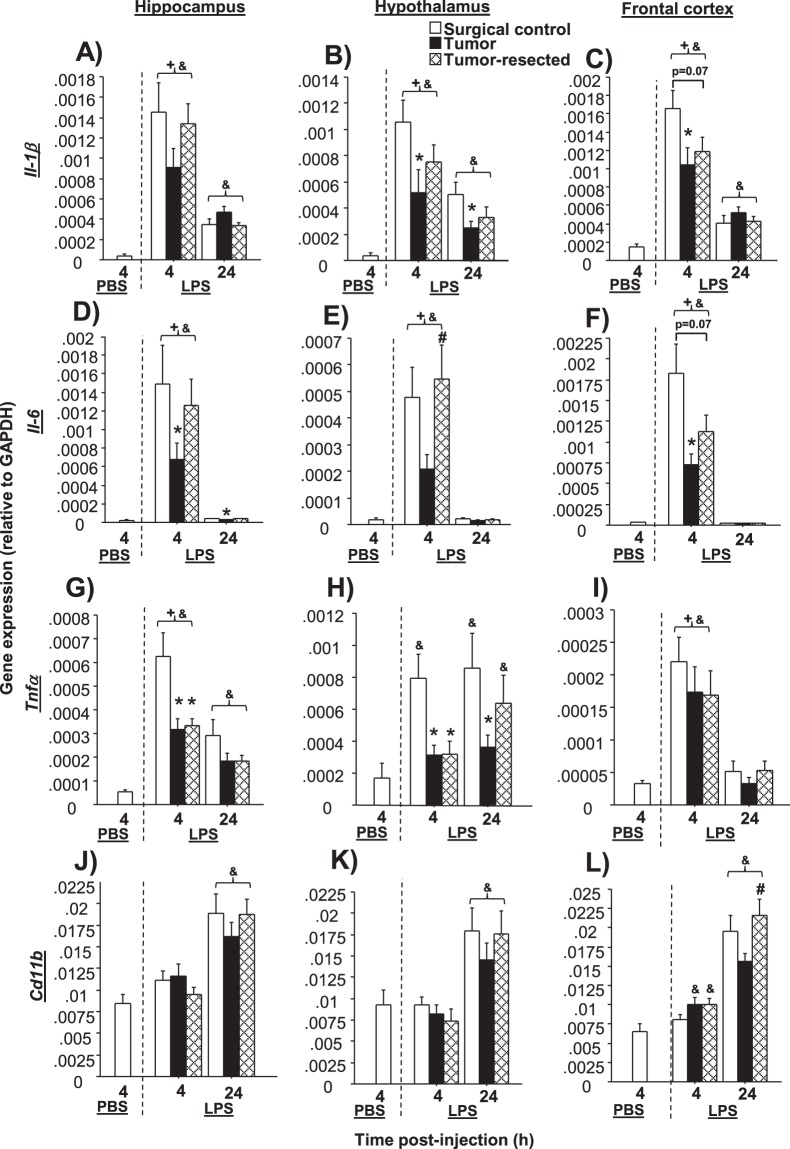
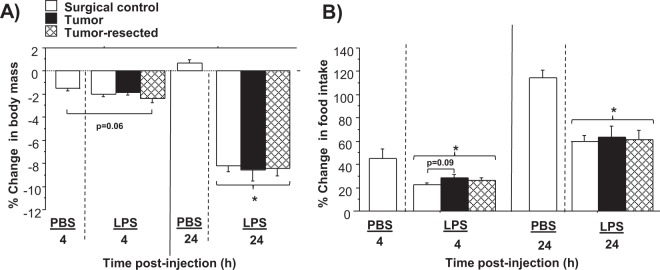
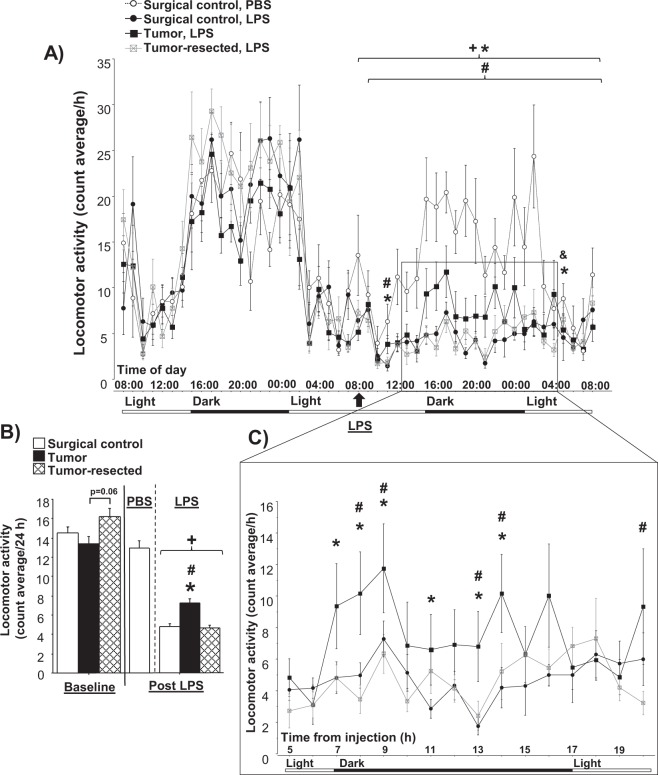
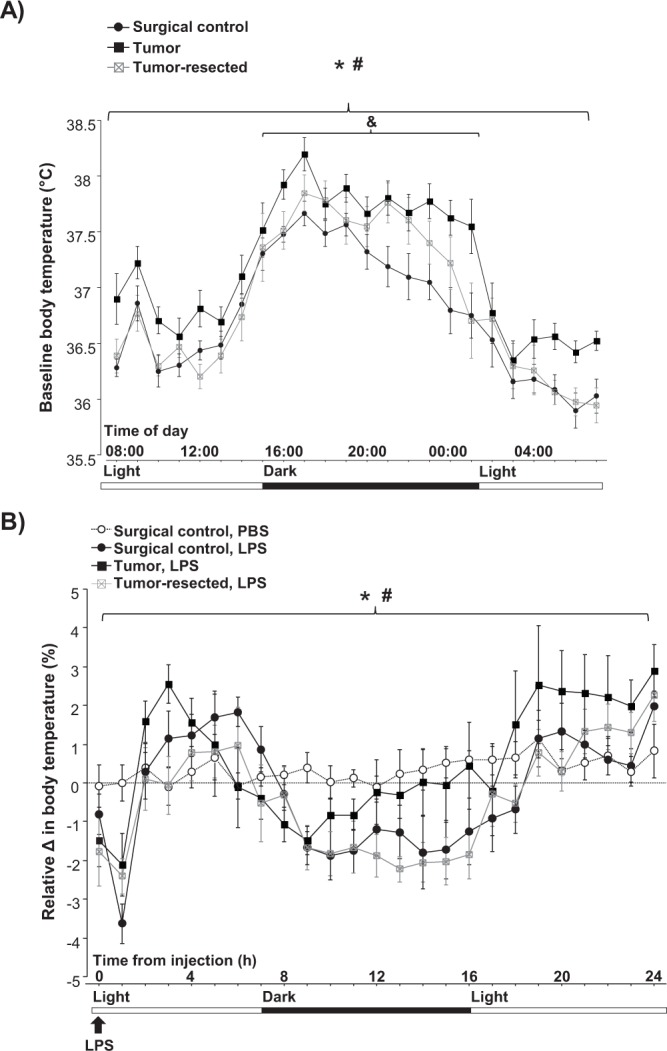
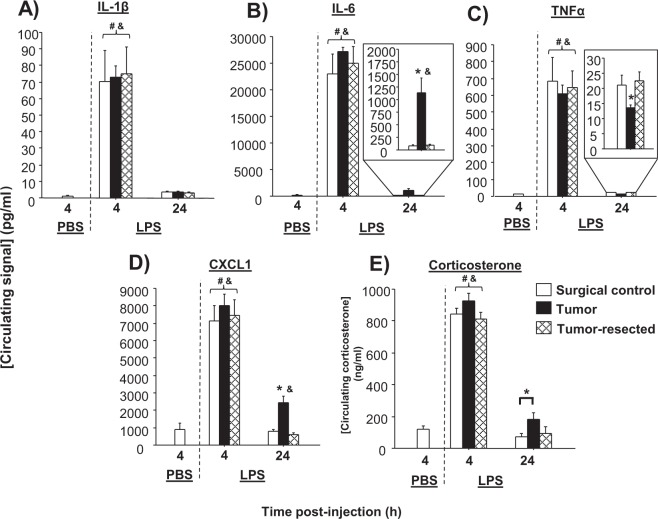
Breast cancer survivors display altered inflammatory responses to immune challenges relative to cancer-naive controls likely due to previous cancer treatments, stress associated with cancer, and/or tumor physiology. Proper inflammatory responses are necessary for adaptive sickness behaviors (e.g., fatigue, anorexia, and fever) and neuroinflammatory pathways are also implicated in mental health disturbances (e.g., cognitive impairment, depression) suffered by cancer patients and survivors. Rodent cancer models indicate that tumors are sufficient to exacerbate neuroinflammatory responses after an immune challenge, however primary tumors are not usually present in cancer survivors, and the behavioral consequences of these brain changes remain understudied. Therefore, we tested the extent to which mammary tumor resection attenuates tumor-induced neuroinflammation and sickness behavior following an immune challenge (i.p. lipopolysaccharide [LPS] injection) in mice. Tnf-α, Il-1β, and Il-6 mRNA decreased in multiple brain regions of LPS-treated tumor-bearing mice relative to LPS-treated controls; tumor resection attenuated these effects in some cases (but not Tnf-α). Tumors also attenuated sickness behaviors (hypothermia and lethargy) compared to LPS-treated controls. Tumor resection reversed these behavioral consequences, although basal body temperature remained elevated, comparable to tumor-bearing mice. Thus, tumors significantly modulate neuroinflammatory pathways with functional consequences and tumor resection mitigates most, but not all, of these changes.
乳腺癌幸存者相对于癌症无进展对照者表现出改变的炎症反应,这可能归因于先前的癌症治疗、与癌症相关的压力和/或肿瘤生理学。适当的炎症反应对于适应性疾病行为(例如疲劳、厌食和发热)是必要的,神经炎症途径也与癌症患者和幸存者所经历的心理健康障碍(例如认知障碍、抑郁)有关。啮齿动物癌症模型表明,肿瘤足以在免疫挑战后加剧神经炎症反应,但癌症幸存者通常没有原发性肿瘤,这些大脑变化的行为后果仍有待研究。因此,我们测试了在接受免疫挑战(腹腔内脂多糖[LPS]注射)后,乳腺肿瘤切除在多大程度上减轻了肿瘤诱导的神经炎症和疾病行为。与 LPS 处理的对照组相比,LPS 处理的荷瘤小鼠的多个脑区中 Tnf-α、Il-1β 和 Il-6mRNA 减少;肿瘤切除在某些情况下减弱了这些效应(但不是 Tnf-α)。肿瘤还减轻了与 LPS 处理的对照组相比的疾病行为(体温过低和昏睡)。肿瘤切除逆转了这些行为后果,尽管基础体温仍然升高,与荷瘤小鼠相当。因此,肿瘤显著调节具有功能后果的神经炎症途径,而肿瘤切除减轻了大多数但不是所有这些变化。