Department of Pharmacology and Physiology, Saint Louis University School of Medicine, 1402 S. Grand Blvd., Saint Louis, MO, 63104, USA.
Department of Neuroscience, Medical University of South Carolina, 173 Ashley Avenue, Charleston, SC, 29425-8908, USA.
Brain Struct Funct. 2019 Apr;224(3):1245-1265. doi: 10.1007/s00429-018-01826-0. Epub 2019 Jan 24.
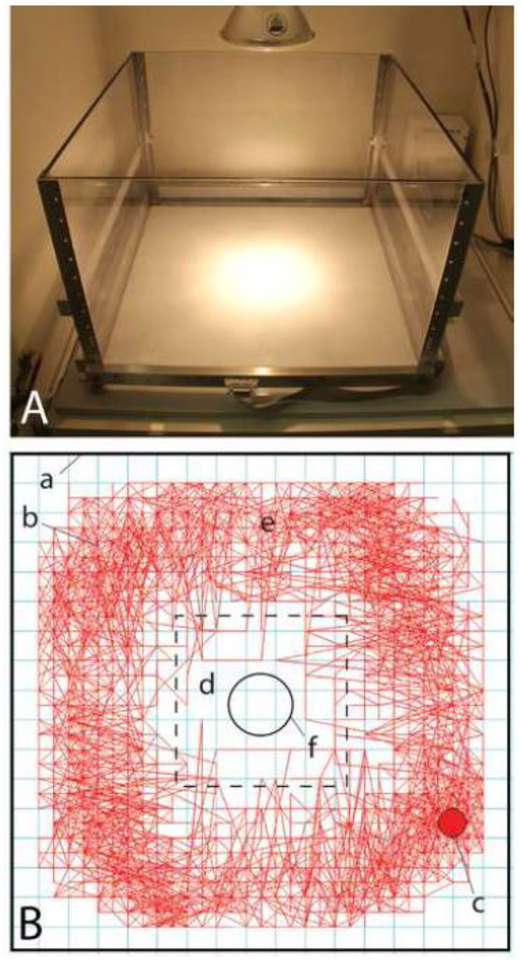
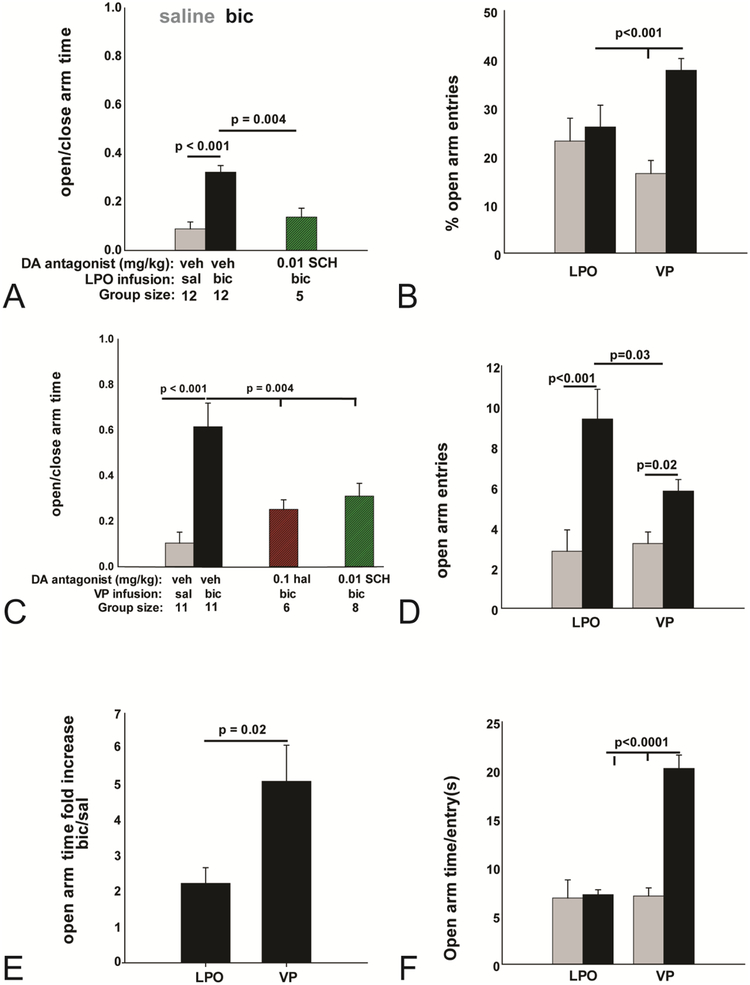
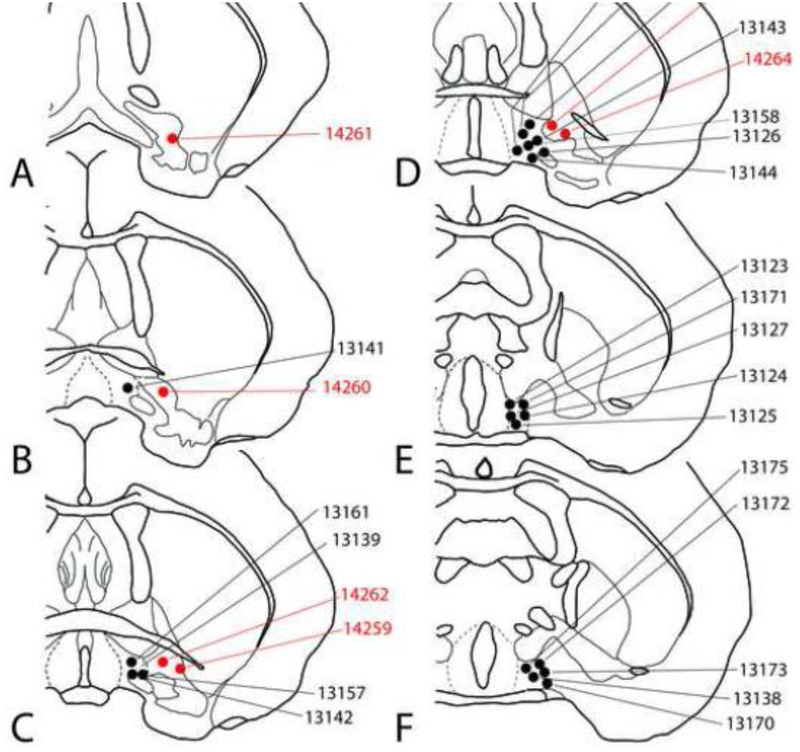
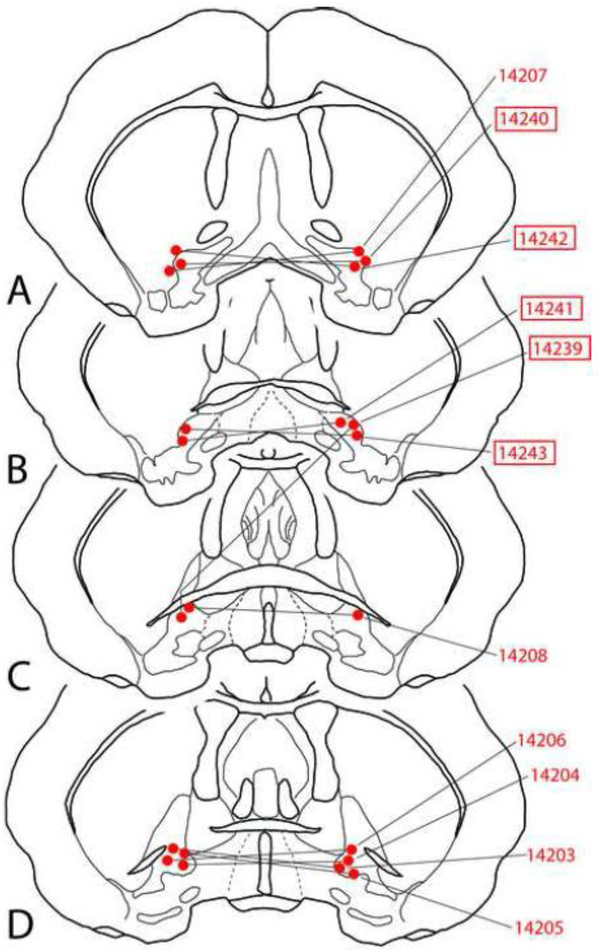
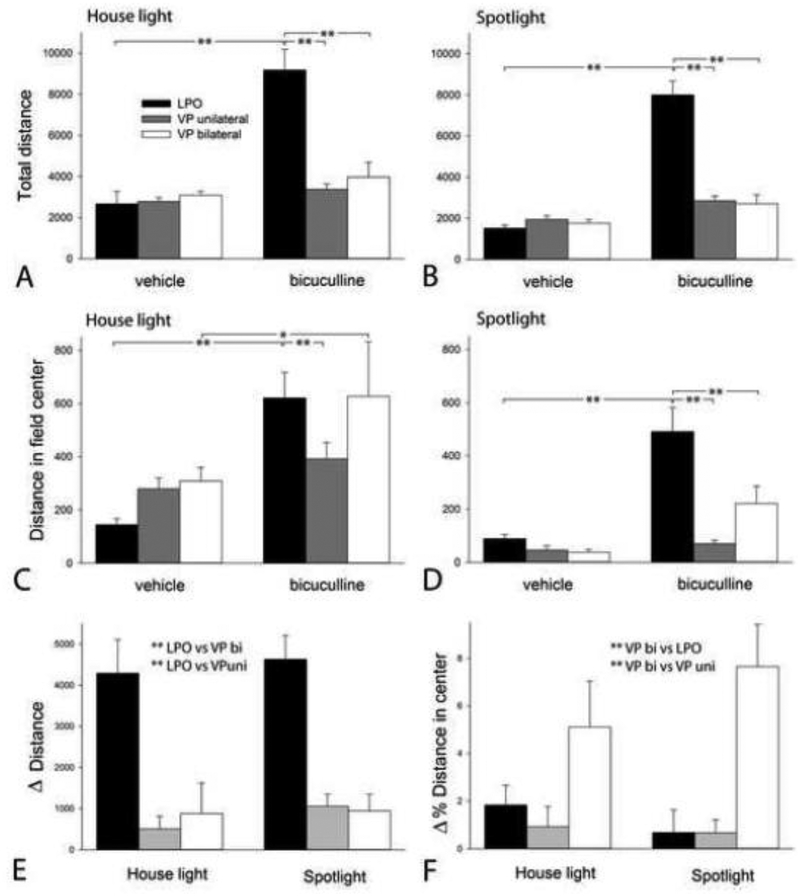
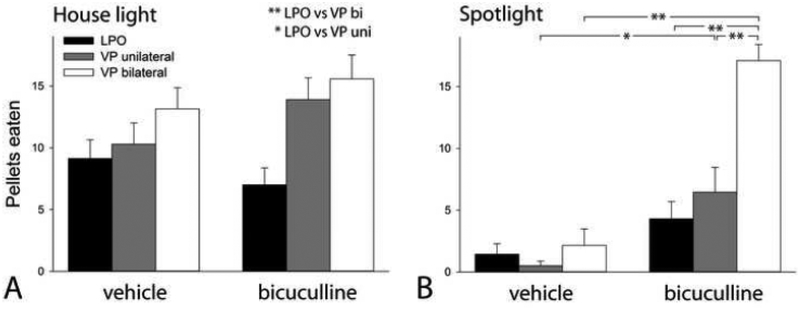
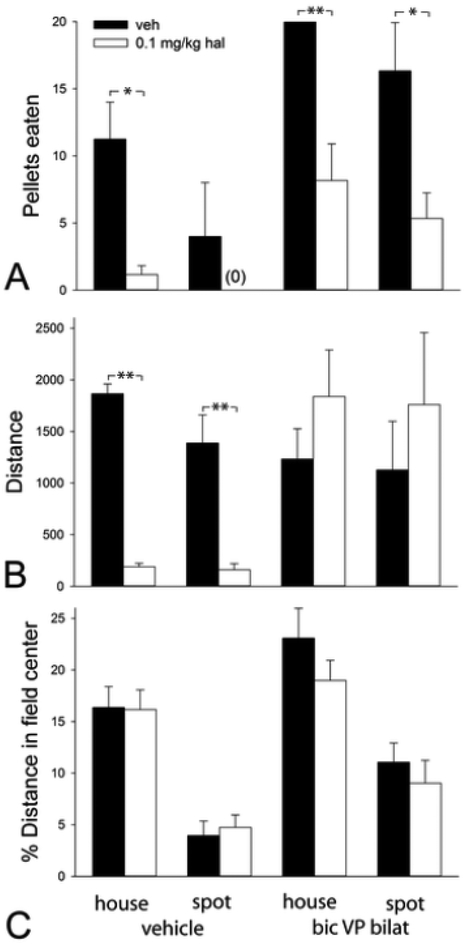
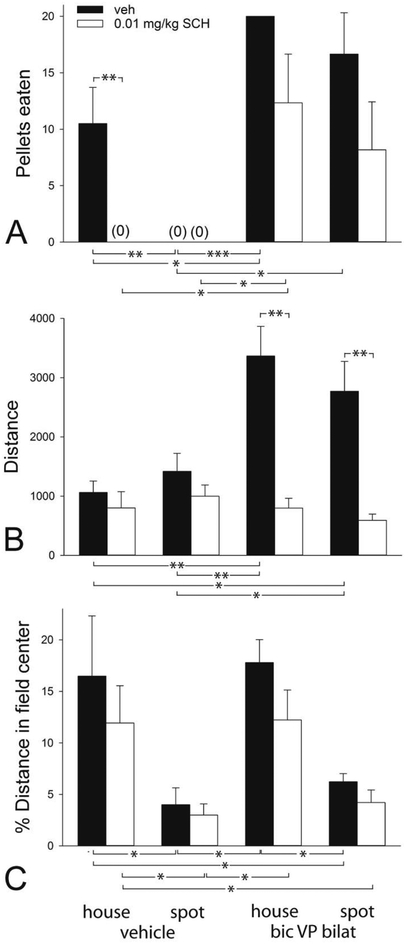
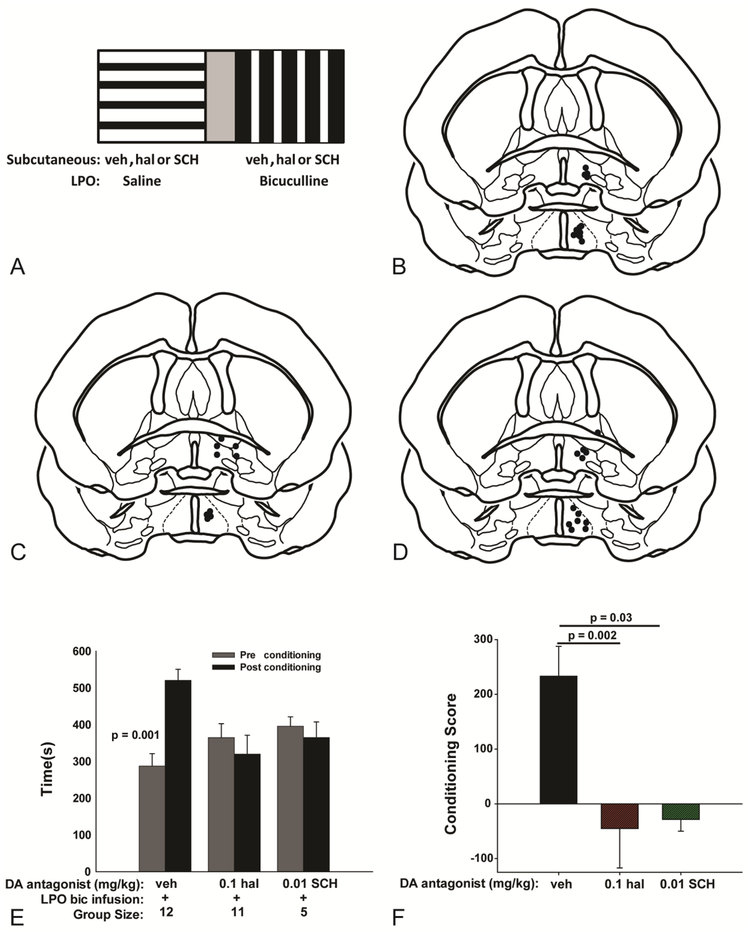
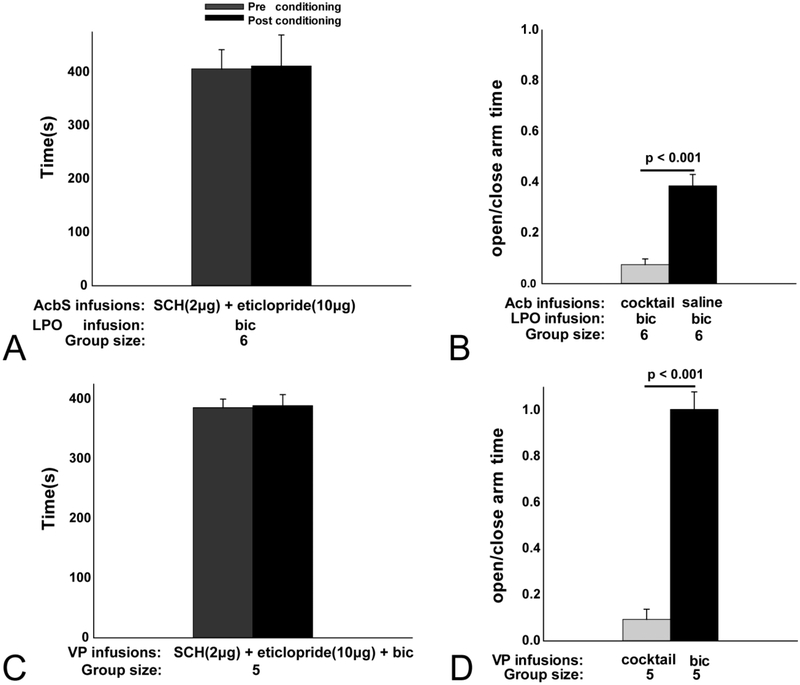
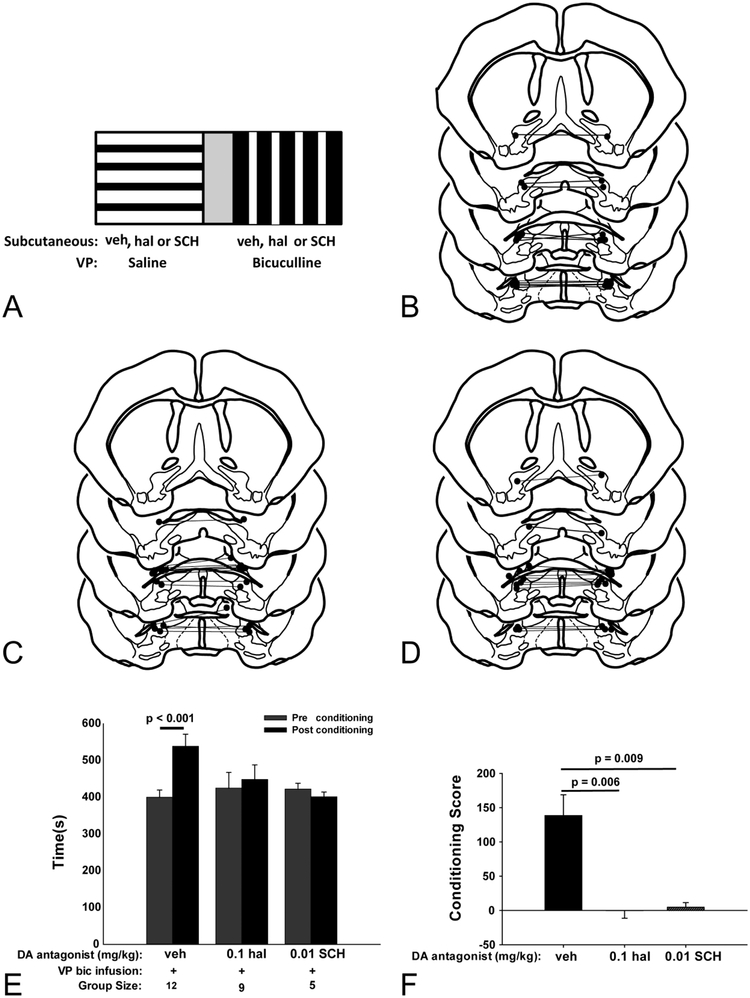
While recently completing a study of the effects of stimulating the lateral preoptic area (LPO) and ventral pallidum (VP) on locomotion and other movements, we also noticed LPO and VP effects on motivational drive and threat tolerance. Here, we have investigated these latter effects by testing conditioned place preference (CPP), behavior on the elevated plus maze (EPM) and the willingness of sated rats to occupy a harshly lit open field center to acquire sweet pellets, a measure of threat tolerance, following infusions of vehicle or bicuculline (bic) into the LPO and VP. LPO-bic infusions robustly increased total locomotion, and, in direct proportion, occupancy of both the harshly lit field center and open arms of the EPM. LPO bic also generated CPP, but did not increase sweet pellet ingestion. These effects were attenuated by dopamine D1 and D2 receptor antagonists, whether given individually or as a cocktail and systemically or infused bilaterally into the nucleus accumbens. VP-bic infusions did not increase total locomotion, but preferentially increased field center occupancy. VP-bic-infused rats compulsively ingested sweet pellets and did so even under the spotlight, whereas harsh illumination suppressed pellet ingestion in the control groups. VP bic produced CPP and increased open arm occupancy on the EPM. These effects were attenuated by pretreatment with dopamine receptor antagonists given systemically or as bilateral infusions into the VP, except for % distance in the field center (by D1 or D2 antagonists) and pellet ingestion (by D1 antagonist). Thus, boldness generated in association with LPO activation is tightly tied to locomotor activation and, as is locomotion itself, strongly DA dependent, whereas that accompanying stimulation of the VP is independent of locomotor activation and, at least in part, DA signaling. Furthermore, respective emboldened behaviors elicited from neither LPO nor VP could clearly be attributed to goal pursuit. Rather, emboldening of behavior seems more to be a fixed action response not fundamentally different than previously for reported locomotion, pivoting, backing, gnawing, and eating elicited by basal forebrain stimulation.
在最近完成的一项关于刺激外侧视前区(LPO)和腹侧苍白球(VP)对运动和其他运动影响的研究中,我们还注意到 LPO 和 VP 对动机驱动和威胁容忍度的影响。在这里,我们通过测试条件性位置偏好(CPP)、高架十字迷宫(EPM)上的行为以及处于饱食状态的大鼠是否愿意进入强光照射的开阔场地中心以获取甜丸来研究这些后者的影响,这是一种衡量威胁容忍度的方法,方法是将载体或荷包牡丹碱(bic)注入 LPO 和 VP 后。LPO-bic 注入可显著增加总运动,并且与强光照射的场地中心和 EPM 的开放臂的占用率成正比。LPO bic 还产生 CPP,但不增加甜丸的摄取。这些影响被多巴胺 D1 和 D2 受体拮抗剂减弱,无论是单独使用还是作为鸡尾酒使用,以及系统地或双侧注入伏隔核。VP-bic 注入不会增加总运动,但会优先增加场地中心的占用率。VP-bic 注入的大鼠强迫性地摄取甜丸,即使在聚光灯下也是如此,而在对照组中,强光照射会抑制丸剂的摄取。VP bic 产生 CPP 并增加 EPM 上的开放臂占有率。这些影响被多巴胺受体拮抗剂预处理减弱,无论是系统给药还是双侧注入 VP,除了场地中心的距离百分比(D1 或 D2 拮抗剂)和丸剂摄取(D1 拮抗剂)外。因此,与 LPO 激活相关的大胆与运动激活紧密相关,与运动本身一样,强烈依赖于 DA,而与 VP 刺激相关的大胆与运动激活无关,至少部分与 DA 信号有关。此外,无论是 LPO 还是 VP 引起的大胆行为都不能明确归因于目标追求。相反,行为的大胆似乎更像是一种固定动作反应,与以前报告的由基底前脑刺激引起的运动、枢轴、后退、咀嚼和进食没有根本区别。