State Key Laboratory of Reproductive Medicine, Department of Histology and Embryology, Nanjing Medical University, Nanjing, China.
Department of Pathology, Women's Hospital of Nanjing Medical University, Nanjing Maternity and Child Health Care Hospital Nanjing, China.
J Cell Mol Med. 2019 Apr;23(4):2583-2594. doi: 10.1111/jcmm.14149. Epub 2019 Jan 24.
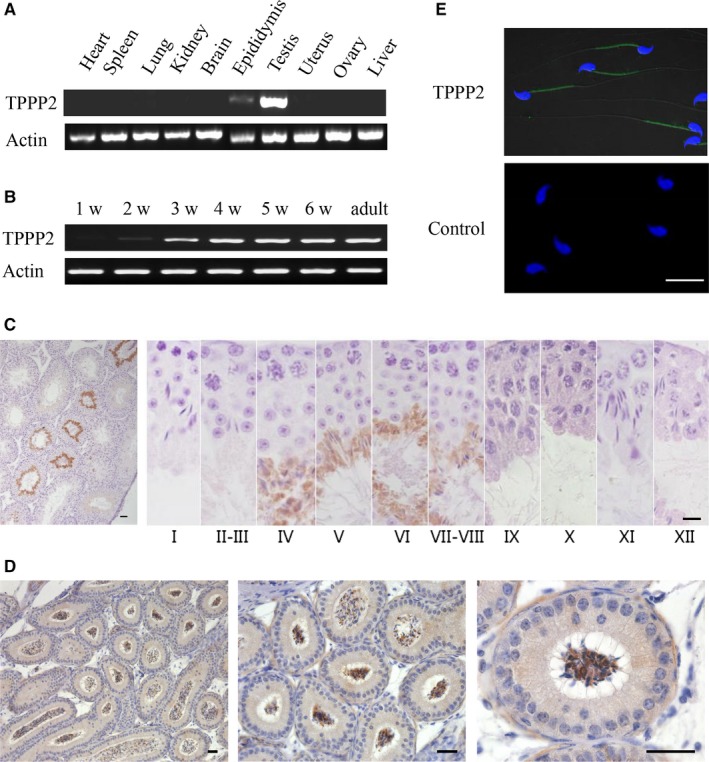
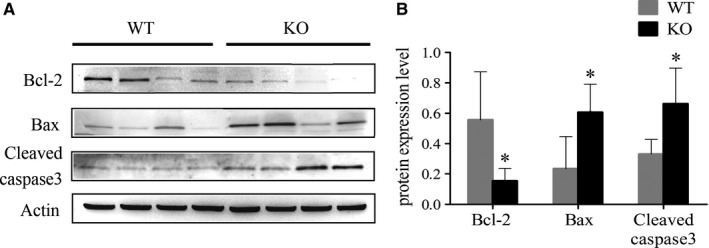
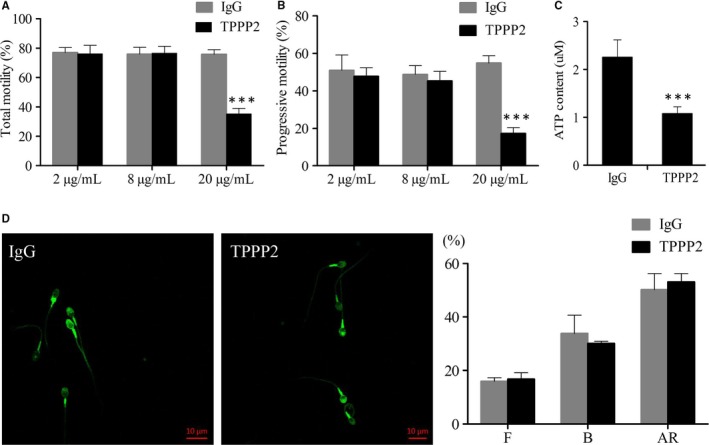
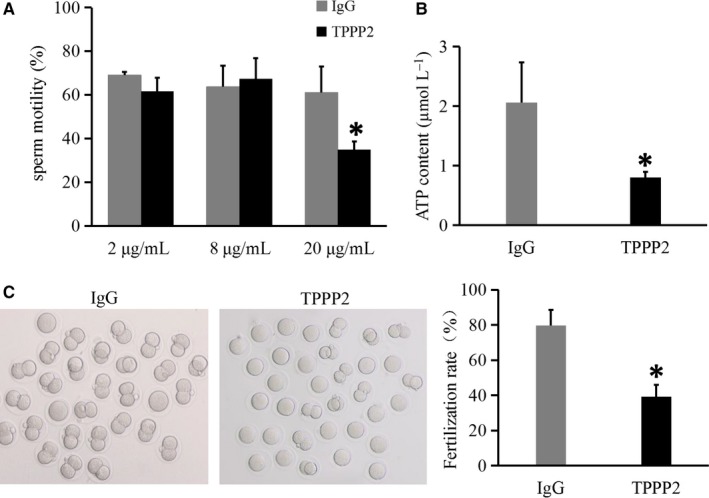
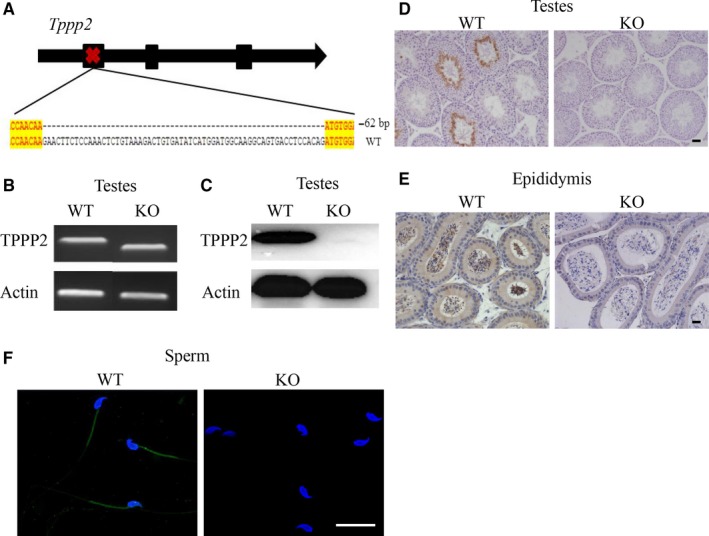
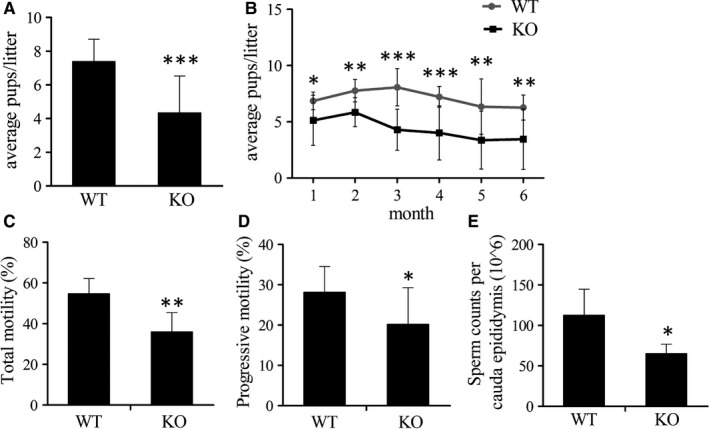
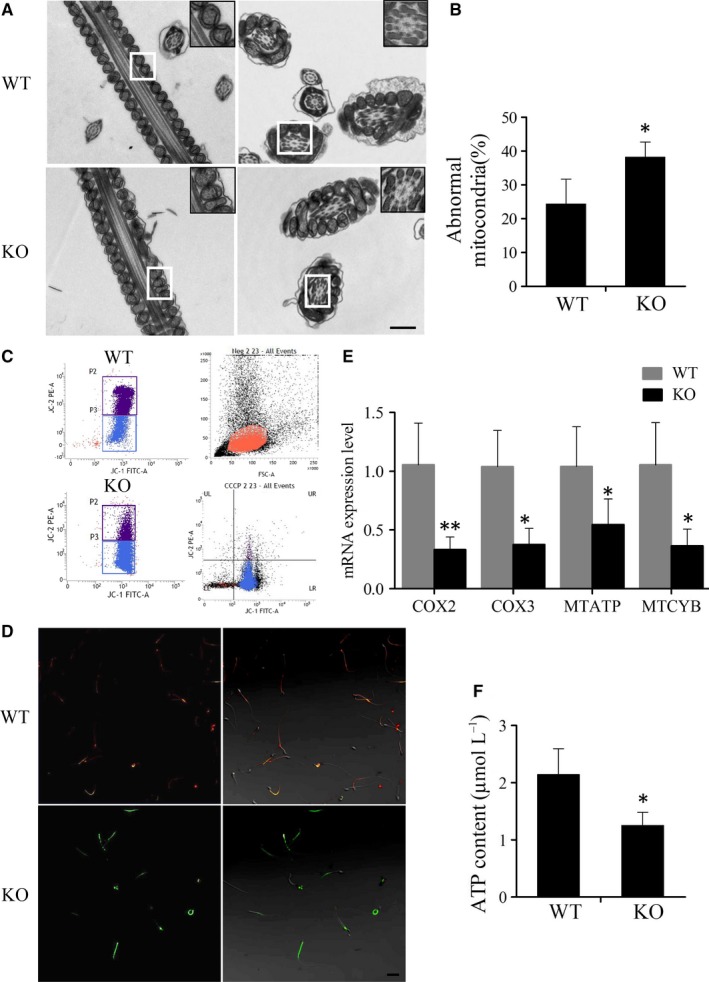
Oligoasthenozoospermia is a major cause of male infertility; however, its etiology and pathogenesis are unclear and may be associated with specific gene abnormalities. This study focused on Tppp2 (tubulin polymerization promoting protein family member 2), whose encoded protein localizes in elongating spermatids at stages IV-VIII of the seminiferous epithelial cycle in testis and in mature sperm in the epididymis. In human and mouse sperm, in vitro inhibition of TPPP2 caused significantly decreased motility and ATP content. Studies on Tppp2 knockout (KO) mice demonstrated that deletion of TPPP2 resulted in male subfertility with a significantly decreased sperm count and motility. In Tppp2 mice, increased irregular mitochondria lacking lamellar cristae, abnormal expression of electron transfer chain molecules, lower ATP levels, decreased mitochondrial membrane potential and increased apoptotic index were observed in sperm, which could be the potential causes for its oligoasthenozoospermia phenotype. Moreover, we identified a potential TPPP2-interactive protein, eEf1b (eukaryotic translation elongation factor 1 beta), which plays an important role in protein translation extension. Thus, TPPP2 is probably a potential pathogenic factor in oligoasthenozoospermia. Deficiency of TPPP2 might affect the translation of specific proteins, altering the structure and function of sperm mitochondria, and resulting in decreased sperm count, motility and fertility.
少精子症是男性不育的主要原因之一;然而,其病因和发病机制尚不清楚,可能与特定基因异常有关。本研究集中于 Tppp2(微管聚合促进蛋白家族成员 2),其编码的蛋白定位于睾丸生精上皮周期 IV-VIII 期的伸长精子和附睾中的成熟精子。在人和小鼠精子中,体外抑制 TPPP2 导致运动能力和 ATP 含量显著下降。对 Tppp2 敲除(KO)小鼠的研究表明,TPPP2 的缺失导致雄性生育力降低,精子数量和运动能力显著下降。在 Tppp2 小鼠中,精子中观察到不规则线粒体增多,缺乏板层嵴,电子传递链分子表达异常,ATP 水平降低,线粒体膜电位降低,凋亡指数升高,这可能是其少精子症表型的潜在原因。此外,我们鉴定出一种潜在的 TPPP2 相互作用蛋白,eEf1b(真核翻译延伸因子 1β),它在蛋白质翻译延伸中发挥重要作用。因此,TPPP2 可能是少精子症的潜在致病因素。TPPP2 的缺乏可能会影响特定蛋白质的翻译,改变精子线粒体的结构和功能,导致精子数量、运动能力和生育力下降。