Institute of Molecular Life Sciences, Research Centre for Natural Sciences, HUN-REN, 1117 Budapest, Hungary.
Int J Mol Sci. 2024 Jun 27;25(13):7017. doi: 10.3390/ijms25137017.
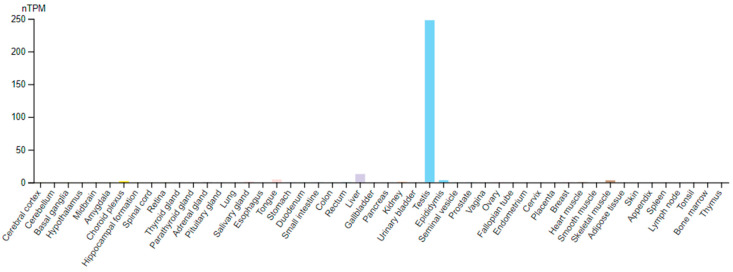
Tubulin polymerization-promoting protein2 (TPPP2) is one of the three paralogs of mammalian TPPP proteins. Its possible role in spermatogenesis is described in this narrative review. TPPP2 is expressed specifically in the male reproductive system, mainly in testes and sperm, and also in the epididymis. In testes, TPPP2 is exclusively expressed in elongating spermatids; in the epididymis, it is located in the middle piece of the sperm tail. TPPP2 is involved in spermiogenesis, in steps which are determinative for the formation and morphology of spermatids. The inhibition of TPPP2 decreases sperm motility (the curvilinear velocity of sperms), probably due to influencing mitochondrial energy production since TPPP2 knockout mice possess an impaired mitochondrial structure. There are data on the role of TPPP2 in various mammalian species: human, mouse, swine, and various ruminants; there is a significant homology among TPPP2s from different species. Experiments with -mice show that the absence of TPPP2 results in decreased sperm count and serious dysfunction of sperm, including decreased motility; however, the in vitro capacitation and acrosome reaction are not influenced. The symptoms show that -mice may be considered as a model for oligoasthenozoospermia.
微管蛋白聚合促进蛋白 2(TPPP2)是哺乳动物 TPPP 蛋白的三个同源物之一。本综述描述了 TPPP2 在精子发生中的可能作用。TPPP2 特异性表达于雄性生殖系统,主要在睾丸和精子中,也在附睾中表达。在睾丸中,TPPP2 仅在伸长的精子中表达;在附睾中,它位于精子尾部中段。TPPP2 参与精子发生,在决定精子形成和形态的步骤中发挥作用。TPPP2 的抑制降低了精子的运动能力(精子的曲线速度),这可能是由于影响了线粒体的能量产生,因为 TPPP2 敲除小鼠的线粒体结构受损。在不同的哺乳动物物种中都有关于 TPPP2 作用的研究:人类、小鼠、猪和各种反刍动物;不同物种的 TPPP2 之间具有显著的同源性。-/- 小鼠实验表明,TPPP2 的缺失导致精子数量减少和严重的精子功能障碍,包括运动能力下降;然而,体外获能和顶体反应不受影响。这些症状表明,-/- 小鼠可能被视为少精子症的模型。