Emergentec biodevelopment GmbH, Vienna, Austria.
Department of Internal Medicine III, Medical University of Vienna, Vienna, Austria.
PLoS One. 2019 Jan 25;14(1):e0210859. doi: 10.1371/journal.pone.0210859. eCollection 2019.
Synthetic lethality describes a relationship between two genes where single loss of either gene does not trigger significant impact on cell viability, but simultaneous loss of both gene functions results in lethality. Targeting synthetic lethal interactions with drug combinations promises increased efficacy in tumor therapy.
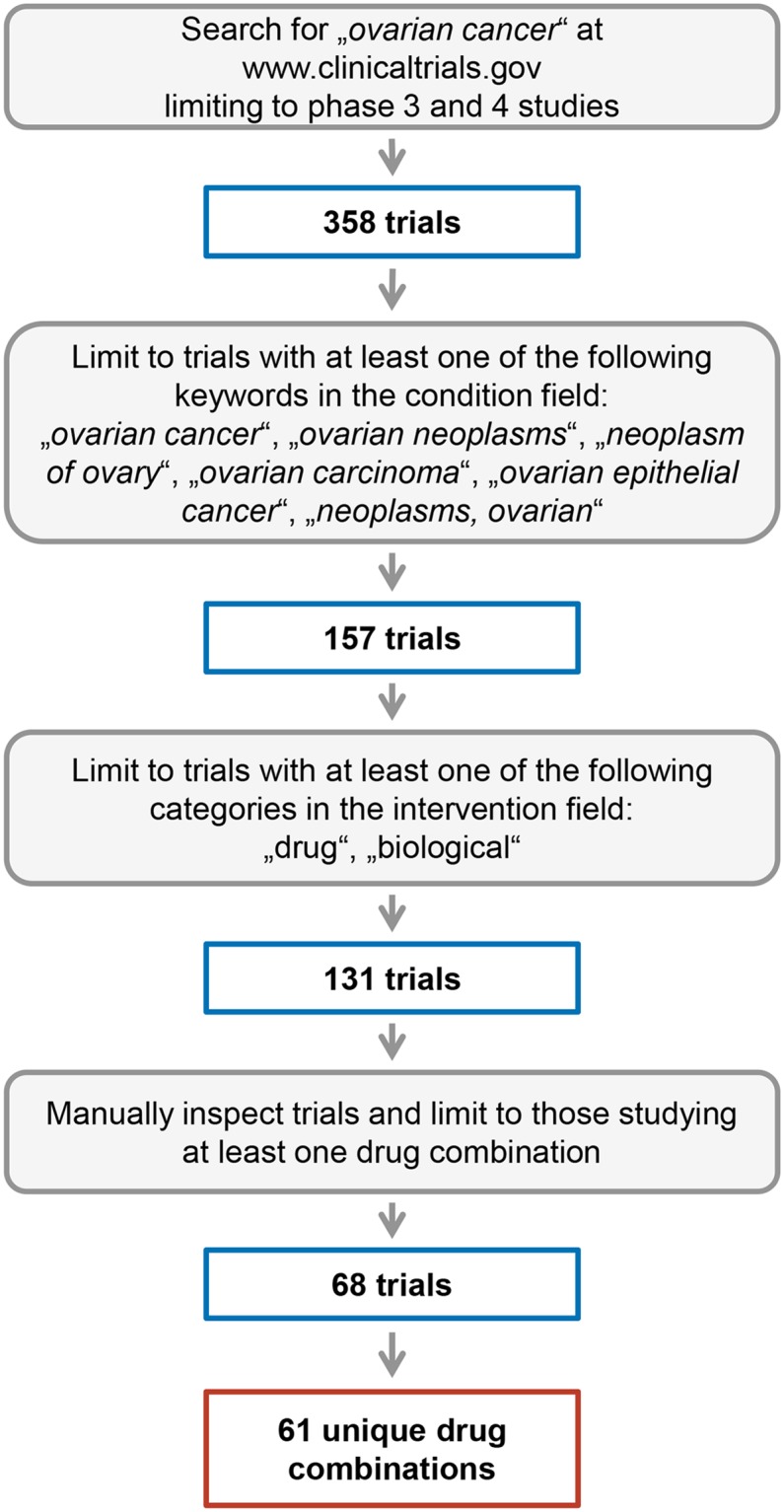
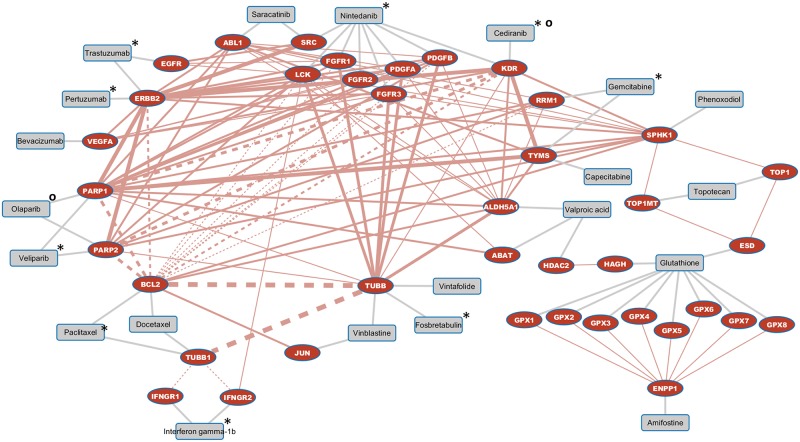
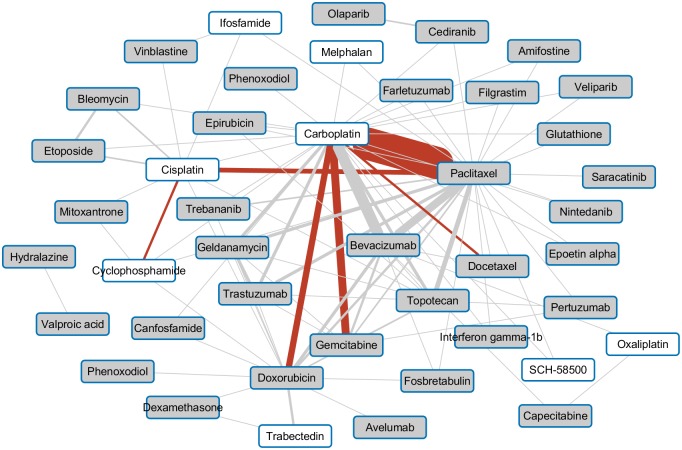
We established a set of synthetic lethal interactions using publicly available data from yeast screens which were mapped to their respective human orthologs using information from orthology databases. This set of experimental synthetic lethal interactions was complemented by a set of predicted synthetic lethal interactions based on a set of protein meta-data like e.g. molecular pathway assignment. Based on the combined set, we evaluated drug combinations used in late stage clinical development (clinical phase III and IV trials) or already in clinical use for ovarian cancer with respect to their effect on synthetic lethal interactions. We furthermore identified a set of drug combinations currently not being tested in late stage ovarian cancer clinical trials that however have impact on synthetic lethal interactions thus being worth of further investigations regarding their therapeutic potential in ovarian cancer.
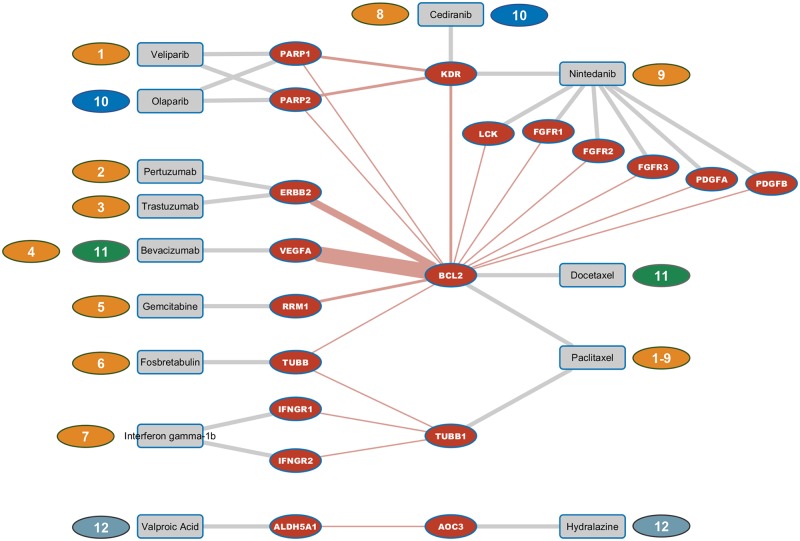
Twelve of the tested drug combinations addressed a synthetic lethal interaction with the anti-VEGF inhibitor bevacizumab in combination with paclitaxel being the most studied drug combination addressing the synthetic lethal pair between VEGFA and BCL2. The set of 84 predicted drug combinations for example holds the combination of the PARP inhibitor olaparib and paclitaxel, which showed efficacy in phase II clinical studies.
A set of drug combinations currently not tested in late stage ovarian cancer clinical trials was identified having impact on synthetic lethal interactions thus being worth of further investigations regarding their therapeutic potential in ovarian cancer.
合成致死性描述了两个基因之间的关系,其中单个基因的缺失不会对细胞活力产生显著影响,但同时缺失两个基因的功能会导致细胞死亡。用药物组合靶向合成致死性相互作用有望提高肿瘤治疗的疗效。
我们使用来自酵母筛选的公开数据建立了一组合成致死性相互作用,并使用同源性数据库中的信息将其映射到相应的人类同源物。该组实验性合成致死性相互作用通过一组基于蛋白质元数据(例如分子途径分配)的预测性合成致死性相互作用得到补充。基于组合数据集,我们评估了晚期临床开发(临床 III 期和 IV 期试验)中使用的或已经用于卵巢癌治疗的药物组合对合成致死性相互作用的影响。我们还确定了一组目前不在晚期卵巢癌临床试验中测试的药物组合,但对合成致死性相互作用有影响,因此值得进一步研究其在卵巢癌中的治疗潜力。
测试的 12 种药物组合针对与抗 VEGF 抑制剂贝伐珠单抗联合使用的合成致死性相互作用,而紫杉醇联合贝伐珠单抗是研究最多的针对 VEGFA 和 BCL2 合成致死对的药物组合。例如,84 种预测药物组合中的一组包括 PARP 抑制剂奥拉帕尼和紫杉醇,它们在 II 期临床研究中显示出疗效。
确定了一组目前不在晚期卵巢癌临床试验中测试的药物组合,这些药物组合对合成致死性相互作用有影响,因此值得进一步研究其在卵巢癌中的治疗潜力。