Department of Chemistry, Graduate School of Science Kyoto University, Kitashirakawa-Oiwakecho, Sakyo, Kyoto, 606-8502, Japan.
Institute for Integrated Cell-Material Science (WPI-iCeMS) Kyoto University, Yoshida-Ushinomiyacho, Sakyo, Kyoto, 606-8501, Japan.
Molecules. 2019 Jan 24;24(3):429. doi: 10.3390/molecules24030429.
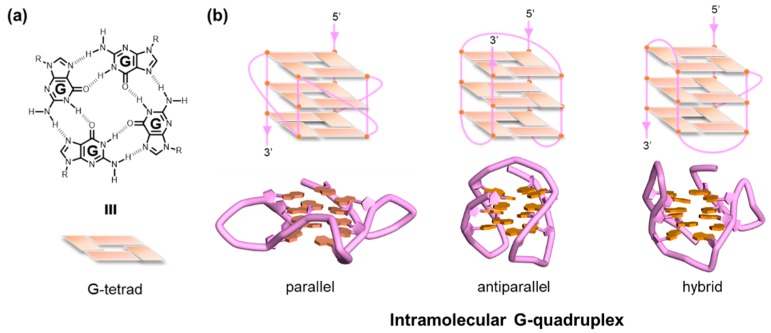
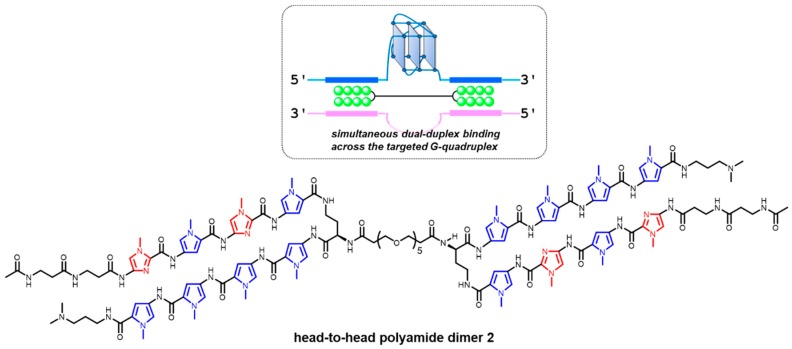
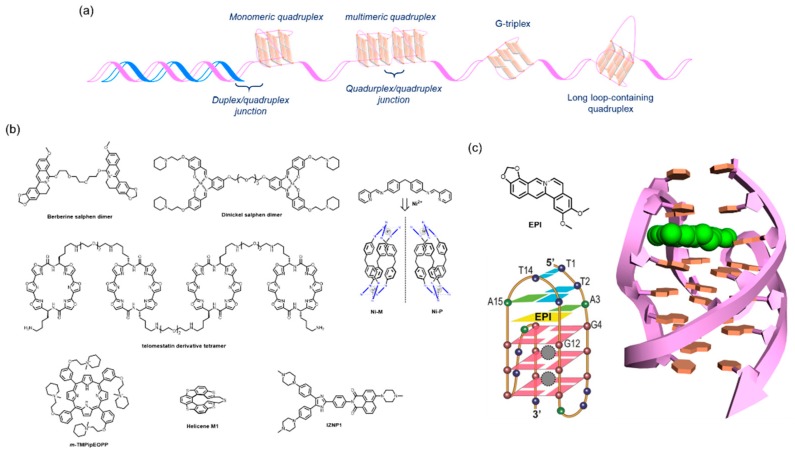
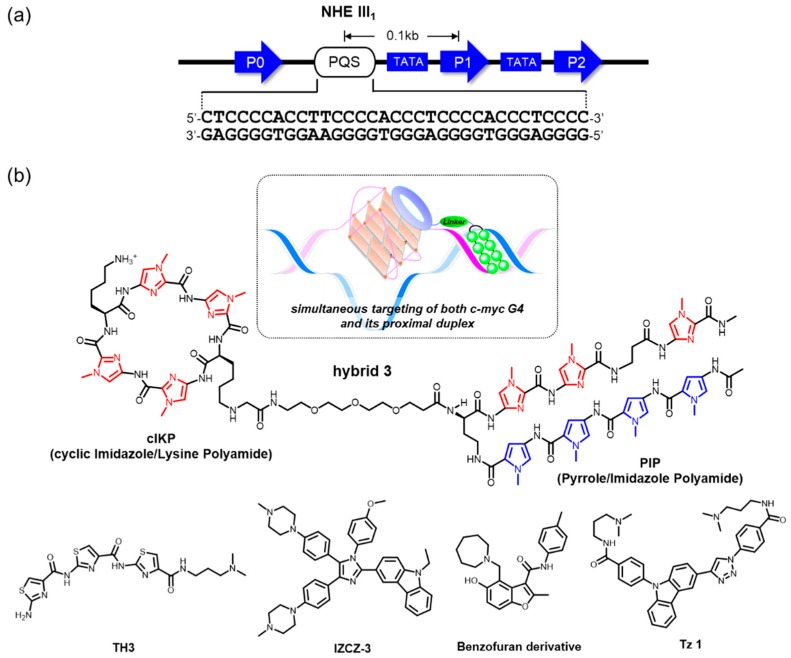
A G-quadruplex (G4) is a well-known nucleic acid secondary structure comprising guanine-rich sequences, and has profound implications for various pharmacological and biological events, including cancers. Therefore, ligands interacting with G4s have attracted great attention as potential anticancer therapies or in molecular probe applications. To date, a large variety of DNA/RNA G4 ligands have been developed by a number of laboratories. As protein-targeting drugs face similar situations, G-quadruplex-interacting drugs displayed low selectivity to the targeted G-quadruplex structure. This low selectivity could cause unexpected effects that are usually reasons to halt the drug development process. In this review, we address the recent research on synthetic G4 DNA-interacting ligands that allow targeting of selected G4s as an approach toward the discovery of highly effective anticancer drugs.
四链体(G4)是一种由富含鸟嘌呤的序列组成的已知核酸二级结构,对各种药理学和生物学事件都有深远的影响,包括癌症。因此,与 G4 相互作用的配体作为潜在的抗癌疗法或分子探针应用引起了极大的关注。迄今为止,许多实验室已经开发了大量的 DNA/RNA G4 配体。由于蛋白质靶向药物面临类似的情况,G-四链体相互作用药物对靶向 G-四链体结构的选择性较低。这种低选择性可能会导致意想不到的影响,这通常是药物开发过程中断的原因。在这篇综述中,我们讨论了最近关于合成 G4 DNA 相互作用配体的研究,这些配体允许靶向选定的 G4,作为发现高效抗癌药物的一种方法。