State Key Laboratory of Genetic Engineering, School of Life Sciences and Zhongshan Hospital, Fudan University, 2005 Songhu Road, Shanghai 200438, China.
Department of Neurosurgery, Shanghai Institute of Neurosurgery, Changzheng Hospital, Second Military Medical University, Shanghai 200003, China.
EBioMedicine. 2019 Feb;40:163-175. doi: 10.1016/j.ebiom.2019.01.030. Epub 2019 Jan 25.
Glioma is the most common and aggressive primary brain tumor with polygenic susceptibility. The cytoplasmic/nuclear shuttling protein, SLC2A4RG (SLC2A4 regulator), has been identified in the 20q13.33 region influencing glioma susceptibility by genome-wide association studies (GWAS) and fine mapping analyses.
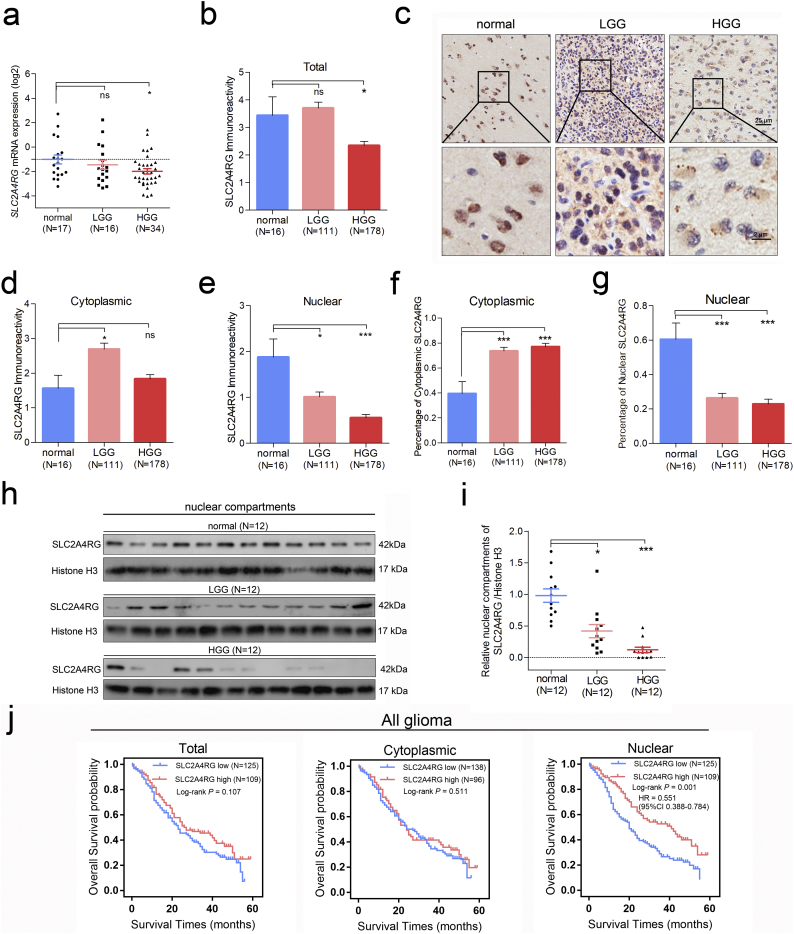
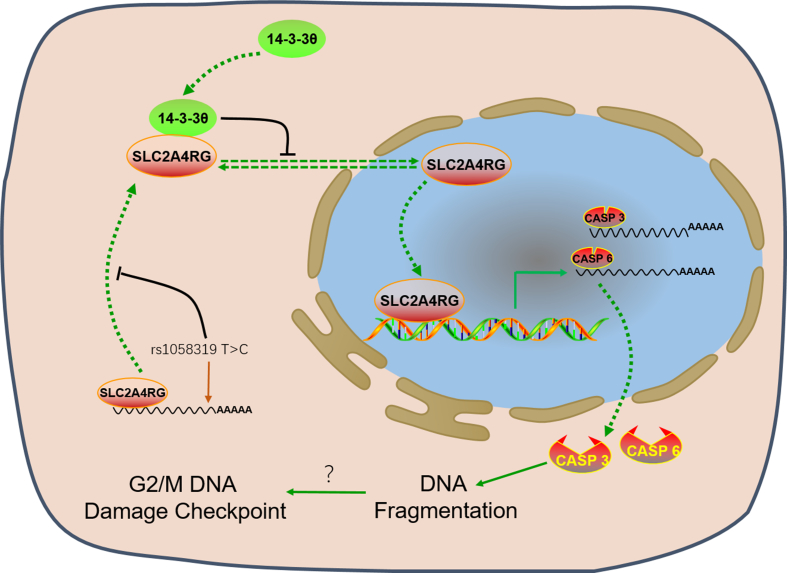
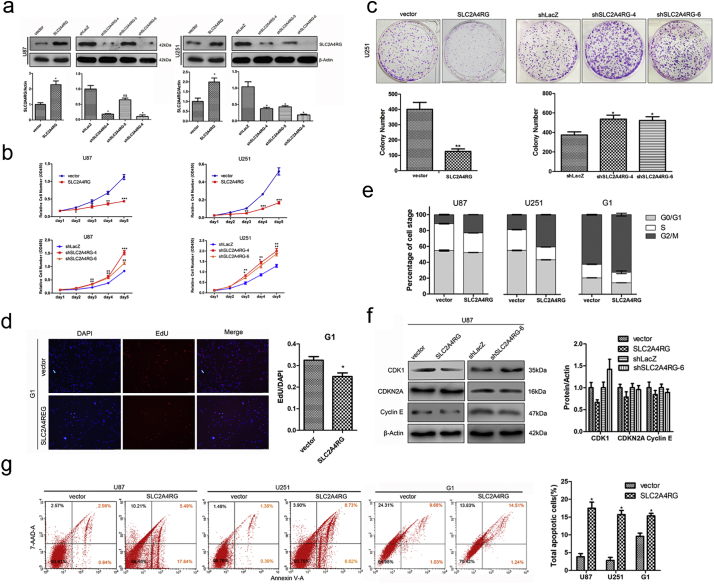
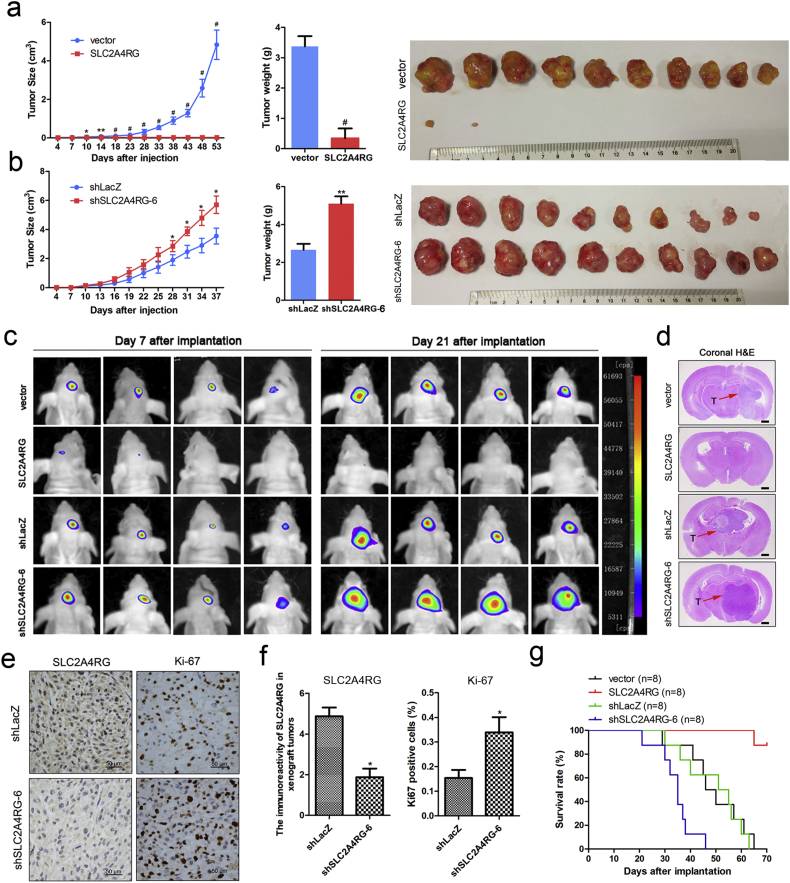
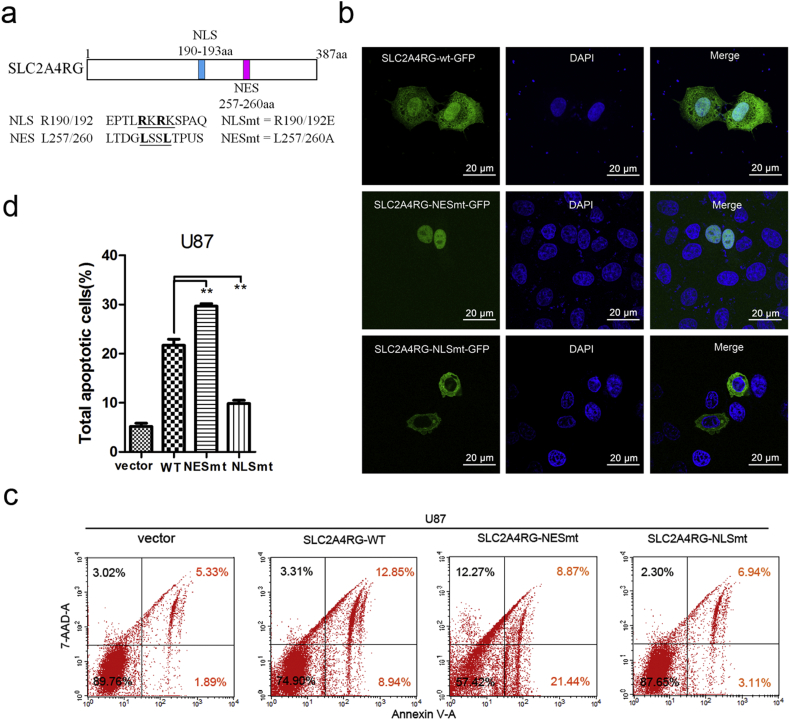
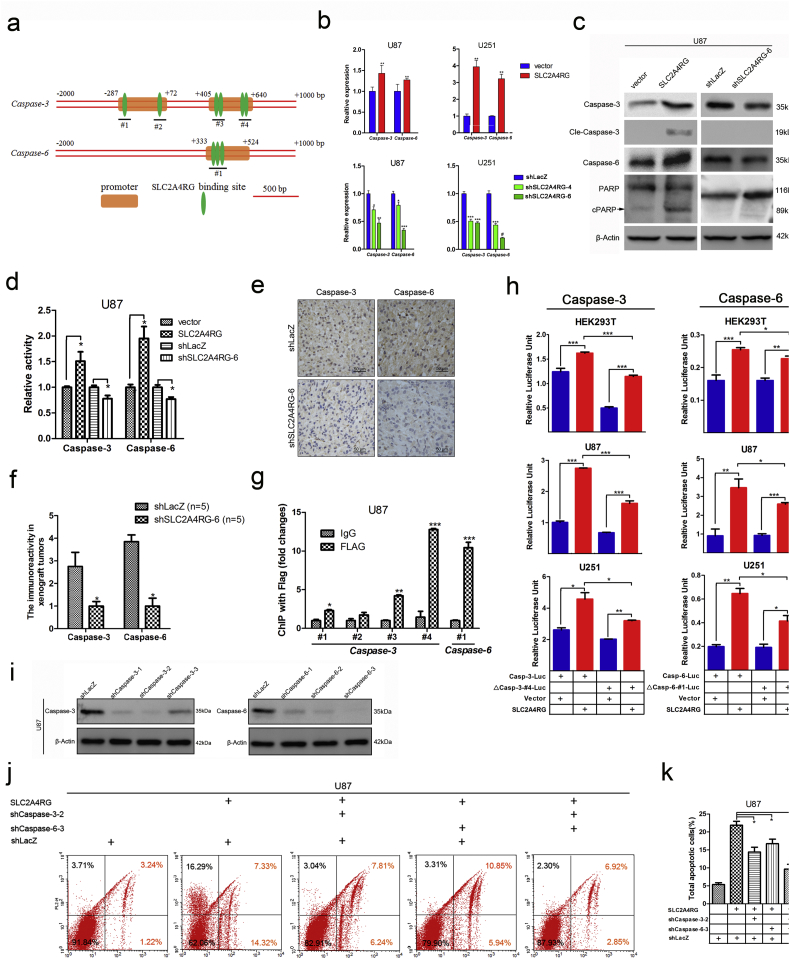
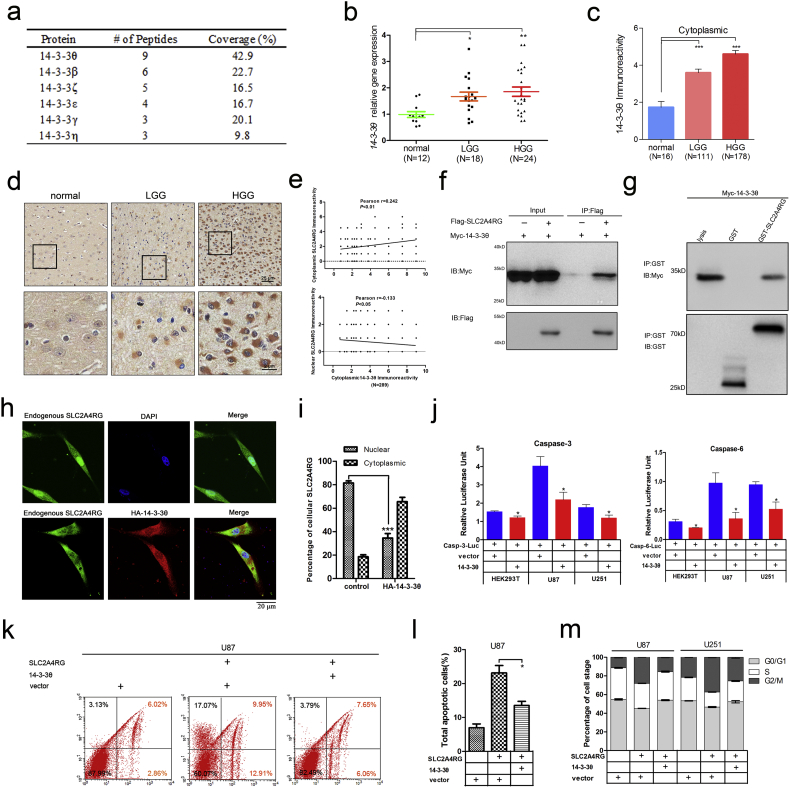
To discover the expression of SLC2A4RG and its relationship with patient prognosis, tissue microarray containing glioma samples and normal brains was constructed followed by immunohistochemical staining. The role of SLC2A4RG on cell proliferation, cell cycle, and apoptosis was evaluated by gain- and loss-of-function assays in vivo, and subcutaneous and intracranial xenografts were performed to assess its functional effects. The mechanism underlying SLC2A4RG was further investigated via luciferase reporter analyses, ChIP, mass spectrometry, Co-IP, immunofluorescence, etc. FINDINGS: The potential tumor suppressor role of SLC2A4RG was further validated by in vitro and in vivo experiments that SLC2A4RG could attenuate cell proliferation via G2/M phase arrest and induce glioma cell apoptosis by direct transactivation of caspase-3 and caspase-6. Moreover, its function displaying showed to depend on the nuclear transportation of SLC2A4RG, however, bound with 14-3-3θ, it would be sequestered in the cytoplasm followed by reversal effect.
We identify a new pro-oncogenic mechanism whereby 14-3-3θ negatively regulates the nuclear function of the tumor suppressor SLC2A4RG, with significant therapeutic implications for the intervention of human glioma. FUND: This work was supported by the National Natural Science Foundation of China (81372706, 81572501, and 81372235).
神经胶质瘤是最常见且侵袭性最强的原发性脑肿瘤,具有多基因易感性。通过全基因组关联研究(GWAS)和精细图谱分析,已在 20q13.33 区域鉴定出具有细胞质/核穿梭蛋白功能的 SLC2A4RG(SLC2A4 调节因子),该蛋白可影响神经胶质瘤的易感性。
为了发现 SLC2A4RG 的表达及其与患者预后的关系,构建了包含神经胶质瘤样本和正常脑组织的组织微阵列,随后进行免疫组织化学染色。通过体内 gain- 和 loss-of-function 测定评估 SLC2A4RG 对细胞增殖、细胞周期和细胞凋亡的作用,并进行皮下和颅内异种移植以评估其功能效应。通过荧光素酶报告分析、ChIP、质谱、Co-IP、免疫荧光等进一步研究 SLC2A4RG 的作用机制。
通过体外和体内实验进一步验证了 SLC2A4RG 的潜在肿瘤抑制作用,表明 SLC2A4RG 通过 G2/M 期阻滞减弱细胞增殖,并通过直接反式激活 caspase-3 和 caspase-6 诱导神经胶质瘤细胞凋亡。此外,其功能显示依赖于 SLC2A4RG 的核转运,然而,与 14-3-3θ 结合后,它会被隔离在细胞质中,随后发生逆转效应。
我们发现了一种新的致癌机制,即 14-3-3θ 负调控肿瘤抑制因子 SLC2A4RG 的核功能,这对人类神经胶质瘤的干预具有重要的治疗意义。
本工作得到了国家自然科学基金(81372706、81572501 和 81372235)的支持。