State Key Laboratory of Plant Physiology and Biochemistry, China Agricultural University, Beijing, 100193, China.
National Center for Evaluation of Agricultural Wild Plants (Rice), MOE Laboratory of Crop Heterosis and Utilization, Department of Plant Genetics and Breeding, China Agricultural University, Beijing, 100193, China.
Plant J. 2019 May;98(4):639-653. doi: 10.1111/tpj.14260. Epub 2019 Mar 1.
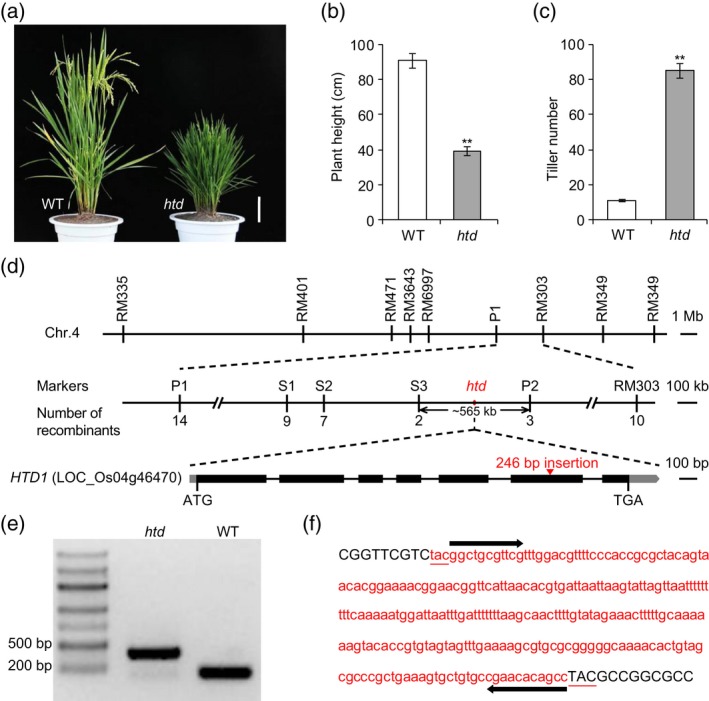
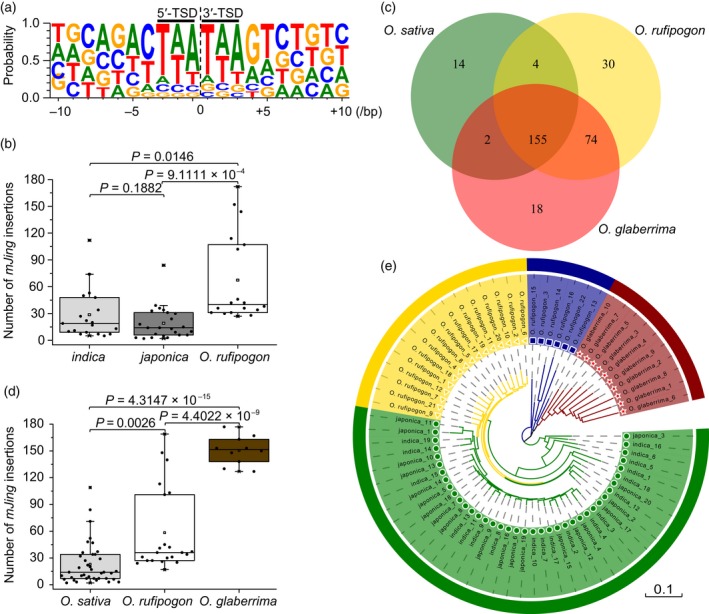
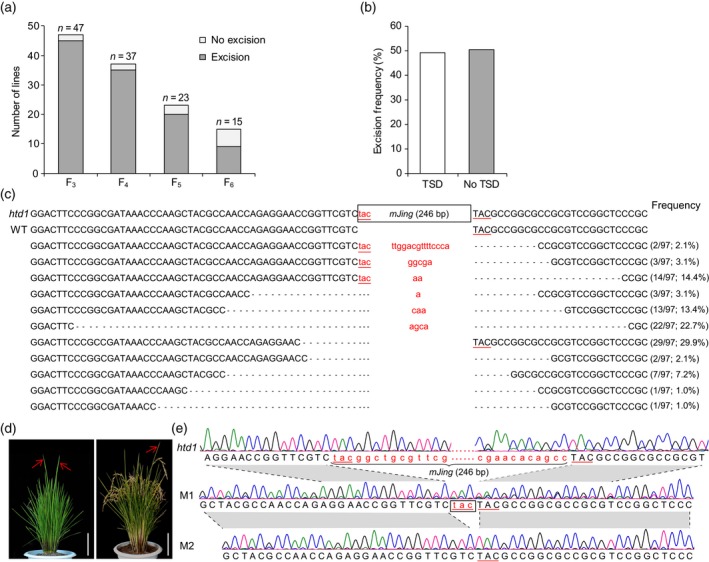
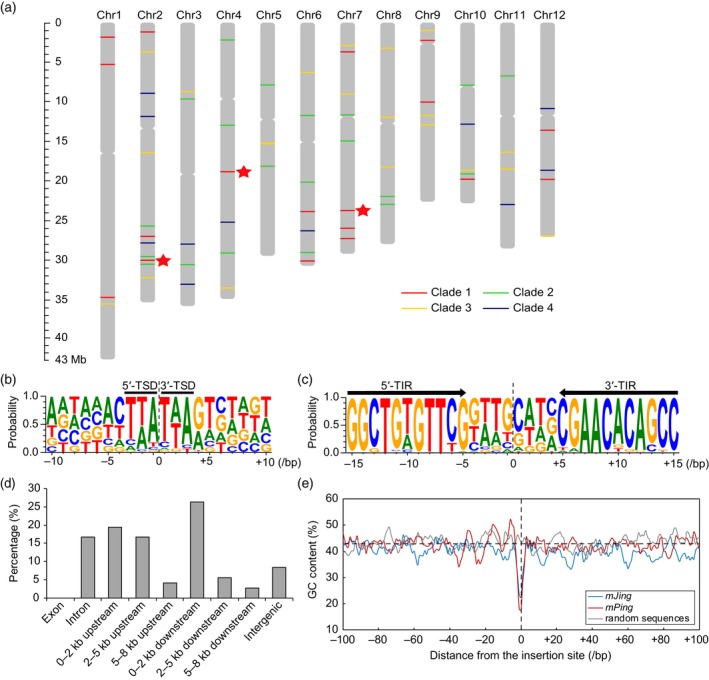
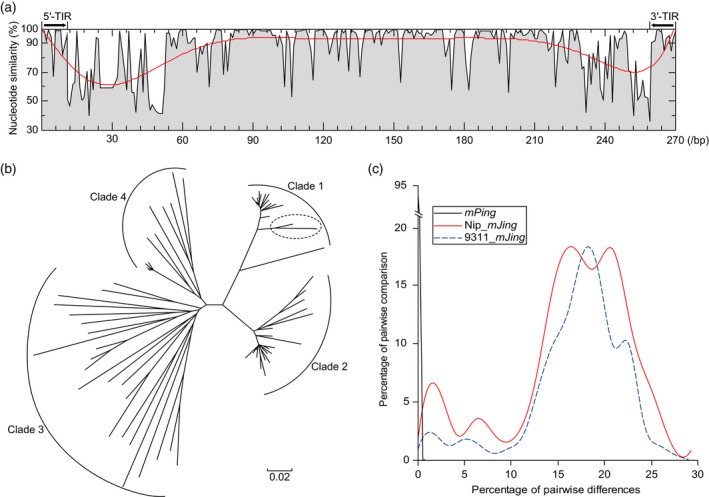
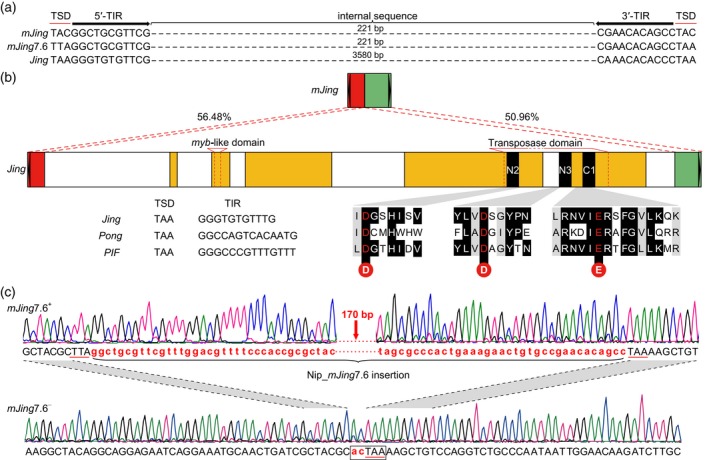
Miniature inverted-repeat transposable elements (MITEs) are structurally homogeneous non-autonomous DNA transposons with high copy numbers that play important roles in genome evolution and diversification. Here, we analyzed the rice high-tillering dwarf (htd) mutant in an advanced backcross population between cultivated and wild rice, and identified an active MITE named miniature Jing (mJing). The mJing element belongs to the PIF/Harbinger superfamily. japonica rice var. Nipponbare and indica var. 93-11 harbor 72 and 79 mJing family members, respectively, have undergone multiple rounds of amplification bursts during the evolution of Asian cultivated rice (Oryza sativa L.). A heterologous transposition experiment in Arabidopsis thaliana indicated that the autonomous element Jing is likely to have provides the transposase needed for mJing mobilization. We identified 297 mJing insertion sites and their presence/absence polymorphism among 71 rice samples through targeted high-throughput sequencing. The results showed that the copy number of mJing varies dramatically among Asian cultivated rice (O. sativa), its wild ancestor (O. rufipogon), and African cultivated rice (O. glaberrima) and that some mJing insertions are subject to directional selection. These findings suggest that the amplification and removal of mJing elements have played an important role in rice genome evolution and species diversification.
微型反向重复转座元件 (MITEs) 是结构均一的非自主 DNA 转座子,具有高拷贝数,在基因组进化和多样化中发挥重要作用。在这里,我们在栽培稻和野生稻的高级回交群体中分析了水稻高分蘖矮秆 (htd) 突变体,并鉴定出一个活跃的 MITE,命名为微型 Jing (mJing)。mJing 元件属于 PIF/Harbinger 超家族。粳稻品种 Nipponbare 和籼稻品种 93-11 分别拥有 72 个和 79 个 mJing 家族成员,在亚洲栽培稻 (Oryza sativa L.) 的进化过程中经历了多轮扩增爆发。在拟南芥中的异源转座实验表明,自主元件 Jing 可能提供了 mJing 动员所需的转座酶。我们通过靶向高通量测序在 71 个水稻样本中鉴定了 297 个 mJing 插入位点及其存在/缺失多态性。结果表明,mJing 在亚洲栽培稻 (O. sativa)、其野生祖先 (O. rufipogon) 和非洲栽培稻 (O. glaberrima) 中的拷贝数差异很大,并且一些 mJing 插入受定向选择的影响。这些发现表明,mJing 元件的扩增和去除在水稻基因组进化和物种多样化中发挥了重要作用。