Mendel University of Brno, Faculty of Business and Economics, Department of Accounting and Taxation, Brno, Czech Republic.
PLoS One. 2019 Jan 28;14(1):e0211317. doi: 10.1371/journal.pone.0211317. eCollection 2019.
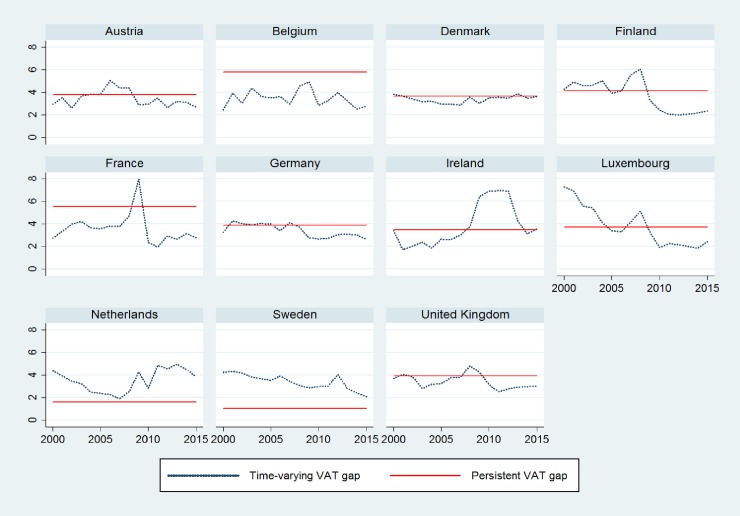
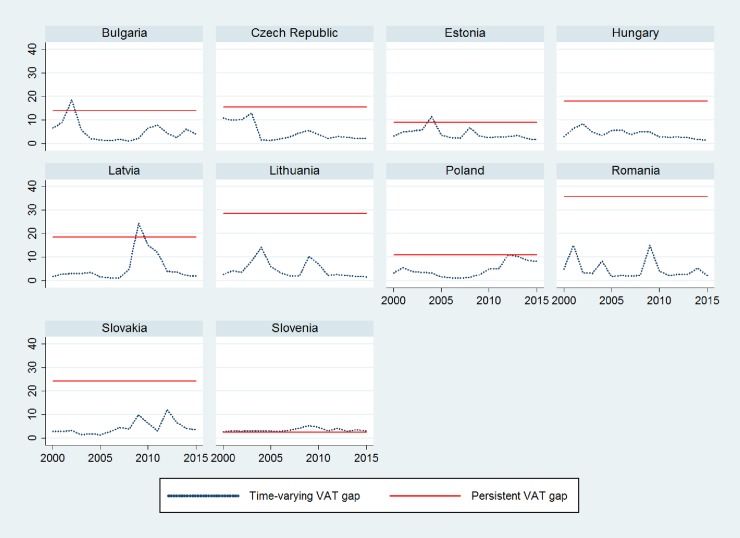
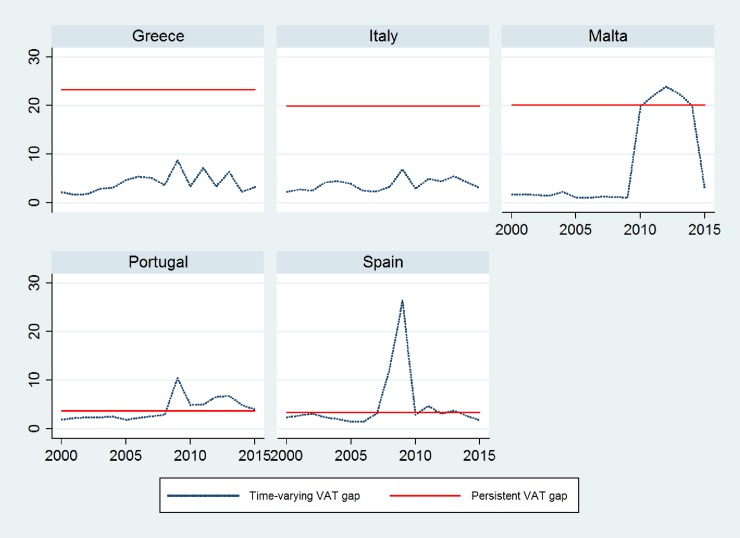
In this paper, we pursue an alternative method to measure the Value Added Tax gap in the European Union using the stochastic tax frontier model. We use the Value Added Tax total tax liability as the input to estimate the optimal frontier of the Value Added Tax, as well as to predict technical inefficiency. Using the latest innovations of the stochastic frontier approach, we aim to obtain the accurate size of the Value Added Tax gap in the EU-26 countries and contrast them with extant estimates. The obtained estimates of the Value Added Tax gap using the stochastic tax frontier model are different from the estimates produced by the top-down method to calculate the Value Added Tax gap in the EU. Moreover, the stochastic tax frontier approach allows us to disentangle the Value Added Tax gap, which is time dependent, from the persistent Value Added Tax gap, which is country specific. The stochastic tax frontier model allows us to test the effect of exogenous factors on the technical inefficiency of the Value Added Tax and propose appropriate policy recommendations.
在本文中,我们采用随机前沿模型,探索了一种在欧盟测算增值税缺口的替代方法。我们使用增值税总纳税额作为投入,以估计增值税的最优前沿,并预测技术无效率。利用随机前沿方法的最新创新成果,我们旨在准确测算欧盟 26 国的增值税缺口规模,并与现有估计值进行对比。通过随机税收前沿模型测算的增值税缺口估计值与通过自上而下方法计算的欧盟增值税缺口估计值不同。此外,随机税收前沿方法使我们能够将依赖时间的增值税缺口与特定于国家的持久性增值税缺口区分开来。随机税收前沿模型使我们能够检验外部因素对增值税技术无效率的影响,并提出相应的政策建议。