Department of Radiation Oncology, Key Laboratory of Cancer Prevention and Therapy, National Clinical Research Center for Cancer, Tianjin's Clinical Research Center for Cancer, Tianjin Medical University Cancer Institute & Hospital, China.
Department of Oncology, Tianjin Union Medical Center, China.
Mol Oncol. 2019 May;13(5):1059-1074. doi: 10.1002/1878-0261.12462. Epub 2019 Feb 22.
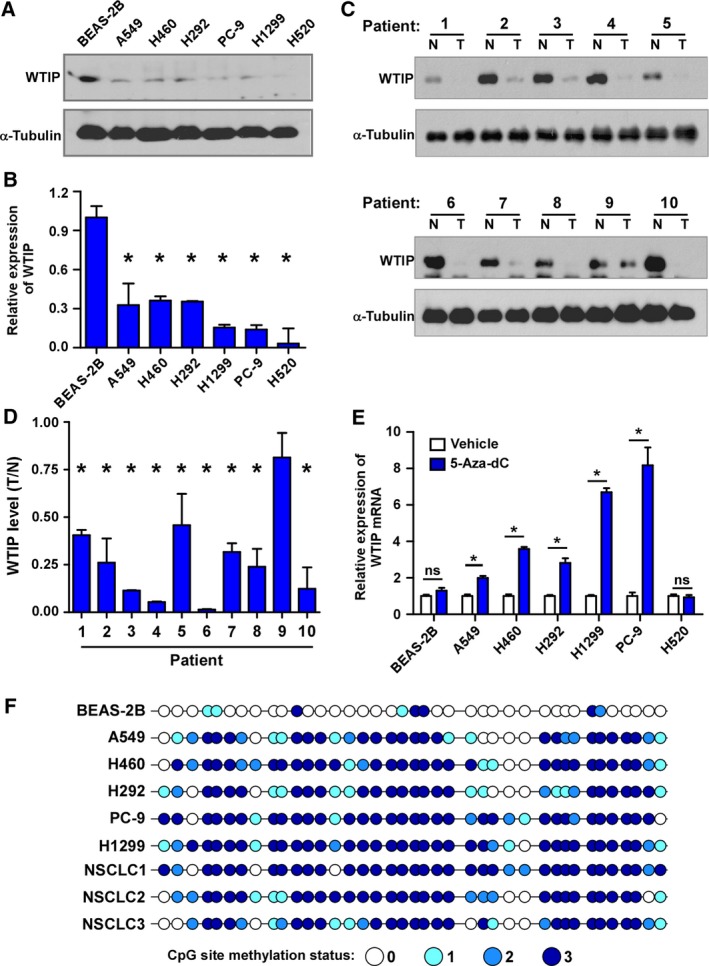
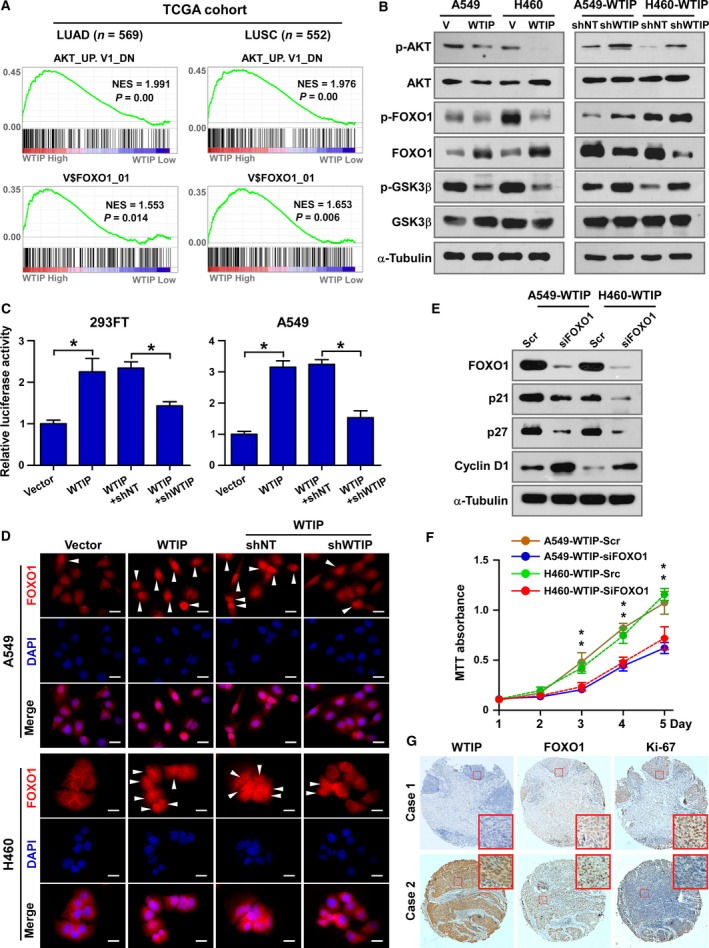
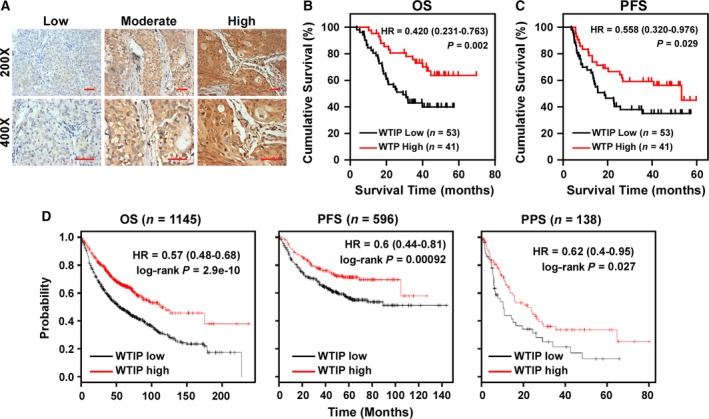
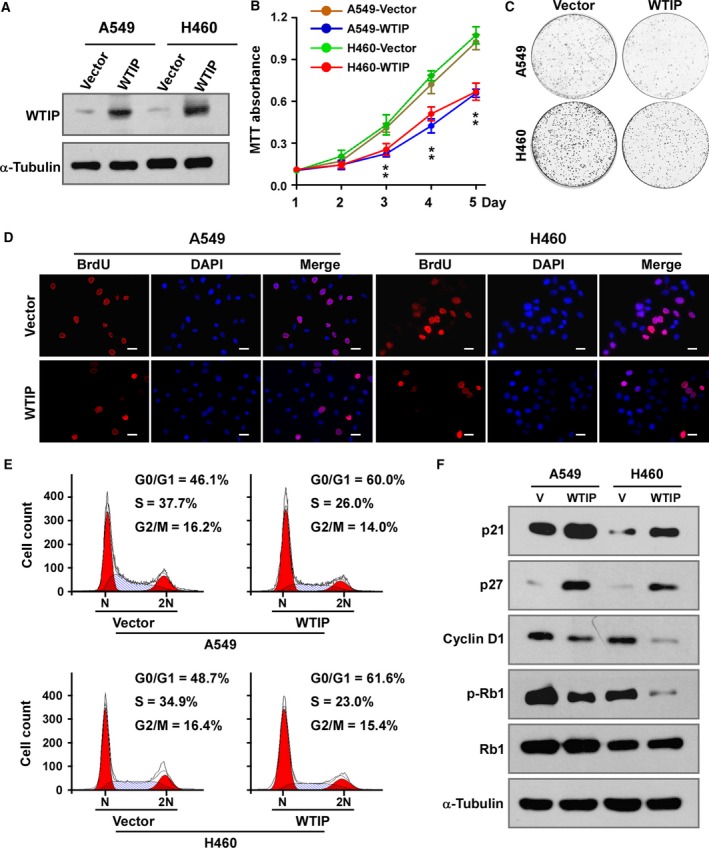
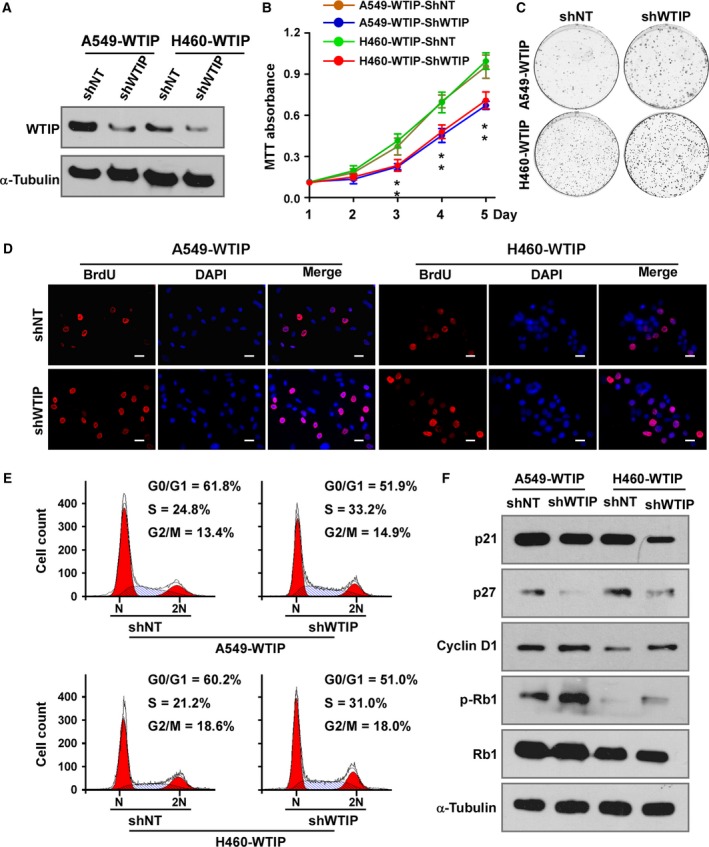
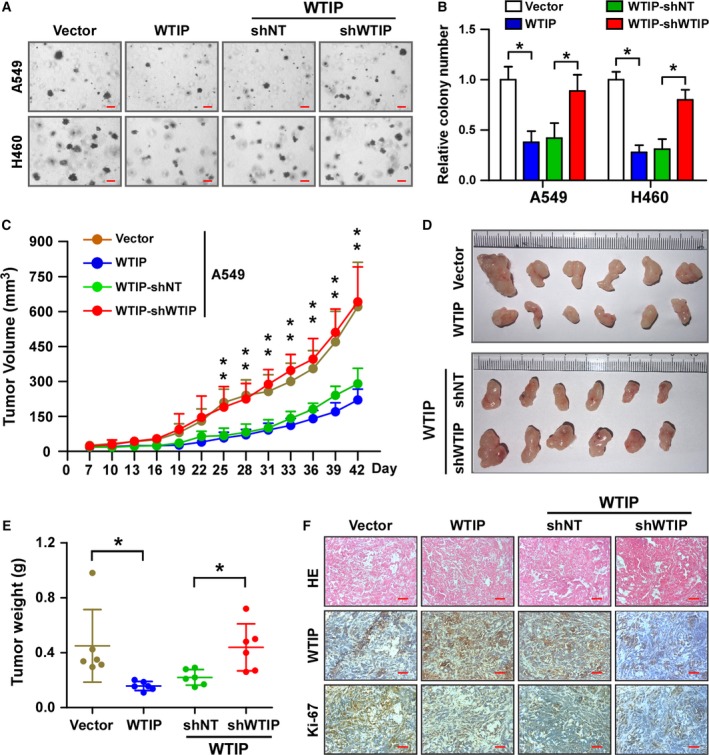
Lung cancer is the most common cancer and the leading cause of cancer-related death worldwide; hence, it is imperative that the mechanisms underlying the malignant properties of lung cancer be uncovered in order to efficiently treat this disease. Increasing evidence has shown that WT1-interacting protein (WTIP) plays important roles both physiologically and pathologically in humans; however, the role of WTIP in cancer is unknown. Here, we investigated the role and mechanism of WTIP in cell proliferation and tumorigenesis of non-small-cell lung cancer (NSCLC). We report that WTIP is a tumor suppressor in human NSCLC. We found that WTIP expression was significantly reduced in both NSCLC cell lines and clinical specimens compared to that in normal controls; this reduction was largely attributed to promoter hypermethylation. Downregulation of WTIP significantly correlates with poor prognosis and predicts a shorter overall survival and progression-free survival among NSCLC patients. Moreover, ectopic overexpression of WTIP dramatically inhibits cell proliferation and tumorigenesis in vitro and in vivo; conversely, depletion of WTIP expression shows the opposite effects. Mechanistically, WTIP impairs AKT phosphorylation and activation, leading to enhanced expression and transcriptional activity of FOXO1, which further increases p21Cip1 and p27Kip1, and decreases cyclin D1, which consequently results in cell cycle arrest. Collectively, the results of the current study indicate that WTIP is an important proliferation-related gene and that WTIP expression may represent a novel prognostic biomarker for NSCLC.
肺癌是最常见的癌症,也是全球癌症相关死亡的主要原因;因此,揭示肺癌恶性特性的潜在机制对于有效治疗这种疾病至关重要。越来越多的证据表明,WT1 相互作用蛋白(WTIP)在人类生理和病理方面都起着重要作用;然而,WTIP 在癌症中的作用尚不清楚。在这里,我们研究了 WTIP 在非小细胞肺癌(NSCLC)细胞增殖和肿瘤发生中的作用和机制。我们报告 WTIP 是人类 NSCLC 的肿瘤抑制因子。我们发现 WTIP 在 NSCLC 细胞系和临床标本中的表达明显低于正常对照;这种减少主要归因于启动子超甲基化。WTIP 的下调与不良预后显著相关,并预测 NSCLC 患者的总生存期和无进展生存期较短。此外,WTIP 的异位过表达在体外和体内均显著抑制细胞增殖和肿瘤发生;相反,WTIP 表达的耗竭则表现出相反的效果。在机制上,WTIP 损害 AKT 的磷酸化和激活,导致 FOXO1 的表达和转录活性增强,从而进一步增加 p21Cip1 和 p27Kip1,减少 cyclin D1,从而导致细胞周期停滞。总之,本研究的结果表明,WTIP 是一个重要的增殖相关基因,WTIP 表达可能代表 NSCLC 的一种新的预后生物标志物。