Division of Cancer and Stem Cells, Cancer Biology, University of Nottingham, Nottingham, UK.
School of Life Sciences, University of Bedfordshire, Luton, UK.
J Neurooncol. 2019 Apr;142(2):231-240. doi: 10.1007/s11060-019-03107-0. Epub 2019 Jan 29.
Glioblastoma (GBM) is the most common invasive malignant brain tumour in adults. It is traditionally investigated in vitro by culturing cells as a monolayer (2D culture) or as neurospheres (clusters enriched in cancer stem cells) but neither system accurately reflects the complexity of the three-dimensional (3D) chemoresistant microenvironment of GBM.
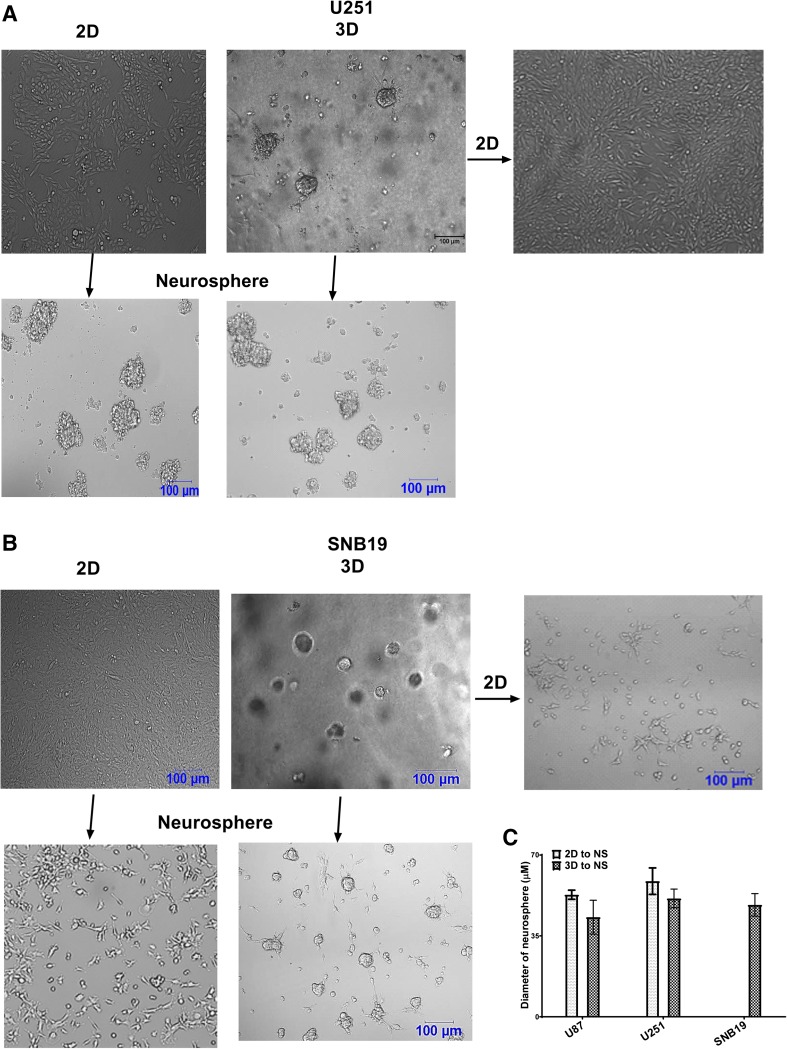
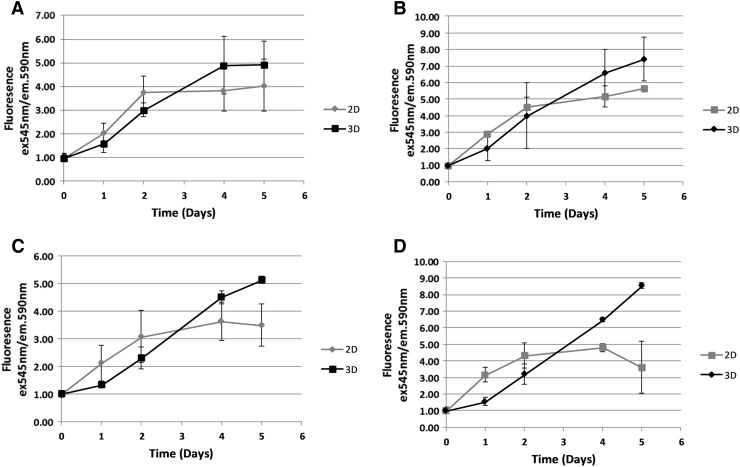
Using three GBM cell-lines (U87, U251, and SNB19), the effect of culturing cells in a Cultrex-based basement membrane extract (BME) [3D Tumour Growth Assay (TGA)] on morphology, gene expression, metabolism, and temozolomide chemoresistance was investigated.
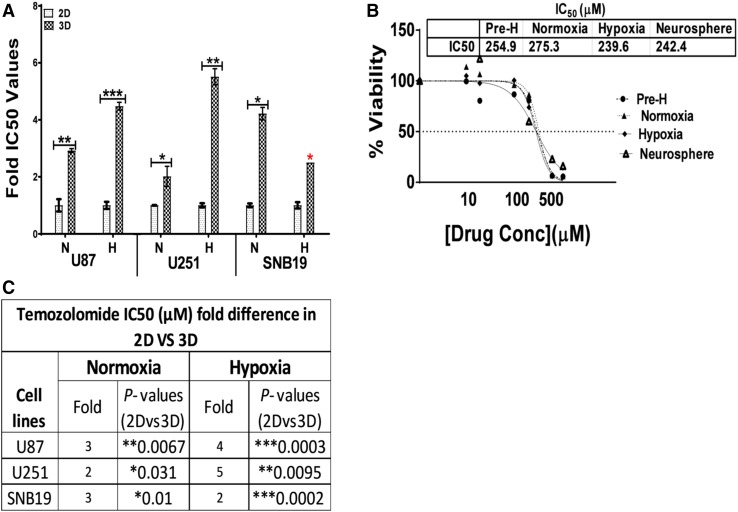
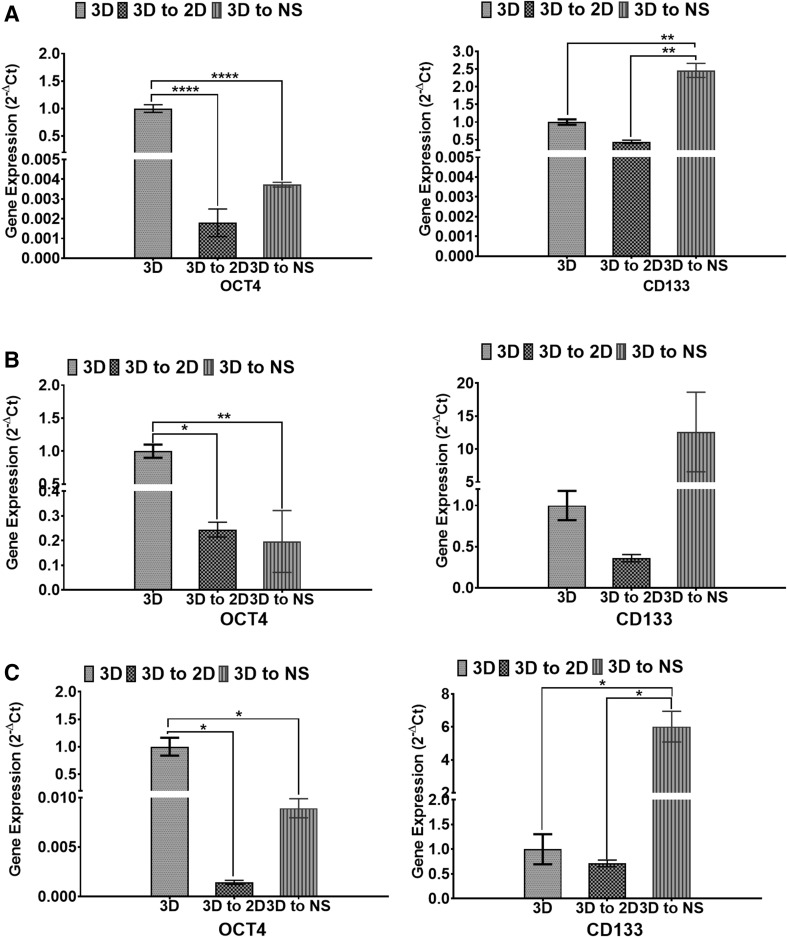
Cells were easily harvested from the 3D model and cultured as a monolayer (2D) and neurospheres. Indeed, the SNB19 cells formed neurospheres only after they were first cultured in the 3D model. The expression of CD133 and OCT4 was upregulated in the neurosphere and 3D assays respectively. Compared with cells cultured in the 2D model, cells were more resistant to temozolomide in the 3D model and this resistance was potentiated by hypoxia.
Taken together, these results suggest that micro-environmental factors influence GBM sensitivity to temozolomide. Knowledge of the mechanisms involved in temozolomide resistance in this 3D model might lead to the identification of new strategies that enable the more effective use of the current standard of care agents.
胶质母细胞瘤(GBM)是成人中最常见的侵袭性恶性脑肿瘤。传统上,通过单层培养(2D 培养)或神经球培养(富含癌症干细胞的簇)来体外研究它,但这两种系统都不能准确反映 GBM 的三维(3D)耐药微环境的复杂性。
使用三种 GBM 细胞系(U87、U251 和 SNB19),研究了在基于 Cultrex 的基底膜提取物(BME)[3D 肿瘤生长测定(TGA)]中培养细胞对形态、基因表达、代谢和替莫唑胺耐药性的影响。
细胞很容易从 3D 模型中收获,并在单层(2D)和神经球中培养。事实上,只有在首先在 3D 模型中培养后,SNB19 细胞才会形成神经球。CD133 和 OCT4 的表达在神经球和 3D 测定中分别上调。与在 2D 模型中培养的细胞相比,细胞在 3D 模型中对替莫唑胺的耐药性更高,而缺氧会增强这种耐药性。
综上所述,这些结果表明微环境因素影响 GBM 对替莫唑胺的敏感性。对这种 3D 模型中替莫唑胺耐药性相关机制的了解可能会导致确定新的策略,从而更有效地利用当前的标准治疗药物。