The Technion Integrated Cancer Center, The Bruce Rappaport Faculty of Medicine, Technion-Israel Institute of Technology, Haifa 31096, Israel.
Int J Mol Sci. 2019 Jan 28;20(3):556. doi: 10.3390/ijms20030556.
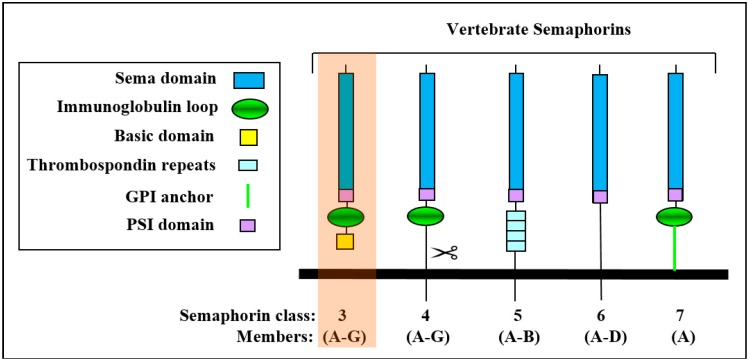
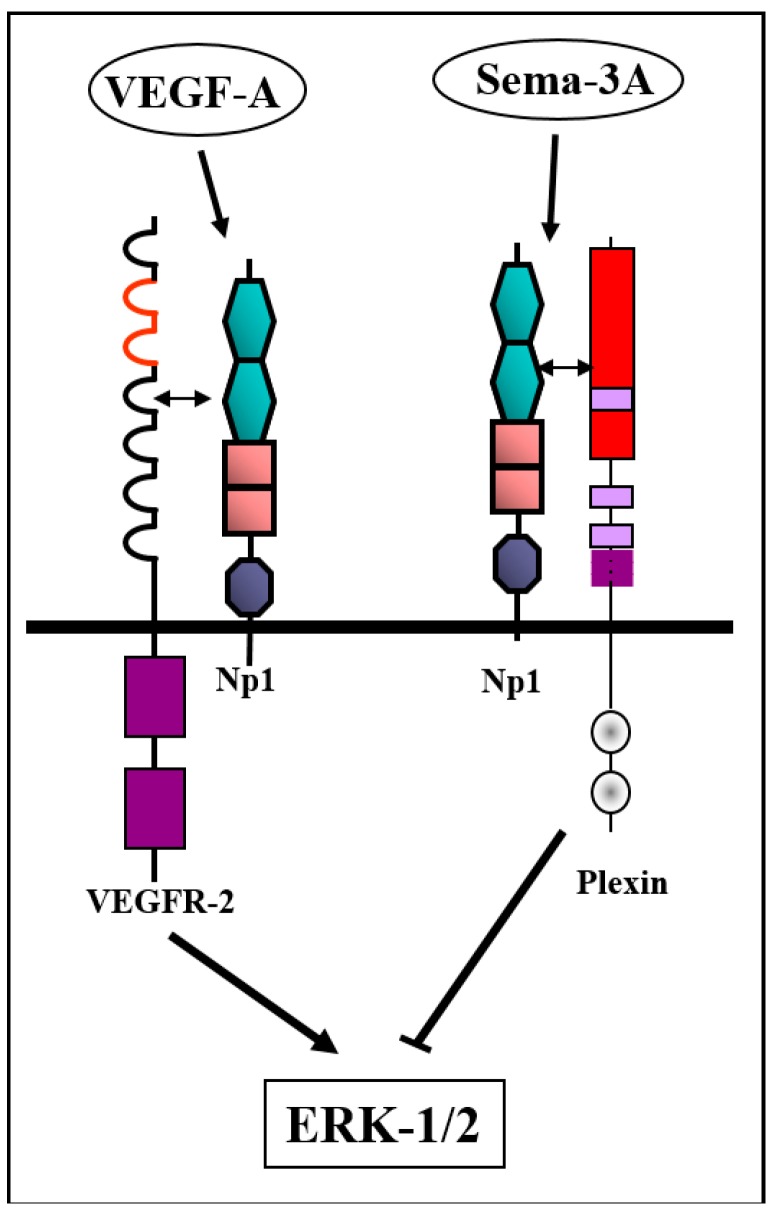
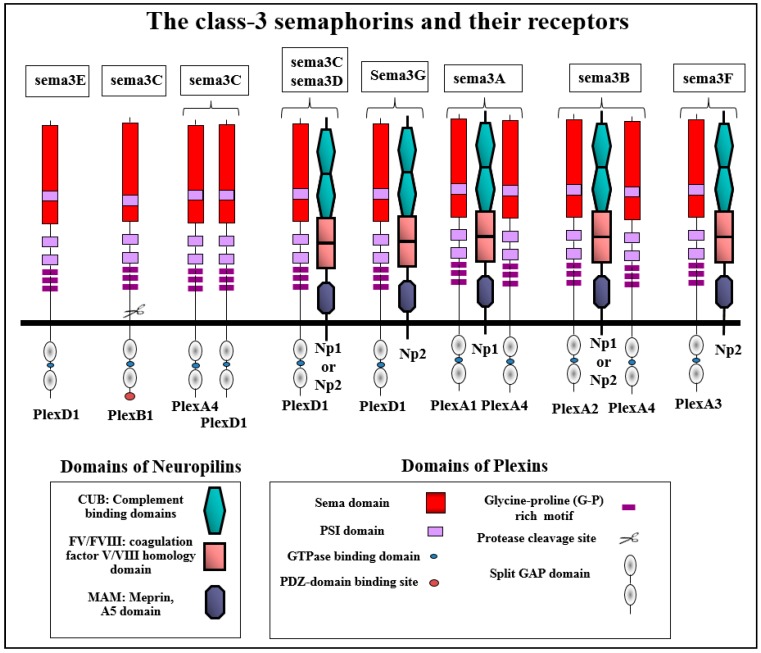
bstract: Semaphorins are the products of a large gene family containing 28 genes of which 21 are found in vertebrates. Class-3 semaphorins constitute a subfamily of seven vertebrate semaphorins which differ from the other vertebrate semaphorins in that they are the only secreted semaphorins and are distinguished from other semaphorins by the presence of a basic domain at their C termini. Class-3 semaphorins were initially characterized as axon guidance factors, but have subsequently been found to regulate immune responses, angiogenesis, lymphangiogenesis, and a variety of additional physiological and developmental functions. Most class-3 semaphorins transduce their signals by binding to receptors belonging to the neuropilin family which subsequently associate with receptors of the plexin family to form functional class-3 semaphorin receptors. Recent evidence suggests that class-3 semaphorins also fulfill important regulatory roles in multiple forms of cancer. Several class-3 semaphorins function as endogenous inhibitors of tumor angiogenesis. Others were found to inhibit tumor metastasis by inhibition of tumor lymphangiogenesis, by direct effects on the behavior of tumor cells, or by modulation of immune responses. Notably, some semaphorins such as sema3C and sema3E have also been found to potentiate tumor progression using various mechanisms. This review focuses on the roles of the different class-3 semaphorins in tumor progression.
神经递质是一个包含 28 个基因的大家族的产物,其中 21 个基因在脊椎动物中发现。3 类神经递质构成了 7 种脊椎动物神经递质的一个亚家族,它们与其他脊椎动物神经递质的不同之处在于,它们是唯一的分泌型神经递质,并且在 C 末端存在碱性结构域,从而与其他神经递质区分开来。3 类神经递质最初被表征为轴突导向因子,但随后发现它们可以调节免疫反应、血管生成、淋巴管生成以及各种其他生理和发育功能。大多数 3 类神经递质通过与属于神经纤毛蛋白家族的受体结合来传递信号,随后与丛蛋白家族的受体结合,形成功能性 3 类神经递质受体。最近的证据表明,3 类神经递质在多种形式的癌症中也发挥着重要的调节作用。一些 3 类神经递质作为肿瘤血管生成的内源性抑制剂发挥作用。其他神经递质通过抑制肿瘤淋巴管生成、直接影响肿瘤细胞的行为或调节免疫反应来抑制肿瘤转移。值得注意的是,一些神经递质,如 sema3C 和 sema3E,也被发现通过各种机制增强肿瘤的进展。这篇综述重点介绍了不同 3 类神经递质在肿瘤进展中的作用。