Department of Radiation Oncology, Xiamen Humanity Hospital, Xiamen, 361000, China.
Department of Radiation Oncology, Fujian Medical University Cancer Hospital, Fujian Cancer Hospital, Fuzhou, 350014, China.
Radiat Oncol. 2019 Jan 29;14(1):20. doi: 10.1186/s13014-019-1226-z.
This study aimed to evaluate the role of postoperative radiotherapy (RT) in dermatofibrosarcoma protuberans (DFSP) and identify the prognostic factors influencing the disease-free survival (DFS).
A total of 184 patients with DFSP were analyzed from 2000 to 2016. The regression model was used to examine the prognostic factors for DFS. Baseline covariates were balanced using a propensity score model. The role of RT was assessed by comparing the DFS of the surgery + RT group with that of the surgery group.
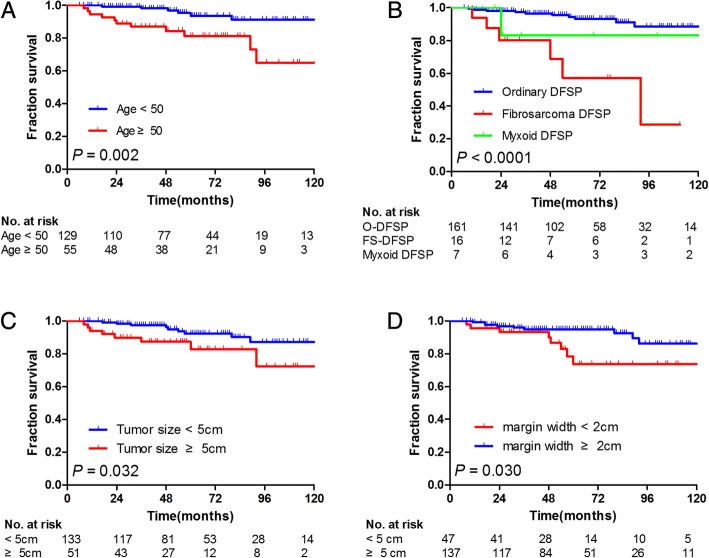
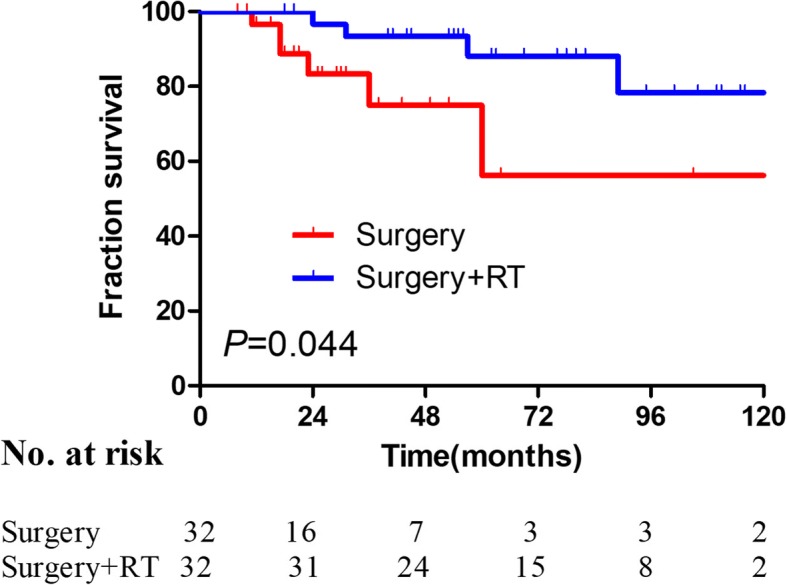
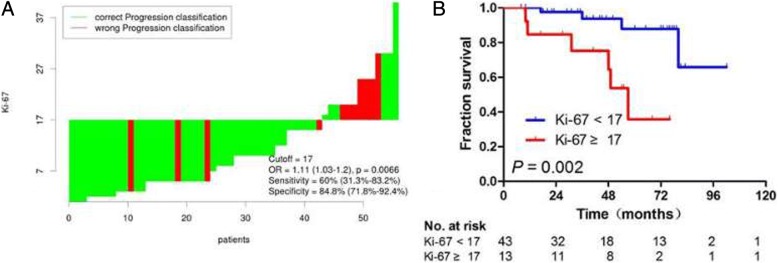
The median follow-up was 58 months (range, 6-203 months). The 5-year DFS rate was 89.8%. The univariate analysis showed that age ≥ 50 years, presence of fibrosarcoma, margins < 2 cm, and tumor size ≥5 cm were associated with worse DFS (P = 0.002, P < 0.001, P = 0.030, and P = 0.032, respectively). The multivariate Cox regression model revealed that age, margin width, lesion number, and histological subtype independently affected DFS. The Ki-67 expression was related to age and histological subtype. Patients with Ki-67 ≥ 17% showed a worse DFS than those with Ki-67 < 17% (35.8% vs 87.8%, P = 0.002). In the matched cohort, DFS was significantly higher in the S + RT group than in the S group (5-year DFS, 88.1% vs 56.2%, P = 0.044).
Age, margin width, lesion number, and histological subtype were independent risk factors for DFS in patients with DFSP. The high expression of Ki-67 could predict a poor prognosis. Postoperative RT could improve DFS for patients with DFSP.
本研究旨在评估术后放疗(RT)在隆突性皮肤纤维肉瘤(DFSP)中的作用,并确定影响无病生存(DFS)的预后因素。
对 2000 年至 2016 年间的 184 例 DFSP 患者进行分析。采用回归模型分析影响 DFS 的预后因素。采用倾向评分模型平衡基线协变量。通过比较手术+RT 组与手术组的 DFS,评估 RT 的作用。
中位随访时间为 58 个月(范围,6-203 个月)。5 年 DFS 率为 89.8%。单因素分析显示,年龄≥50 岁、存在纤维肉瘤、切缘<2cm 和肿瘤大小≥5cm 与较差的 DFS 相关(P=0.002、P<0.001、P=0.030 和 P=0.032)。多因素 Cox 回归模型显示,年龄、切缘宽度、病变数量和组织学亚型独立影响 DFS。Ki-67 表达与年龄和组织学亚型有关。Ki-67≥17%的患者DFS 较 Ki-67<17%的患者差(35.8%比 87.8%,P=0.002)。在匹配队列中,S+RT 组的 DFS 明显高于 S 组(5 年 DFS,88.1%比 56.2%,P=0.044)。
年龄、切缘宽度、病变数量和组织学亚型是 DFSP 患者 DFS 的独立危险因素。Ki-67 高表达可预测不良预后。术后 RT 可改善 DFSP 患者的 DFS。