Zhang Zhen, Feng Yun, Li Zhen-Yu, Cao Xiao-Zhong
Departments of General Surgery, Luoyang Central Hospital Affiliated to Zhengzhou University, Luoyang, Henan, China.
Arch Med Sci. 2019 Jan;15(1):174-182. doi: 10.5114/aoms.2018.79429. Epub 2018 Nov 8.
Glycyrrhizinic acid is a natural product of pharmacological relevance and its anticancer activity against breast cancer cell lines has not been evaluated. Therefore the main purpose of the present study was to investigate the anticancer effects of glycyrrhizinic acid in MCF-7 human breast cancer cells.
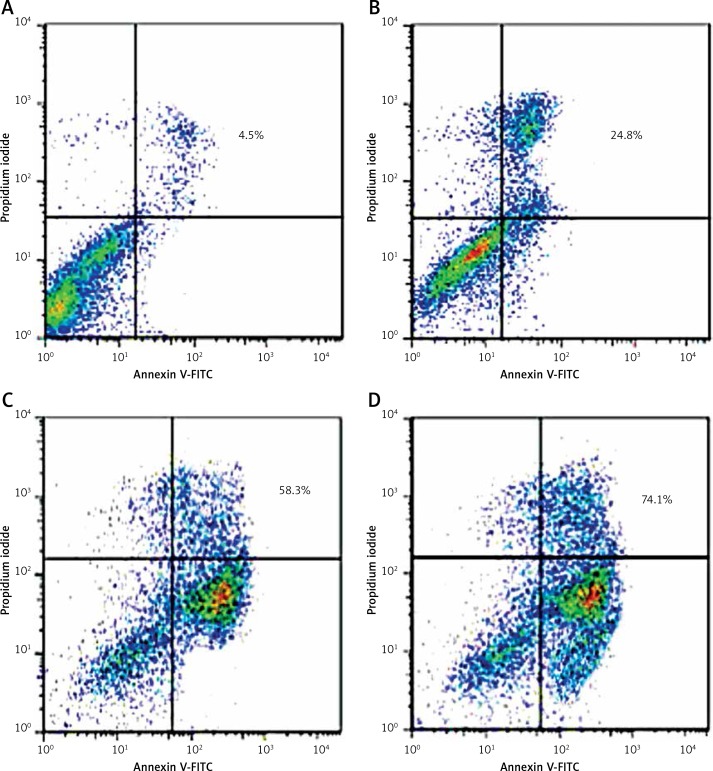
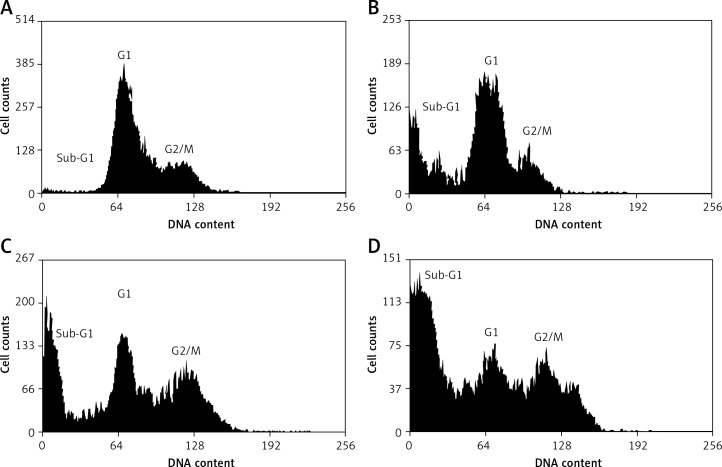
The MTT assay was used to evaluate the anticancer effects while a clonogenic assay was used to study its effects on colony formation tendency. Flow cytometry was used to study the effects on cell cycle phase distribution and apoptosis. Western blot assay was used to study changes in protein expression of the m-TOR/PI3K/Akt pathway.
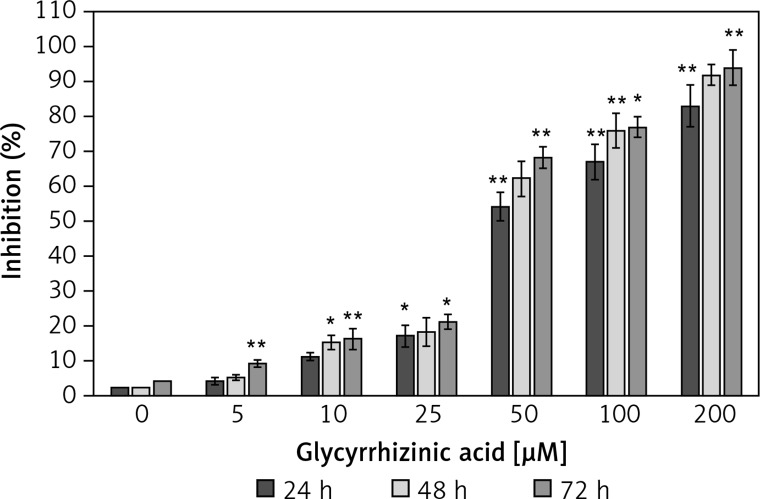
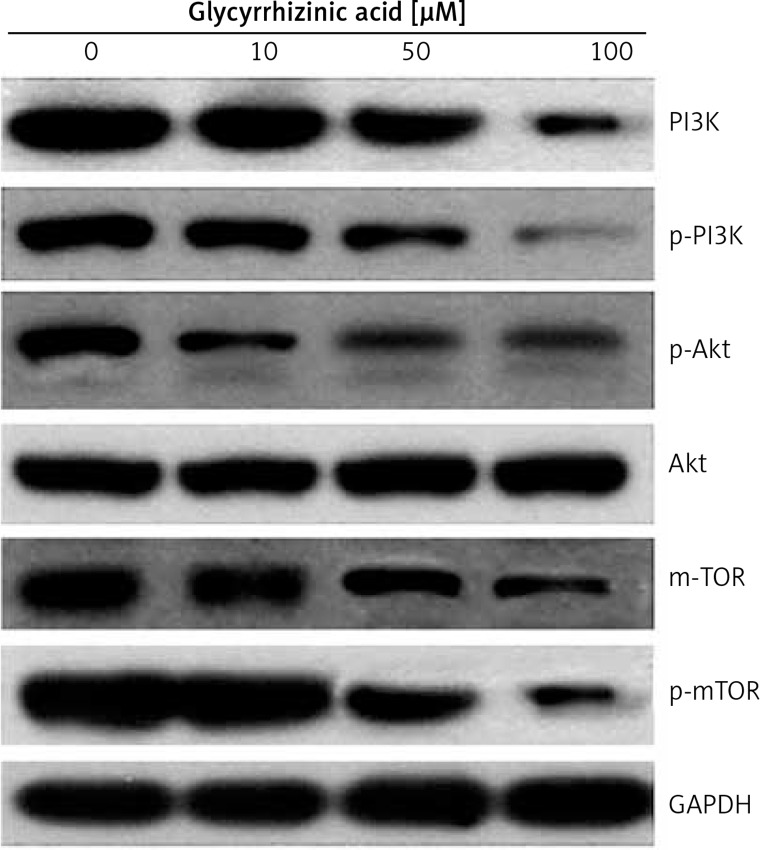
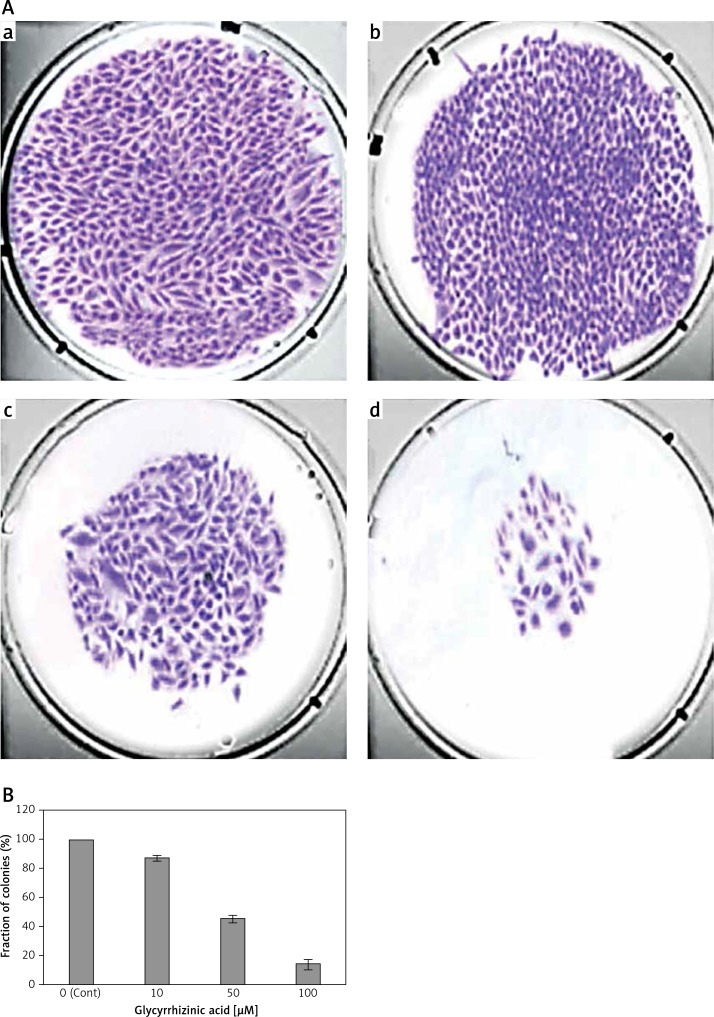
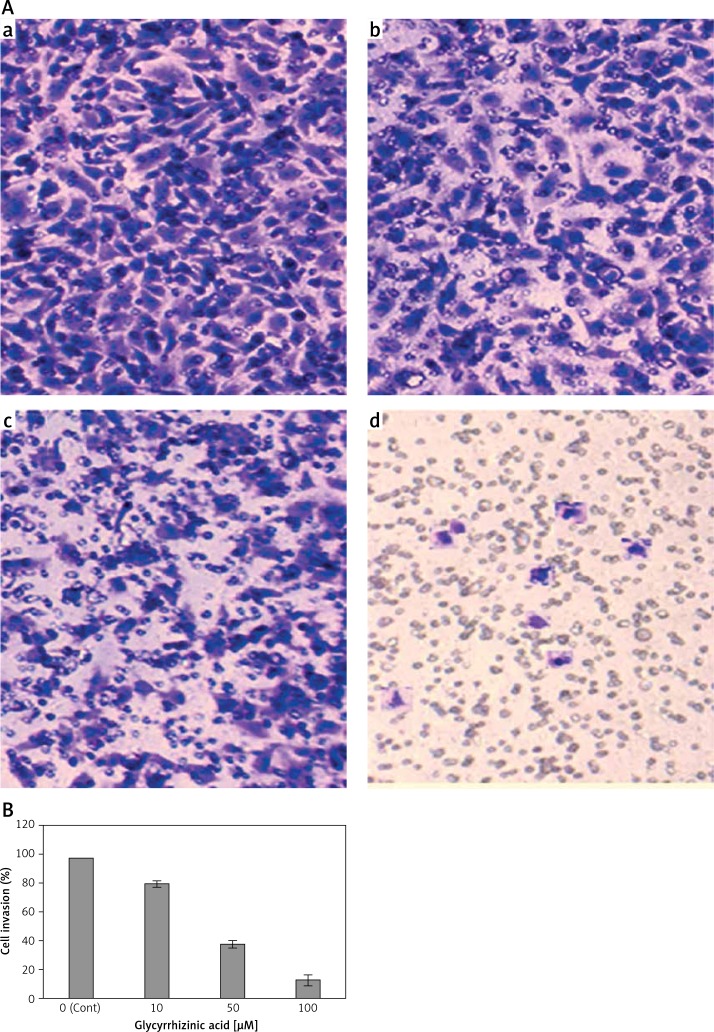
The results indicated that glycyrrhizinic acid caused significant ( < 0.01). The growth inhibitory effects MCF-7 human breast cancer cells. The growth inhibitory effects of glycyrrhizinic acid exhibited concentration-dependent as well as time-dependent growth inhibitory trend. Different doses of glycyrrhizinic acid had a tendency to significantly ( < 0.01) inhibit the colony formation tendency of MCF-7 cells. As compared to the control group, glycyrrhizinic acid-treated cells showed a high percentage of apoptotic cells. Cells treated with a 10, 50 and 100 µM dose of glycyrrhizinic acid led to a 24.3%, 41.5% and 82.1% increase in the sub-G1 phase (apoptotic) cells. Glycyrrhizinic acid also led to significant ( < 0.01) inhibition of cell invasion along with downregulation of m-TOR/PI3K/Akt protein expression.
Glycyrrhizinic acid inhibited MCF-7 human breast cancer cell growth and therefore may prove essential lead molecule in the treatment of breast cancer.
甘草次酸是一种具有药理学相关性的天然产物,其对乳腺癌细胞系的抗癌活性尚未得到评估。因此,本研究的主要目的是探讨甘草次酸对MCF-7人乳腺癌细胞的抗癌作用。
采用MTT法评估抗癌作用,同时采用克隆形成试验研究其对集落形成倾向的影响。流式细胞术用于研究对细胞周期阶段分布和凋亡的影响。蛋白质印迹分析用于研究m-TOR/PI3K/Akt信号通路蛋白表达的变化。
结果表明,甘草次酸对MCF-7人乳腺癌细胞具有显著的(<0.01)生长抑制作用。甘草次酸的生长抑制作用呈现浓度依赖性和时间依赖性生长抑制趋势。不同剂量的甘草次酸有显著(<0.01)抑制MCF-7细胞集落形成倾向的趋势。与对照组相比,经甘草次酸处理的细胞显示出高比例的凋亡细胞。用10、50和100μM剂量的甘草次酸处理的细胞导致亚G1期(凋亡)细胞分别增加24.3%、41.5%和82.1%。甘草次酸还导致对细胞侵袭的显著(<0.01)抑制以及m-TOR/PI3K/Akt蛋白表达下调。
甘草次酸抑制MCF-7人乳腺癌细胞生长,因此可能是治疗乳腺癌的重要先导分子。