a Teneobio, Inc ., Menlo Park , CA , USA.
b Department of Laboratory Medicine , University of California , San Francisco , CA , USA.
MAbs. 2019 May/Jun;11(4):639-652. doi: 10.1080/19420862.2019.1574521. Epub 2019 Feb 20.
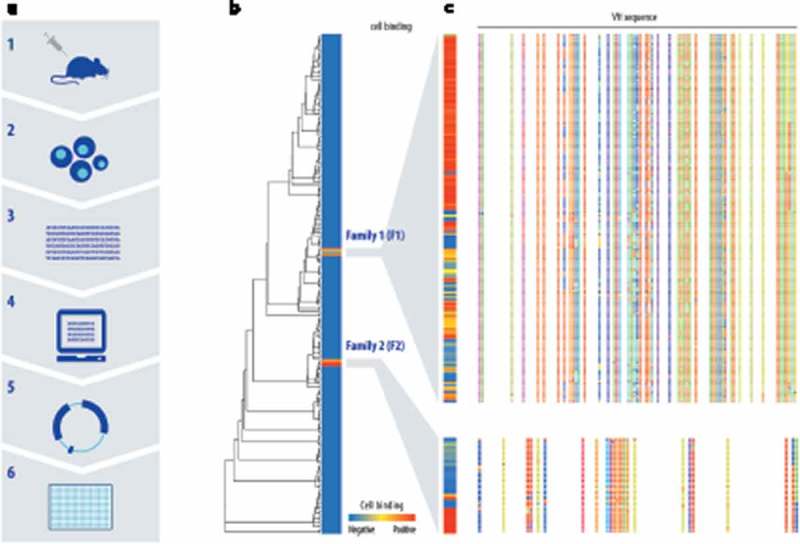
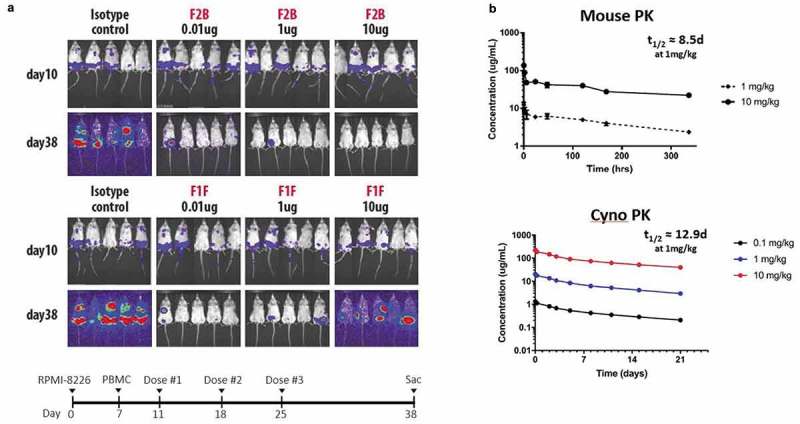
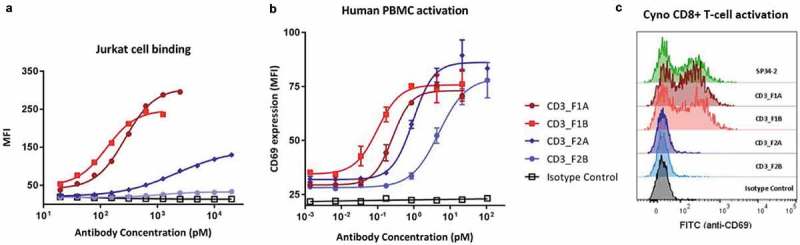
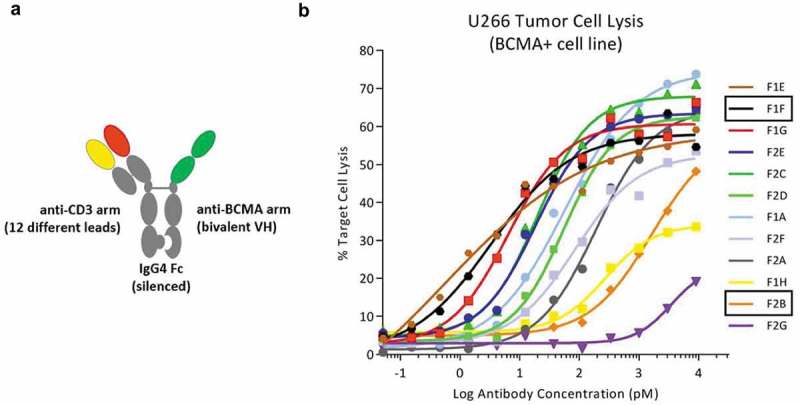
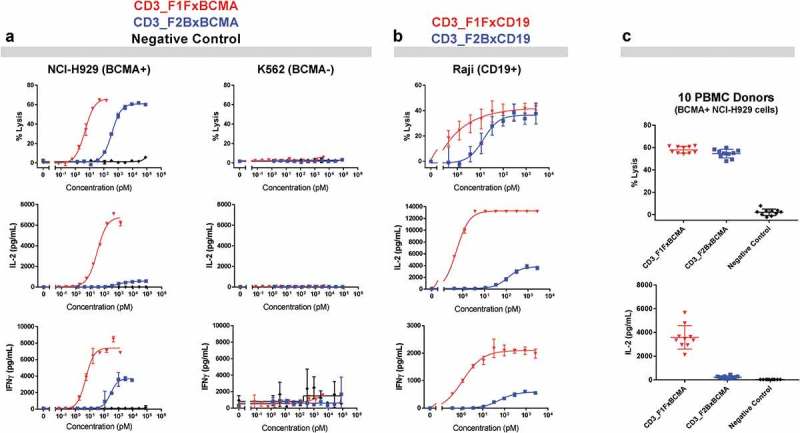
T-cell-recruiting bispecific antibodies (T-BsAbs) have shown potent tumor killing activity in humans, but cytokine release-related toxicities have affected their clinical utility. The use of novel anti-CD3 binding domains with more favorable properties could aid in the creation of T-BsAbs with improved therapeutic windows. Using a sequence-based discovery platform, we identified new anti-CD3 antibodies from humanized rats that bind to multiple epitopes and elicit varying levels of T-cell activation. In T-BsAb format, 12 different anti-CD3 arms induce equivalent levels of tumor cell lysis by primary T-cells, but potency varies by a thousand-fold. Our lead CD3-targeting arm stimulates very low levels of cytokine release, but drives robust tumor antigen-specific killing in vitro and in a mouse xenograft model. This new CD3-targeting antibody underpins a next-generation T-BsAb platform in which potent cytotoxicity is uncoupled from high levels of cytokine release, which may lead to a wider therapeutic window in the clinic.
T 细胞募集双特异性抗体(T-BsAbs)在人类中显示出强大的肿瘤杀伤活性,但细胞因子释放相关毒性影响了它们的临床应用。使用具有更好特性的新型抗 CD3 结合结构域有助于创造具有改善治疗窗口的 T-BsAbs。我们使用基于序列的发现平台,从人源化大鼠中鉴定出了新的抗 CD3 抗体,这些抗体结合到多个表位并引发不同水平的 T 细胞激活。在 T-BsAb 形式中,12 种不同的抗 CD3 臂通过原代 T 细胞诱导等效水平的肿瘤细胞裂解,但效力相差一千倍。我们的领先 CD3 靶向臂刺激非常低水平的细胞因子释放,但在体外和小鼠异种移植模型中驱动强大的肿瘤抗原特异性杀伤。这种新的 CD3 靶向抗体为下一代 T-BsAb 平台提供了基础,在该平台中,强大的细胞毒性与高水平的细胞因子释放脱钩,这可能导致临床治疗窗口更宽。