Bürckert Jean-Philippe, Dubois Axel R S X, Faison William J, Farinelle Sophie, Charpentier Emilie, Sinner Regina, Wienecke-Baldacchino Anke, Muller Claude P
Department of Infection and Immunity, Luxembourg Institute of Health, Esch-sur-Alzette, Luxembourg.
Front Immunol. 2017 Dec 22;8:1834. doi: 10.3389/fimmu.2017.01834. eCollection 2017.
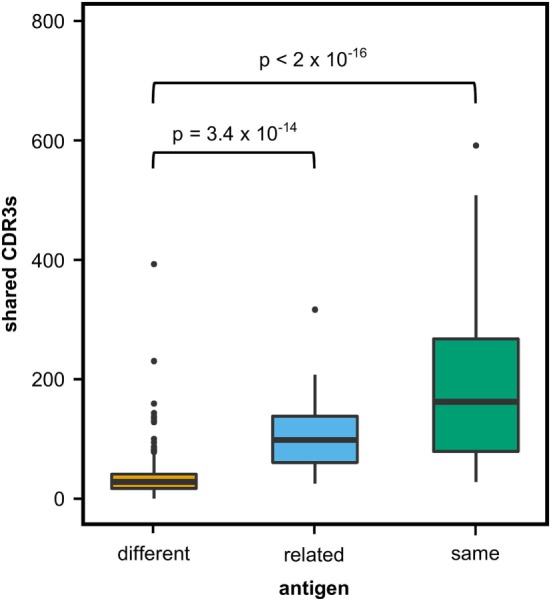
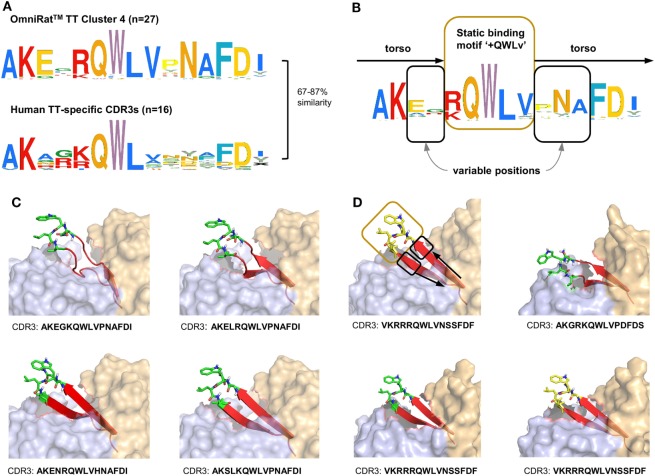
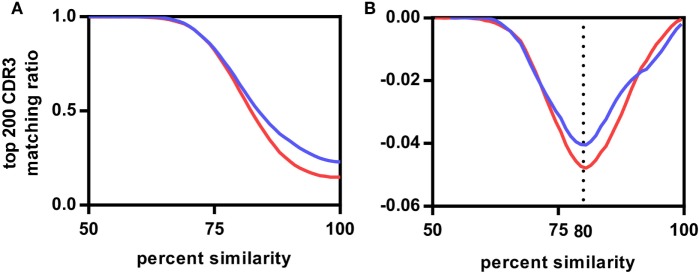
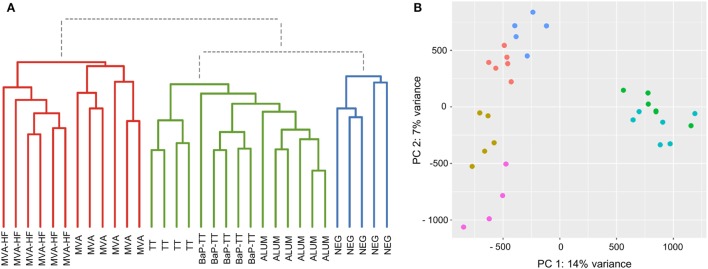
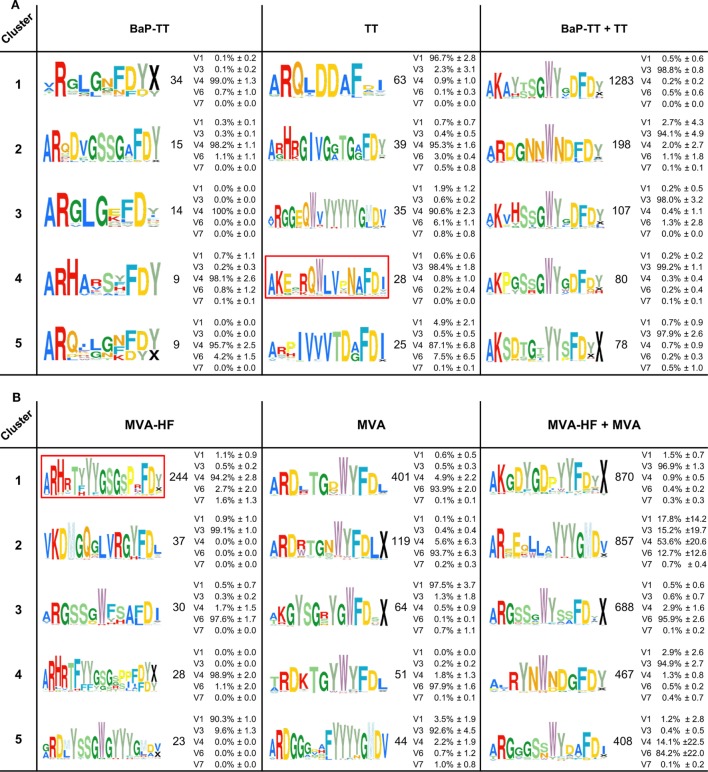
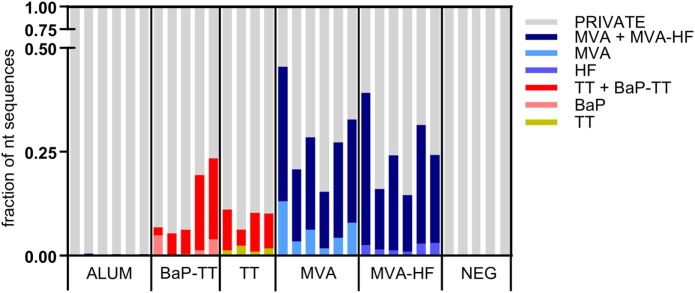
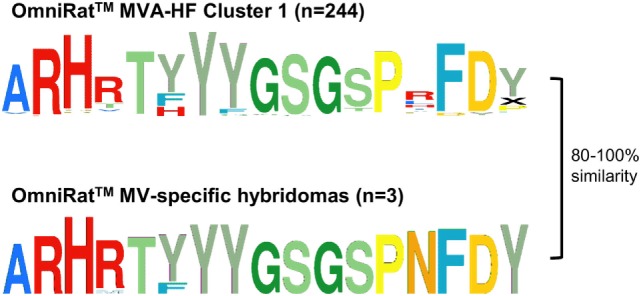
The identification and tracking of antigen-specific immunoglobulin (Ig) sequences within total Ig repertoires is central to high-throughput sequencing (HTS) studies of infections or vaccinations. In this context, public Ig sequences shared by different individuals exposed to the same antigen could be valuable markers for tracing back infections, measuring vaccine immunogenicity, and perhaps ultimately allow the reconstruction of the immunological history of an individual. Here, we immunized groups of transgenic rats expressing human Ig against tetanus toxoid (TT), Modified Vaccinia virus Ankara (MVA), measles virus hemagglutinin and fusion proteins expressed on MVA, and the environmental carcinogen benzo[a]pyrene, coupled to TT. We showed that these antigens impose a selective pressure causing the Ig heavy chain (IgH) repertoires of the rats to converge toward the expression of antibodies with highly similar IgH CDR3 amino acid sequences. We present a computational approach, similar to differential gene expression analysis, that selects for clusters of CDR3s with 80% similarity, significantly overrepresented within the different groups of immunized rats. These IgH clusters represent antigen-induced IgH signatures exhibiting stereotypic amino acid patterns including previously described TT- and measles-specific IgH sequences. Our data suggest that with the presented methodology, transgenic Ig rats can be utilized as a model to identify antigen-induced, human IgH signatures to a variety of different antigens.
在感染或疫苗接种的高通量测序(HTS)研究中,识别和追踪总免疫球蛋白(Ig)库中的抗原特异性Ig序列至关重要。在这种情况下,接触相同抗原的不同个体共享的公共Ig序列可能是追溯感染、测量疫苗免疫原性的有价值标记,甚至最终可能有助于重建个体的免疫史。在此,我们用表达人Ig的转基因大鼠免疫破伤风类毒素(TT)、安卡拉改良痘苗病毒(MVA)、麻疹病毒血凝素以及在MVA上表达的融合蛋白,还有与TT偶联的环境致癌物苯并[a]芘。我们发现这些抗原施加了一种选择压力,导致大鼠的Ig重链(IgH)库趋向于表达具有高度相似IgH CDR3氨基酸序列的抗体。我们提出了一种类似于差异基因表达分析的计算方法,该方法选择相似度达80%的CDR3簇,这些簇在不同组的免疫大鼠中显著富集。这些IgH簇代表抗原诱导的IgH特征,呈现出包括先前描述的TT和麻疹特异性IgH序列在内的定型氨基酸模式。我们的数据表明,采用所介绍的方法,转基因Ig大鼠可作为一种模型,用于识别针对多种不同抗原的抗原诱导型人IgH特征。