Zhao Dongyan, Hamilton John P, Bhat Wajid Waheed, Johnson Sean R, Godden Grant T, Kinser Taliesin J, Boachon Benoît, Dudareva Natalia, Soltis Douglas E, Soltis Pamela S, Hamberger Bjoern, Buell C Robin
Department of Plant Biology, Michigan State University, 612 Wilson Road, East Lansing, MI 48824, USA.
Department of Biochemistry and Molecular Biology, Michigan State University, 603 Wilson Road, East Lansing, MI 48824, USA.
Gigascience. 2019 Mar 1;8(3). doi: 10.1093/gigascience/giz005.
Teak, a member of the Lamiaceae family, produces one of the most expensive hardwoods in the world. High demand coupled with deforestation have caused a decrease in natural teak forests, and future supplies will be reliant on teak plantations. Hence, selection of teak tree varieties for clonal propagation with superior growth performance is of great importance, and access to high-quality genetic and genomic resources can accelerate the selection process by identifying genes underlying desired traits.
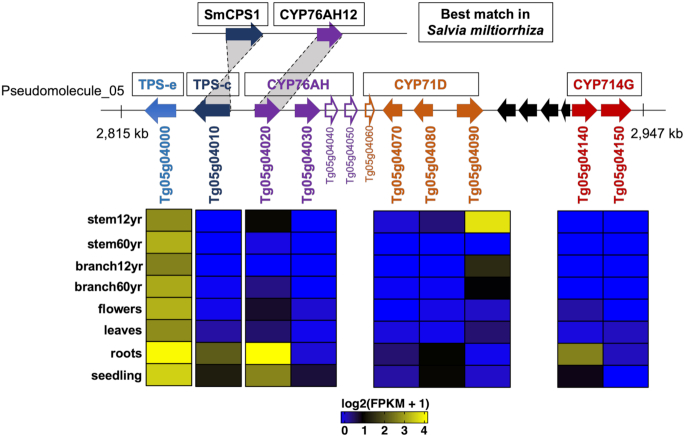
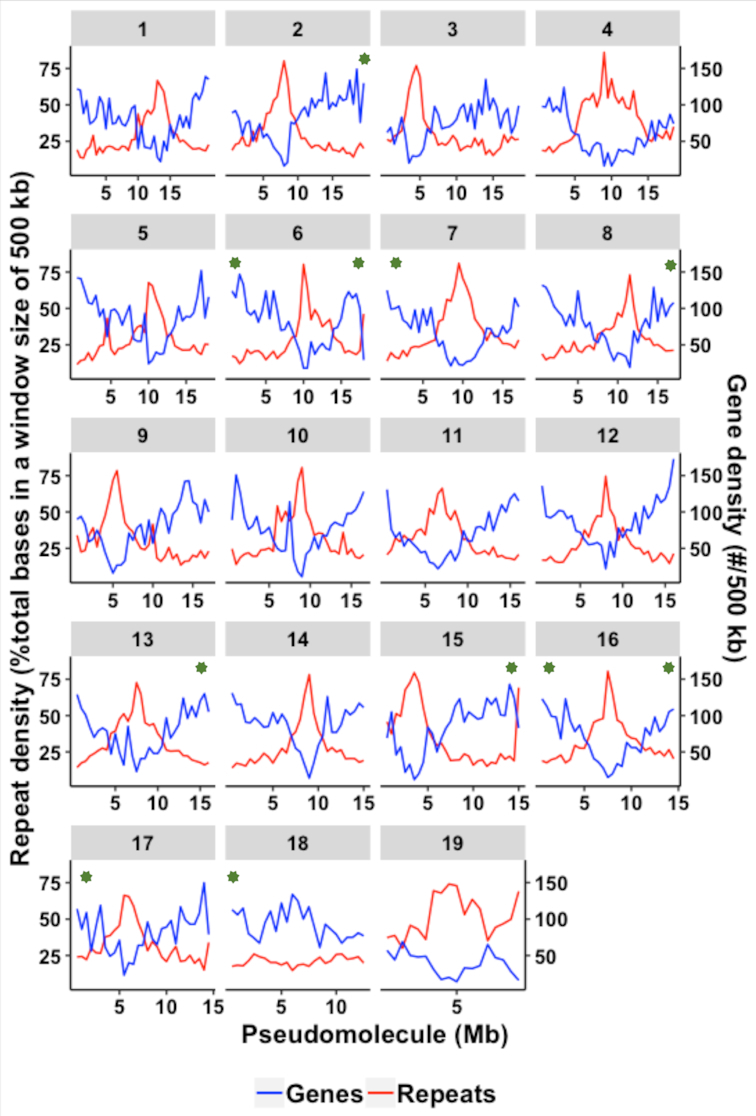
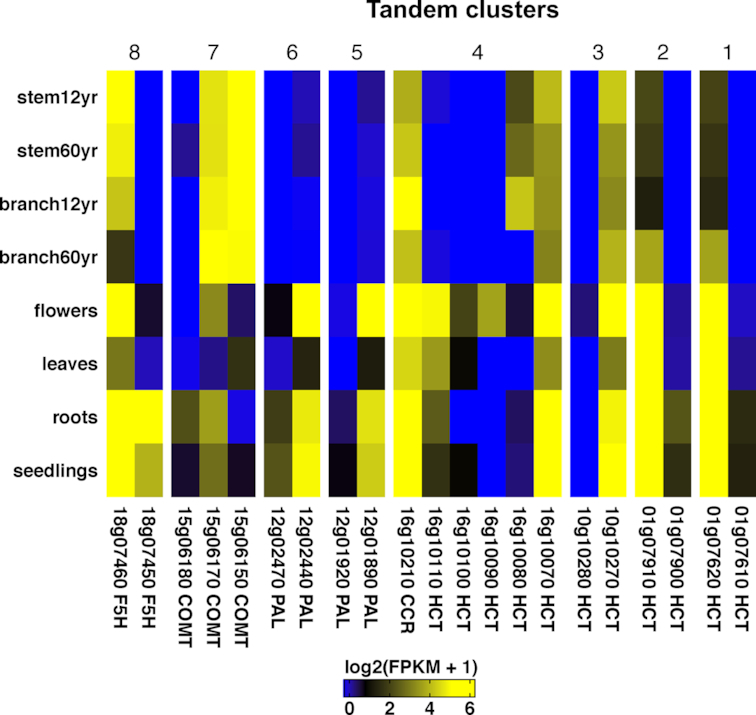
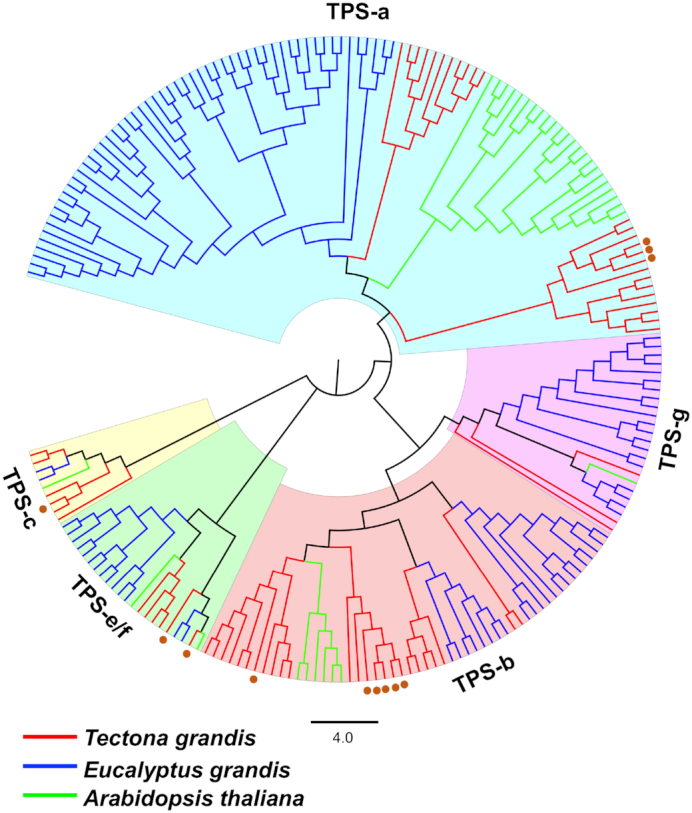
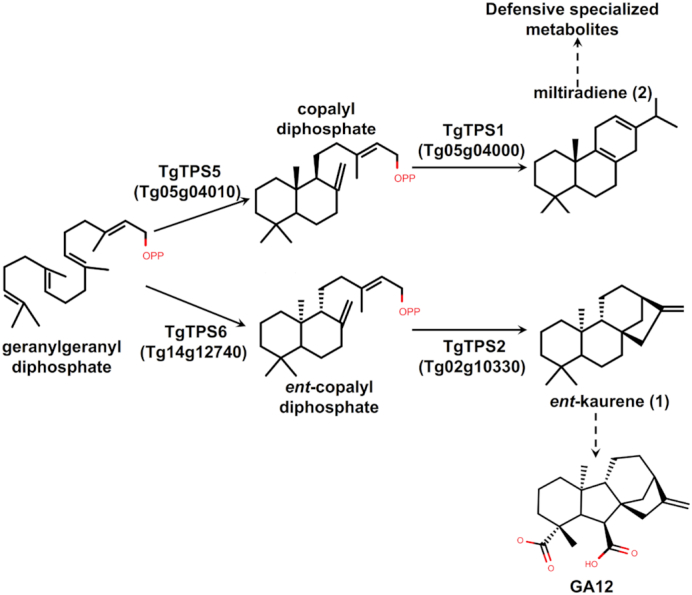
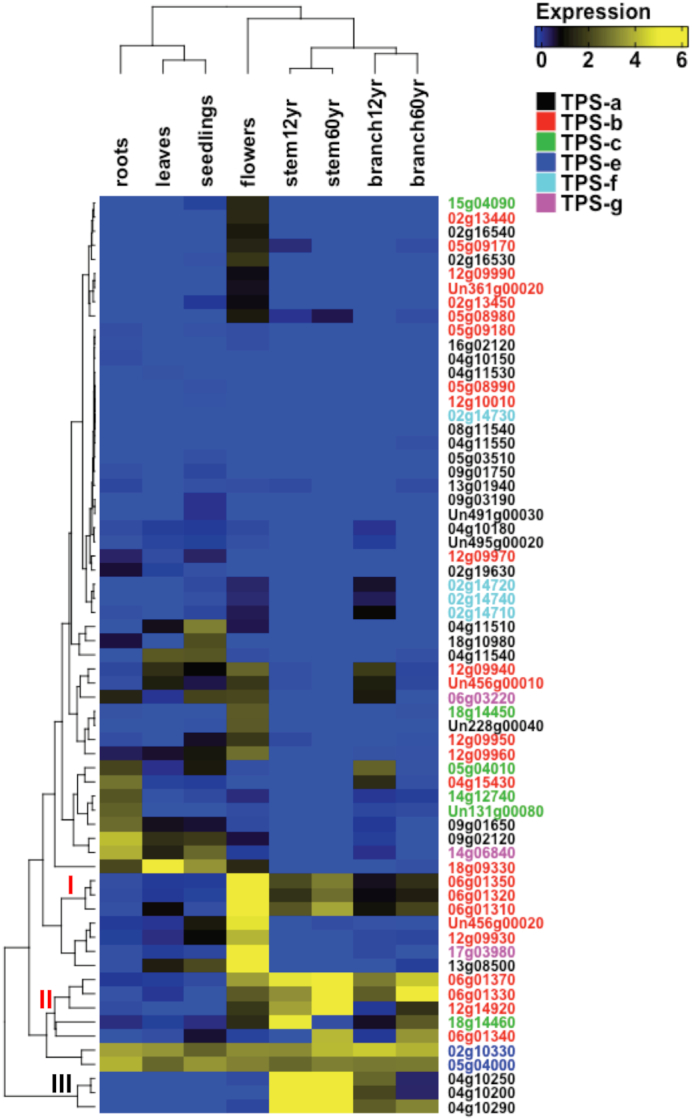
To facilitate teak research and variety improvement, we generated a highly contiguous, chromosomal-scale genome assembly using high-coverage Pacific Biosciences long reads coupled with high-throughput chromatin conformation capture. Of the 18 teak chromosomes, we generated 17 near-complete pseudomolecules with one chromosome present as two chromosome arm scaffolds. Genome annotation yielded 31,168 genes encoding 46,826 gene models, of which, 39,930 and 41,155 had Pfam domain and expression evidence, respectively. We identified 14 clusters of tandem-duplicated terpene synthases (TPSs), genes central to the biosynthesis of terpenes, which are involved in plant defense and pollinator attraction. Transcriptome analysis revealed 10 TPSs highly expressed in woody tissues, of which, 8 were in tandem, revealing the importance of resolving tandemly duplicated genes and the quality of the assembly and annotation. We also validated the enzymatic activity of four TPSs to demonstrate the function of key TPSs.
In summary, this high-quality chromosomal-scale assembly and functional annotation of the teak genome will facilitate the discovery of candidate genes related to traits critical for sustainable production of teak and for anti-insecticidal natural products.
柚木是唇形科的一员,其木材是世界上最昂贵的硬木之一。高需求加上森林砍伐导致天然柚木林减少,未来的供应将依赖于柚木种植园。因此,选择具有优良生长性能的柚木品种进行克隆繁殖至关重要,而获取高质量的遗传和基因组资源可以通过识别所需性状背后的基因来加速选择过程。
为了促进柚木研究和品种改良,我们利用高覆盖度的太平洋生物科学公司长读长测序技术结合高通量染色质构象捕获技术,生成了一个高度连续的染色体水平基因组组装。在柚木的18条染色体中,我们生成了17个近乎完整的假分子,其中一条染色体以两个染色体臂支架的形式存在。基因组注释产生了31168个编码46826个基因模型的基因,其中分别有39930个和41155个具有Pfam结构域和表达证据。我们鉴定出14个串联重复的萜类合酶(TPS)基因簇,这些基因是萜类生物合成的核心基因,参与植物防御和吸引传粉者。转录组分析揭示了10个在木质组织中高表达的TPS,其中8个是串联的,这揭示了解析串联重复基因以及组装和注释质量的重要性。我们还验证了4个TPS的酶活性,以证明关键TPS的功能。
总之,这种高质量的柚木基因组染色体水平组装和功能注释将有助于发现与柚木可持续生产和抗虫天然产物相关的关键性状的候选基因。