Aix Marseille Univ, INSERM MMG, Nerve and Muscle Department, Marseille, France.
NIHR Biomedical Research Centre, University College London, Great Ormond Street Institute of Child Health and Great Ormond Street Hospital NHS Trust, 30 Guilford Street, London WC1N 1EH, UK.
Nucleic Acids Res. 2019 Apr 8;47(6):2822-2839. doi: 10.1093/nar/gkz005.
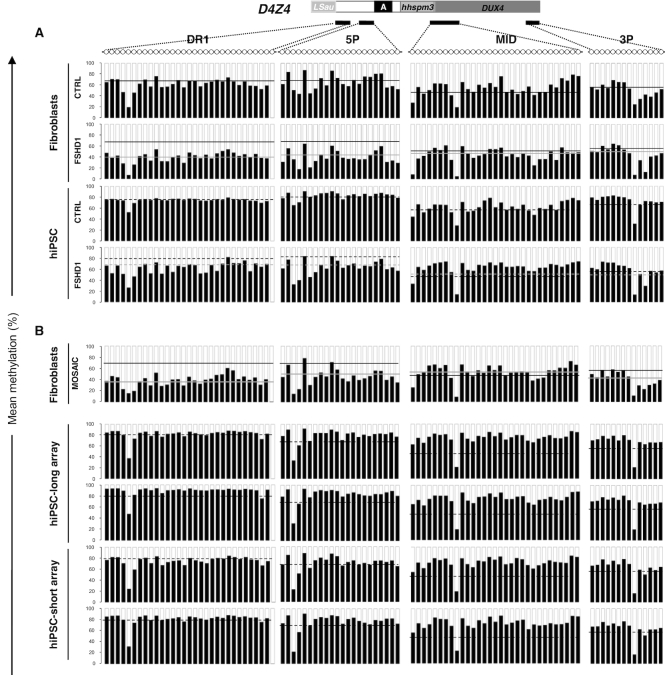
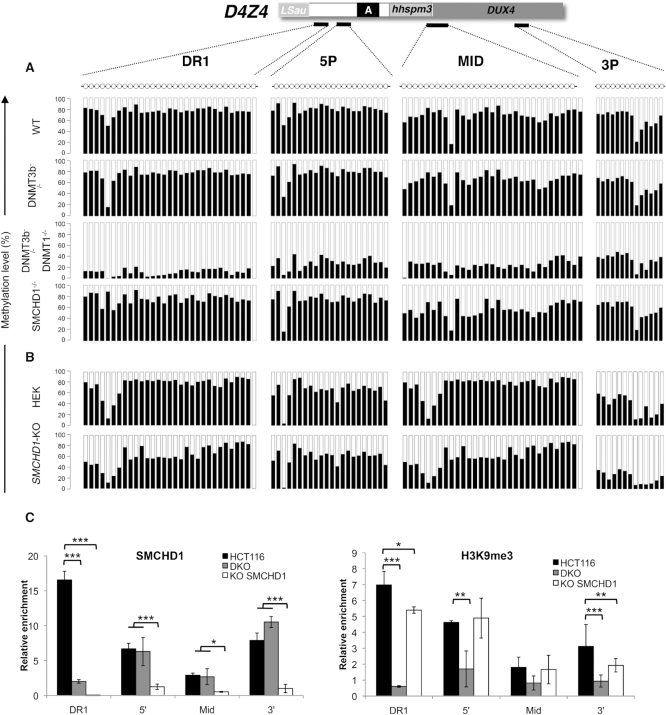
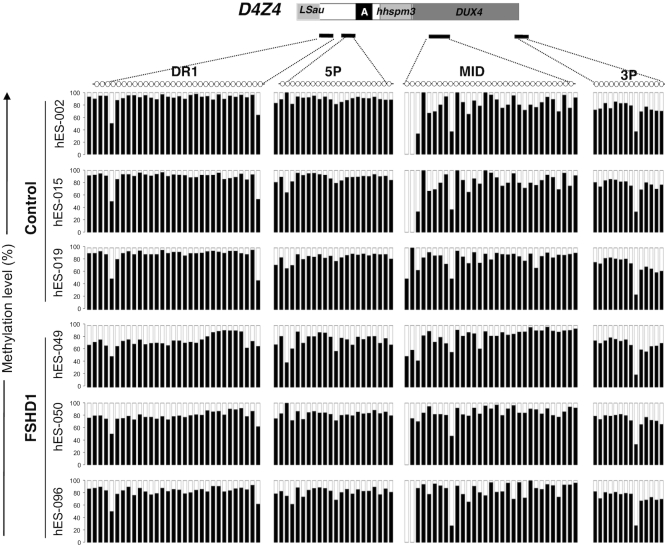
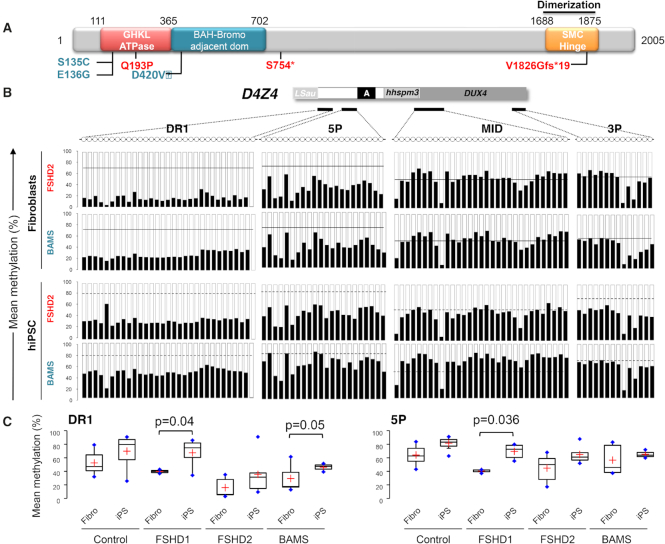
The DNA methylation epigenetic signature is a key determinant during development. Rules governing its establishment and maintenance remain elusive especially at repetitive sequences, which account for the majority of methylated CGs. DNA methylation is altered in a number of diseases including those linked to mutations in factors that modify chromatin. Among them, SMCHD1 (Structural Maintenance of Chromosomes Hinge Domain Containing 1) has been of major interest following identification of germline mutations in Facio-Scapulo-Humeral Dystrophy (FSHD) and in an unrelated developmental disorder, Bosma Arhinia Microphthalmia Syndrome (BAMS). By investigating why germline SMCHD1 mutations lead to these two different diseases, we uncovered a role for this factor in de novo methylation at the pluripotent stage. SMCHD1 is required for the dynamic methylation of the D4Z4 macrosatellite upon reprogramming but seems dispensable for methylation maintenance. We find that FSHD and BAMS patient's cells carrying SMCHD1 mutations are both permissive for DUX4 expression, a transcription factor whose regulation has been proposed as the main trigger for FSHD. These findings open new questions as to what is the true aetiology for FSHD, the epigenetic events associated with the disease thus calling the current model into question and opening new perspectives for understanding repetitive DNA sequences regulation.
DNA 甲基化表观遗传特征是发育过程中的关键决定因素。其建立和维持的规则仍然难以捉摸,尤其是在重复序列中,这些序列占甲基化 CG 的大多数。包括与修饰染色质的因子突变相关的疾病在内,许多疾病的 DNA 甲基化都会发生改变。其中,SMCHD1(染色体结构维持 hinge 结构域包含 1 型)在 Facio-Scapulo-Humeral Dystrophy(FSHD)和一种无关的发育障碍 Bosma Arhinia Microphthalmia Syndrome(BAMS)中发现种系突变后引起了人们的极大兴趣。通过研究为什么种系 SMCHD1 突变会导致这两种不同的疾病,我们发现该因子在多能性阶段的从头甲基化中起作用。SMCHD1 在重新编程时 D4Z4 大片段卫星的动态甲基化中是必需的,但对于甲基化维持似乎是可有可无的。我们发现携带 SMCHD1 突变的 FSHD 和 BAMS 患者细胞均允许 DUX4 表达,而 DUX4 是一种转录因子,其调节被认为是 FSHD 的主要触发因素。这些发现提出了新的问题,即 FSHD 的真正病因是什么,与疾病相关的表观遗传事件因此对当前的模型提出了质疑,并为理解重复 DNA 序列的调控开辟了新的视角。