Population Health, Health Systems and Innovation, Human Sciences Research Council, Pretoria, South Africa.
University of the Witwatersrand, Johannesburg, South Africa.
PLoS One. 2019 Jan 30;14(1):e0211208. doi: 10.1371/journal.pone.0211208. eCollection 2019.
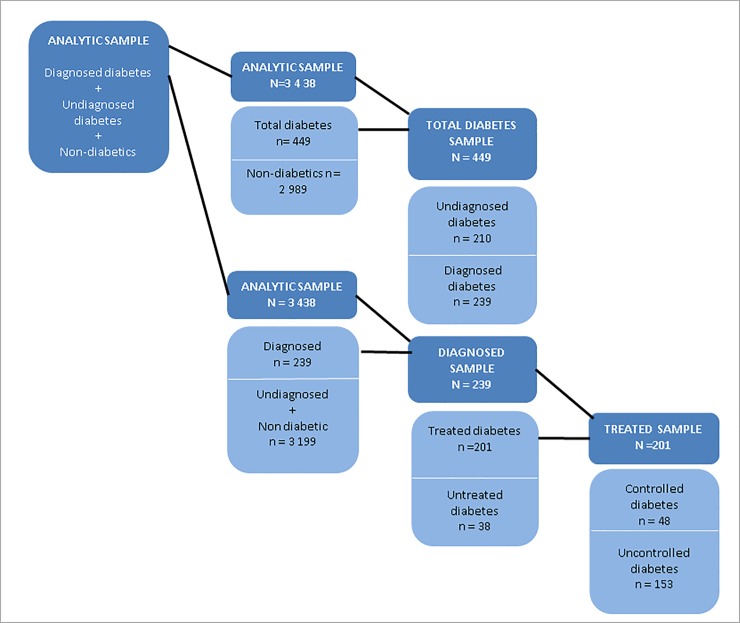
Inequalities in diabetes are widespread and are exacerbated by differences in lifestyle. Many studies that have estimated inequalities in diabetes make use of self-reported diabetes which is often biased by differences in access to health care and diabetes awareness. This study adds to this literature by making use of a more objective standardised measure of diabetes in South Africa. The study estimates socio-economic inequalities in undiagnosed diabetes, diagnosed diabetes (self-reported), as well as total diabetes (undiagnosed diabetics + diagnosed diabetics). The study also examines the contribution of lifestyle factors to diabetes inequalities in South Africa.
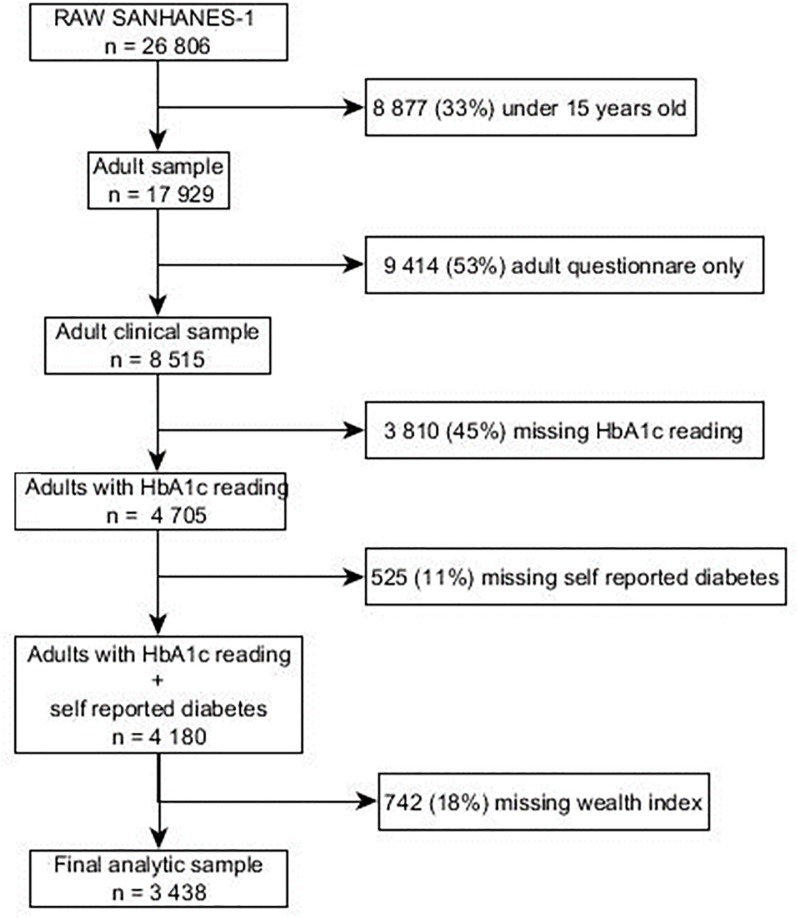
This cross sectional study uses data from the 2012 South African National Health and Nutrition Examination Survey (SANHANES-1) and applies the Erreygers Concentration Indices to assess socio-economic inequalities in diabetes. Contributions of lifestyle factors to inequalities in diabetes are assessed using a decomposition method.
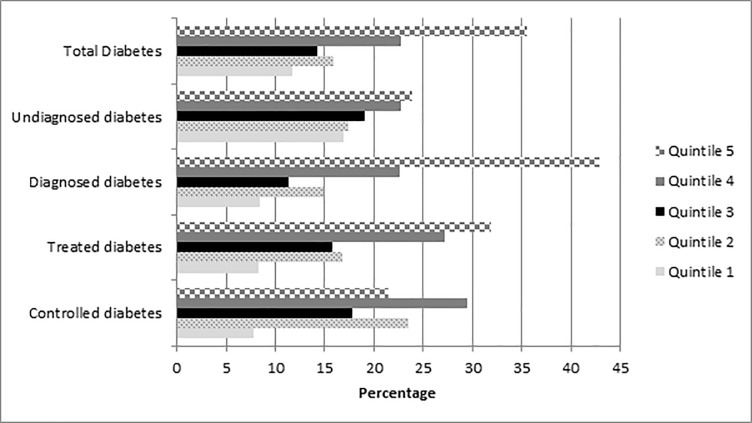
Self-reported diabetes and total diabetes (undiagnosed diabetics + diagnosed diabetics) were significantly concentrated amongst the rich (CI = 0.0746; p < 0.05 and CI = 0.0859; p < 0.05). The concentration index for undiagnosed diabetes was insignificant but pro-poor. The decomposition showed that lifestyle factors contributed 22% and 35% to socioeconomic inequalities in self-reported and total diabetes, respectively.
Diabetes in South Africa is more concentrated amongst higher socio-economic groups when measured using self-reported diabetes or clinical data. Our findings also show that the extent of inequality is worse in the total diabetes outcome (undiagnosed diabetics + diagnosed diabetics) when compared to the self-reported diabetes outcome. Although in comparison to other determinants, the contribution of lifestyle factors was modest, these contributions are important in the development of policies that address socio-economic inequalities in the prevalence of diabetes.
糖尿病的不平等现象普遍存在,并因生活方式的差异而加剧。许多估计糖尿病不平等的研究都利用了自我报告的糖尿病,而自我报告的糖尿病往往因获得医疗保健和糖尿病意识的差异而存在偏差。本研究通过利用南非更客观的标准化糖尿病衡量标准,为这一文献做出了补充。该研究估计了未确诊糖尿病、自我报告的确诊糖尿病(自我报告)以及总糖尿病(未确诊糖尿病患者+确诊糖尿病患者)方面的社会经济不平等。该研究还考察了生活方式因素对南非糖尿病不平等的贡献。
本横断面研究使用了 2012 年南非国家健康和营养调查(SANHANES-1)的数据,并应用 Erreygers 集中指数来评估糖尿病方面的社会经济不平等。使用分解方法评估生活方式因素对糖尿病不平等的贡献。
自我报告的糖尿病和总糖尿病(未确诊糖尿病患者+确诊糖尿病患者)在富人中显著集中(CI=0.0746;p<0.05 和 CI=0.0859;p<0.05)。未确诊糖尿病的集中指数无显著意义,但偏向穷人。分解表明,生活方式因素对自我报告和总糖尿病的社会经济不平等分别贡献了 22%和 35%。
当使用自我报告的糖尿病或临床数据来衡量时,南非的糖尿病在较高的社会经济群体中更为集中。我们的研究结果还表明,与自我报告的糖尿病结果相比,总糖尿病(未确诊糖尿病患者+确诊糖尿病患者)的不平等程度更严重。尽管与其他决定因素相比,生活方式因素的贡献微不足道,但这些贡献对于制定解决糖尿病流行方面社会经济不平等的政策非常重要。