Telethon Kids Institute, University of Western Australia, Northern Entrance Perth Children's Hospital, 15 Hospital Ave, Nedlands, Western Australia, 6009, Australia.
School of Public Health, Curtin University, Perth, Western Australia, 6845, Australia.
Respir Res. 2019 Jan 30;20(1):21. doi: 10.1186/s12931-019-0976-3.
Epidemiological studies have identified strong relationships between maternal obesity and offspring respiratory dysfunction; however, the causal direction is not known. We tested whether maternal obesity alters respiratory function of offspring in early life.
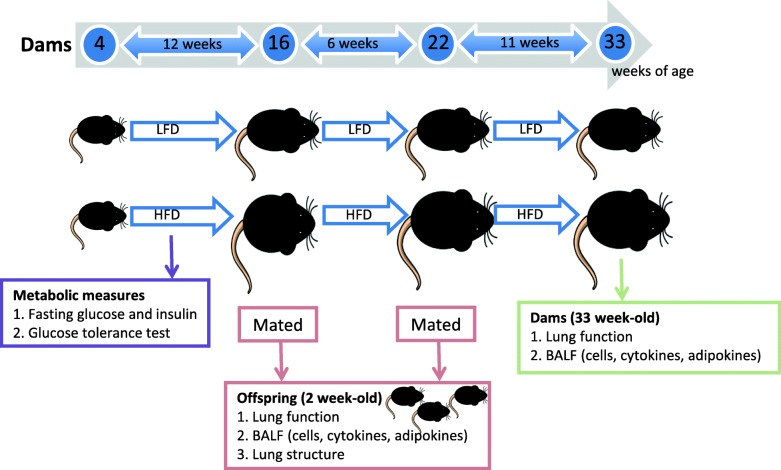
Female C57Bl/6 J mice were fed a high or low fat diet prior to and during two rounds of mating and resulting pregnancies with offspring lung function assessed at 2 weeks of age. The lung function of dams was measured at 33 weeks of age.
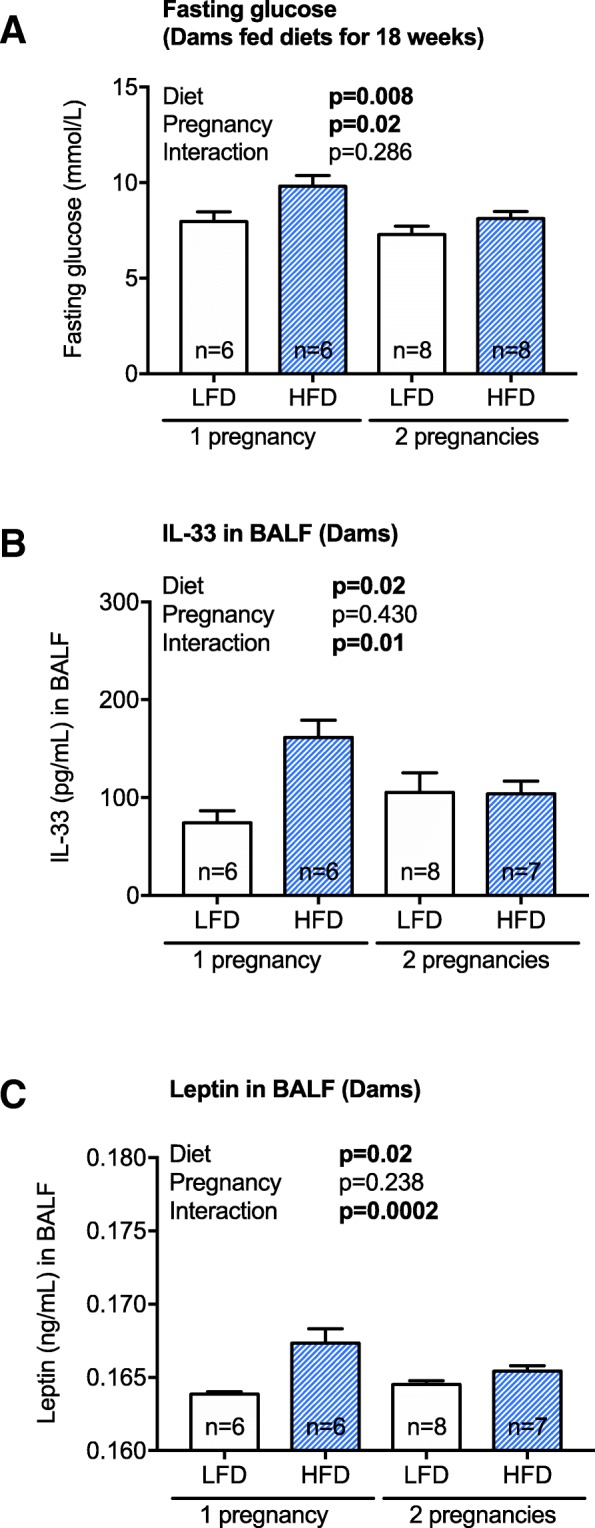
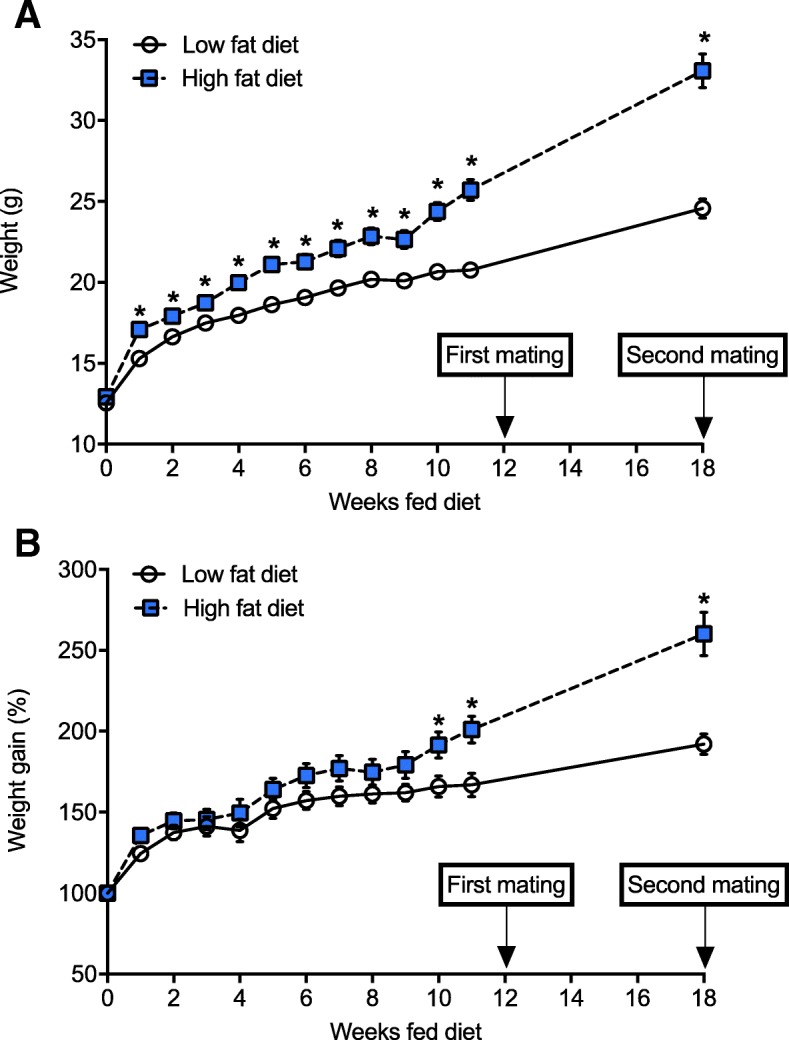
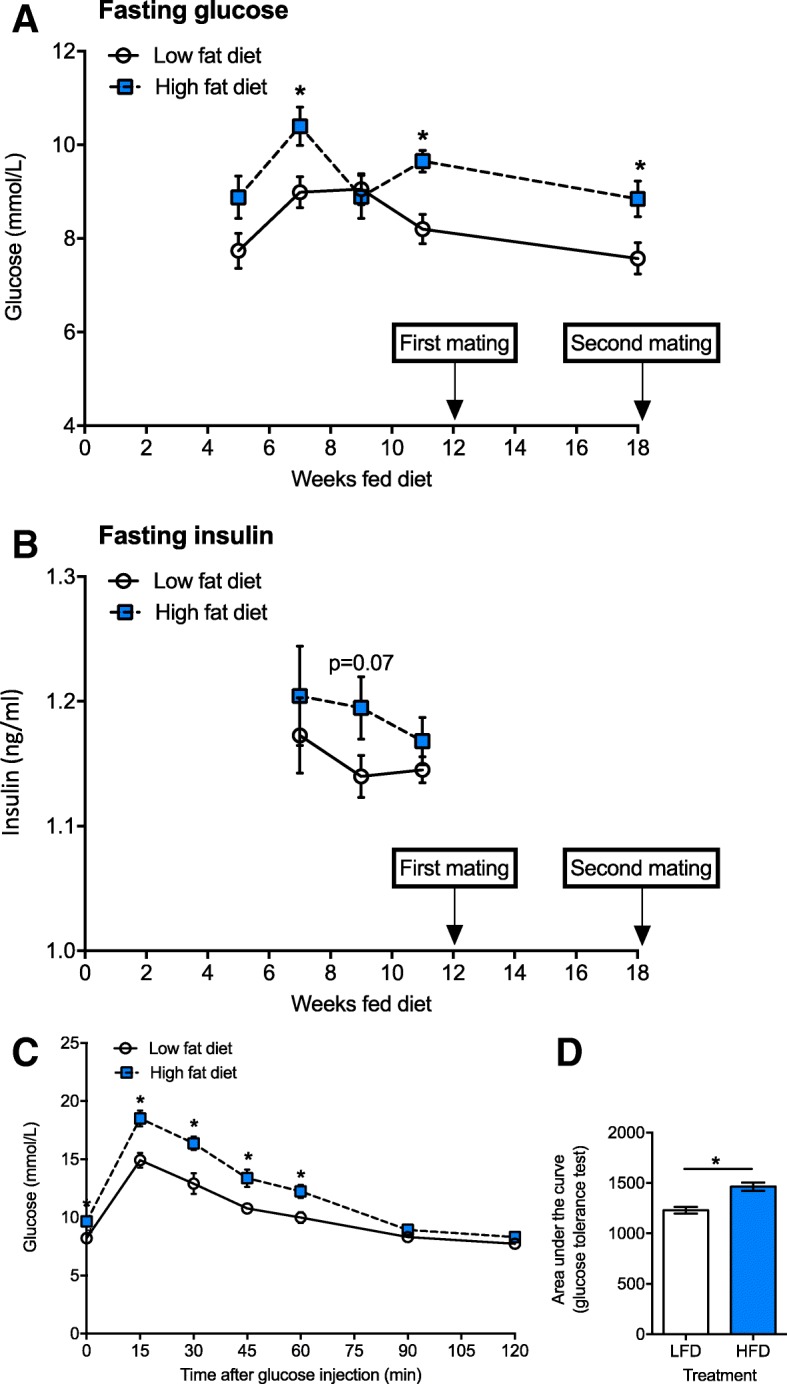
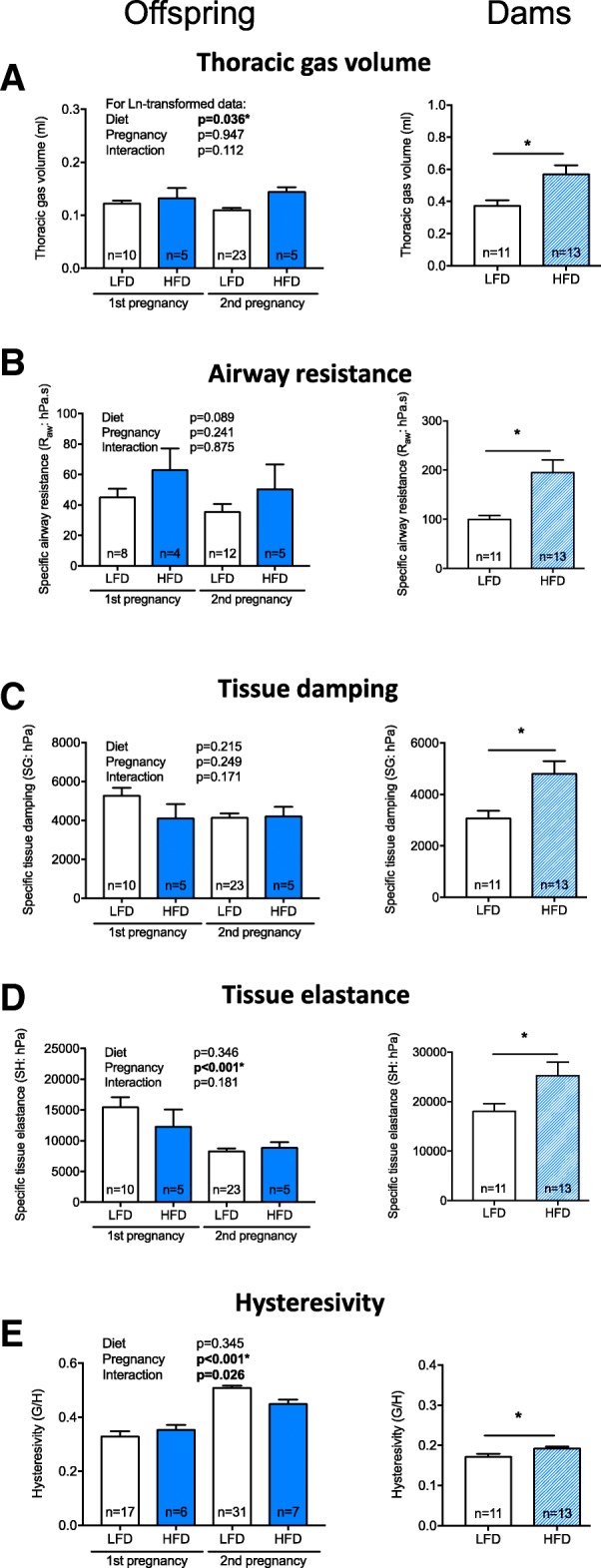
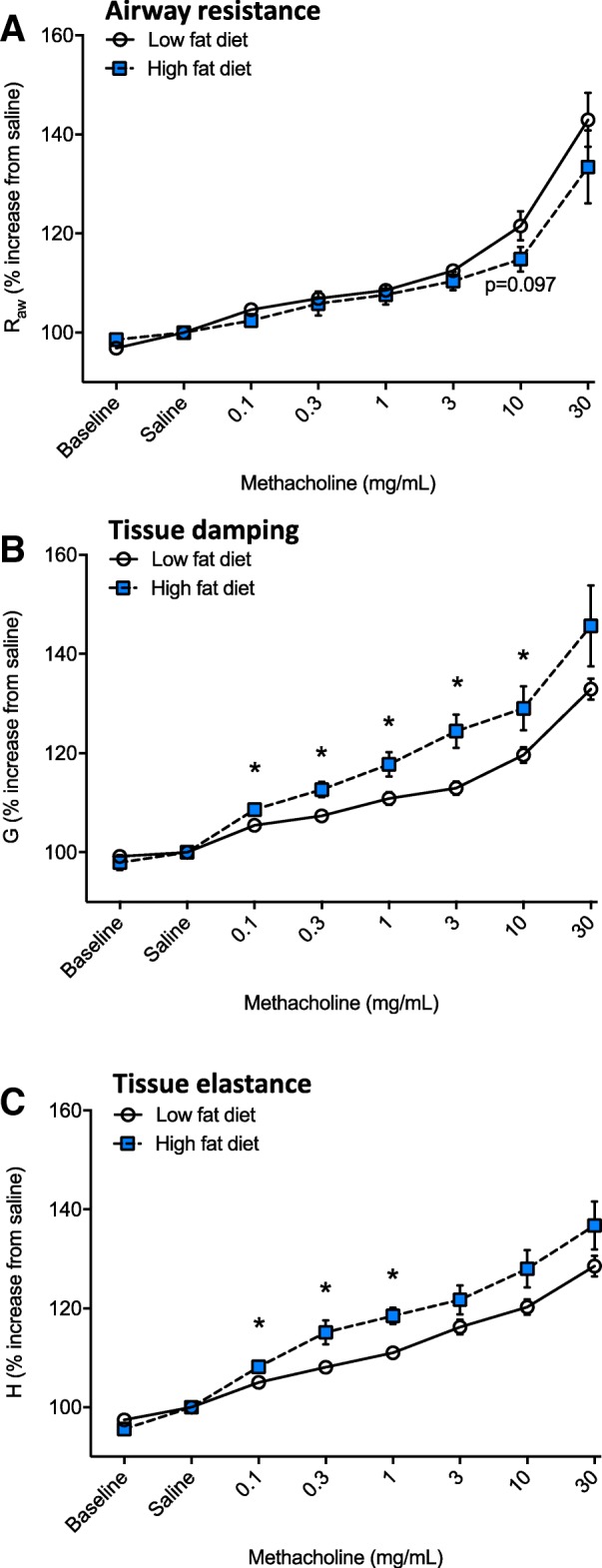
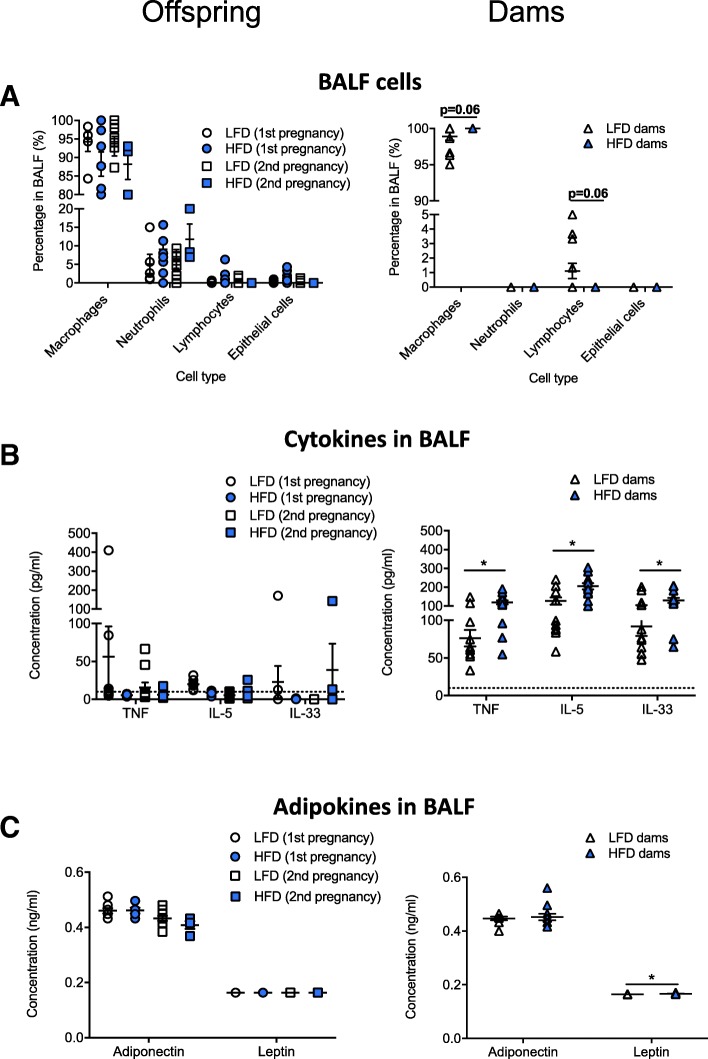
A high fat diet caused significant weight gain prior to conception with dams exhibiting elevated fasting glucose, and glucose intolerance. The number of surviving litters was significantly less for dams fed a high fat diet, and surviving offspring weighed more, were longer and had larger lung volumes than those born to dams fed a low fat diet. The larger lung volumes significantly correlated in a linear fashion with body length. Pups born from the second pregnancy had reduced tissue elastance compared to pups born from the first pregnancy, regardless of the dam's diet. As there was reduced offspring survival born to dams fed a high fat diet, the statistical power of lung function measures of offspring was limited. There were signs of increased inflammation in the bronchoalveolar lavage fluid of dams (but not offspring) fed a high fat diet, with more tumour necrosis factor-α, interleukin(IL)-5, IL-33 and leptin detected. Dams that were fed a high fat diet and became pregnant twice had reduced fasting glucose immediately prior to the second mating, and lower levels of IL-33 and leptin in bronchoalveolar lavage fluid.
While maternal high fat diet compromised litter survival, it also promoted somatic and lung growth (increased lung volume) in the offspring. Further studies are required to examine downstream effects of this enhanced lung volume on respiratory function in disease settings.
流行病学研究已经确定了母体肥胖与后代呼吸功能障碍之间存在强烈的关系;然而,因果关系尚不清楚。我们测试了母体肥胖是否会改变后代在生命早期的呼吸功能。
雌性 C57Bl/6J 小鼠在两次交配前和期间均食用高脂肪或低脂肪饮食,在 2 周龄时评估后代的肺功能。在 33 周龄时测量母鼠的肺功能。
高脂肪饮食在受孕前导致显著的体重增加,母体表现出空腹血糖升高和葡萄糖不耐受。高脂肪饮食组的存活产仔数显著减少,存活后代的体重、长度和肺容积均大于低脂肪饮食组的后代。较大的肺容积与体长呈线性相关。与第一胎相比,来自第二胎的幼仔组织弹性明显降低,而与母体饮食无关。由于高脂肪饮食组的后代存活率降低,因此对后代肺功能的测量统计效力有限。高脂肪饮食组的母鼠(而非后代)支气管肺泡灌洗液中有炎症迹象,检测到更多的肿瘤坏死因子-α、白细胞介素(IL)-5、IL-33 和瘦素。两次怀孕的高脂肪饮食母鼠在第二次交配前的空腹血糖明显降低,支气管肺泡灌洗液中的 IL-33 和瘦素水平也较低。
尽管高脂肪饮食的母体降低了产仔存活率,但也促进了后代的身体和肺部生长(增加了肺容积)。需要进一步研究增强的肺容积对疾病状态下呼吸功能的下游影响。