Platt K M, Charnigo R J, Pearson K J
1 Graduate Center for Nutritional Sciences, College of Medicine, University of Kentucky, Lexington, KY, USA.
2 Department of Biostatistics, College of Public Health, University of Kentucky, Lexington, KY, USA.
J Dev Orig Health Dis. 2014 Jun;5(3):229-39. doi: 10.1017/S2040174414000154.
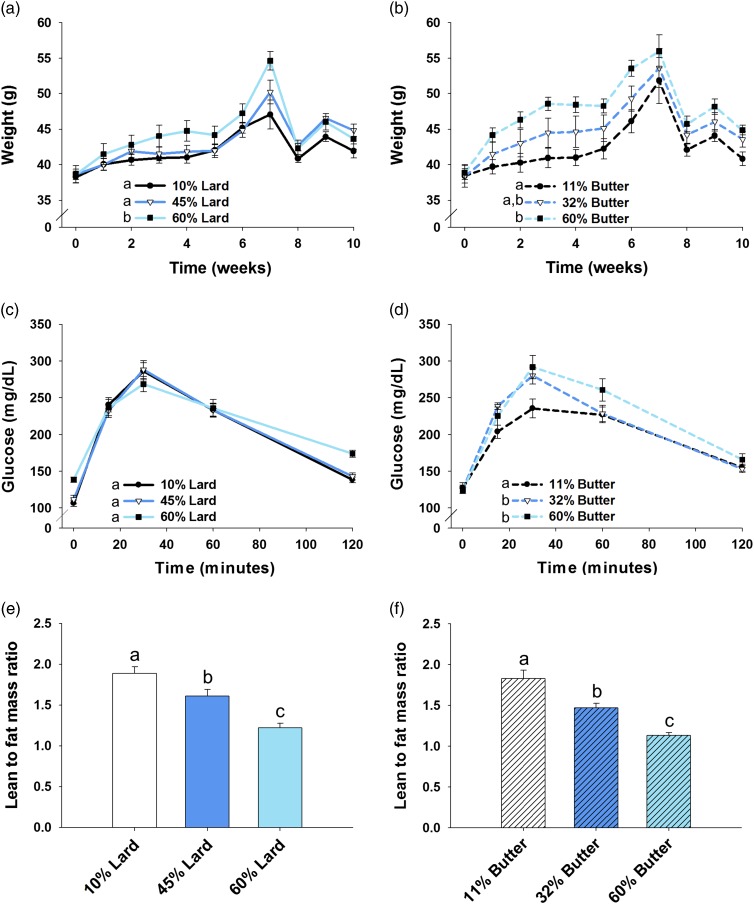
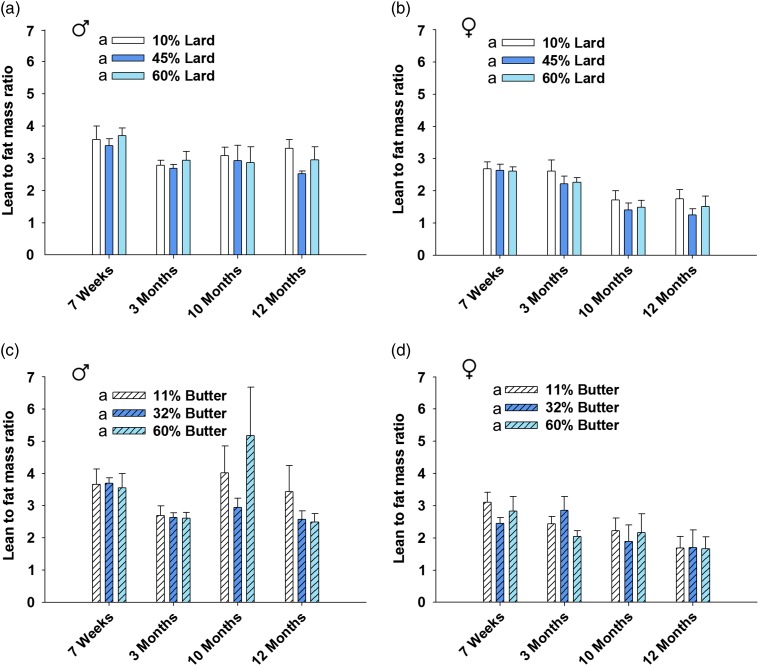
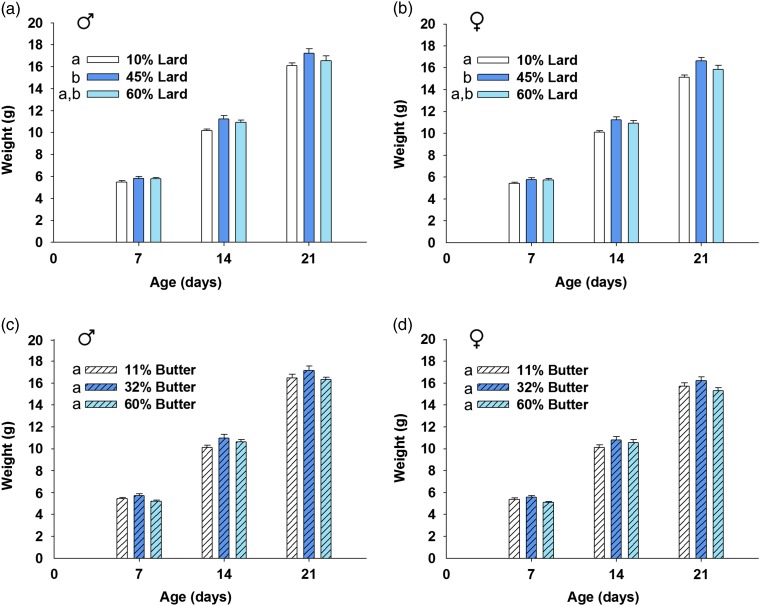
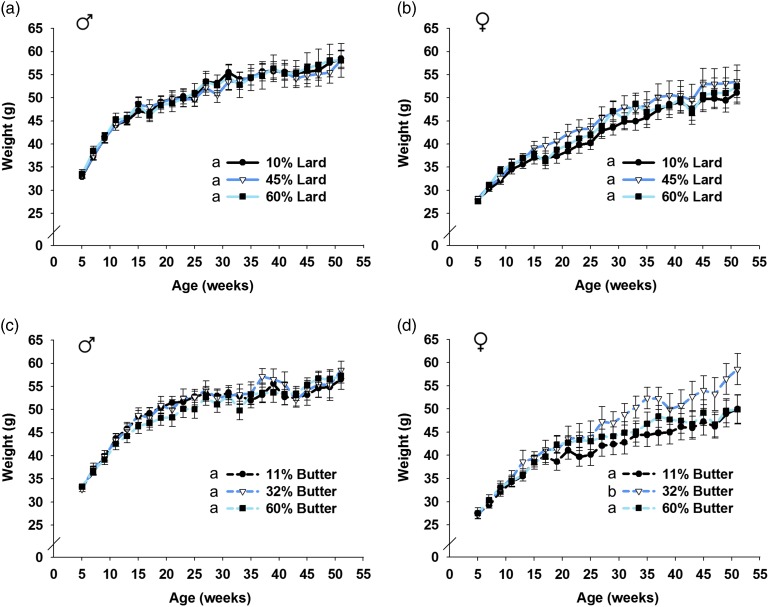
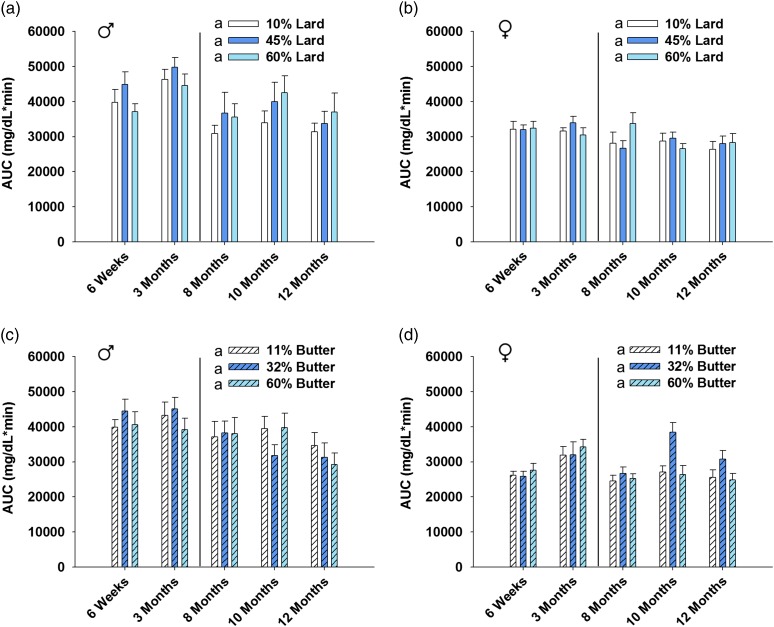
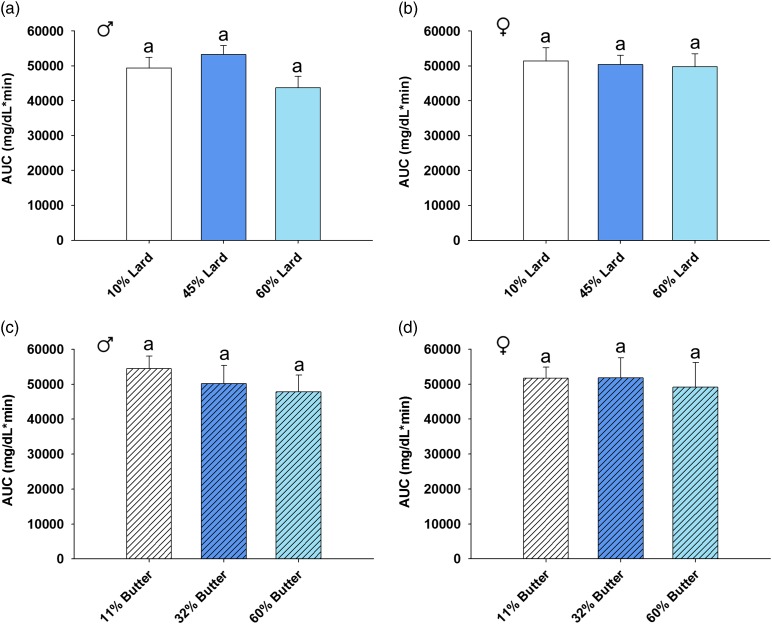
Maternal high-fat diet consumption and obesity have been shown to program long-term obesity and lead to impaired glucose tolerance in offspring. Many rodent studies, however, use non-purified, cereal-based diets as the control for purified high-fat diets. In this study, primiparous ICR mice were fed purified control diet (10-11 kcal% from fat of lard or butter origin) and lard (45 or 60 kcal% fat) or butter (32 or 60 kcal% fat)-based high-fat diets for 4 weeks before mating, throughout pregnancy, and for 2 weeks of nursing. Before mating, female mice fed the 32 and 60% butter-based high-fat diets exhibited impaired glucose tolerance but those females fed the lard-based diets showed normal glucose disposal following a glucose challenge. High-fat diet consumption by female mice of all groups decreased lean to fat mass ratios during the 4th week of diet treatment compared with those mice consuming the 10-11% fat diets. All females were bred to male mice and pregnancy and offspring outcomes were monitored. The body weight of pups born to 45% lard-fed dams was significantly increased before weaning, but only female offspring born to 32% butter-fed dams exhibited long-term body weight increases. Offspring glucose tolerance and body composition were measured for at least 1 year. Minimal, if any, differences were observed in the offspring parameters. These results suggest that many variables should be considered when designing future high-fat diet feeding and maternal obesity studies in mice.
母体高脂饮食摄入和肥胖已被证明会使后代长期肥胖,并导致葡萄糖耐量受损。然而,许多啮齿动物研究使用非纯化的谷物类饮食作为纯化高脂饮食的对照。在本研究中,初产ICR小鼠在交配前、整个孕期以及产后2周的哺乳期,分别喂食纯化对照饮食(来自猪油或黄油的脂肪占10 - 11千卡%)以及基于猪油(45或60千卡%脂肪)或黄油(32或60千卡%脂肪)的高脂饮食4周。交配前,喂食32%和60%黄油基高脂饮食的雌性小鼠表现出葡萄糖耐量受损,但喂食猪油基饮食的雌性小鼠在葡萄糖激发试验后显示出正常的葡萄糖代谢。与食用10 - 11%脂肪饮食的小鼠相比,所有组的雌性小鼠在饮食处理的第4周高脂饮食摄入均降低了瘦体重与脂肪量的比率。所有雌性小鼠与雄性小鼠交配,并监测怀孕情况和后代结局。出生于喂食45%猪油的母鼠的幼崽在断奶前体重显著增加,但只有出生于喂食32%黄油的母鼠的雌性后代表现出长期体重增加。对后代的葡萄糖耐量和身体组成进行了至少1年的测量。在后代参数方面观察到的差异极小(如果有的话)。这些结果表明,在设计未来小鼠高脂饮食喂养和母体肥胖研究时应考虑许多变量。