Hisamatsu Daisuke, Masuoka Hiroaki, Takeshige-Amano Haruka, Kurokawa Rina, Ogata Yusuke, Suda Wataru, Hatano Taku, Asaoka Daisuke, Mabuchi Yo, Naraoka Yuna, Sato Nobuhiro, Asada Takashi, Hattori Nobutaka, Hattori Masahira, Akazawa Chihiro
Intractable Disease Research Center, Juntendo University Graduate School of Medicine, Tokyo 113-8421, Japan.
Laboratory for Symbiotic Microbiome Sciences, RIKEN Center for Integrative Medical Sciences, Yokohama 235-0045, Japan.
iScience. 2025 May 6;28(6):112593. doi: 10.1016/j.isci.2025.112593. eCollection 2025 Jun 20.
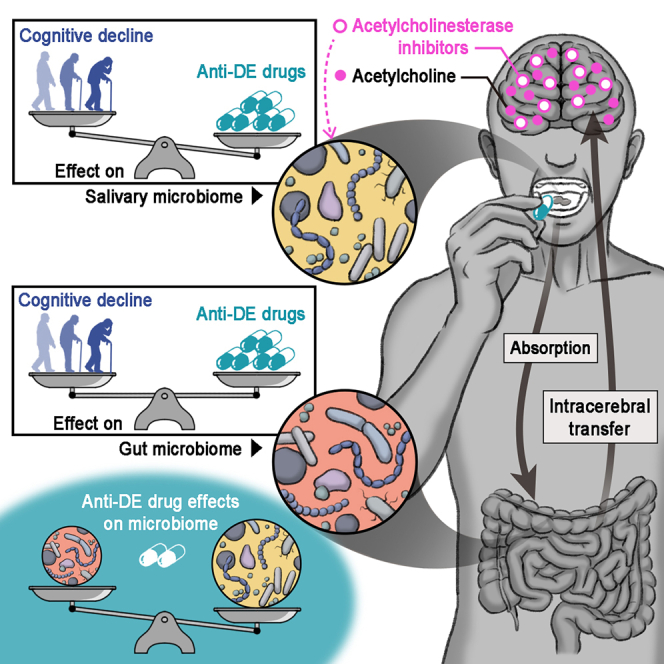
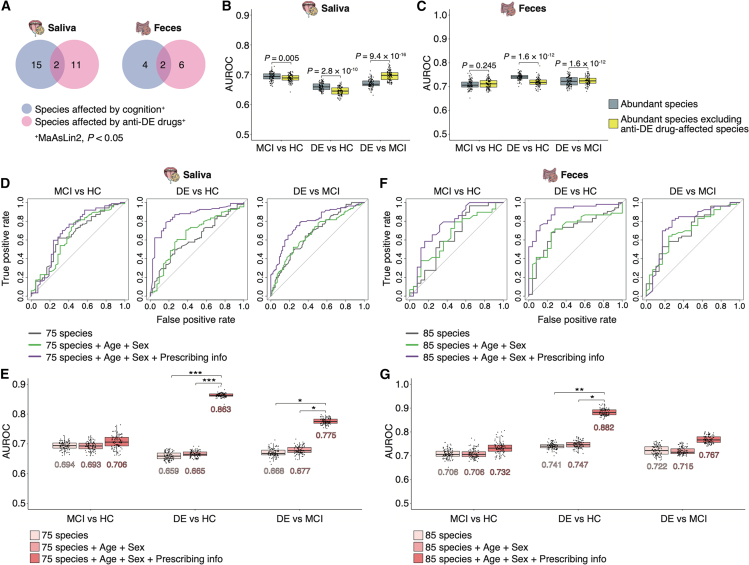
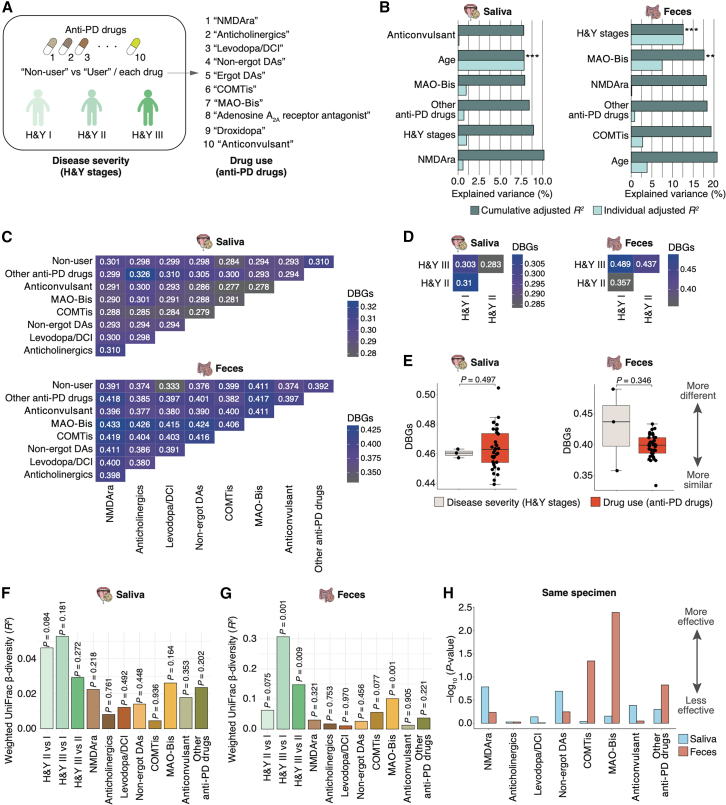
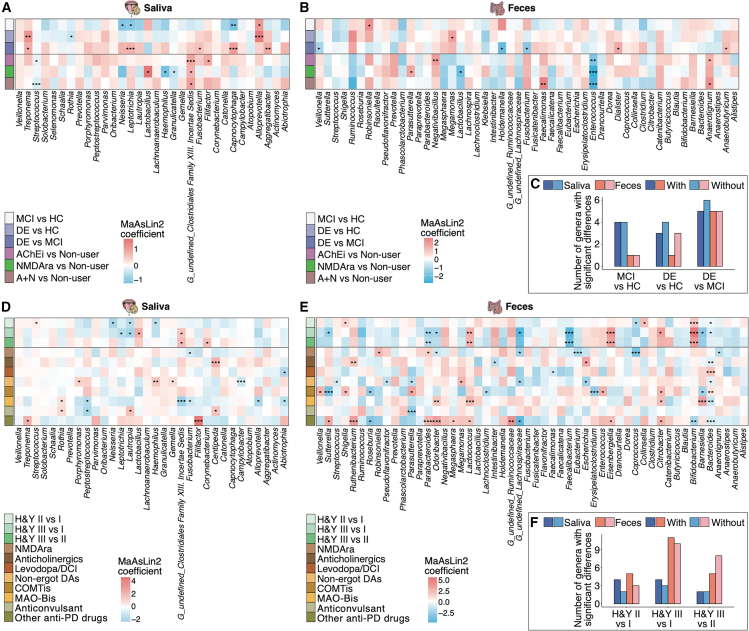
Microbiome alterations are reportedly linked to systemic disease progression and medication. However, the effects of central nervous system drugs on the microbiome of patients with neurodegenerative diseases, such as Alzheimer's or Parkinson's disease, are poorly understood. Here, we comprehensively analyzed the effects of medication on the salivary and gut microbiomes of patients with Alzheimer's or Parkinson's disease. Comparative analyses of the effects of disease severity and drug use revealed that anti-dementia (DE) drugs, particularly acetylcholinesterase inhibitors, had a greater effect on compositional changes in the salivary microbiome than on those in the gut microbiome. Multivariate analyses incorporating anti-DE drug use showed that microbial signatures may serve as promising disease biomarkers, enabling the development of more precise predictors of cognitive function. Our findings will facilitate the advancement of diagnostic tools leveraging the salivary microbiome.
据报道,微生物群的改变与全身疾病进展及药物治疗有关。然而,中枢神经系统药物对阿尔茨海默病或帕金森病等神经退行性疾病患者微生物群的影响却知之甚少。在此,我们全面分析了药物治疗对阿尔茨海默病或帕金森病患者唾液和肠道微生物群的影响。对疾病严重程度和药物使用影响的比较分析表明,抗痴呆(DE)药物,尤其是乙酰胆碱酯酶抑制剂,对唾液微生物群组成变化的影响比对肠道微生物群组成变化的影响更大。纳入抗DE药物使用情况的多变量分析表明,微生物特征可能是很有前景的疾病生物标志物,有助于开发更精确的认知功能预测指标。我们的研究结果将推动利用唾液微生物群的诊断工具的发展。