Gupta Shruti, Fečkaninová Adriána, Lokesh Jep, Koščová Jana, Sørensen Mette, Fernandes Jorge, Kiron Viswanath
Faculty of Biosciences and Aquaculture, Nord University, Bodø, Norway.
Department of Food Hygiene and Technology, University of Veterinary Medicine and Pharmacy in Košice, Košice, Slovakia.
Front Microbiol. 2019 Jan 11;9:3247. doi: 10.3389/fmicb.2018.03247. eCollection 2018.
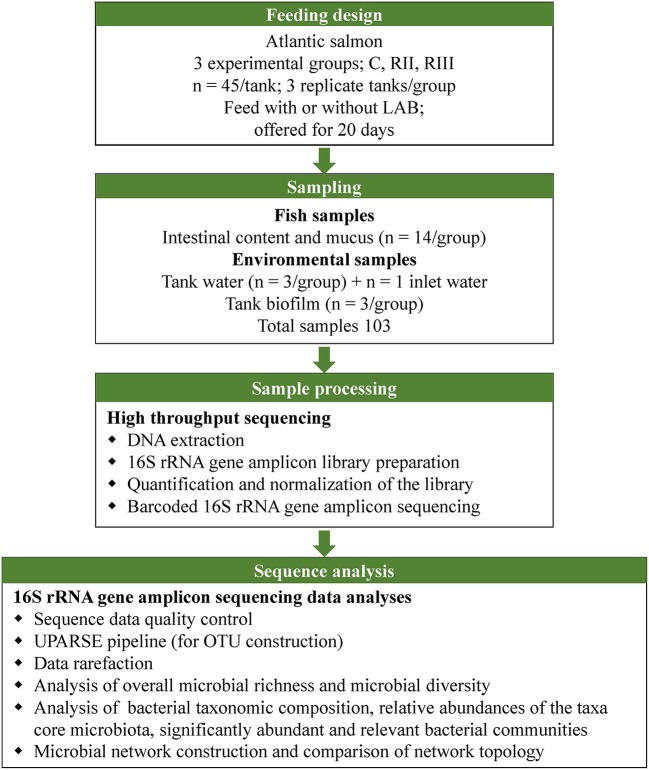
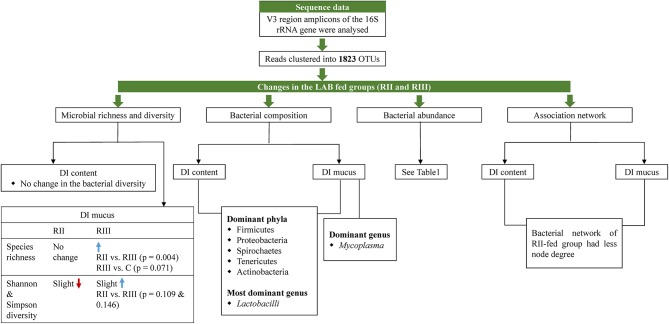
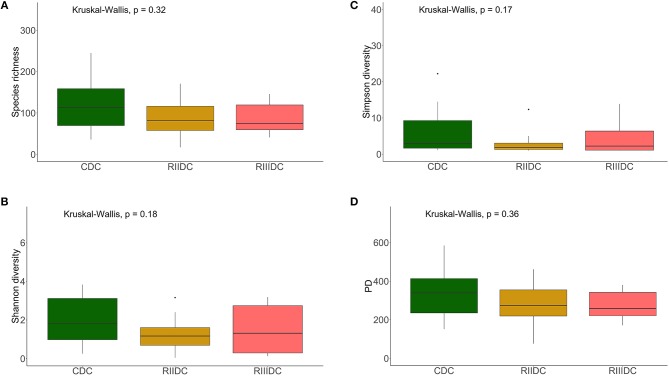
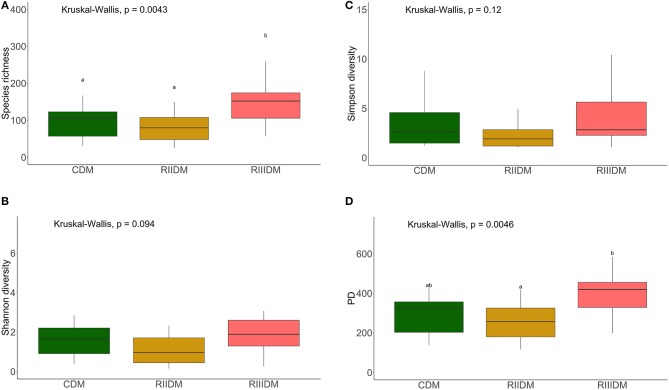
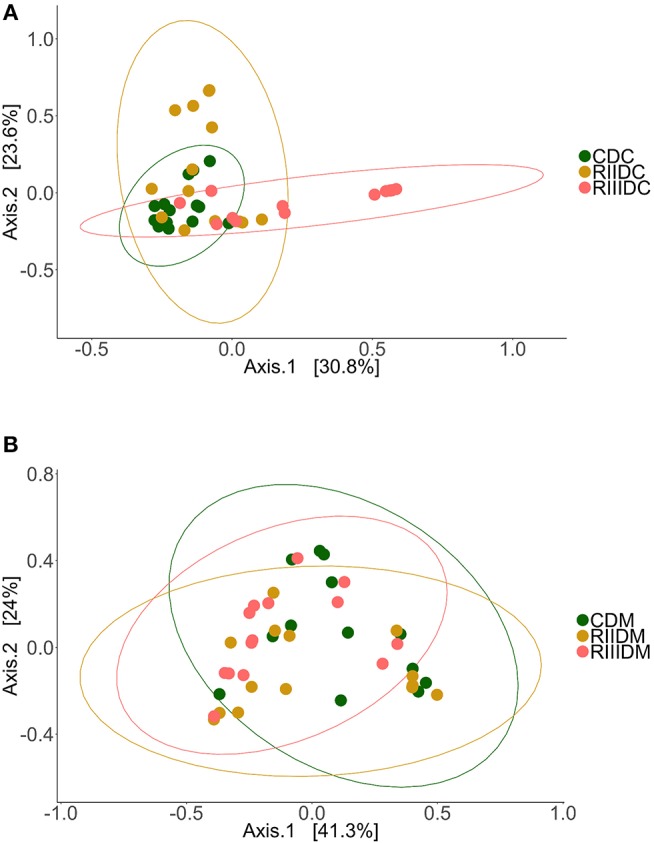
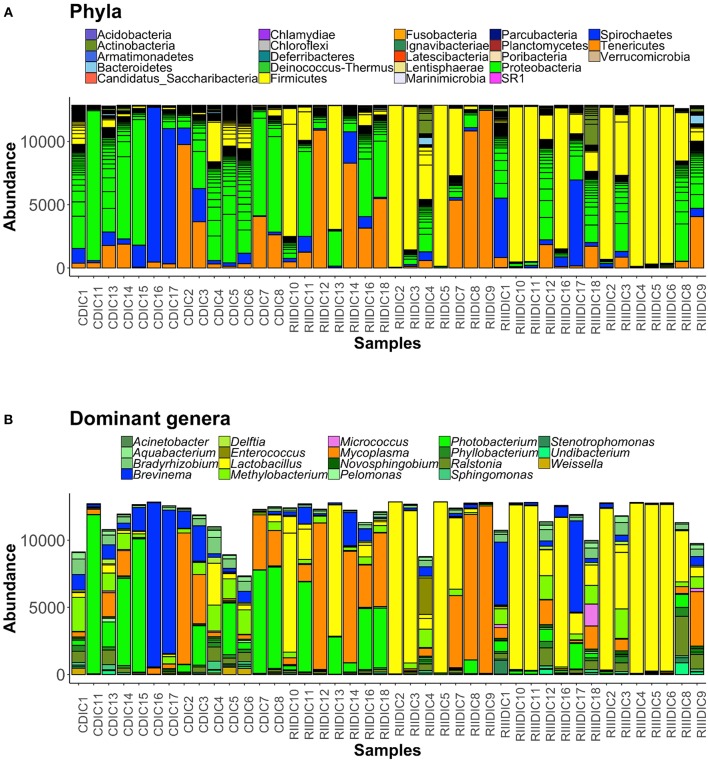
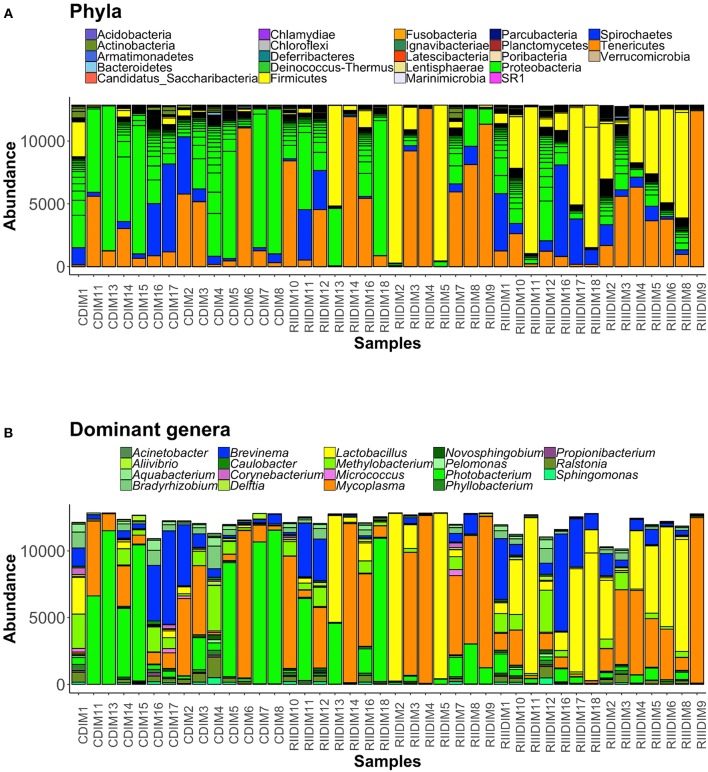
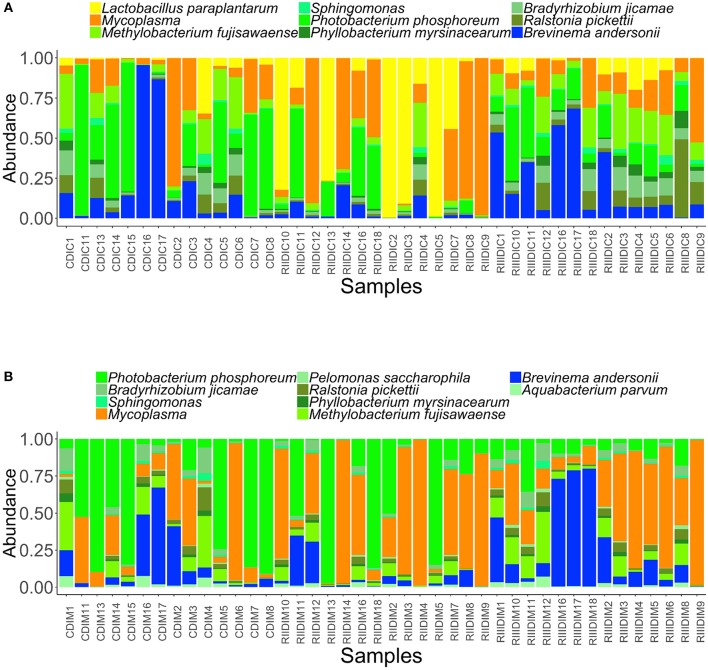
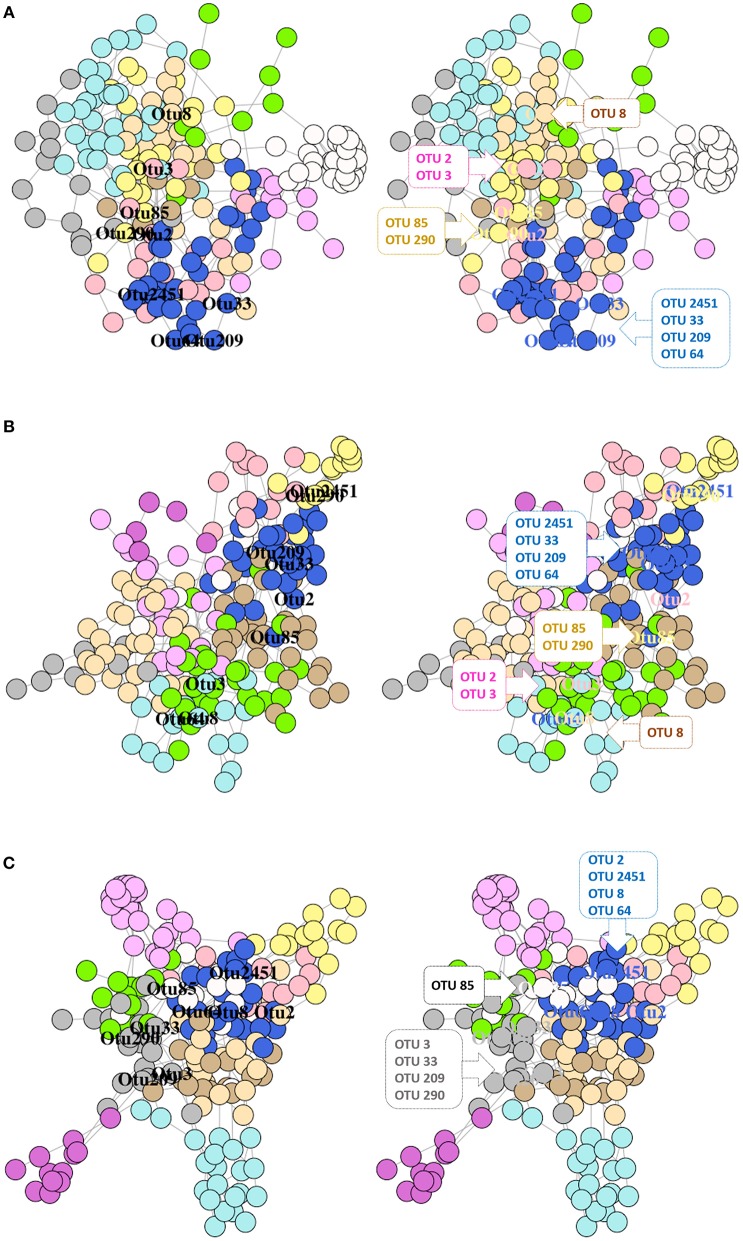
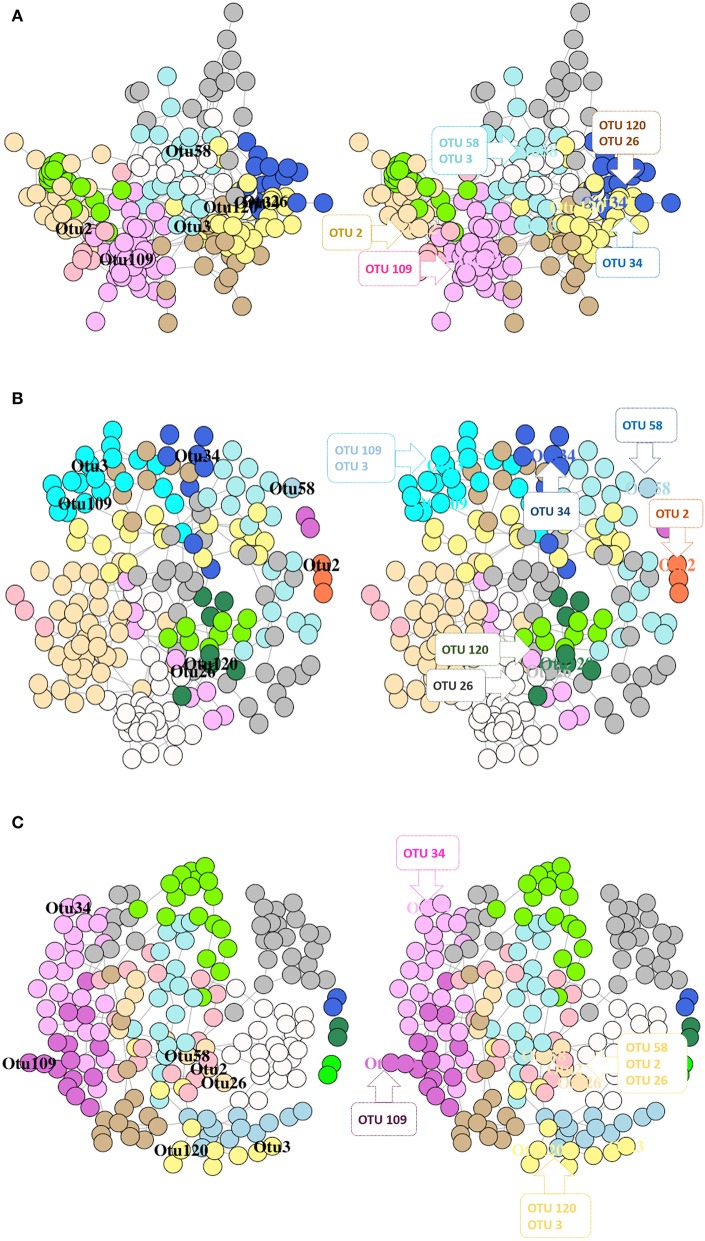
Probiotics, the live microbial strains incorporated as dietary supplements, are known to provide health benefits to the host. These live microbes manipulate the gut microbial community by suppressing the growth of certain intestinal microbes while enhancing the establishment of some others. Lactic acid bacteria (LAB) have been widely studied as probiotics; in this study we have elucidated the effects of two fish-derived LAB types (RII and RIII) on the distal intestinal microbial communities of Atlantic salmon (). We employed high-throughput 16S rRNA gene amplicon sequencing to investigate the bacterial communities in the distal intestinal content and mucus of Atlantic salmon fed diets coated with the LABs or that did not have microbes included in it. Our results show that the supplementation of the microbes shifts the intestinal microbial profile differentially. LAB supplementation did not cause any significant alterations in the alpha diversity of the intestinal content bacteria but RIII feeding increased the bacterial diversity in the intestinal mucus of the fish. Beta diversity analysis revealed significant differences between the bacterial compositions of the control and LAB-fed groups. was the dominant genus in LAB-fed fish. A few members of the phyla Tenericutes, Proteobacteria, Actinobacteria, and Spirochaetes were also found to be abundant in the LAB-fed groups. Furthermore, the bacterial association network analysis showed that the co-occurrence pattern of bacteria of the three study groups were different. Dietary probiotics can modulate the composition and interaction of the intestinal microbiota of Atlantic salmon.
益生菌作为膳食补充剂所含的活微生物菌株,已知对宿主有益健康。这些活微生物通过抑制某些肠道微生物的生长,同时促进其他一些微生物的定殖,来操纵肠道微生物群落。乳酸菌(LAB)作为益生菌已得到广泛研究;在本研究中,我们阐明了两种鱼类来源的乳酸菌类型(RII和RIII)对大西洋鲑鱼远端肠道微生物群落的影响。我们采用高通量16S rRNA基因扩增子测序来研究喂食添加乳酸菌或未添加微生物的饲料的大西洋鲑鱼远端肠道内容物和黏液中的细菌群落。我们的结果表明,添加微生物会使肠道微生物谱发生不同变化。添加乳酸菌不会导致肠道内容物细菌的α多样性有任何显著改变,但喂食RIII会增加鱼肠道黏液中的细菌多样性。β多样性分析揭示了对照组和喂食乳酸菌组的细菌组成之间存在显著差异。 在喂食乳酸菌的鱼中是优势属。在喂食乳酸菌的组中还发现柔膜菌门、变形菌门、放线菌门和螺旋体门的一些成员也很丰富。此外,细菌关联网络分析表明,三个研究组细菌的共现模式不同。膳食益生菌可调节大西洋鲑鱼肠道微生物群的组成和相互作用。