Lorenz Elizabeth C, Egginton Jason S, Stegall Mark D, Cheville Andrea L, Heilman Raymond L, Nair Sumi Sukumaran, Mai Martin L, Eton David T
William J von Liebig Center for Transplantation and Clinical Regeneration, Mayo Clinic, 200 1st St. SW, Rochester, MN, 55905, USA.
Center for the Science of Health Care Delivery, Mayo Clinic, Rochester, USA.
J Patient Rep Outcomes. 2019 Jan 30;3(1):8. doi: 10.1186/s41687-019-0095-4.
Kidney transplant recipients face a lifelong regimen of medications, health monitoring and medical appointments. This work involved in managing one's health and its impact on well-being are referred to as treatment burden. Excessive treatment burden can adversely impact adherence and quality of life. The aim of this study was to develop a conceptual framework of treatment burden after kidney transplantation. Qualitative interviews were conducted with kidney transplant recipients (n = 27) from three Mayo Clinic transplant centers. A semi-structured interview guide originally developed in patients with chronic conditions and tailored to the context of kidney transplantation was utilized. Themes of treatment burden after kidney transplantation were confirmed in two focus groups (n = 16).
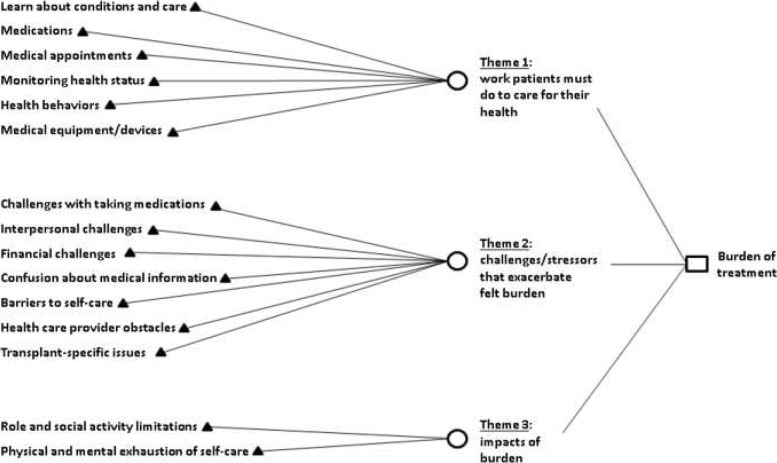
Analyses confirmed three main themes of treatment burden after kidney transplantation: 1) work patients must do to care for their health (e.g., attending medical appointments, taking medications), 2) challenges/stressors that exacerbate felt burden (e.g., financial concerns, health system obstacles) 3) impacts of burden (e.g., role/social activity limitations).
Patients describe a significant amount of work involved in caring for their kidney transplants. This work is exacerbated by individual, interpersonal and system-related factors. The framework will be used as a foundation for a patient-reported measure of treatment burden to promote better care after kidney transplantation.
肾移植受者面临着终身的药物治疗、健康监测和医疗预约。参与管理自身健康及其对幸福感的影响的这些工作被称为治疗负担。过重的治疗负担会对依从性和生活质量产生不利影响。本研究的目的是构建肾移植后治疗负担的概念框架。对来自梅奥诊所三个移植中心的肾移植受者(n = 27)进行了定性访谈。使用了最初为慢性病患者开发并根据肾移植背景进行调整的半结构化访谈指南。在两个焦点小组(n = 16)中确认了肾移植后治疗负担的主题。
分析证实了肾移植后治疗负担的三个主要主题:1)患者为照顾自身健康必须做的工作(例如,参加医疗预约、服药),2)加重感知负担的挑战/压力源(例如,经济担忧、卫生系统障碍),3)负担的影响(例如,角色/社会活动限制)。
患者描述了在照顾肾移植方面涉及的大量工作。个人、人际和系统相关因素会加剧这项工作。该框架将作为患者报告的治疗负担测量方法的基础,以促进肾移植后的更好护理。