Demir Günay, Özen Samim, Çetin Hafize, Darcan Şükran, Gökşen Damla
Ege University Faculty of Medicine, Department of Pediatric Endocrinology and Diabetes, İzmir, Turkey
J Clin Res Pediatr Endocrinol. 2019 May 28;11(2):189-195. doi: 10.4274/jcrpe.galenos.2019.2019.0009. Epub 2019 Jan 31.
The aim of this study was to determine the prevalence of impaired hypoglycemia awareness (IHA) in children and adolescents with type 1 diabetes mellitus using a professional continuous glucose monitoring (CGM) system and to show the effect of structured education on glycemic variability (GV) in children and adolescents with IHA.
Forty type 1 diabetic children and adolescents with a diabetes duration of at least five years were eligible for inclusion in this prospective, quantitative study. All subjects were asked about their history of being aware of the symptoms of hypoglycemia using a questionnaire. Professional CGM was conducted in all of the patients for six days. The frequency of IHA detected by comparison of CGM and logbook reports were analyzed. Patients with identified IHA underwent a structured training program. After three months, CGM was re-applied to patients with IHA.
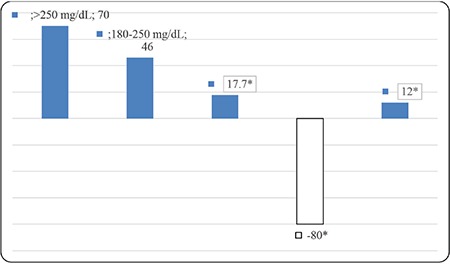
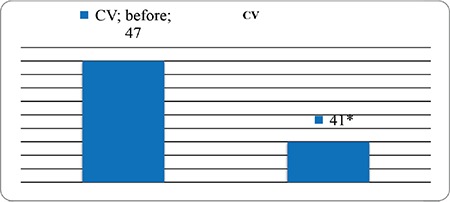
The study was completed by 37 diabetic children and adolescents. After the initial CGM, nine patients (24.3%) were found to have had episodes of IHA. Area under the curve (AUC) for hypoglycemia and number of low excursions were; 1.81±0.95 and 8.33±3.60 for the IHA group at the beginning of the study. AUC for hypoglycemia was 0.43±0.47 after three months of structured education the IHA patients (p=0.01). Coefficient of variation which shows primary GV decreased significantly although unstable at the end of education in IHA patients (p=0.03).
CGM is a valuable tool to diagnose IHA. IHA, GV and time in range can be improved by education-based intervention.
本研究旨在使用专业的持续葡萄糖监测(CGM)系统确定1型糖尿病儿童和青少年低血糖意识受损(IHA)的患病率,并展示结构化教育对IHA儿童和青少年血糖变异性(GV)的影响。
40名1型糖尿病儿童和青少年,糖尿病病程至少5年,符合纳入这项前瞻性定量研究的条件。使用问卷询问所有受试者关于他们低血糖症状意识的病史。对所有患者进行了6天的专业CGM监测。分析通过比较CGM和日志报告检测到的IHA频率。确诊为IHA的患者接受了结构化培训计划。三个月后,对IHA患者重新进行CGM监测。
37名糖尿病儿童和青少年完成了研究。在初始CGM监测后,发现9名患者(24.3%)有IHA发作。研究开始时,IHA组低血糖的曲线下面积(AUC)和低血糖发作次数分别为1.81±0.95和8.33±3.60。IHA患者经过三个月的结构化教育后,低血糖的AUC为0.43±0.47(p=0.01)。显示主要GV的变异系数在IHA患者教育结束时虽不稳定但显著下降(p=0.03)。
CGM是诊断IHA的有价值工具。基于教育的干预可以改善IHA、GV和血糖达标时间。