Division of Diabetes, Metabolism and Endocrinology, Kawasaki Medical School, 577 Matsushima, Kurashiki, Okayama, 701-0192, Japan.
Department of Internal Medicine, Kawasaki Medical School, Okayama, Japan.
Lipids Health Dis. 2019 Jan 31;18(1):36. doi: 10.1186/s12944-019-0983-x.
The study aimed to examine the relationship between levels of serum eicosapentaenoic acid (EPA), arachidonic acid (AA), as well as EPA/AA ratio and weight loss during hospitalization in participants considered to be overweight, with type 2 diabetes.
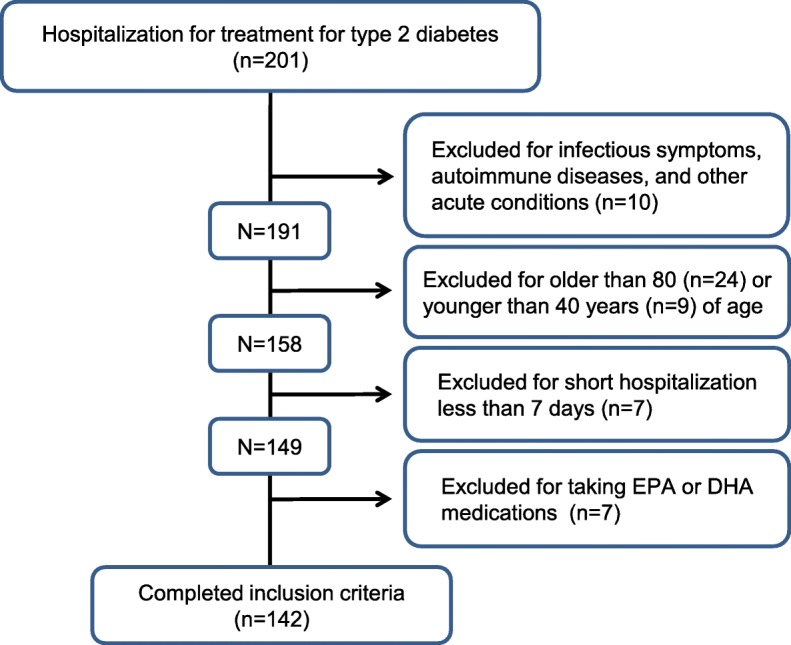
The study participants included 142 patients who were hospitalized for treatment of type 2 diabetes. We divided the participants into two groups depending on the achievenemt in reduction of bodyweight 3% or more during hospitalization and examined the relationship between serum levels of EPA and AA, as well as ratio of EPA/AA on admission and effectiveness of weight loss under strict dietary therapy during hospitalization, using Cox proportional hazard models.
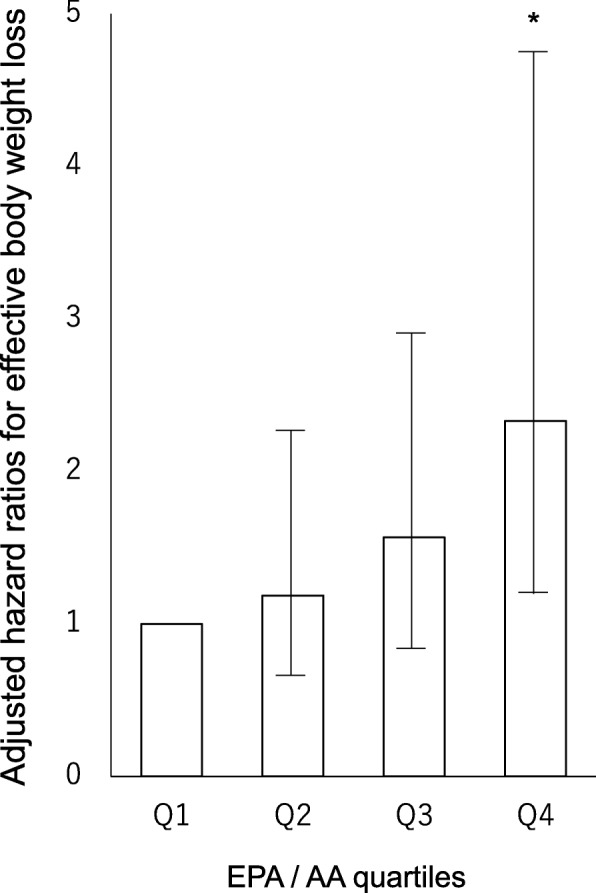
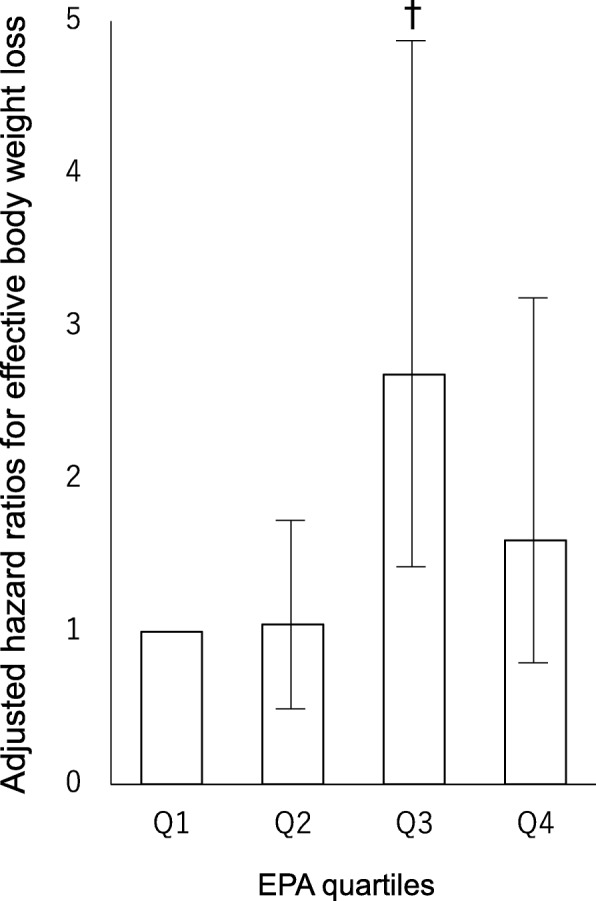
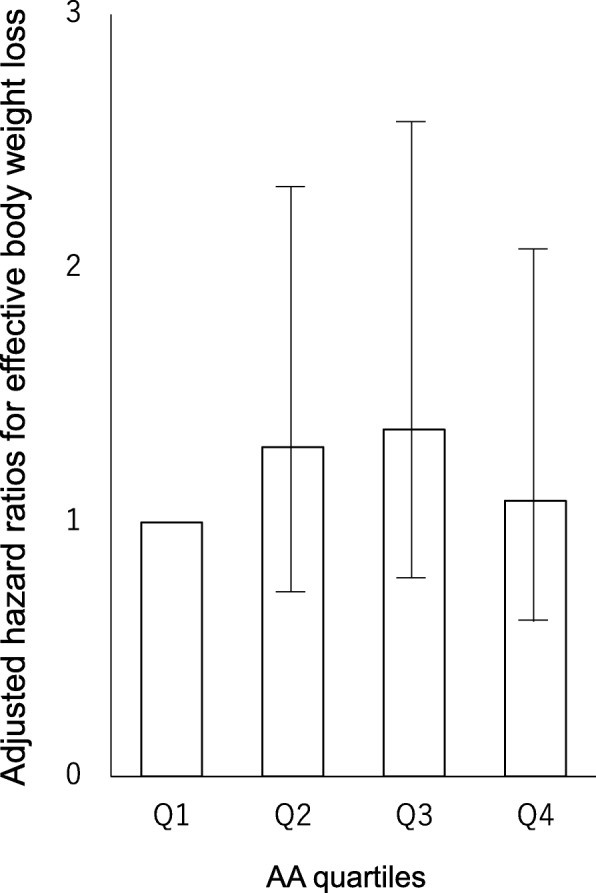
After adjustment was made for several confounders, the hazard ratio of effective weight loss for logarithmical serum EPA was 1.59 (95% CI 1.02-2.49, P = 0.04) and for logarithmical EPA/AA ratio 1.64 (1.03-2.61, P = 0.04), whereas the hazard ratio for effective weight loss for logarithmical serum AA was 1.11 (0.45-2.78, P = 0.82). In addition, after dividing EPA/AA ratio and serum EPA into quartiles based on participant number, the hazard ratio for the highest quartile of EPA/AA ratio was 2.33 (1.14-4.77, P = 0.02), and for the highest quartile of serum EPA 1.60 (0.80-3.19, P = 0.18) compared with the lowest quartile.
These results suggest the possibility that EPA is involved in bodyweight change under a caloric-restriction regimen. In addition, EPA/AA ratio was found to be a better predictor of medical intervention for weight loss among overweight patients with type 2 diabetes, compared with serum EPA level.
本研究旨在探讨血清二十碳五烯酸(EPA)、花生四烯酸(AA)水平及其比值与超重 2 型糖尿病患者住院期间体重减轻的关系。
研究对象为 142 例因 2 型糖尿病住院治疗的患者。根据住院期间体重减轻 3%或更多的目标,我们将参与者分为两组,并使用 Cox 比例风险模型,考察入院时血清 EPA 和 AA 水平以及 EPA/AA 比值与住院期间严格饮食治疗的体重减轻效果之间的关系。
在调整了几个混杂因素后,血清 EPA 对数的有效体重减轻的风险比为 1.59(95%CI 1.02-2.49,P=0.04),EPA/AA 比值对数的风险比为 1.64(1.03-2.61,P=0.04),而血清 AA 对数的有效体重减轻的风险比为 1.11(0.45-2.78,P=0.82)。此外,根据参与者人数将 EPA/AA 比值和血清 EPA 分为四等分后,最高四分位数 EPA/AA 比值的风险比为 2.33(1.14-4.77,P=0.02),最高四分位数血清 EPA 的风险比为 1.60(0.80-3.19,P=0.18)与最低四分位数相比。
这些结果表明 EPA 可能参与了热量限制治疗方案下的体重变化。此外,与血清 EPA 水平相比,EPA/AA 比值被发现是超重 2 型糖尿病患者体重减轻的医学干预的更好预测指标。