Woodard Lindsay N, Grunlan Melissa A
Department of Biomedical Engineering, Texas A&M University, College Station, Texas 77843, United States.
Department of Materials Science and Engineering, Texas A&M University, College Station, Texas 77843, United States.
ACS Macro Lett. 2018 Aug 21;7(8):976-982. doi: 10.1021/acsmacrolett.8b00424. Epub 2018 Jul 30.
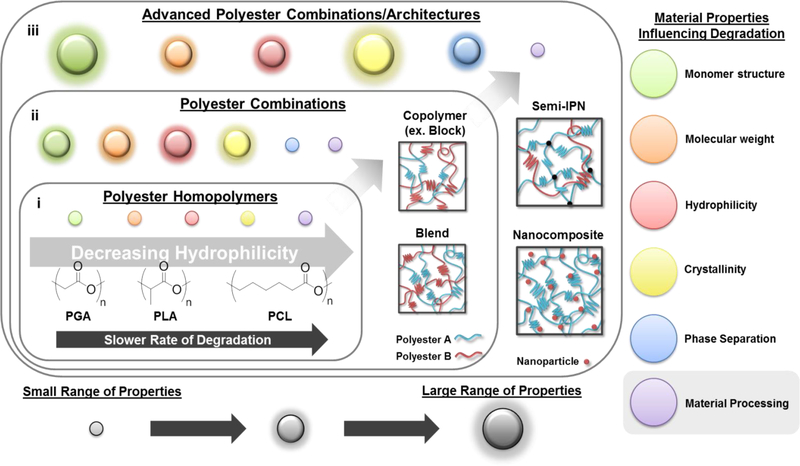
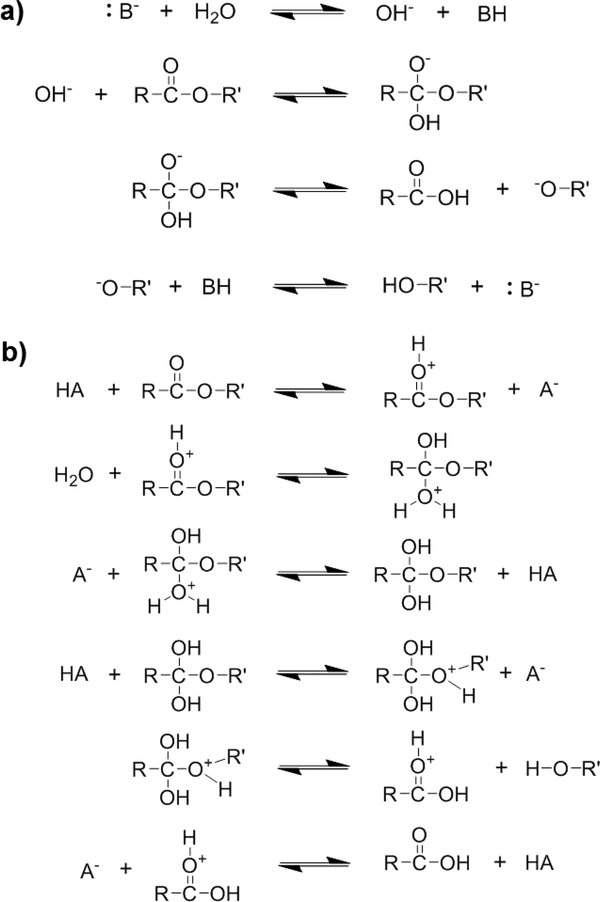
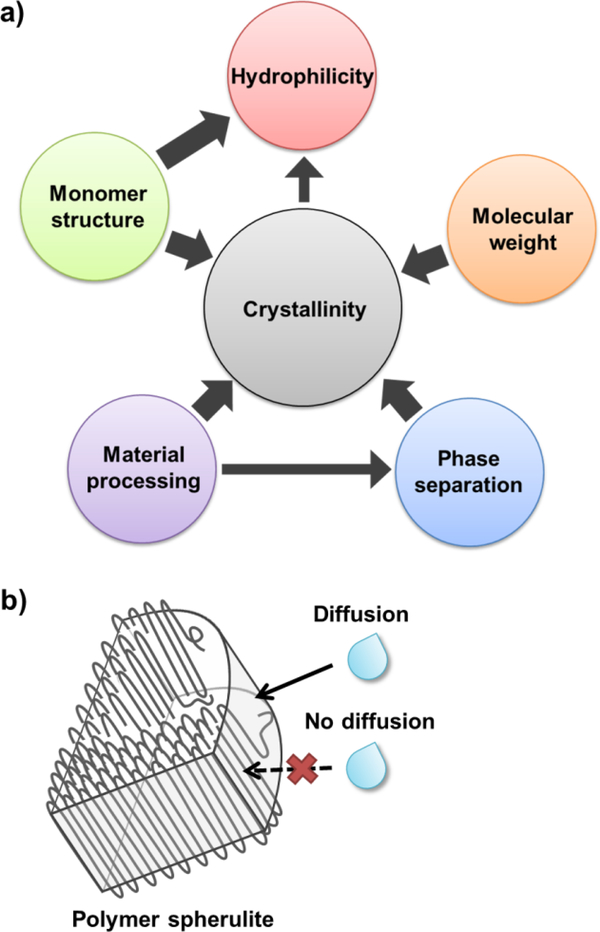
Strategies to refine the degradation behavior of polyester biomaterials, particularly to overcome the limitations of slow hydrolytic degradation, would broaden their utility. Herein, we examine the complexities of polyester degradation behavior, its assessment and strategies for refinement. The factors governing polyester degradation are strikingly complex. In addition to the half-life of the hydrolytically-labile bond, a series of interdependent material properties must be considered. Thus, methods used to characterize such material properties, both before and during degradation, must be carefully selected. Assessment of degradation behavior is further complicated by the variability of reported test protocols and the need for accelerated rather than real-time testing conditions. Ultimately, through better control of degradation behavior and correlation of , simulated degradation to that observed , the development of superior devices prepared with polyester biomaterials may be achieved.
优化聚酯生物材料降解行为的策略,特别是克服缓慢水解降解的局限性,将扩大其应用范围。在此,我们研究了聚酯降解行为的复杂性、其评估方法以及优化策略。影响聚酯降解的因素极其复杂。除了水解不稳定键的半衰期外,还必须考虑一系列相互依存的材料特性。因此,在降解之前和降解过程中用于表征此类材料特性的方法必须谨慎选择。报告的测试方案的可变性以及对加速而非实时测试条件的需求,进一步增加了降解行为评估的复杂性。最终,通过更好地控制降解行为,并将模拟降解与实际观察到的降解相关联,或许能够实现用聚酯生物材料制备出更优质的器件。