Department of Biotechnology, College of Life Science, CHA University, Pocheon-si, Korea.
Medicinal Bioconvergence Research Center, Seoul National University, Seoul, Korea.
Aging Cell. 2019 Apr;18(2):e12909. doi: 10.1111/acel.12909. Epub 2019 Jan 31.
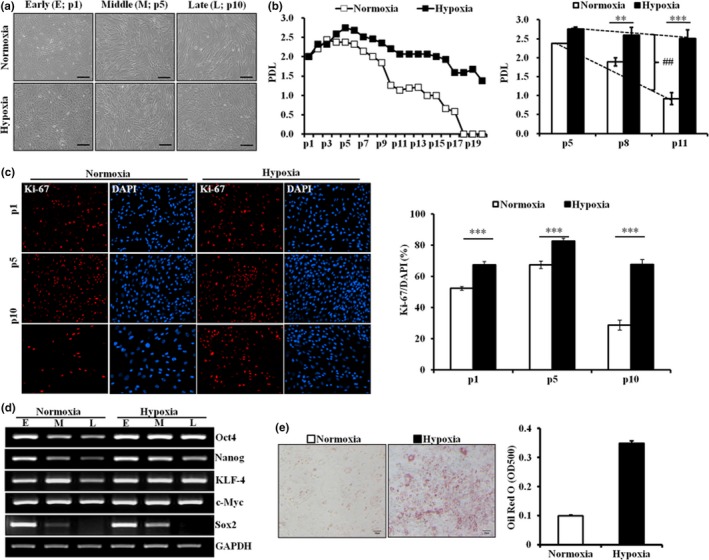
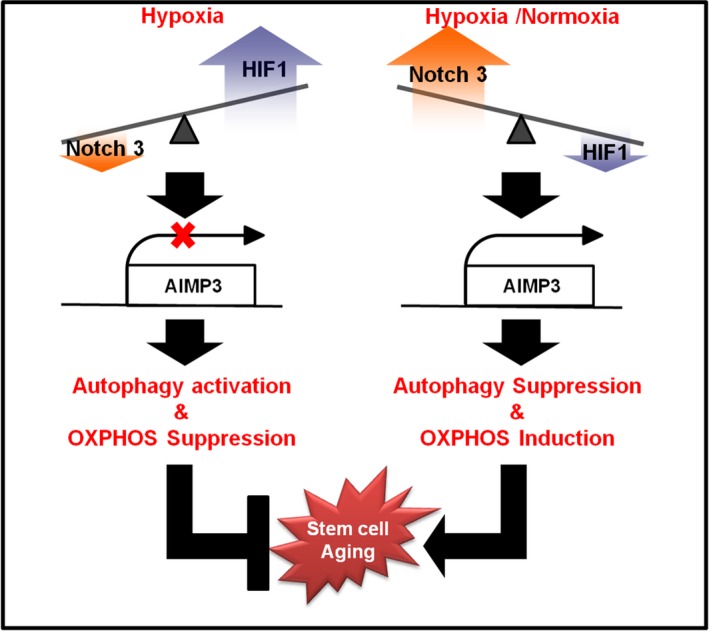
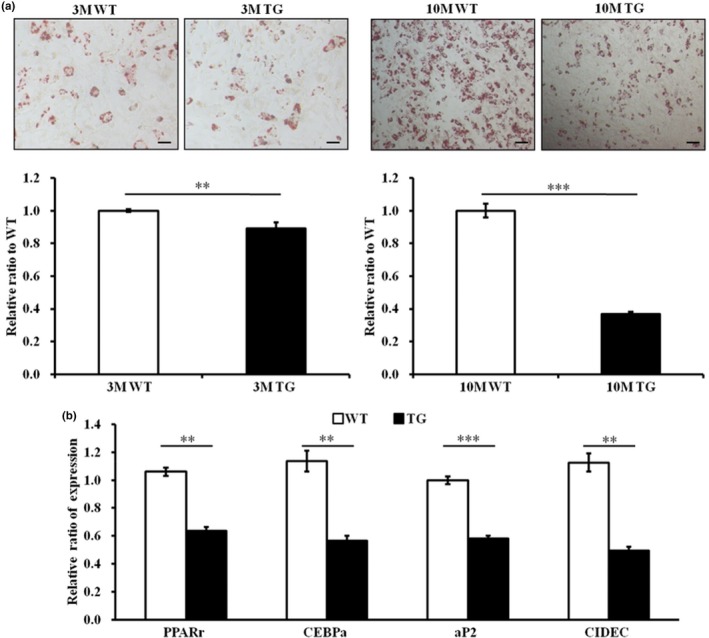
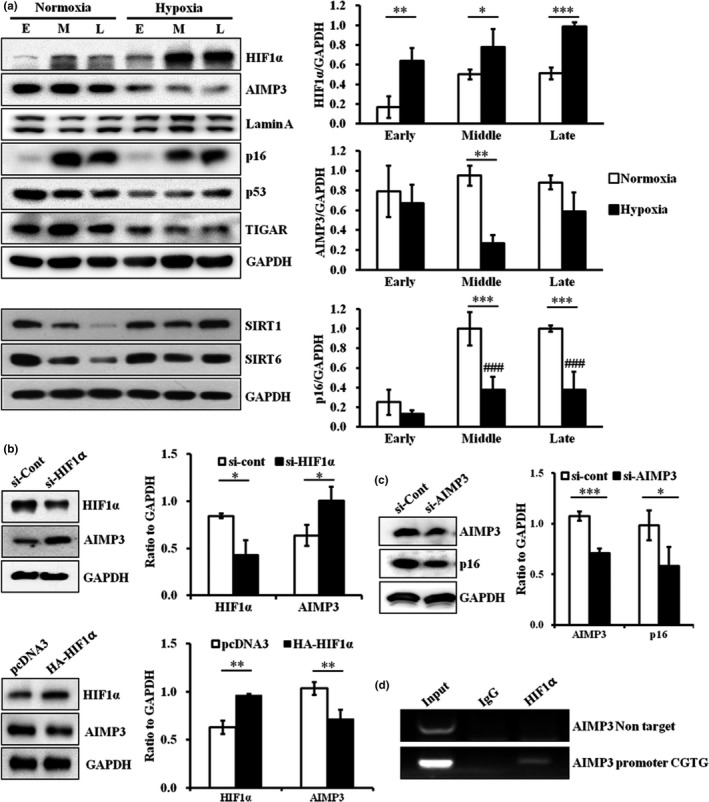
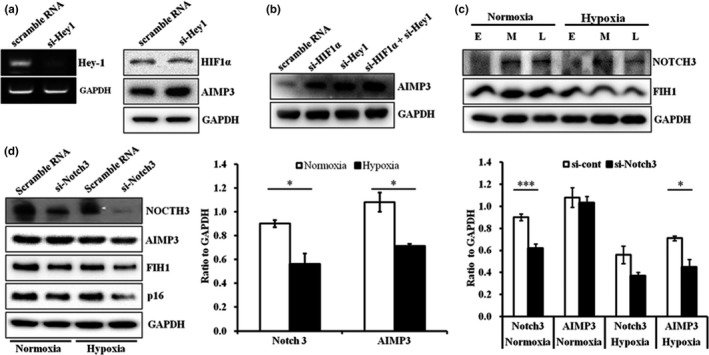
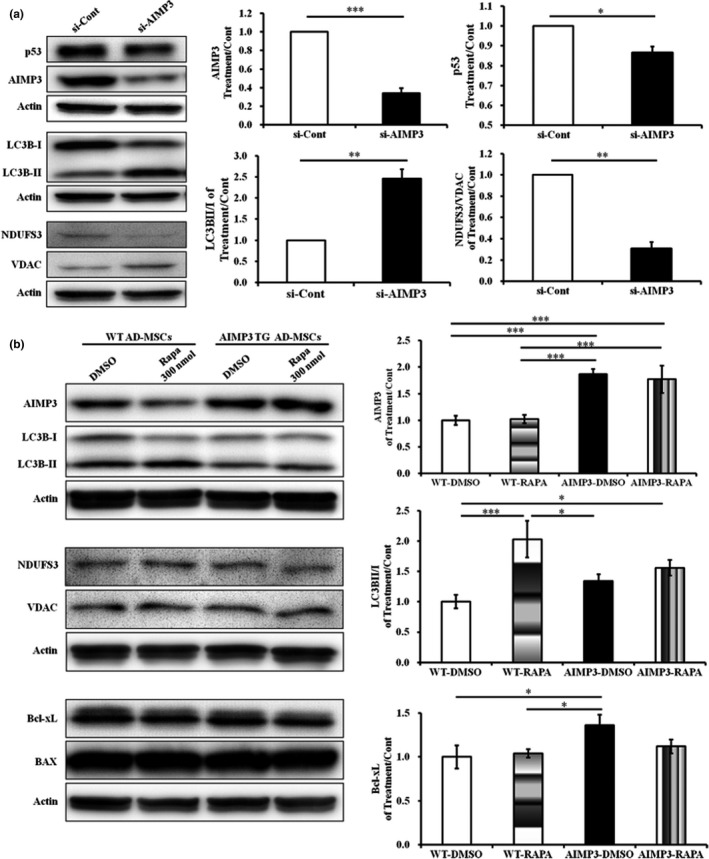
Senescence in stem cells, which occurs as a consequence of chronic responses to the environment, defines the capacity of stem cells for proliferation and differentiation as well as their potential for tissue regeneration and homeostasis maintenance. Although stem cells reside under low oxygen pressure and the availability of oxygen is known to be a crucial determinant in their fate, the key modulators in stem cell aging and the underlying mechanism have yet to be unraveled. Human placenta-derived mesenchymal stem cells (hpMSCs) were cultured under hypoxia (3% O ) or normoxia (21% O ) to investigate the key factors that regulate stem cell senescence under hypoxic conditions. RNA sequencing results suggested that the expression of aminoacyl-tRNA synthetase-interacting multifunctional protein 3 (AIMP3, EEF1E1), an aging inducer, in the hpMSCs was dramatically repressed under hypoxia with concurrent suppression of the aging marker p16 . The hpMSCs that overexpressed AIMP3 under hypoxic conditions displayed significantly decreased proliferation and fewer stem cell characteristics, whereas the downregulation of AIMP3 ameliorated the age-related senescence of MSCs. Consistent with the results of the hpMSCs, MSCs isolated from the adipose tissue of AIMP3-overexpressing mice exhibited decreased stem cell functions. Interestingly, AIMP3-induced senescence is negatively regulated by hypoxia-inducible factor 1α (HIF1α) and positively regulated by Notch3. Furthermore, we showed that AIMP3 enhanced mitochondrial respiration and suppressed autophagic activity, indicating that the AIMP3-associated modulation of metabolism and autophagy is a key mechanism in the senescence of stem cells and further suggesting a novel target for interventions against aging.
衰老干细胞是一种慢性应对环境的后果,它定义了干细胞的增殖和分化能力,以及它们的组织再生和维持内稳态的潜力。尽管干细胞处于低氧压下,并且氧的可用性已知是其命运的关键决定因素,但干细胞衰老的关键调节剂及其潜在机制仍有待阐明。人胎盘间充质干细胞(hpMSCs)在低氧(3% O )或常氧(21% O )下培养,以研究调节低氧条件下干细胞衰老的关键因素。RNA 测序结果表明,在 hpMSCs 中,氨基酸酰-tRNA 合成酶相互作用多功能蛋白 3(AIMP3,EEF1E1)的表达在低氧下被显著抑制,同时衰老标志物 p16 的表达也被抑制。在低氧条件下过表达 AIMP3 的 hpMSCs 表现出明显的增殖减少和更少的干细胞特征,而 AIMP3 的下调改善了 MSC 的与年龄相关的衰老。与 hpMSCs 的结果一致,从过表达 AIMP3 的小鼠脂肪组织中分离的 MSC 表现出干细胞功能下降。有趣的是,AIMP3 诱导的衰老受低氧诱导因子 1α(HIF1α)负调控,受 Notch3 正调控。此外,我们表明 AIMP3 增强了线粒体呼吸,抑制了自噬活性,表明 AIMP3 相关的代谢和自噬调节是干细胞衰老的关键机制,并进一步表明针对衰老干预的新靶点。