Møller Anders Pape, Laursen Karsten, Karadas Filiz
Ministry of Education Key Laboratory for Biodiversity Science and Ecological Engineering, College of Life Sciences, Beijing Normal University, Beijing 100875, China.
Ecologie Systématique Evolution, Université Paris-Sud, CNRS, Agro ParisTech, Université Paris-Saclay, F-91405 Orsay CEDEX, France.
Antioxidants (Basel). 2019 Jan 31;8(2):31. doi: 10.3390/antiox8020031.
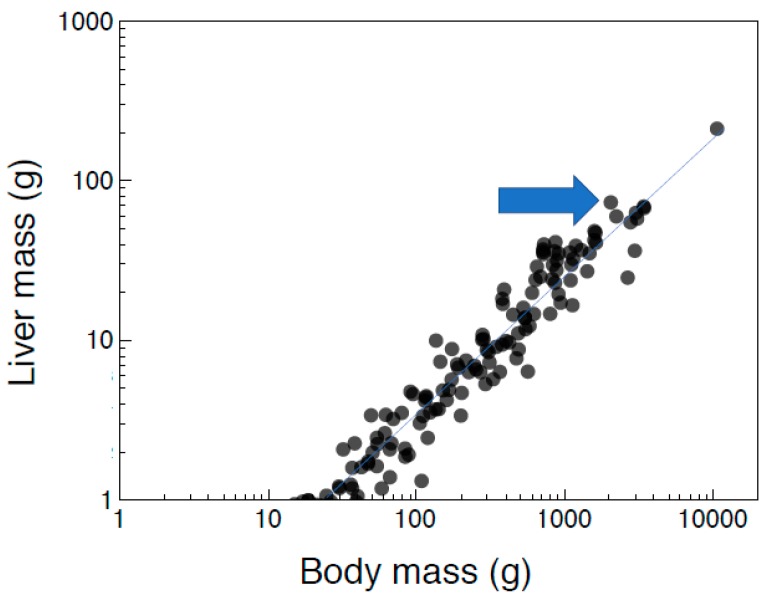
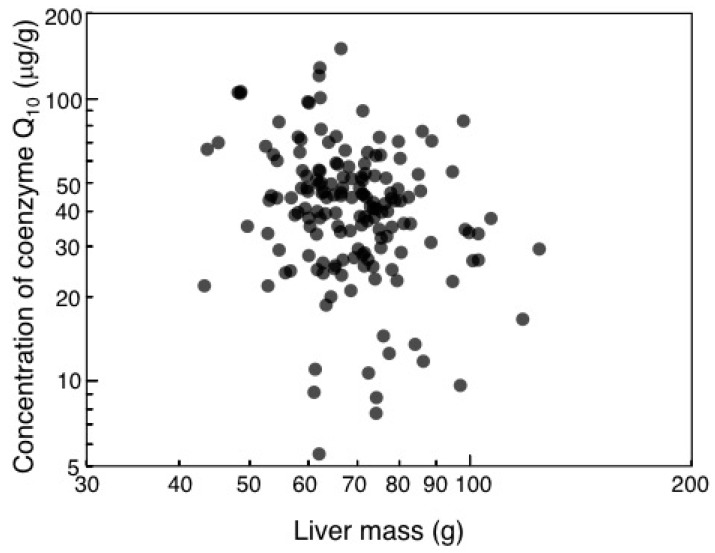
Antioxidants in the liver are particularly abundant in capital breeders that rely on stored resources for egg production. Capital breeders like eider (hereafter common eider) have disproportionately large livers with low levels of coenzyme Q when compared to other bird species. Concentrations of total carotenoids and vitamin E in the livers of eiders were smaller than predicted for similarly sized bird species. Eiders with high body condition estimated as body mass relative to skeletal body size had high levels of total carotenoids and low levels of coenzyme Q. The concentration of total carotenoids per gram of liver increased with age, and vitamin E and total carotenoids accumulated during the winter onwards from February to peak at the start of incubation in April. Total vitamin E, total carotenoids, and coenzyme Q per gram of liver decreased with increasing beak volume. The size of the empty gizzard increased with increasing liver mass but decreased with total carotenoids and coenzyme Q. The main components of the diet were blue mussels (40%), draft whelk (27%), and periwinkle (10%). The concentration of vitamin E increased with the number of razor clams sp. and draft whelks in the gizzard and the concentration of total carotenoids increased with the number of beach crabs . These observations are consistent with the hypothesis that eiders are limited in their levels of antioxidants through food limitation. Furthermore, they imply that diet and morphological characters involved in food acquisition and processing are important determinants of the level of antioxidants in the liver.
在依赖储存资源进行产卵的资本繁殖者中,肝脏中的抗氧化剂含量尤为丰富。与其他鸟类相比,像绒鸭(以下简称普通绒鸭)这样的资本繁殖者肝脏特别大,但辅酶Q水平较低。绒鸭肝脏中总类胡萝卜素和维生素E的浓度低于同等体型鸟类的预测值。身体状况良好(以体重相对于骨骼大小来估计)的绒鸭,其总类胡萝卜素水平较高,辅酶Q水平较低。每克肝脏中总类胡萝卜素的浓度随年龄增长而增加,维生素E和总类胡萝卜素在从2月开始的冬季积累,并在4月孵化开始时达到峰值。每克肝脏中总维生素E、总类胡萝卜素和辅酶Q的含量随喙体积的增加而降低。空砂囊的大小随肝脏质量的增加而增大,但随总类胡萝卜素和辅酶Q的含量而减小。饮食的主要成分是蓝贻贝(40%)、峨螺(27%)和滨螺(10%)。砂囊中维生素E的浓度随剃刀蛤和峨螺数量的增加而增加,总类胡萝卜素的浓度随沙滩蟹数量的增加而增加。这些观察结果与以下假设一致:绒鸭因食物限制而抗氧化剂水平受限。此外,这意味着饮食以及与食物获取和处理相关的形态特征是肝脏中抗氧化剂水平的重要决定因素。