Department of Nephrology, Renji Hospital, School of Medicine, Shanghai Jiao Tong University, Shanghai, 200127, China.
Department of Nephrology, Changzheng Hospital, Second Military Medical University, Shanghai, 200003, China.
BMC Nephrol. 2019 Feb 1;20(1):34. doi: 10.1186/s12882-019-1219-z.
Globally, there is increased clinical interest and uptake of hemodiafiltration (HDF) for increased removal of uremic toxins. To date, there has been no epidemiological analysis of HDF in China. We present HDF practice patterns and associated mortality risk in Shanghai.
This is an observational, prospectively collected, retrospective analysis of 9351 Chinese patients initiating hemodialysis in Shanghai from 2007 to 2014. The primary exposure was hemodialysis sub-modality at inception, classified into hemodiafiltration (HDF) and hemodialysis (HD), with adjustment for concommitant hemoperfusion. The primary outcome was patient mortality. We used Cox proportional hazards regression and Fine and Gray's proportional subhazards regression, with multiple imputation of missing co-variates by the chained equation method, adjusting for demographic and clinical variables.
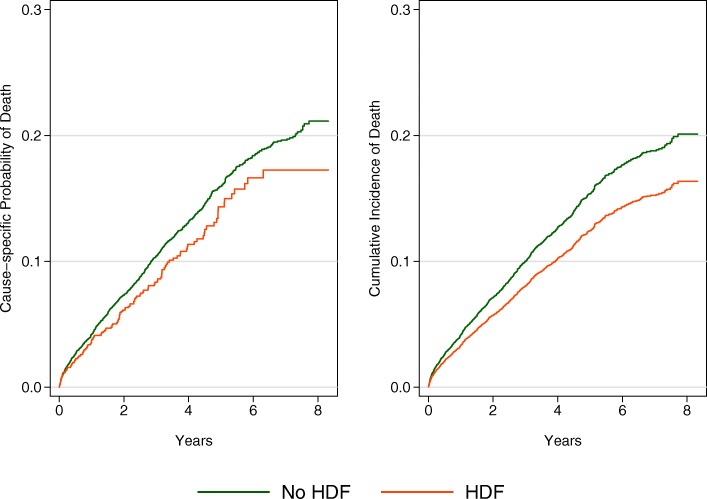
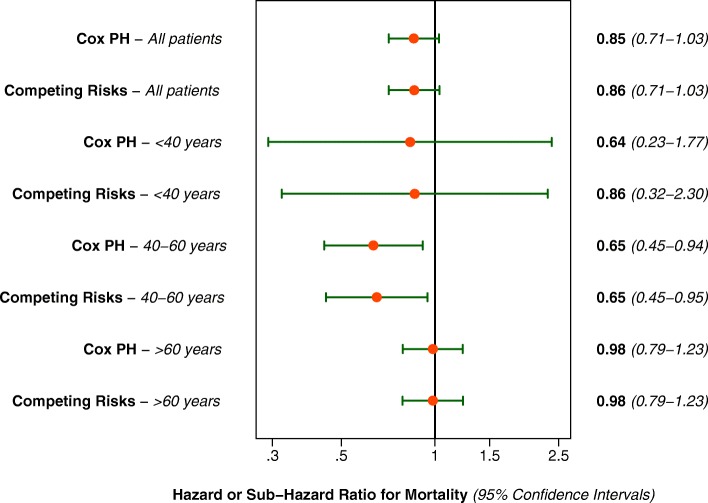
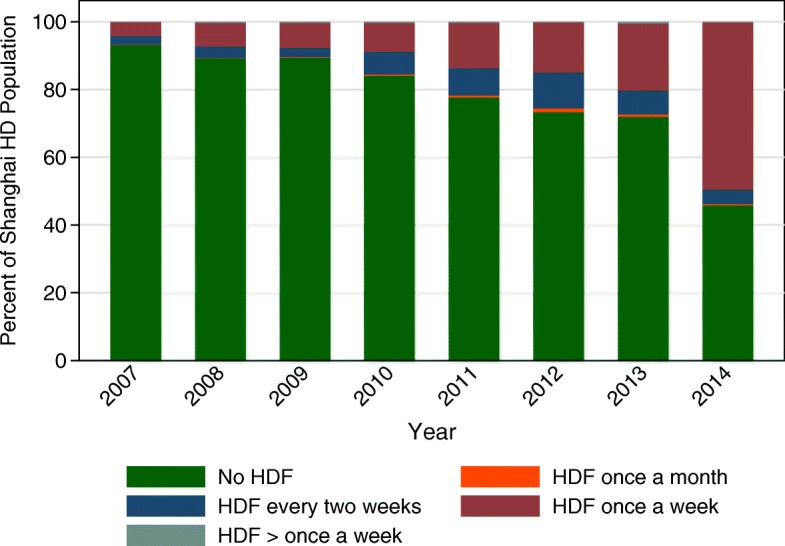
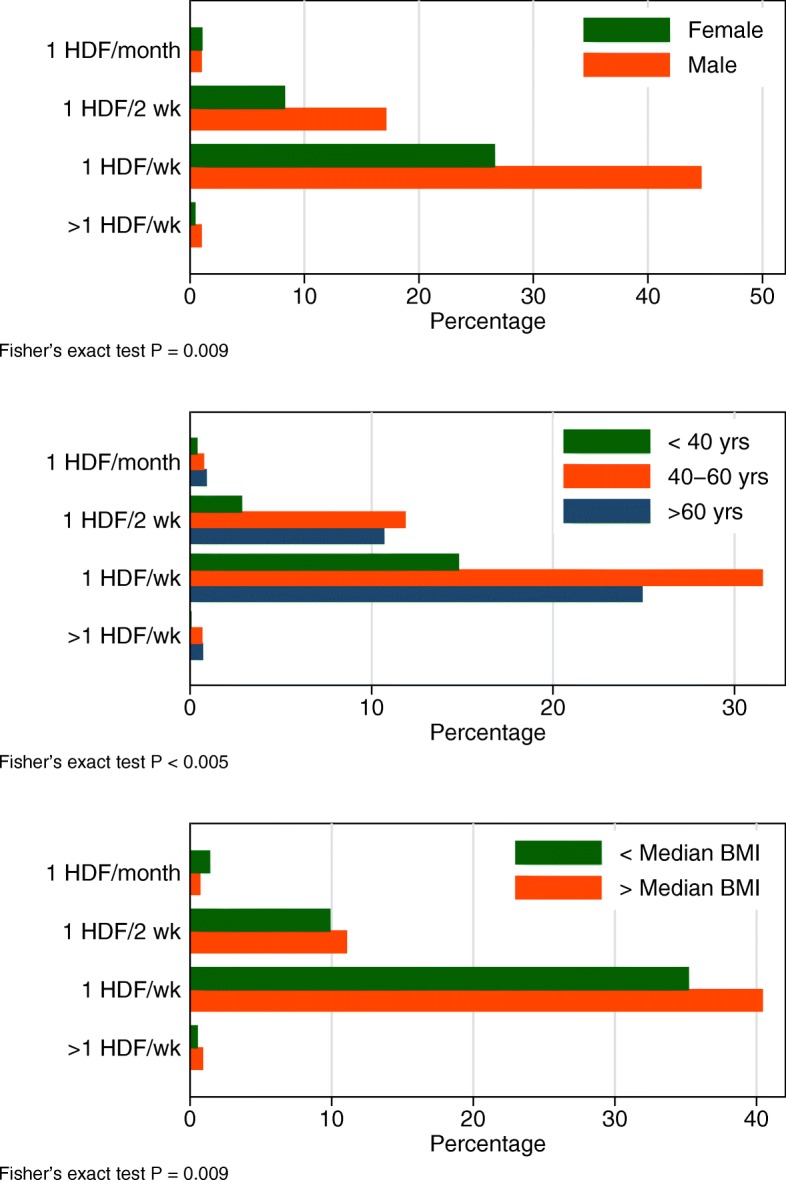
Overall, patients in the cohort were younger, with a more males, and with a lower body mass index when compared to corresponding non-Asian cohorts. Mortality rate was low although it doubled over the period of observation. HDF utilization increased from 7% of patients in 2007 to 42% of patients in 2014. The majority of patients received HDF once a week. The adjusted hazard ratio of death (95% confidence intervals) for HDF versus HD was 0.85 (0.71-1.03), and corresponding sub-hazard ratio 0.86 (0.71-1.03). There was strong effect modification by age. In those aged 40-60 years, the hazard ratio (95% confidence intervals) was 0.65 (0.45-0.94), and sub-hazard ratio also 0.65 (0.45-0.95).
Our study has certain limitations resulting from the limited number of co-variates available for modelling, missing data for some co-variates, and the lack of verification of data against source documentation. Notwithstanding, there is evidence of clinical benefit from HDF in China, and potential to improve patient outcomes through the greater removal of middle and larger uremic solutes.
全球范围内,临床对血液透析滤过(HDF)的应用兴趣日益增加,因其能更有效地清除尿毒症毒素。目前,中国尚未对 HDF 进行流行病学分析。本研究旨在介绍上海地区 HDF 的应用模式及与死亡率的相关性。
本研究为一项观察性、前瞻性、回顾性分析,纳入 2007 年至 2014 年期间在上海开始血液透析的 9351 例中国患者。主要暴露因素为起始时的血液透析亚模式,分为血液透析滤过(HDF)和血液透析(HD),同时调整同期进行的血液灌流。主要结局为患者死亡率。采用 Cox 比例风险回归和 Fine 和 Gray 比例亚风险回归,通过链方程法对缺失协变量进行多次插补,调整人口统计学和临床变量。
总体而言,与相应的非亚洲队列相比,本队列患者年龄较小,男性比例较高,体重指数较低。尽管死亡率在观察期间翻了一番,但仍处于较低水平。HDF 的使用率从 2007 年的 7%增加到 2014 年的 42%。大多数患者每周接受一次 HDF。与 HD 相比,HDF 死亡的调整风险比(95%置信区间)为 0.85(0.71-1.03),相应的亚风险比为 0.86(0.71-1.03)。年龄存在强烈的效应修饰作用。在 40-60 岁的患者中,风险比(95%置信区间)为 0.65(0.45-0.94),亚风险比也为 0.65(0.45-0.95)。
本研究存在一定的局限性,主要是由于建模的协变量数量有限、部分协变量数据缺失以及缺乏数据与原始文档的验证。尽管如此,本研究仍有证据表明 HDF 在中国具有临床获益,并有可能通过清除更多的中分子和大分子尿毒症溶质来改善患者的预后。