Bieber Anja, Nguyen Natalie, Meyer Gabriele, Stephan Astrid
Institute of Health and Nursing Sciences, Martin Luther University Halle-Wittenberg, Halle (Saale), Germany.
BMC Health Serv Res. 2019 Feb 1;19(1):88. doi: 10.1186/s12913-018-3825-z.
The literature describes the obstacles to sufficient care faced by people with dementia and their informal caregivers. Although factors influencing access and utilisation are frequently studied, the body of knowledge lacks an overview of aspects related to influence. The frequently used Behavioural Model of Health Care Use (BM) could be used to structure and explain these aspects. An adaptation of the BM emphasises psychosocial influences and appears to enrich the understanding of the use of long-term care for dementia.
We conducted a scoping review with the aim of providing an overview of the aspects influencing the access to and utilisation of formal community care in dementia. Our search covered the PubMed, CINAHL, Social Science Citation Index and PsychInfo databases, as well as grey literature. Two researchers assessed the full texts for eligibility. A data extraction form was developed and tested. We analysed the main topics investigated by the studies and mapped and described the investigated psychosocial aspects according to the BM after narratively summarising the findings. We used the Mixed Method Appraisal Tool (MMAT) to critically appraise the included studies.
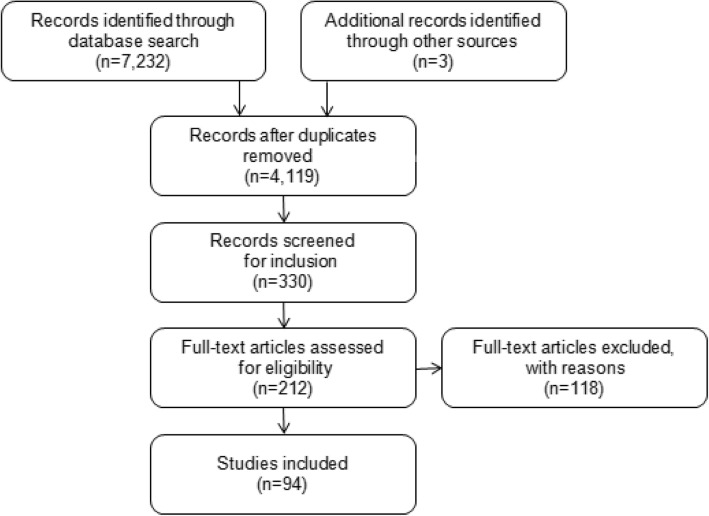
A total of 94 studies were included: n = 55 with quantitative designs, 35 with qualitative designs and four with mixed methods. The studies investigated different services, mainly focusing on health care services. One third of the studies provided information regarding the severity of dementia. The most frequently investigated main topics were ethnicity and attitudes towards services. Psychosocial aspects were frequently investigated, although few studies considered the perspectives of people with dementia. Approximately half of the studies reported a theoretical framework. The adapted BM facilitated the structuring and description of psychosocial aspects. However, this instrument did not address topics beyond the scope of psychosocial aspects, such as sociodemographic characteristics.
The access to and utilisation of formal community care for dementia can only be partly explained by individual influencing aspects. Therefore, a theoretical framework would likely help to describe this complex subject. Our findings indicate that the psychosocial categories of the adapted BM enriched the original BM, and that people with dementia should more often be included in healthcare service research to ensure a better understanding of the barriers to accessing formal community care.
文献描述了痴呆症患者及其非正式照护者在获得充分照护方面所面临的障碍。尽管影响医疗服务获取和利用的因素经常被研究,但现有知识体系缺乏对相关影响因素的概述。常用的医疗服务利用行为模型(BM)可用于构建和解释这些因素。对该模型的一种改编强调心理社会影响,似乎丰富了对痴呆症长期护理利用情况的理解。
我们进行了一项范围综述,旨在概述影响痴呆症患者获得和利用正式社区护理的因素。我们的检索涵盖了PubMed、CINAHL、社会科学引文索引和PsychInfo数据库以及灰色文献。两名研究人员评估全文的合格性。开发并测试了一份数据提取表。我们分析了研究调查的主要主题,并在对结果进行叙述性总结后,根据BM对所调查的心理社会因素进行了映射和描述。我们使用混合方法评估工具(MMAT)对纳入的研究进行严格评估。
共纳入94项研究:55项为定量设计,35项为定性设计,4项为混合方法设计。这些研究调查了不同的服务,主要集中在医疗保健服务上。三分之一的研究提供了有关痴呆症严重程度的信息。最常调查的主要主题是种族和对服务的态度。心理社会因素经常被调查,尽管很少有研究考虑痴呆症患者的观点。大约一半的研究报告了一个理论框架。改编后的BM有助于对心理社会因素进行构建和描述。然而,该工具并未涉及心理社会因素范围之外的主题,如社会人口学特征。
痴呆症患者获得和利用正式社区护理的情况只能部分由个体影响因素来解释。因此,一个理论框架可能有助于描述这个复杂的主题。我们的研究结果表明,改编后的BM的心理社会类别丰富了原始的BM,并且痴呆症患者应更频繁地纳入医疗服务研究,以确保更好地理解获得正式社区护理的障碍。